Welcome to tutorial 1,
Introduction to Pranayama.
I would like to start with Pranayama theory and the Vayus.
Pranayama is a combination of the words prana,
Life force energy or vital energy,
And yama,
Restraint,
Or the opposite of that ayama,
Expansion.
Both the restraint and the expansion of prana are accurate reflections of the practice of pranayama.
By controlling the life force energy,
Prana is expanded.
Prana exists on a macro level in the universe and includes forces that keep the planets in motion.
On a micro level,
Prana is the life force energy that is responsible for all body movements and physical and mental activity.
Prana is meant to prepare the mind for meditation,
To control the vrittis,
Or thought waves,
In the mind.
The guiding principle is that movement of breath and movement of thoughts are closely related.
Breath is the external manifestation of the internal,
Subtle energy of prana.
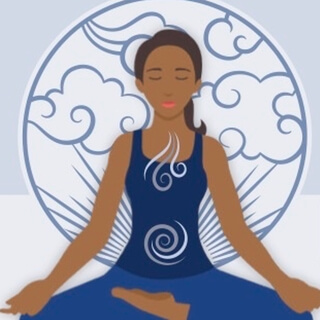
When we slow down our breathing and focus on our energy of breath,
We can start feeling and controlling the subtle energy of prana.
Rapid breathing is often associated with an agitated mind,
Whereas calmer breathing usually comes with a peaceful mind and vice versa.
By controlling our breath,
We can regulate prana,
Causing our whole body to respond.
If we can control our breath and flow of prana,
We can learn how to control the thoughts in our minds.
Therefore,
As the guiding principle of pranayama states,
It is when the breath is soft and calm that we can reach deep states of meditation.
The vayus,
Or vital airs,
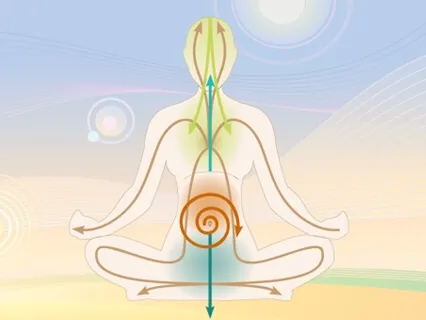
Are five specific manifestations of prana in the subtle body,
Each having a certain function and location in the physical body.
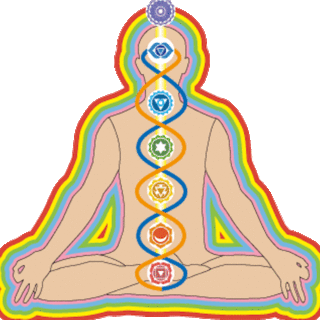
Uddana vayu is the rising air,
And it flows between the throat and the top of the head.
Its seat is the throat,
Or vishuddha chakra.
Uddana controls speech,
Swallowing and vomiting,
And aspects of memory and sleep.
Prana vayu is vital air.
It works between the throat and the navel,
And its seat is the heart,
Or anahata chakra.
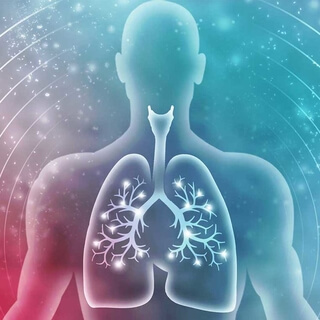
It controls respiration,
Circulation,
Body temperature,
And much of the brain.
Samana vayu is unchanging air,
And operates between the navel and the heart.
Its seat is the solar plexus,
Or bhanipura chakra.
Samana vayu keeps apana and prana vayus balanced and controls digestion,
Secretions of the stomach,
Liver,
And duodenum,
And separates nutrients from waste products,
Sending nourishment to the cells.
Apana vayu is downward air,
And flows from the navel to the feet.
Its seat is the root,
Or muladhara chakra.
Apana assists prana vayu with respiration and controls excretion,
Menstrual activity,
Reproduction,
And child delivery.
And finally,
Vyana vayu,
Diffused air.
It flows throughout the body,
Helps all other pranas function,
And appears as the aura around the body.
Vyana controls voluntary and involuntary muscles,
Body movement,
Circulation,
And provides energy for the nervous system.
Pranayama basics The three phases of pranayama are puraka,
Inhalation,
Kumbhaka,
Retention,
And recchaka,
Exhalation.
Through pranayama the ratio of inhalation,
Exhalation,
And retention of breath are altered.
Sitting postures Finding the right seat for pranayama and consequently meditation is essential to ensure your practice is as effective as possible.
While there are a number of sitting postures available,
The seat's main purpose is to allow pranic energy to flow freely throughout the body.
Whatever seat you choose,
It should be comfortable,
Stable,
And enable your spine,
Neck,
And head to be in alignment but relaxed.
If you're unable to sit cross-legged on the floor for any length of time,
You can choose to kneel or use props such as a bolster,
Cushion,
Or meditation bench for support.
You can also sit in a chair.
General guidelines for pranayama What is the best time for practice?
Whatever time works for you to practice regularly,
But the general recommendation is early morning or sunrise,
Noon,
And sunset or before bed are the best times to practice.
Give yourself at least two hours after eating and have an empty bladder and bowels before starting.
Setting and comfort are important.
Find a quiet,
Uncluttered space away from direct sunlight or draft with a comfortable seat on the floor or a chair.
Wear loose clothing.
Keep your spine,
Neck,
And head in alignment but relaxed.
And don't strain.
Practice should feel good,
Not forced.
There are some restrictions in pranayama.
The pranic energy that is stimulated during pranayama can be very powerful.
Therefore,
It is recommended that you do not practice when you're tired or sick or if you're excited or emotionally upset,
With the exception of specific practices intended for these conditions.
Pranayama that involves breast retention should not be practiced by those who suffer from ulcers,
Lung or heart disease,
Depression,
Or other mental complications.
Breast retention should also be avoided or practiced with caution by those with glaucoma or other eye or ear problems.
Those who suffer from illness can substitute pranayama with practicing the eight kriyas,
Which you can find under my guided pranayama.
Establishing a regular practice.
As with any practice,
Start slow and build.
Begin with a minimum number of exercises and time of breast retention.
Gradually increasing according to your level of comfort.
When your practice gets interrupted,
Even for a few days,
Return to baseline and start building again.
Some pranayama are heating,
Some are cooling,
So consider climate,
Season,
And time of day for your practice.
Finally,
Develop your practice gradually.
Avoid dramatic leaps.
Do what you can to maintain a regular,
Steady practice.
It's called practice for a reason.
What to do after pranayama.
Since pranayama helps focus the mind,
It is best to practice meditation for any amount of time.
If you don't meditate,
You can take some time in savasana instead.
Give yourself at least 30 minutes after pranayama to eat or practice asana.
Thank you for joining me for this tutorial introduction to pranayama.
I hope to see you in tutorial 2 on basic breathing methods.