Welcome to tutorial 7 on Ashwini Mudra,
Horse Seal.
Ashwini Mudra is one of the four purification methods that was taught by Baba Haridass,
Based on the ancient text of the Girandhasamitta.
The practice was passed down to me by his students during my yoga teacher training at Mount Madonna Institute,
And it is my intention to teach this method in the same way that I was instructed.
Ashwini means horse,
A symbol of power,
And mudra means seal or lock.
This breath involves steady rhythmic contractions and releases of the anal sphincter muscle on an inhaled breath.
As always,
The best way to learn is to practice.
Let me walk through the steps before we practice together.
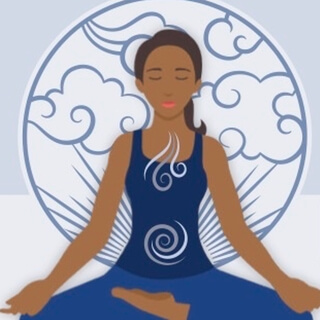
Find a comfortable seat,
Head,
Neck,
And back tall but relaxed.
Exhale completely.
Take a yogic inhale through your nose and hold the breath in.
While holding your inhale,
Rhythmically contract and release your anal sphincter muscle as many times as you are comfortable on an inhaled breath.
Exhale slowly and gently as you release your final contraction.
This constitutes one round.
There are some contraindications for this breathing method.
Since Ashwini mudra involves breath retention,
This should not be practiced by those with anxiety.
Also,
If you have active or bleeding hemorrhoids,
Please do not perform this practice.
Let's practice five rounds with up to 30 contractions for each round.
I will guide you through the first two and then you'll do three on your own.
Find a comfortable seat,
Head,
Neck,
And back tall but relaxed.
Exhale completely to start.
Take a yogic inhale through your nose and hold your breath in.
While holding your inhale,
Rhythmically contract and release your anal sphincter muscle as many times as you can do comfortably on an inhaled breath.
Go at a pace that is comfortable to you and complete as many contractions as you can without running out of air.
Take a catch breath before starting your next round.
When you're ready,
Inhale through your nose,
Hold the breath in,
And start your series of contractions again.
Really try to isolate your anal sphincter muscle at the base of your spine.
When you finish this round,
Take a moment if you need before starting again.
I'll remain silent as you do three more rounds at your own pace.
Once you've completed your five rounds,
Return to your natural breath and I'll give you a moment to reflect and experience the effects of your practice.
Now,
Let's take a look at the rhythm of the contractions.
Especially in the beginning,
The rhythm of the contractions can be slow,
With the goal to isolate the anal sphincter muscle and to keep a steady rhythm.
You can increase your pace gradually as you develop the ability to keep a steady rhythm.
Isolating the anal sphincter muscle requires some concentration.
Try not to contract other muscles in the pelvic floor.
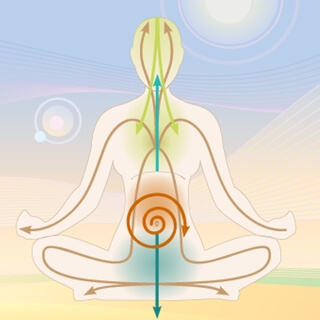
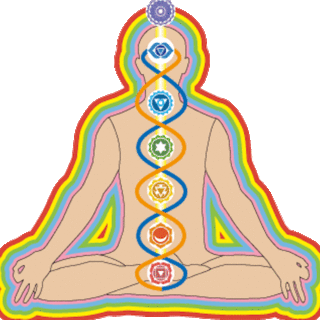
Concentration during Ashwini mudra is at the base of your spine,
Your root chakra,
Or Mula Dara chakra,
Stimulating the energy in that area.
If you're familiar with Mula Bandha,
The anal sphincter contractions in this practice are in preparation for this lock.
Let's practice another three rounds.
I will guide you through the first round and then you'll do two on your own.
Pick a pace that is comfortable for you.
Sit comfortably,
Head,
Neck and back tall but relaxed.
Exhale completely before inhaling a full yogic breath and holding it in.
Start your series of anal sphincter contractions and releases.
As soon as you feel the need to exhale,
Gently breathe out and take a catch breath before starting your next round.
I'll remain silent as you do two more rounds at your own pace.
Once you've completed your three rounds,
Return to your natural breath and I'll give you a moment to reflect and experience the effects of your practice.
Let's practice another three rounds.
Benefits and effects.
Ashvini Mudra stimulates Apana Vayu,
The downward flow of air.
It is beneficial for mild hemorrhoids,
Constipation and menstrual problems and a good practice for prenatal and postnatal conditioning as well as prostrate problems.
It purifies the urogenital system by increasing blood flow to the lower torso.
This practice has a moderating effect as it is neither heating nor cooling and strengthens Mula Bandha.
Do up to 30 contractions per round depending on how long you can hold your inhale comfortably and exhale in a slow and controlled manner.
Two to four rounds is good practice.
Thank you for joining me for this tutorial on the final of the four purifications,
Ashvini Mudra.
I look forward to welcoming you in tutorial eight as we move on to other introductory pranayama practices,
Starting with the two methods of Ujjayi.