Thanks for tuning in,
Everybody.
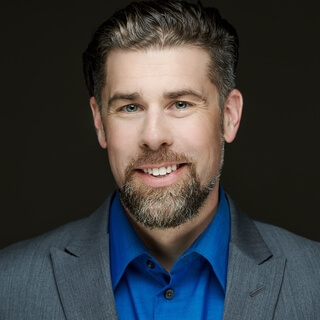
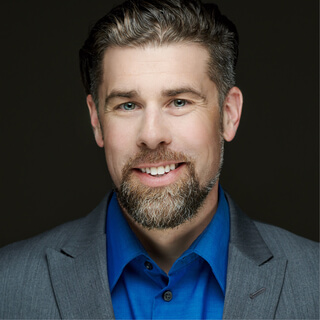
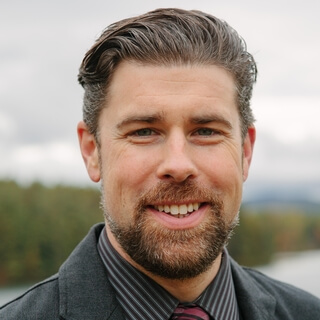
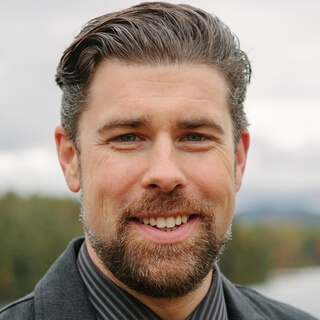
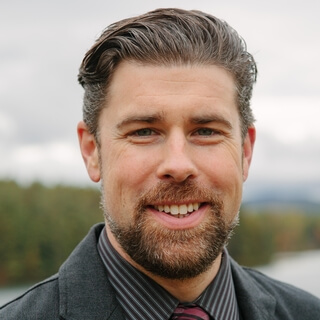
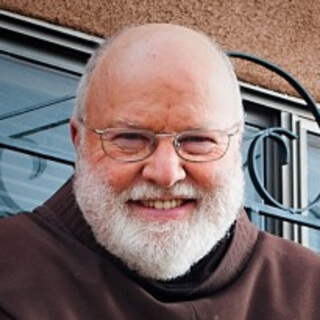
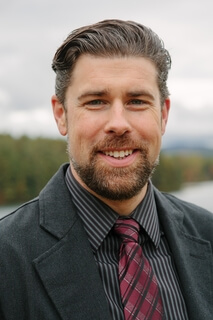
I'm excited and honored to share with you the wisdom of my good friend Matthew Wright in this eighth episode of Contemplate This,
Conversations on Contemplation and Compassion.
If there were a who's who of emerging contemplative teachers in the Christian tradition,
Matthew Wright would probably be toward the top of the list.
I first met Matthew a few years ago when he was giving a retreat at the Episcopal House of Prayer,
A retreat center located in the idyllic Northwoods of my alma mater,
St.
John's University in Collegeville,
Minnesota.
And we were both present for the new contemplative exchange gathering of younger,
Youngish leaders of contemplative Christianity at St.
Benedict's Monastery in Snowmass,
Colorado last August.
Matthew is an ordained Episcopal priest and he lives in Woodstock,
New York with his wife,
Janek,
Right next to the brothers of the Holy Cross Monastery.
He's probably best known as a retreat director and he emphasizes Christian contemplative prayer as a prayer of the heart,
By which he means that prayer is literally something that occurs in the physical space of the heart.
And he also picks up a more ancient monastic strain of theology that considers the heart as the seat or the core of the entire person.
And that core includes the intellect or reason,
The mind,
Memory,
Feelings and emotions.
And it's the center of our connection,
Both with the divine within,
With God,
And to the created world around us that includes other people in the natural world.
As always,
You can find the show notes and more information about Matthew and the Wisdom School of which he is a part on the podcast website at thomasjbushlack.
Com forward slash contemplate dash this.
Or you can find the show notes simply at thomasjbushlack.
Com forward slash episode eight.
That's episode and then the number eight,
No spaces.
I continue to be grateful for those of you listening who are helping with submitting reviews,
Especially on iTunes,
Promoting the podcast among your friends and family and social media,
And offering donations to support the free media,
Which you can do at thomasjbushlack.
Com forward slash donate.
Thanks again.
And with that,
Let's jump right into my interview with the Reverend Matthew Wright.
All right,
Matthew,
Thanks for being here this morning.
Always good to see you,
Whether on Zoom or in person.
The same.
Yeah.
So why don't you start by just telling us a little bit about who you are,
Where you're coming from,
And then we'll back it up from there and hear more of your history.
Sure.
I'm an Episcopal priest.
I serve a little parish church in Woodstock,
New York,
And my wife and I,
We live alongside the Brothers of Holy Cross Monastery,
Which is an Episcopal Benedictine monastic community.
We've been here getting close to four years now.
And I've also been,
I guess,
For almost a decade now,
A student of Cynthia Borjoe,
Who's a contemporary Christian contemplative teacher who I know you've interviewed on here before.
And over the last few years,
I've started working with a little nonprofit called Northeast Wisdom that Cynthia helped found for building Christian wisdom community,
Contemplative community in the Northeast,
And also doing a bit of teaching for the Contemplative Society,
Which is an organization that's also sort of in her lineage of contemplative work based up in British Columbia.
That's the sort of Christian side of my roadmap.
And for about the same amount of time,
I've also been connected to the Threshold Society,
Which is a contemporary expression of the Mevlevi order,
Which is a Sufi order that is from Jalaluddin Rumi.
And that's directed by Kabir and Kabil Helmanski.
And so those two contemplative streams,
Sort of Cynthia's and then Kabir and Kamil's have been my primary kind of formative influences.
That's interesting.
I mean,
I've known you for a couple years.
I didn't know that you were more formally involved with the,
Help me pronounce it right,
Mevlevi.
Mevlevi,
Yeah.
Mevlevi,
Yeah.
I mean,
I know Rumi's work,
And I'm sure a lot of listeners do too.
But can you say a little bit more,
Maybe about both of those lineages that people might,
Or may not be familiar with?
Yeah,
Sure.
The Threshold Society,
It's an attempt to sort of present the wisdom of the Sufi path in our contemporary North American context.
And when I started,
Late in high school,
When I started a sort of contemplative journey that then began unfolding through college and through seminary,
I struggled to find teachers in the Christian landscape,
Contemplative teachers who could sort of take me on the books that I was reading.
And I actually found that it was easier to find mentors in some of the other contemplative traditions that were around.
You know,
The sort of Thomas Keating's and Cynthia Borgeau's were few and far between.
And so I found some helpful mentoring in a Sufi community that was,
You know,
I saw at the time as a supplement to my Christianity,
And in a way it's become sort of a parallel track alongside it over the years.
Yeah,
And that's,
We might circle back around to that,
Because I have similar experiences with the yoga tradition.
And at times they feel parallel and at times they feel like they're the same track coming out of different geographical and linguistic and historical locations.
But so that would be interesting.
And then the schools that you mentioned,
I mean,
I know Cynthia has talked about her wisdom school.
Are these kind of branches of that as well?
Yeah,
So Cynthia's sort of created this far flung wisdom network,
Wisdom community.
And we've created a few different hubs,
Or I should say hubs that sort of emerged organically,
Where she's planted the seeds of the work.
And one of those is the Contemplative Society up in BC.
And then the one here closest to home for me is Northeast Wisdom.
And they're really regional attempts to help support community,
To disseminate the teaching.
We also try to help with the formation of new leaders and teachers,
And encourage local circles to start up in people's own hometowns after they've come to some of the wisdom schools themselves.
And the schools tend to be weekend or five or six day,
Sometimes,
Retreats that are sort of an immersion in the contemplative Christian tradition.
The idea that you really have to sort of be immersed in a rhythm of prayer and teaching and community for a while to start getting it in your bones.
And so usually we have people come for an intro school,
And then they come back for a few more.
And then,
God willing,
They take the seeds with them and start sowing them in their own,
You know,
Their own home turf.
Yeah,
It reminds me of one of the conversations that was sort of recurring at Snowmass last year was immersion and infusion.
The immersion kind of comes out of monastic traditions often,
Because they have the community and the rhythm.
And you kind of need that to get started to like throw yourself into it.
But then the infusion is kind of dripping it into daily life.
Right,
Right.
You know,
Cynthia.
If you're not living in a monastery,
You need maybe a little bit of both to have it stick.
Right.
Yeah,
I think that's absolutely right.
Cynthia's got a great saying that when you begin a contemplative practice,
It starts as a place you go to within yourself,
But more and more it becomes the place you come from.
Yeah.
And so hopefully after those initial immersions,
More and more you're coming from that.
And then it becomes,
Like you said,
An infusion into all of daily life in the world.
And that's really the model we've been working with to seek contemplation,
To actually try to move away from strictly monastic models so that it really is about how we infuse this into daily life.
So that contemplation is never just sort of,
You know,
Individual navel gazing,
But that it's actually,
It's not escape from the world.
It's preparation for deeper and fuller engagement with all of life.
Yeah,
As an oblate of St.
Benedict up at St.
John's myself,
I sometimes,
Well,
I have different ways of thinking about it,
I guess,
But sometimes thinking about it as like the cultivating a little monastery in the heart to carry with because I obviously wasn't called to stay and be part of that monastic community,
But I still love that draw of it.
The heart image is an important one for me.
That's in a really sort of literal way what's been,
I think,
A bridge for me between the Sufi and the Christian contemplative streams is a heart-centeredness.
And the prayer of the heart stream within Christianity has been really central for me.
And then the Sufi tradition is also very much centered around,
Both of these around putting the mind in the heart and developing the heart as a seat and center of awareness and selfhood.
This other faculty of knowing that isn't just the rational sort of intellectual faculty that we tend to stake our selfhood in,
That we can actually anchor selfhood somewhere else.
And our culture doesn't tend to tell us that.
No,
It pushes us away from it,
Whether consciously or not.
Can you say a little bit about the prayer of the heart?
Because some people might not be familiar with that particular tradition.
Yeah,
Absolutely.
So,
You know,
In Jesus' own life,
We see him living a contemplative rhythm.
In Mark's gospel,
We're told what his practice was like.
Mark says that early in the morning while it was still dark,
He got up and went to a quiet place and there he prayed.
So we see that as a continual practice that he's going away and sort of centering.
But we don't,
Of course,
Know what his technique was.
You know,
How is he practicing in the silence?
But what we do know is what early Christians pretty quickly were doing and writing about.
And so in the desert tradition of the desert mothers and fathers,
They start talking about this work of drawing the mind,
Drawing awareness into the heart center.
And they connected it to Jesus' teaching in the Sermon on the Mount,
The Beatitudes,
When he says,
Blessed are the pure in heart,
For they shall see God.
And we tend to hear that as,
Blessed are the pure in heart now,
For they shall see God later when they die.
We think of this purity as a sort of moralistic purity.