So today's session is continuing with eight noble truths in Buddhism.
These are suggestions for wholesome living.
And today's session is on Right Mindfulness.
Right Mindfulness requires right effort,
Which we have already covered.
It is the watching or observation of your body,
Actions,
Feelings,
Thoughts and imaginations.
To do this helps us gain a better understanding of ourselves and the ever-changing nature of our own mind and body.
So today we are going to do a simple practice,
Which is putting together things that we have practiced previously.
We will observe the body,
The thoughts and the feelings.
That is it.
That is mindfulness.
It sounds simple,
But as we all know,
It can be extremely difficult to just sit and observe because our minds get distracted and before we know it,
We are elsewhere.
This is from a Thai meditation master.
Imagine being in a lovely and peaceful meadow with a train full of thoughts and feelings and desires rolling by in the distance.
Normally as this train approaches,
We tend to become fascinated,
Drawn in some significant way and we hop on board and get carried away and we become lost in thought.
On the other hand,
Mindfulness allows you to see the train coming,
But have the presence of mind to stay in the meadow.
And whenever you get swept along by the train,
As soon as you notice that,
You return immediately to the peaceful meadow,
To the refuge of mindfulness.
That is all you need to do in this practice.
Be aware of the sensations of the body.
Observe the thoughts and the feelings without judgment and try not to get caught up in the bad,
Good,
Pleasant,
Unpleasant,
Like or dislike.
We are just watching them.
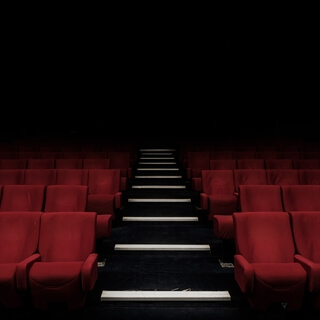
Imagine seeing them on a giant cinema screen behind your eyes whilst we sit in our seat,
A seat of peace,
Just quietly and calmly observing them,
These thoughts.
And now I invite you to close your eyes and just notice on the exhale that the body becomes heavier and softer.
Notice on the exhale the softening of the scalp,
The forehead,
The muscles around the eyes,
The mouth,
The jaw.
Notice on the exhale the shoulders lowering,
The chest softening and the stomach becoming heavier.
Notice on the exhale the seat becoming heavier,
The legs and the feet,
The whole body softening and becoming heavier.
Notice your feet in contact with the floor and your bottom in contact with the floor or the seat.
Remember that right now there is nowhere to go and nothing to do.
Now become aware of the body.
Do a quick body scan.
What can you notice?
What do you notice around the head and the shoulders?
Is there any scrunching,
Screwing,
Lifting?
Remember you are not trying to change anything,
You are just knotting.
The chest,
The stomach,
The arms front and back,
The back upper and lower,
The hands,
The pelvic and the bottom region,
The legs upper and lower,
Front and back,
The feet.
Remember you are just observing what is there,
You are not changing anything,
You are just taking note.
And now take yourself to your seat of attention,
The seat behind your eyes and look at the huge cinema screen in front of you.
Here you sit and just observe.
If there are any thoughts that come,
Can you just see them as a picture or words on the screen?
Without getting on that train and getting lost in thought,
Can you just take note what is happening?
For example if you notice that you are planning what to do next,
You might see the word planning on the screen or see the actions that you are planning to do on the screen.
Do you notice any feelings that tag along with these thoughts?
Again not getting caught up in any whys or any narratives,
You just notice it.
For example there is worry,
There is sadness,
There is anger,
A noticing of the feelings,
A noting of them.
You might also notice that when the thought comes across the screen and you notice a feeling attached,
That there may be a new sensation in your body.
Make a note of this.
Notice it with curiosity.
So as the thought comes,
Do another body scan.
When you notice a feeling,
Do another body scan.
Note what happens.
If you see that you have jumped on the train,
Don't be cross with yourself.
Just settle yourself back down in your seat and quietly go back to watching the thoughts and feelings and any body sensations that you have.
And now take your attention to the breath in the stomach.
Watch the rise and fall.
On the inhale the stomach rises.
On the exhale the stomach falls.
So to yourself,
Rise,
Fall.
Become aware of the fullness of the inhale.
Full journey of the inhale.
And the fullness of the exhale.
Full journey of the exhale.
Become aware now of the whole journey,
Of the whole breath.
And notice that you have moved your attention away from the thoughts by just watching the breath.
Sometimes when we think we can't get out of our thinking,
All we need to do is to watch our breath.
In and out.
Rise and fall.
The whole inhale.
The whole exhale.
And if our mind wanders again,
Then gently and without judgement of yourself,
Bring it back to just noticing the thoughts,
The feelings,
The sensations,
The breath.
And now for the next couple of minutes just sit and watch your breath in silence.
And maybe say to yourself,
Breathing in,
Breathing out.
This might help you to anchor the attention.
And if you notice your mind wandering again,
Just bring it gently back to just observing the breath.
Breathing in.
Breathing out.
And now bring your attention to your feet on the ground,
Your bottom on the seat.
Notice any clothing in contact with the skin.
And maybe you notice the cool air around the nostrils or the face.
Notice any sounds outside of the room and inside the room.
Become aware of the space to the left and to the right of you.
And the space behind you and below you.
And the space above you and in front of you.
Have a picture of yourself in the space where you are.
And when you are ready,
Slowly and carefully open your eyes.
Thank you.
.