Hello everybody,
I'm Nathan McCann and I will be your guide for today's meditation.
Today we'll be visiting winter.
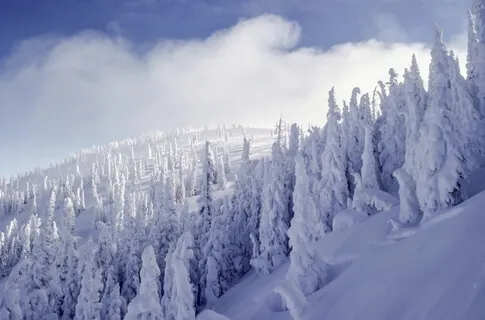
We'll be beginning the meditation in a snow field.
We'll be gentler than anything in real life,
Softer.
And we'll be focusing quite a bit on the quiet of winter,
So that's something to enjoy.
We'll begin our journey there now.
Please focus on a point on the floor.
And begin blinking your eyes.
Blinking slower and slower each time.
And with each blink,
Feel your eyelids getting heavier and heavier.
Feel in your imagination the weight of snow.
As you blink your eyes,
Blink them nice and slow.
And then finally,
Blink one last time and keep them closed.
This time we find ourselves in the middle of winter.
We're in a snow field,
Very close to home.
It's early morning.
The sun is still gold.
Light is on the snow.
And we will be walking toward our home.
Home will be the end of the meditation,
But the focus today is on the journey,
Not the destination.
Imagine stepping forward and hearing that beautiful crunching sound that only snow,
Freshly fallen snow,
Can provide just a very firm and solid sound,
Mixed with the softness of the snow itself as it compacts beneath our feet.
We're dressed quite well for this.
We're warm,
Many layers of clothing,
So the cold isn't an issue.
We'll be actually a little warm during this meditation.
Imagine yourself to be not uncomfortably warm,
But very cozy even outside in the snow.
Although the snow is freshly fallen,
It's only barely below freezing.
And there's no wind here,
So even our face is going to be cool,
But not uncomfortable.
And because this is a special place just for you,
Things are different here.
Just like all of the other seasons we visited and we will be visiting,
Things are on your side here.
They are here to help.
So the air is gentler to us than the air in winter.
It's not dry.
It doesn't make our eyes feel cold.
It's just cool.
Imagine a cool breeze in autumn.
That's what it feels like here.
And keep walking forward in your imagination.
Just feel and hear the crunch of the snow.
Nice,
Soft at the beginning and then firm as you compact the snow.
And you can see home,
Whatever that may look like in the distance.
You're looking forward to being there,
But it does strike you now that the journey itself can be a very pleasant thing.
So we're going to focus on that.
And aside from the warm clothing,
You're not carrying anything.
You had some things that you had to do in town.
You've left that town now and the things you needed to do didn't involve carrying anything back.
So you may have carried some anxiety back,
Even if you have not brought any physical objects with you.
So imagine feeling just a little bit heavy,
A little bit tense,
As we do.
You probably don't even have to imagine that.
That is how we tend to spend our days,
Unfortunately.
That's why meditations like this can be so nice.
Imagine,
Think about a little bit of heaviness and shrug your shoulders,
Move your shoulders back and feel some of that heaviness fall off.
Just as if it were some snow on your back that was sliding to the ground,
Falling into the soft snow behind you.
The tension,
The tasks that you don't need to bring with you.
Just shrug your shoulders again,
Roll your shoulders back and let them slide off into the snow.
Just fall off into the snow,
Gently,
Gently disappearing into the snow.
We don't need to bring them with us.
This journey is about leaving things behind that aren't necessary as we crunch through the snow.
We're moving slowly through the snow.
We're not in any sort of hurry.
It is morning,
And so we're not worried about it getting dark or cold.
It's going to get warmer,
And we don't have anything urgent we need to do at our home that we can see in the distance.
We are just going to take our time getting there.
And you see off to the right a nice bench.
It's somehow not covered in snow.
It's one of those things that just is different in these places in our imagination.
It's an oak bench with a cushion on it,
Soft on the upper layer,
And then the firm oak beneath is timeless and strong as oak is.
So walk over to that bench just a little bit in your mind and sit down.
Think about unwanted thoughts that we carry around and imagine that being the snow that you are shaking off your boots now.
Just wiggle your toes a little bit,
Move your feet just a little bit,
Imagine those unnecessary things getting shaken off,
Falling on the ground and melting away just like snow.
And imagine leaning back in this bench.
We're going to do a body scan now.
We're going to be moving from the tips of our toes up to the top of our head.
You want to make sure our toes are feeling good,
They haven't got too cold in the snow.
So we check in and know our toes are fine.
We have nice,
Luxuriously thick socks on,
Wool socks,
Very warm.
So our toes feel very nice.
I'd like you to imagine now wiggling your toes and then wiggling your toes in real life just a bit,
Just to thank them and pay attention to the sensation that gives you.
If you're not wearing shoes,
You might try moving your hands to your toes and wiggling them against your hands and just seeing how that feels.
Just pay attention to the feeling.
And working our way up,
We're going to pay a little attention to the ankles.
The ankles provide a lot of support for us and they are very skillful body parts in the sense that they adjust automatically without input from us to keep us steady and safe as we walk.
Just imagine the strength there that's often overlooked and just rotate your ankles a little bit,
Imagining them being rotated in those thick boots that we're wearing in our imagination.
And then move up to your legs,
Both legs,
All of the muscles in your legs.
Those are also warm.
They're actually the warmest part of our body right now because they've been moving.
They've been exerting more energy than anything else.
And it's nice sometimes to start with the legs.
I'm going to soon ask you,
Don't do this just yet,
But soon ask you to clench and release body parts.
I'm going to say clench and then we'll count to three and then I'll say to release.
So all of the muscles in both of your legs gently,
Gently,
Gently clench one,
Two,
Three and release.
And in our imagination that has helped a lot and in real life that's likely to have helped a lot too.
Those big muscles in our legs are so strong and they carry us.
We don't actually get that much sensory input from our legs compared to say our fingers and our eyes.
They are the strong and silent type and very supportive.
So since we work them hard throughout the day and since they're so important to our overall body,
Musculature,
We're going to do them again.
So both muscles,
Both legs,
Clench one,
Two,
Three and release.
And by now,
Definitely our imaginary selves and most likely our real selves are feeling that relaxation,
Having removed some of the tension.
And because it's cold outside,
Not too cold,
But a little chilly,
We're going to check in with our fingers.
Just wiggle your fingers a little bit.
We're not clenching just yet.
Just imagine them being in thick gloves.
Very well protected from the elements here.
Just move them around.
And then with one of your hands,
Rub the palm of your other hand gently.
The specific technique doesn't matter.
Just touch your hand with your other hand and exert some pressure.
Note how that feels.
And then hold your hands together.
Lock your fingers together and see how that feels.
Notice the joining of two parts.
Feels nice.
It feels nice.
And now separate your hands and gently,
Very gently,
Clench to a fist.
One,
Two,
Three,
Release.
And because we use our hands for so much,
We're going to do that again.
So make a fist,
Clench,
One,
Two,
Three,
Release.
And now just take a deep,
Deep,
Deep breath.
Feel so much of that tension that we've carried with us,
Leaving our body through our breath.
And now we're going to pay attention to the muscles in our abdomen,
All of the muscles around our belly button.
The specific muscle groups here don't matter.
You don't have to try to remember which is which,
What's called what.
Just very,
Very,
Very gently,
The muscles around your belly button just clench.
One,
Two,
Three,
And release.
And by now you're feeling pretty nice.
You're paying attention to your body and your body does enjoy that very much.
It's sending you so many signals throughout the day and it does like to be listened to,
Just like we ourselves like to be listened to.
So it's feeling good just because you've been paying attention to it.
So let's move up to the arms now.
Both muscles in both arms soon,
But not yet.
I'll ask you to flex,
But I'd like you to be very gentle with them.
Very gentle now.
Don't flex too hard.
We're not trying to show off our muscles here.
So clench.
One,
Two,
Three,
Relax.
And then I'm going to have you clench your shoulder muscles.
So clench.
One,
Two,
Three,
Relax.
We're going to do that one more time.
Your shoulders clench.
One,
Two,
Three,
Relax.
And as you relax that second time,
Imagine more of your burdens sliding off your back,
Falling into the snow.
These are burdens that not only do you not have to pay attention to right now,
They're ones that you don't ever have to pay attention to.
Just things that are out of your control or that don't matter.
Things that you don't need ever,
That you're better off not worrying about.
Sometimes we have burdens that are necessary and it's all we can do to adjust to the weight and acknowledge them and their importance.
But we do also accumulate a lot of burdens that we don't need to carry that will weigh us down for no gain.
So times like this,
It's best to shed them.
One more time,
Your shoulders clench.
One,
Two,
Three,
And release.
And feel all of the rest of those unnecessary burdens just fall off into the snow behind you.
It makes a nice satisfying crunch as they fall to the ground.
They're heavy burdens so they do make quite a bit of sound.
And then the snow around them just covers them up and they start to melt away as the snow will melt away later today.
Finally,
Check in with your jaw,
Your brow,
And your eyes.
Just your head as a whole.
Our head is a big source of sensory input for us.
Our tongue is there to taste delicious things.
And as I say that,
You realize that there is something delicious waiting for you at home in this imaginary space.
It can be whatever you like.
It could be hot chocolate or apple cider.
It could be bread or stew.
But whatever it is,
Imagine something nice now waiting for you.
Just take a moment.
If you're not sure what to pick,
Just let's do hot chocolate.
Think about the creaminess of whatever you like or the savory delight of it.
Imagine what that would feel like on your tongue.
And as you do,
Realize how much joy our tongue brings us.
It senses very nice things in our life.
So just give a bit of gratitude for your tongue.
It's a silly looking,
Floppy part of our body that really does make things nice for us.
And now the jaw itself,
Which is a team with our tongue.
It's also where we hold a lot of tension during the day.
So I'd like to be very careful and slow about this.
But clench your jaw.
One,
Two,
Three,
And release.
Feel that relaxation.
And finally,
Let's go up to the eyes.
Our eyes are perhaps the biggest source of sensory information we have.
Humans are visual creatures.
Different animals are prone to experiencing their lives primarily through different senses.
Dogs,
Of course,
Are creatures of smell.
Cats are highly visual,
But also those big pointy ears are for hearing.
They pay a lot of attention to the sounds around them.
But humans have those big eyes with some very complicated wiring behind them.
They give us a lot of sensory information.
And we experience the world through our eyes so much that we sometimes forget to thank our eyes.
It's just such a part of our being that we take them for granted.
That they're always there,
They're always working for us.
But if you think about looking around,
Just move your eyes around in your head,
A little behind your eyelids.
Just move around gently.
And imagine that if you were reading something,
You would be moving those eyes back and forth,
Back and forth,
And realize how hard they work for us.
Not just the sensory computations in our head,
But also the muscles that physically move the eyes.
So just take a few moments to give gratitude to your eyes.
Just a little bit of quiet here and thank our eyes for all they do for us.
And with that short rest,
You feel ready to get up and continue toward home.
So we continue walking,
Feeling a lightness in our body,
Freshly relieved from that tension that we've just shed.
It's easier to move now.
The snow isn't actually as loud as it was before.
Our footsteps are lighter,
So the sound is a softer crunch.
As you move forward,
Your mind goes to the heavy clothing that you have on in this imaginary space.
It is keeping the cold out,
But it's doing more than that.
This set of clothing you see is special.
It's different than clothing that you would find in the real world.
Not only is it protecting your body here from the cold,
But it is like a suit of armor protecting you from worries.
It's flexible and soft,
But also very,
Very strong.
As you continue your journey toward home,
No additional burdens will be stuck to you.
They just go forward into your clothing and bounce right off.
They don't even make a dent.
They just bounce off immediately and fall off into the snow.
When you're wearing the set of clothes,
You can't become more worried.
It's just a special property that these clothes have in this space.
So with that in mind,
Continue walking and imagine hearing the crunching of the snow.
Gentle crunch,
Crunch,
Crunch as you move forward.
When your body is feeling relaxed and very light,
You look at the sunlight on the snow and realize that if it was the real world,
It would be brighter and would be hurting your eyes a little bit,
But not here.
Light and sun are gentler here.
So the only sensation you have when you look at the snow is the beautiful reflection of the sun.
And without the glare,
You can see it more clearly.
You can see how the snow is almost a gold color,
How the ground is.
It appears as if it is coated in this beautiful,
Soft golden snow.
Just take a moment to imagine that.
And as we move forward towards home,
I'd like you to stop and think about the air and the sound that is not there.
The snow,
As in real life in this place,
Absorbs sound.
So although you can see a few things,
There's almost nothing to hear.
The snow just absorbs all sound into itself.
So imagine looking around a little bit in this imaginary space and seeing a few things,
But hearing nothing.
Imagine if you can complete silence.
The snow is helping you by keeping sound from bothering you.
So for just a moment,
I'm going to stop talking and we'll focus on silence itself for just a little while.
It can be tricky to focus on the lack of a sense,
Like imagining not a thing,
Imagining the opposite of a thing or the absence of a thing.
But next time in the real world,
When you have silence,
Just remember this place and remember how special it is to suddenly have the world silent for a while.
How unique that is for us to experience.
And how in this place,
It's easier to achieve that silence.
All you have to do is stop walking in your mind and hear nothing.
Just hear nothing at all.
Around you,
You can sense the air.
Mostly you only can feel it on your face because the rest of you is covered up,
But you just know,
You just know that the air around you is so pure.
As it fell through the sky last night,
The snowflakes took any moisture or dust or anything else in the air,
Just brought it down to the ground and buried it.
So the air is so pure.
It's similar to the silence.
The air is silent and empty in the same way that silence itself is empty.
So we're going to do some breathing exercises.
You've likely done many types of breathing exercises before,
But this one is very,
Very simple.
Just two steps.
Breathe in through your nose and out through your mouth.
That's all.
You don't need to hold your breath.
You don't need to time anything.
You don't need to do anything else except breathe in through your nose and out through your mouth.
I'm going to add one more step shortly,
But just for now,
Imagining breathing in through your nose and imagine that cool,
Infinitely pure air mixing with any stale air in your lungs or any tension.
And as you exhale,
Imagine the stress just escaping your lungs and disintegrating in the pure air.
So just breathe for a while in through the nose,
Out through the mouth.
Feel that pure air as you breathe in through the nose and out through the mouth.
Feel the lack of everything.
Breathe in through the nose,
Out through the mouth,
And realize that there's no input from the air except a cool purity and that there's still no sound here.
So you're able to focus inward.
Inward,
Inward on your breath.
In through the nose,
Out through the mouth.
And now we're going to add one more step.
In fact,
We're going to add many steps.
What we're doing is adding the sound of crunching snow as we move forward and we're going to count our steps.
So as you continue breathing in through the nose and out through the mouth,
I'd like you to also imagine stepping forward a foot at a time.
Just moving forward,
Walking slowly,
And counting your steps,
Visualizing your boots going into the snow as you breathe in through the nose and out through the mouth.
Just count the steps.
There's no need to keep careful track.
If you lose track,
Just go back to the last number you remember or just start back at one.
It really doesn't matter.
The important part is to count steps.
Breathe in through the nose and out through the mouth.
In through the nose,
Out through the mouth as the infinitely pure air purifies your body.
Getting rid of what little tension remains after your journey toward home.
Just a little longer.
Breathe in through the nose,
Out through the mouth.
Just a little longer as you imagine your footsteps.
One step,
Two step.
Just go forward.
Keep walking.
Imagine the lightness too that we've gained over the course of this meditation by shedding our burdens.
And one last breath in through the nose,
Out through the mouth.
And now pay attention to home in front of you.
The porch light is on and now you know that this meditation is about to end.
That it ends when you open the door and go into your home.
But know that this place does not leave when you end this meditation.
That in fact this place can never disappear.
You've listened to my words.
It's been me talking but it's been you creating this place in your imagination.
And since you created this imaginary place you can go back to it at any time at all.
For any reason at all.
If you're stressed that's a good time to come back but you don't need a reason.
If you want to experience this calm and quiet ever again just close your eyes and you'll be back here instantly from anywhere.
Imagine now holding this scene in your hand.
Imagine it as if it were a snowball.
Just squeeze it a little.
Don't worry it won't break.
It can't break.
And it can't melt either so squeeze the snowball a little harder and imagine making a full fist and then letting go and no longer seeing that snowball.
But knowing that instead of being squished that instead it has just been pulled into you.
That it is now a part of you forever.
And that if you ever need to go back all you need to do is in your mind hold out your hand and imagine this place and open your hand and see that snowball.
And then enter it into your mind.
And with that this meditation is over.
But again the snow fields and your experiences in the snow field never end.
You can go back at any time.
Thank you so much for joining me during this meditation.