The moment we go from being up there in our thinking space,
In our head space,
In our ruminating space,
And drop down into the body,
We're dropping from past and future time into now time.
And one of the reasons to practice meditation is to find and to learn to dwell in the freshness of the present moment.
Welcome to Mind and Life.
I'm Wendy Hasenkamp.
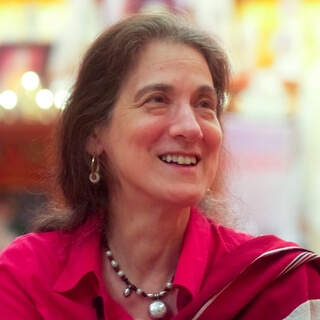
My guest today is Willa Miller.
Willa is a Buddhist scholar,
Teacher,
And author.
In addition to having a PhD from Harvard University,
She spent 12 years training as a Tibetan Buddhist monastic and did two consecutive three-year retreats.
So she has a lot of experience investigating the mind,
As I think will become clear in this episode.
In our conversation,
We discuss some of her early experiences of Buddhism in action,
A research study that she was involved in about meditation and real-world compassionate behavior,
The most relevant outcomes for contemplative scientists to be measuring when they study meditation,
And how qualities like curiosity and compassion that we develop toward our own mental states in meditation might transfer to others.
We then dive into her deep knowledge of how we can use the body as a guiding light for our meditation practice.
She shares three natural metaphors for what she calls somatic mindfulness practice.
We discuss the role of letting go and the importance of trust and how to foster it.
And she reflects in what I think is a really powerful and clear way on the implications of these ideas for how we think about ourselves and for our interconnection with others and the world around us.
I spoke with Willa last year when she visited our offices at the Mind & Life Institute in Charlottesville,
Virginia.
Listening back to our conversation now,
The wisdom that she shares feels both grounding and uplifting in the midst of our current crises.
In the show notes for the episode,
We've linked to some of Willa's meditations if you're interested in trying them for yourself.
So thank you for listening.
It's my pleasure to share with you Willa Miller.
Thank you so much for being with us today.
Oh,
It's great to be here at Mind & Life.
So to begin,
I thought it would just be wonderful to hear a little bit about your background in history and kind of how you became interested in meditation and Buddhism and your path so far.
Well,
I grew up with a couple of parents that were Buddhist curious,
I might say.
I can't say they were exactly card carrying Buddhists,
But they were certainly curious.
And I remember in particular Zen mind beginner's mind,
Which I probably picked up when I was 10 or something and started to read.
And I found the language really simple and profound.
I remember even then I kind of got that it was about the present moment and that that was something that one could actually look into as an activity.
And I learned to meditate with my mother in an ashram in Berkeley.
We were,
You know,
70s.
You can imagine there was ashrams and cults every couple of blocks in Berkeley.
There was things going on communes and whatnot.
So I learned that as a child and did it through high school.
And in high school,
I got interested in what exactly is this practice coming from and started doing my papers.
If I had a choice to do a paper,
If they said you can do it on whatever you want,
I would choose Buddhism.
And then I would write the paper and do some research.
I got to college and also majored in cross cultural psychology.
And at that time went to Nepal for a year studied for my junior year in Nepal and in Tibet.
Wow.
And got exposure to that type of Buddhism.
And in that context,
Seeing lived Buddhism was really moving to me.
And I could see elements of what was written about in these books I was reading like Bodhicitta which means something like compassion and wisdom.
The emphasis on loving kindness in those books,
I could see that playing out in the families that I was living in and in the nunnery that I lived in for a while and in my relationships just seemed to be influenced by the culture's ethical framework.
That was really coming through and that inspired me maybe more than anything to want to be more serious about really understanding what is this about,
Not just the meditation practice,
But also the ethical framework.
Can you think of any examples of how you noticed that when you were living there?
Well,
Even before I went to Nepal,
I visited Thailand because my mother had moved there for a few years.
And so it was my very first trip to Asia when I was 15.
I remember being in the living room of one of my mother's Thai friends and we were just sitting around having tea after dinner.
And I suddenly noticed,
So I'm really fresh off the plane,
And I suddenly noticed all these geckos on the ceiling.
And then I noticed that the geckos were eating the mosquitoes.
And I said,
Wow,
That's really great.
It's like living pest control.
It's great how they're eating the mosquitoes.
And there was just this silence.
And I didn't understand until later the reason is because killing anything is not a light matter.
It's not like a serious matter and that you don't joke about that.
Even the mosquitoes.
Even the mosquitoes.
And I had never thought about these small insects with such care and concern and love.
Just this idea that even a mosquito is a precious life was a teaching for me.
So after you lived in Nepal,
You said you were at a nunnery for some time.
So yeah,
In a nunnery at that time,
I was in a nunnery for a while and I was 19 or something.
And just living with the nuns.
I think what really struck me in that environment was the power of community in Buddhist practice that at least when I was living there,
I didn't know Tibetan well enough at that time to chant with as fast as they could chant.
So I would go and sit in the shrine with them,
Shrine room.
What I felt there was just the power of their togetherness because I couldn't read fast enough.
I could just soak up the power of the togetherness and the power of their voices as one.
And for me at that time,
It was very inspiring being a young woman that women could live together and work together and create this wonderful community on their own.
I'm not saying that it wouldn't be great with men too,
But it was just empowering as a woman also as a woman who wasn't used to using her voice very much and being very powerful to see these women who were very powerful doing this together was inspiring.
So you became a nun?
Eventually I did.
Yeah.
So I came back,
Finished college and it turned out there was a monastery in upstate New York,
20 minutes from my college.
And I would ride my bike there and study Tibetan and hang out with the monks and nuns there who were a mixture of Tibetan and American monks and nuns.
And it was there that I eventually moved in and lived for,
I thought I would live there for maybe a week or two weeks or three weeks.
And then it was,
Well,
Maybe a month and then two months and then,
Well,
Maybe a year.
And then,
You know,
One year turned into 15 years.
So I was there a long time and I did take monastic vows.
I did two three-year retreats and there was a power of community there also.
And so now you have your own retreat center,
Beautiful place called Wonderwell up in New Hampshire.
And you are a Buddhist teacher in your own right at that center.
And also you have a Sangha in Boston?
Yes,
I do teach and have a center in Boston,
Which we call Natural Dharma Fellowship,
Which is the kind of umbrella nonprofit.
And we offer retreats and teachings in the Boston area.
And then we,
In 2011,
We found a retreat center in Springfield,
New Hampshire.
And now we have most of our retreats there.
So I'm curious to talk with you about one of the things that you've done that I'm familiar with is a Mind and Life funded research study.
It was a pilot study.
This was done some years ago by Paul Condon and David Distino and Gaelle DeBord and yourself.
And this was really one of the first studies to look at the effects of meditation on real world behavior outside the lab.
So this was an interesting study.
It was an eight week meditation intervention.
And the participants were led to believe that it was a study on attention and the effects of meditation on attention,
Which in part it was.
But there was also another aspect going on that they weren't aware of.
So can you describe how this study unfolded and how you all measure this real world behavior and what the outcomes were?
So we did the eight week course.
And at the end of that eight week course,
Just as promised,
There was the test,
Attentional test.
So the subjects came in one by one to take that attentional test.
They had an appointment.
Each of them would have an appointment to come in.
They would walk into the waiting room to wait to take the test.
And the researchers had arranged things so that the waiting room was full.
But there was one seat available.
And the subject would invariably go take that seat.
And in the case of each of the subjects,
Someone on crutches came into the waiting room.
And the researchers wanted to see whether the subject who had done all this meditation training or hadn't,
If they were in the control group,
Would get up and offer their seat to the person who is on crutches.
If I'm remembering the design of that study correctly,
There were two kinds of meditation groups.
One was just mindfulness very strictly without any kind of heart practices or prosocial aspects.
And then one was a compassion training group.
And so you taught both of these groups?
I did.
Yeah,
I taught both of the groups.
And they needed that to happen because they didn't want there to be thrown off by having two different teachers that might actually throw the study off.
So yes,
I taught the compassion group,
I taught the mindfulness group,
And then there was the control group.
And what was surprising to the researchers and to me also is that the mindfulness group and the compassion group were more likely than the control group to give up their seat for this person who was coming in.
But there was no difference between the compassion group and the mindfulness group,
Which was really interesting.
Both of those groups had increased prosocial behavior by twice the control groups' prosocial behavior,
According to the measure of actual activity of coming to the aid of somebody who's in need.
Right.
And this was surprising because the researchers had hypothesized that only the compassion intervention would lead to this increased prosocial behavior or what could be considered compassionate behavior,
Getting up to give someone your seat.
But in fact,
Both the mindfulness alone without any compassion elements,
As well as the compassion interventions led to this effect.
So what did you all think was going on there?
So one of the reasons that might be happening that we thought after the study was finished is because the attentional improvement was good in both of the meditation groups.
Both of the meditation groups might have improved their attention so that they noticed when that person came in the room needing a place to sit,
Whereas the control group,
Perhaps their attentional skills had not strengthened as much.
So they didn't even notice that that person had come in or it was tuned out maybe by,
You know,
There were magazines around and there were things that could have distracted them and maybe just they were tuning it out.
That's one possibility.
The other possibility is that mindfulness and compassion meditation are both strengthening relational prosocial outlook and that that happens,
It's inherent to the practice of meditation itself that you develop a compassionate gaze on your own experience,
Which is a little bit different from attention and that then when you see another person in need,
That compassionate gaze is extended to include the people around you.
So that's another possibility.
Yeah,
That's really interesting.
I like thinking about when you were teaching the mindfulness group,
You were explicitly told to not bring in any,
You know,
Heart elements,
But maybe there was still a sense you had of the group bonding or things that kind of sneak their way in any way automatically.
Yeah.
This brings up a wider question of whether community itself,
Like being in a community and practicing in a community is a powerful way to develop connection and compassion and kindness that maybe there was something about these groups being together and forming bonds and forming relationships that carried over into the waiting room environment.
So that's another possibility too.
Yeah.
And in in Buddhist community,
We talk about the power of Sangha.
Sangha just means community that there's something very important in our practice of meditation about connecting to others who are also doing similar kinds of practices.
And that those relationships can help support the practice.
And also the practice can then be mirrored in relationship and that can go much more widely than just the meditation community or the Sangha.
Yeah,
I think that's a really fascinating area.
I hope that the research will move,
You know,
To setting more the effects of Sangha and clearly an important part for those who practice in community.
Thinking also about,
You know,
Integrating contemplative teachers with research,
The measure that you described of,
You know,
Real world behavior,
Getting up to give someone your seat is especially at the time that was published,
That was really cutting edge because most studies,
We don't have good ways to measure those kinds of pro social aspects.
And often it's a self report measure or something like that,
Where there's kind of a lot of opportunity for bias or you feel like you should be answering in a certain way.
And so lots of issues with self report.
So this was really new and exciting to be able to look at real world behavior.
And I'm just wondering from your perspective as a teacher,
I think a lot about are we measuring the right things in a lot of these studies?
And what are the actual outcomes that are coming from practice for people?
And so I would just love to hear your thoughts on like,
What you think are the most consistent,
If there are consistent changes,
What they look like,
And how you can tell from the perspective of you as a teacher in a student,
Maybe that changes are happening?
That's a great question.
And yes,
I think that is important.
What are we actually trying to achieve in a practice of meditation?
Is it just a lasting peace?
Is it some state of bliss and happiness?
Or is it emotional regulation,
Which is one that I think is often overlooked in practice communities that the successful meditation practice should help us be less reactive,
And more able to embrace what's arising in a state of equilibrium to be able to work with what's coming up in ways that are skillful and also sort of self insight,
Self knowledge,
And by extension,
A little bit more sensitivity to to others and,
And in the sense of having a better insight into their,
Their situation,
Although,
You know,
Oh,
And curiosity,
Actually,
A curiosity about the state of others,
Because you've been curious about your own state.
So in meditation practice,
One of the things that we do is inquire,
How is my body now?
How is my breath now?
And what is my mind doing now?
And ideally,
That carries over to curiosity about how is your body and how is your mind and so forth.
So I wonder if that's a another one.
Yeah,
An insight for sure,
Like insight into the nature of your experience.
And what that is a subtler attunement to the nature of experience.
It'd be really interesting if that could be measured a kind of sensitivity to what's happening in the mind body.
Yeah.
I like what you were just saying about the ability to be curious about your own experience and then potentially others.
It's like the same transfer you were speaking about before about having self compassion or holding yourself without judgment or in a compassionate sense.
And then kind of maybe there's an automatic transfer to the way you relate to others.
It's interesting.
It would make sense.
Yeah.
Yeah.
And maybe increased somatic awareness,
The ability to sense your body I think improves with meditation practice.
I also think that it depends on how the practice is taught because it's possible to teach mindfulness practice that is using the body but is objectifying it a bit.
And I wonder that too whether I think an embodied practice can get you into a place where you sense subtle feelings that you were not able to feel before.
And in that way,
A meditation practice is a way to become more embodied.
And I'd be curious whether that can be measured.
Yeah.
There's some work on what's generally called interoception in the field,
The ability to sense your own internal bodily states.
And so there have been some studies on this based on just what you said,
Kind of the assumption that it seems that those capacities improve.
One of the classic measures is heartbeat detection,
So your ability to track your own heartbeat.
And I think the results there are mixed.
I remember some of the first studies that came out showed no effect.
But then it's also,
As you pointed out,
It depends what you're practicing,
Right?
Like that's probably not a specific thing that you would be practicing.
And then I know other studies have found improvements and kind of bodily awareness and other measures of interoception.
So I agree.
I think that's really interesting.
And that actually brings me to the next space I wanted to chat with you in related to the body.
I know that you've been increasingly interested on the role of the body in practice.
And so yeah,
We just love to hear your thoughts on the way that the body relates to practice.
So in the tradition of Buddhism,
In which I trained the most and did the most practice is a tradition that I've been thinking of lately as yogic Buddhism,
Although maybe the more popular name for it is Tibetan Buddhism or Himalayan Buddhism.
But it is this unique variety.
And it exists not just in Tibet,
Actually it's in Japan,
It's in China,
It's in many countries have,
And even now in the modern day,
These forms of Buddhism,
Which have a historical connection to texts called the tantras,
Has spread around into different parts of Asia.
So in that tradition of Buddhism,
The body has a very central role in practice.
And the way the body is viewed in those traditions is as a territory,
Which is to say that there's a possibility for exploring the body in this really deep way.
Not as an object of focus alone.
But even as the teacher of the practice,
That the body has something to offer from its own side that is not provided by the mind.
In these yogic traditions,
The body has its own knowledge,
Its own intelligence,
Its own wisdom.
And lately I've been reading Guy Claxton's work,
Intelligence in the Flesh.
He writes very beautifully about the way the physical body actually is intelligent.
And he's not writing so much about the way the body can teach the mind in a spiritual sense,
But just that the body carries its own knowledge and intelligence and that we can,
By observing it or by getting on board with the body's intelligence,
By connecting to it,
The mind can receive a certain kind of intelligence from that.
So that kind of is similar in my own practice to the tantric model where we actually breathe in certain ways and we pay attention to body in certain ways and we move.
There's actual yoga movements as a part of this tradition as a way to jumpstart a harmonious relationship between body and mind in which the body has this profound place,
Is a profound place of wisdom,
A terrain to be explored.
And that in that exploration,
You can connect with all these qualities that we think of as awakened kinds of qualities or even just from a mindfulness perspective,
The kinds of goals that we're looking for in mindfulness,
Such as equanimity and tranquility and insight and concentration,
Groundedness,
Stability.
Some of those qualities are modeled in the body.
Another reason that the body is such a powerful terrain to practice in is that the body is very present.
The mind is running after the past,
Is ruminating about what happened in the past and processing that or it is ruminating about the future and worrying about the future and planning for the future.
Very seldom do we find ourselves just in the now or when we are just in the now,
We are not fully immersed in it.
We're not fully in it.
But the body is just feeling,
Just sensing,
Just breathing,
Just experiencing.
And so the moment we go from being up there in our thinking space and our head space and our ruminating space and drop down into the body,
We're dropping from past and future time into now time.
And one of the reasons to practice meditation is to find and to learn to dwell in the freshness of the present moment.
And that opens up all kinds of opportunities to be in relationship with others,
To be in a more graceful relationship with ourselves,
And just to experience our life so that we don't let it pass us by.
One of the great things about having you here with us in the office is that you led us through a meditation earlier that I found to be really powerful in the way that it works both with the body and also the natural world.
Could you share a little bit about that practice?
Yeah.
So today,
We explored that in a very simple,
Straightforward way by using three metaphors,
Three natural metaphors that you can connect to your own body.
The first being body like a mountain.
Our body is naturally stable and grounded by the force of gravity.
It's not like our body's just flying out in the universe.
We are grounded.
And the mind is just flitting all around.
It is not very present,
Not very stable.
So it's windy.
You might say the mind is windy,
But the body is grounded.
So if we bring our attention to the body,
And especially to the place where our body is close to the earth,
Connected to the earth where we feel the gravity most vividly in the lower part of the body,
If we draw our awareness down to that part of the body,
Suddenly this mind that was flying all over the place is resting just by virtue of connecting to that groundedness in the body.
And there's kind of a difference,
An intentional difference between noticing that feeling and allowing your attention to saturate that feeling.
I've been thinking about that lately,
That there's something about saturation of the body with your attention,
Like almost like the body is the sponge.
We would say the bodily sensations are the sponge and attention is the water.
And letting the sponge of the body draw the water in and hold it.
There's something about that.
It's also passive,
So you don't have to do anything.
It takes away the effort,
The efforting that so many of us put into practice.
This is the power of the body,
To take away the efforting.
So an effective somatic meditation practice invites the mind to give up control and to let the body have more control in a certain way,
You're surrendering into the body.
And from a practice point of view,
That's a huge relief because we are so used to this notion that we should bring attention back to the anchor.
What if we phrase it a different way and let the anchor draw us back?
It's subtle but it's important,
That difference.
So the second metaphor is breath like the ocean.
Our breath,
Many of us are used to focusing on the breath as a mindfulness tool.
And it's not uncommon,
At least this was true for me,
For us to tighten up around the breath because it's so close to us.
It's so close to us and the attention needed to focus on the breath is reflexive,
Right?
Because it's us focusing on ourselves.
And there's something about that that sets up a syndrome of self-consciousness that takes a while to get over if you're a meditator,
To not feel self-conscious about the breath.
And that can kind of just regulate the breath a little bit because you're now focusing on the breath and you're like,
Am I breathing too shallowly?
Am I breathing too deeply?
Am I doing this right?
Am I this and that?
The thing I love about the metaphor,
The breath like the ocean is that it lets you release into something natural because the breath is just breathing.
The breath is just breathing.
And you can let the breath breathe you.
You don't have to breathe the breath.
Whether or not,
No matter what you do,
The breath is going to keep breathing.
I mean I suppose you could do something to make it stop,
But that would be the end of your meditation practice.
And much more.
But yeah,
The breath like an ocean.
And you know the ocean,
You can't stop the ocean.
The ocean just has these swells.
It swells up and it swells down.
And I was reflecting back to the first time I snorkeled,
Which was just a few years ago.
And one of the things that struck me being dumped into the ocean with my snorkeling gear was all of a sudden I had no control.
And it was a little scary because the swells were kind of high that day.
And they were pulling us up.
And then you would fall.
And then you would go up.
And then you would fall.
And I started to panic because I felt like I can't do this.
This is really taking me.
And then there was a turning point when I decided,
You know,
I don't have any control over the waves.
The waves are not going to stop just because I'm scared.
So I just thought,
Okay,
I'm going to go with this.
I'm just going to go with it.
And this is what we need to do with the breath too.
As soon as you go with it,
Just like in snorkeling,
As soon as you go with those swells,
You're fine.
It's just fine.
The ocean will carry you,
Hold you.
And the same with our breath.
If we release into the natural rhythm of the rise and the fall without gripping,
But just being a part of it,
Just riding on it like you might ride on the waves,
Then it's easy.
You can stay with that and let the breath be the one that's in control.
And you let go of control and release into the breath.
And that isn't to say that you're not going to become distracted,
You know.
But the way to think about the distraction or one way to think about it is,
You know,
There's stuff floating on the ocean and it's all around you.
And it's also riding the breath.
It's all part of being alive and it's natural.
The thoughts are natural.
Man,
That's a lovely metaphor.
I love how you're bringing this back to letting go.
I'm wondering how this cultivating the ability to let go by using these bodily processes seems to require,
Thinking of your snorkeling example,
A lot of trust,
Right?
And you know,
There's a fear there that is related to the need to control.
And so to let go requires a trust in what is there that will hold you.
And I'm wondering about cultivating that.
And it seems like what you're speaking about is also like cultivating a trust in the body as well.
Yes,
That's a prerequisite or a foundation.
Let's not say a prerequisite because it's all process.
But a foundation for somatic mindfulness is this trust in the body and that it will hold you if you bring attention there.
Now we don't necessarily trust the body.
And many of us have had a history,
All of us probably at some point,
Right,
Of getting sick and feeling betrayed by our body.
So we need to build trust in the body.
The meditation practice does that for us and to some extent,
We develop trust by noticing that when we connect to the breath,
It's very something we can rely on that the next breath will come and the next breath will come.
We can rely on that rhythm and it will be there for us.
We can rely on the solidity and the stability of the body,
Just its basic earthiness.
We can rely on that.
Even if we're sick,
We can rely on that.
So it's finding the places in the body that we can let go and that we can trust.
There's also a connection between trust and meditation practice.
I think that connection is deeper and more important than maybe many of us realize when we first start to meditate.
And so having practices that help us feel safe as part of our meditation practice is important.
And one that I really love is connecting to beneficent presences before I meditate or right before I move into a practice of somatic mindfulness or mindfulness or non-dual awareness.
I mean,
There's many different practices that we do in the tradition which I practice,
But all of them have a prerequisite connecting to loving presence.
And I'm not talking about God here,
Although it could be.
God could be a loving presence in your practice.
But it could be just people or beings in your life in whose presence you have felt safe and loved and bringing them into your imagination,
Into your meditation space,
And feeling yourself held by their presence.
We call this in Buddhism refuge,
Finding refuge at the beginning.
And that helps us also move into a place of relaxation and trust so that when we start to move into the body,
We take some of that with us into the somatic practice.
What about people who may have had very difficult lives and have a hard time maybe coming up with situations,
People with whom they felt really loved and safe?
Are there other ways to try to get to this practice?
Yeah.
I was leading a retreat a few years ago with a group of people that had never been exposed to this benefactor style practice,
Which by the way,
I learned,
I mean,
The Buddhist tradition has a refuge practice,
But I learned this adaptation from John McCranskey,
Lama John McCranskey.
I'm very grateful to him for that.
I want to mention that.
So I was in this group of people and they had never connected to this kind of practice before and one of the people in the group said,
I cannot find anyone.
I don't trust anyone.
That he realized when he looked back on his life and he looked at his life now,
He's like,
I can't find a place to feel safe.
And I suggested,
Okay,
Then maybe how about a place or how about an animal?
And at first I could see him processing that.
And then we did the practice again the next day and he tried again.
And he said that during the practice,
He suddenly had this memory of this dog that he had had as a child and this dog in him,
He had felt this completely unshakable bond with this dog and he could look into that dog's eyes and feel completely held and safe and full of love and joy.
And he brought that dog into his practice before he meditated.
And it was life changing for him.
He said,
You mean I can remember that dog in my practice?
And I was like,
Yeah,
Right.
That's it.
And so he was very,
Very helpful for him.
So I think we can think about finding safety before refuge.
Refuge can be a place that you love in the natural world.
You could imagine yourself under your favorite tree.
You could connect to an animal.
There's almost no limit to what you can use in a practice of finding refuge or connection at the beginning of a meditation practice.
I want to come back around to the letting go idea and the metaphors you were sharing before and I'm wondering how does that letting go that we can do by relating to the body then relate to the mind?
Right.
So the third metaphor is mind like the sky.
And our mind doesn't usually feel like the sky.
I think our default experience with the mind is something that the Buddha called monkey mind,
Right?
That our mind is just is bouncing around and is restless and is full.
As is a common experience that meditators have when they first start to sit is that my mind is packed with thoughts or the thoughts just won't stop,
That kind of thing,
Right?
That's our experience.
But if we sit for a while,
If we cultivate a meditation practice over time,
We begin to notice that all of this activity,
All of this flow of thought,
This restlessness,
These images,
These memories,
They're arising in a context.
There's got to be a holding environment in which they are arising and in the practice of Buddhism,
We think of that holding environment as the space in the mind.
We're very focused on the content of the thoughts and we don't notice that there is this openness in which all of that is arising and into which all of that is dissolving.
And if we can connect to that context,
To that sense of the broader openness,
Then we encounter spaciousness in the mind,
Something that we might not have noticed before.
And so practice then becomes an invitation to connect to that openness and that spaciousness and to rest there and hold the thoughts,
To let all of that be arising just like clouds arise coalesce in the sky and dissolve back into the sky.
It's like a natural process that our thoughts are arising and dissolving and arising and dissolving and that we can sit there and hold the space in which all of that is happening.
We can become the space in which all of that is happening.
And so in the context of this meditation practice,
The body is being,
Is grounded,
The breath is in its rhythm,
And then the mind can open up and hold all of it in the same way that the sky is above and open and all around the mountain or all around and mirrored back in an ocean that these elements of openness and of movement and of matter or solidity all coexist within the psychophysical organism in the same way that they coexist in the natural world.
So much of what you're sharing strikes me as this kind of not forcing and effortlessness.
And I'm wondering how that plays into,
Well,
It's kind of the opposite of clinging in general,
But also then how does that play into our sense of self and kind of an ability to have more spaciousness or less efforting maybe around the self?
Well,
First,
I think the self is not a problem.
You know,
When the Buddha taught Anatta or Anatman,
Anatman in Sanskrit,
Which means selflessness,
He wasn't teaching that the self needs to be flattened and annihilated,
But that the path is one of gradually realizing that the self is a construction,
Which is to say it's in flux,
It's not solid,
It's not real in the way that we think,
But it's there,
Right?
Our personality is there.
We have a construction.
So part of our practice,
Part of the practice of meditation or even just living a mindful life or a wise life is to create a healthy construction,
Or we might say strong scaffolding,
Strong scaffolding for this life.
And so identity or self is not the enemy.
Even in a Buddhist practice,
It's something to work with,
It's something to work with.
And part of our work has to be creating a healthy structure because when we meditate,
We're really expressing a willingness to encounter whatever we have inside.
And that's going to be challenging.
It's going to be challenging and light will be shown in the dark corners of our soul,
So to speak.
And so because that's going to happen,
We need to be stable.
And I'm very much a proponent of the healthy scaffolding and not thinking of identity as something or self even as something that needs to be swept away.
But I do think that one of the profound parts of Buddhism that we call insight is a dissolution of our clinging to that construction.
And that's a lot of work to let go of that clinging.
But in letting go of that clinging,
You're also beginning to realize that the self that we thought was so isolated is actually completely interconnected.
Our scaffolding is totally interconnected with everyone else's scaffolding.
So we are an extended self.
It's not just this thing,
This one thing.
That was going to be my next question is the relationship of what we normally think of as self and then normally think of as other.
So I think you were just starting to speak to that interdependence.
Interdependence or my favorite definition of enlightenment is the dissolution of the belief that we are separate.
So enlightenment is this,
The dissolution of the illusion of separateness.
And that can come I think in many forms and we can have many little insights into that along the way.
But when I think about what makes an authentic insight,
It has something to do with the connection that we have with the world and with others and the breaking down of the sense of I and thou.
And just to clarify,
When you say the dissolution of the feeling of separateness,
That's not the same thing as saying that everyone is the same or everyone is one,
Right?
So there are still identities and there's still differences,
But they're not so disconnected.
Not so disconnected.
Yes,
Yeah.
I mean,
Every being is unique.
So it's not a flattening of the uniqueness at all,
This interdependence or connection or the dissolution of separateness.
It's not about a flat homogenous oneness,
But a dissolution of separateness.
Yeah,
At the same time.
Thank you.
I think that's a great place to leave it.
So thank you so much for spending your time with us today.
It's been really wonderful to talk with you.
Thank you so much.
And thanks for all the work you do at Mind and Life.
This episode was edited and produced by me and Phil Walker.
Music on the show is from Blue Dot Sessions and Universal.
This episode was supported in part by the Lens Foundation.
Show notes and resources for this and other episodes can be found at podcast.
Mindandlife.
Org.
If you enjoyed this episode,
Please rate and review us on iTunes and share it with a friend.
If something in this conversation sparked insight for you,
We'd love to know about it.
You can send an email or voice memo to podcast at mindandlife.
Org.
Mind and Life is a production of the Mind and Life Institute.
Visit us at mindandlife.
Org,
Where you can learn more about how we bridge science and contemplative wisdom to foster insight and inspire action.
There you can also support our work,
Including this podcast.