So it's not identity politics that's the issue.
It's what I call breaking politics.
What leaders should be doing is helping people move to bridging and telling a story,
A coherent story,
Not just a list of issues.
And I think we can do that.
We live in stories.
That's what in some ways distinguishes Homo sapiens.
That ability to imagine and tell stories also gives us the possibility of constituting ourselves and constituting larger we's.
And I think both religion and spirituality will be essential for that.
Welcome to Mind and Life.
I'm Wendy Hasenkamp.
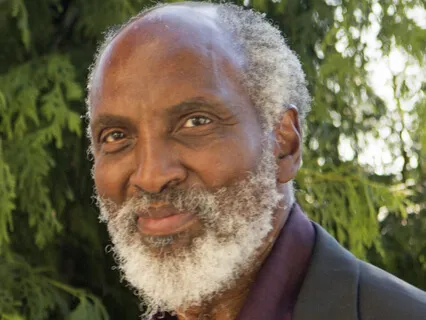
Today I'm speaking with law professor and civil rights expert John Powell about his work at the intersection of social justice and spirituality.
John is a professor of law at UC Berkeley and the director of the Othering and Belonging Institute,
Formerly known as the Haas Institute.
He's an internationally recognized expert in the areas of civil rights and civil liberties with a wide range of expertise around race,
Structural racism,
Social justice,
And democracy.
As the United States once again confronts our long history of racism and oppression and the many injustices that have followed,
We wanted to share this conversation this week.
We recorded this interview last year at our summer research institute.
And while our discussion doesn't speak directly to the current protests and unrest,
The topics that John explores are still highly relevant and I'd say even central to today's struggles.
In the conversation,
We discuss the problem of othering,
The roots of whiteness in this country,
The rapid changes that our global society is facing and how we react to them,
And implicit bias and if and how we might be able to change it.
Throughout our conversation,
John focuses a lot on the importance of narrative,
The stories that we tell ourselves,
And creating what he calls bridging stories,
As well as the central role of leadership in this process.
We also talk about the self as a construction,
Spirituality and interconnection,
And the roles of science and religion in society.
As I've been working on editing this episode,
I've really been struck by how much wisdom is embedded in every point he makes.
Each topic could be unpacked into a whole literature of knowledge.
John speaks about these challenging issues in a unique way that I sense is born from his many years of both active engagement and deep spiritual practice.
This is an episode where I'd encourage a really close listen if you can,
And maybe even a second listen.
If you're interested in learning more about John's work,
You can find links in the show notes,
Including to an op-ed and a podcast from the Othering and Belonging Institute,
Where he reflects on recent events.
I hope that John's wisdom and knowledge can be useful to you in the midst of our current struggles to build,
As he says,
A circle of humanity where no one is outside.
I'm glad to be able to share with you these insights from Professor John Powell.
Well,
John Powell,
Thank you so much for joining us today on the podcast.
It's good to be here,
Wendy.
I'd love to start with just a little bit of your personal story,
How you have ended up where you are,
How you've become interested in social justice that's rooted in spirituality.
The short answer is I don't know.
But growing up in a very religious family that was also a very lovely family,
And I think seeing some evidence of some things being awry,
Discrimination and stuff like that,
I thought fairly early on that if I had any special gifts or talents,
I would like to use them for this purpose.
And I think I first started seriously thinking about that when I was 11.
And I think I've been pretty steady,
You know,
Getting involved in stuff in terms of school.
And then I think life is just full of questions,
And we call it spiritual or religious or even philosophical,
Although they're different.
I think just those tributaries coming together to create a river.
So you've said that the problem in today's world,
The biggest problem is othering.
Can you say a little bit about what you mean by that term specifically?
Othering is basically a process where you refuse to see or fail to see someone else's full humanity,
As well as mutuality.
You know,
There's a lot of stuff now,
Especially in the spiritual community,
About trying to become interconnected.
And I would slightly reframe that I think we're already connected,
Just trying to realize it and live it in a way that's honorable and appropriate.
But I think the fact is that we're already interconnected.
And the failure to do that and the extreme other is to deny that someone is related,
Connected,
Or that someone has full claims of humanity and equality.
One way of thinking about it is that there are a lot of people today,
Including people in the White House and other state houses around the world,
Who assert that we're not only our brothers and sisters keeper,
But not our brothers and sisters.
And therefore,
We can build walls,
We can lock them up,
We can take their babies away from them.
In the extreme,
We can actually commit genocide.
All those are expressions of othering.
And othering can happen across any dimension,
Race,
Gender,
Sexual orientation,
Disability,
Language,
Height.
So part of it is just how the stories we tell ourselves.
And I think leaders and culture plays a big role in sort of creating the national story.
And othering is not simply about,
Quote unquote,
The other,
Because there's no unnatural other.
It's also about ourselves.
So we sometimes use the other as a foil for all of our anxiety,
What Jung would call the shadow.
But also,
We seem to constitute ourselves.
This interesting story when you think about Marcus Garvey.
Marcus Garvey,
African American,
Who was trying to take African Americans back to Africa and didn't have a lot of patience for white people and white culture.
And you would have thought in the 20s and 30s,
They would have said,
Just go.
But just when he was ready to go,
They arrested him on a fraud.
It was kind of this sort of crazy dynamics where even though there was this hostility toward blacks,
At the same time,
There was a need for them.
And I don't think that's totally unusual.
Can you say more about what you mean by not just the other,
But how we conceive or construct our own self identities?
Yeah,
There's a couple of things.
One often say that the solution to othering is not saving,
Which is what the liberal response is.
We try to assert it's everyone the same.
People are not the same.
And what difference difference makes is a social question.
So there's no natural other,
There's no natural same either.
But the self is constantly being constituted.
It's constituted both through our structures,
Our cultures,
Our interactions,
Our language,
Our religion.
And usually we inhabit those spaces without being aware of them.
So we're not aware that the self is constituted and constantly changing.
And one of the things that comes with practice,
At least some practices,
Is that you can become aware of the shifts in the self.
And in fact,
I remind myself that this the deep teaching of Buddhism from many traditions is that it's not self realization,
There's no self realization.
So that the self is not permanent,
It's constantly shifting.
But it's not arbitrarily shifting.
It's shifting based on again,
Those stories,
That environment.
And so that's how the self is constituted.
It's usually not co constituted or self constituted in the sense that it's given to me.
I'm not aware that I don't decide to become African American with all the things that that implies or male or you know,
What does age means?
All these things are largely social.
In our society,
In the United States in particular,
Although I know in the western side generally,
There's an effort and a belief in the supremacy of the individual.
And so the individual thinks that he or she is self constituted,
That they can either they're already given or not given,
They can constitute themselves.
And both of those are not right.
Right.
So you mean the individual as opposed to the collective or an interdependent reality?
Yeah,
Collective and interdependence actually,
From my mind means something somewhat different.
Collective actually invites a kind of an idea of mass,
A mob,
And a differentiation.
Whereas interdependence suggests there's still agency.
So it's in that sense,
Individual becomes an expression,
An iterative expression that happens within all these things.
So if you think of the Buddhist concept of dependency co-arising,
They're constantly in things are constantly interacting with each other.
It's not one directional.
But neither is it separate and self constituted and stable in the way that Americans like to think of themselves.
Right.
So do you think that in the West and in America,
Maybe in particular,
This extreme emphasis on the individual leads to a sense of isolation?
I think it leads to a sense of isolation and a sense of anxiety.
And it's a historical expression to some extent.
And I sometimes associate that with both the Enlightenment project and a certain expression of whiteness as an ideology.
And it happened in action in part to a group of people being enslaved.
And so the anxiety of something bad's happening,
It's like,
I don't want that to happen to me.
And white workers,
Which initially were European workers as they became less available for indentured servitude,
They wanted to distinguish themselves from those who were in that space.
And what was offered to them,
Not initially,
What was offered to them eventually was whiteness as an identity.
There was also an effort to do it by religious identity and by language identity.
Those didn't stick as much as racial identity.
But then people experienced that as,
I made that up myself.
I created that and I'm not affiliated with anything or anyone except under my own contractual agency.
And I can sever it under my own contractual agency.
Because that's radically wrong.
That's what many Americans think.
Can you say more about the influence of the Enlightenment on these constructs?
Sure.
The Enlightenment period,
Many of these ideas,
They're only a couple hundred years old.
And they came out of the Enlightenment before the Enlightenment in what we call pre-modern society.
Your identity came from your family and your community and your religion.
And it was not thought that you could change it or cast it off at will.
So John's son was really John's son.
And you did the same thing as the father and his father and his father's father.
And that's why some writers mistakenly believe that there was no progress.
But time was also circular.
So you found yourself by not going out and discovering yourself,
But by looking to the past and you aspire to be,
In a sense,
What you already were.
And the Enlightenment period,
Among other things,
Gave us this idea of the separate self.
You know,
It's influenced by a number of things coming together.
Like if you think about the association with Christianity,
It's actually Protestantism because Catholicism was more communal.
You had obligations to the community and to the church and those obligations,
To some extent,
Were cyclical.
Whereas Protestantism was one of the notions that it cut out the middleman.
Right,
The individual connection.
And so instead of going through the pope or the priest and having obligations horizontally,
It's like I have a one-to-one relationship with God.
And even privacy,
To some extent,
Was associated with that because you get.
.
.
The idea was you'd retreat into private space and commune with God.
And then pretty soon you retreated and God wasn't there.
So you're just by yourself.
It's not so cool then.
But that's a particular historical.
.
.
That's a construct itself,
A particular moment.
And it wasn't even true all the way around the world.
And then of course the fact that,
Again,
That there were enslaved people made it even more pronounced.
So the Lightning gave us many things.
It gave us,
So you could say,
Science as we know it today.
It gave us democracy as we know it today.
It gave us the sense of the individual as we know it today.
And it did many good things,
But also did many bad things as well.
And I think of it as a project.
It's not just the truth.
It was a project.
There's only a couple hundred people who were seriously involved in the project.
But it gave us the foundation for much of the way we think and even the way we feel.
And now we think our thoughts and our feelings are our own,
But they have a historical genesis to them.
Yeah,
Fascinating.
So you have a really clear and effective way of describing the current state of our society and the many changes that we're undergoing so rapidly.
Could you kind of walk through how that leads to anxiety and what are some of the ways out?
Yes,
The mammals and certainly humans and other animals can only process so much change over a short period of time without going through extreme stress.
And at the very extreme,
Of course,
The mammals die.
So but the stress of rapid change takes its toll on us physiologically and psychologically,
Emotionally.
And right now,
All around the world,
We're going through rapid change.
And at least four areas,
You could say five.
But in those areas of rapid change,
Which are interrelated,
Are climate change,
Globalization,
Technology and changing demographics.
You could throw in economics as well.
Those changes are putting stress on people.
How people understand that stress and make sense of it,
They can't,
For the most part,
Figure out on their own.
That's actually done through leaders,
Through cultures,
Through practices.
But people want to experience it as such.
So people don't experience leaders dealing with their stress and pushing them in a certain direction.
So the narrative that becomes dominant is one of the things that do is help us make sense of the world.
It's one of the role of a narrative is to give us a grounding.
And it's always been true.
And so there are two major,
Maybe,
Narratives that come out of that.
One is a narrative that the other,
These demographic changes in particular,
Are a threat.
And therefore,
We need to build a wall,
We need to detain,
We need to stop immigration,
We need to do,
We need to,
In the extreme,
We need to kill them,
Genocide.
And the other is usually identified through some marker.
So it could be racial,
It could be ethnic.
And then once people inhabit that story,
Then you,
It makes sense to do terrible things to people.
Because once people become deeply other,
They are not seen as human at a subconscious level.
And worse than human,
Not subhuman,
They're seen as a threat.
And while we talk about a threat,
The threat is really an ontological threat,
It's a spiritual threat.
But the threat is not coming from the migrants per se,
Maybe not at all.
It's actually what people are experiencing is the anxiety.
And then what someone does is,
Like,
Because anxiety is,
By definition,
Is not well defined,
It's like,
I just know I'm not comfortable.
I don't know why.
It's like,
Oh,
You're not comfortable because of that person.
Right.
Oh,
Yeah.
That makes sense.
Yeah,
That makes sense.
So that's the bad news,
And even worse news in some respects,
Is that two things.
One,
The stresses aren't going to stop.
In fact,
They're going to become more intense and speed up.
So you could even remove migration or try to slow it down.
And those other things,
Climate change,
Which actually affects migration,
Globalization,
Which affects migration,
And technology.
So what happens is the world speeds up,
Time speeds up.
One solution about this scary future is to go back to the past.
And so oftentimes you have these calls by authoritarian leaders to retreat back into an imaginary past,
When life was simple and everybody knew everything.
And,
You know,
We didn't have gender fluidity.
We didn't have gay marriage.
We didn't have black people in the White House as president.
We didn't have women out of place trying to control their own bodies.
And so all these sort of things that are associated with these changes become a call for a return to some imaginary past.
The thing that makes it salable to people is that people know something is problematic about now.
And part of what they're sensing,
Rightly so,
But they name it wrong,
Is they are changing.
And they're changing in a way that they don't control.
And so,
You know,
You hear people sometimes say,
I woke up in my neighborhood and it wasn't my neighborhood.
I never moved.
There are people speaking Spanish all over the neighborhood.
So something happened.
This is not the America I knew.
And the assumption is the America I knew is the real America,
As opposed to that was a blip in history.
And we're always changing.
And this issue of who we are is we the people.
So who are the we and we the people?
And it wasn't women.
It wasn't blacks.
It wasn't Native Americans.
It certainly wasn't Chinese or Japanese.
It wasn't to a large extent even white men without property.
So the we has always been contested in the United States.
And that contestation has been extreme when it comes to race.
If you think of cases like Dred Scott,
Where the court said,
The Chief Justice of the Supreme Court said,
Blacks can never be part of the political community of the United States,
Whether they're free or enslaved.
And he said,
We can't imagine blacks being part of the we.
And to some extent,
That got baked into some people's mind.
And so part of the quote unquote,
What people call backlash,
Or what they call white lash,
Is that space of occupying,
Defining some privileged position is under threat.
Another way of dealing with this apparent threat is to say,
OK,
The world is changing and it's good.
We're going to make a new world where diversity is not a big deal,
Where miscegenation is not a bad thing.
But that's still actually constituting a new identity.
And in between there is the liberal response,
Which is basically,
Let's not talk about identity.
Let's not talk about these changes,
Except in very dry terms,
Like economic terms.
So if we fix the economy,
Go back to 2005,
Then everything will be like it was.
And they're wrong on that.
Many of our major institutions and norms are under severe stress.
And it's not just the United States.
So in that sense,
Trump is not an aberration.
He's a response to this deep shifting reality.
We will be different.
And instead of happening over two or three generations,
It will start happening faster.
And even if you think about,
Like I said,
If you could stop migration,
What are we going to do about robots?
What are we going to do about artificial intelligence?
What are we going to do about people being designed?
Do we really want to try to end globalization?
And then there's climate change.
It's not going to go away because we deny it.
And climate change will actually create tremendous change in the environment,
Some of it potentially life threatening.
We are in deep relationship with the environment.
As one person said,
We're not humans fighting for nature.
We're nature fighting for nature.
And hopefully we'll win that or nature will win that fight because our life depends on it.
But in the meantime,
We have a story to help people in large numbers embrace this future.
So the right wing perspective is right wing nationalism filled with hate and fear.
But the liberal response is largely,
Well,
Things are changing a little bit,
But you're going to be okay.
And actually things are changing a lot.
So we don't have a story for how do we think about nation states in the age of globalization?
How do we think about jobs in the age of robots and artificial intelligence?
And again,
Thinking about them is one way of talking about it.
But it's more a deeper question is who are we in this new environment?
And those are deeply spiritual questions that the left haven't dealt with.
And to some extent I say the spiritual community haven't dealt with because we haven't deeply embraced what's happening in the world and the implications.
Can you talk a little bit about the schemas that we hold and how they are built up in our minds and how that relates to things like implicit bias?
Yeah,
So we're finding out more and more about the mind and one of the great things that happen at this event here at Garrison,
Which we have a lot of mind scientists and a lot of practitioners,
The unconscious mind is big,
It's fast,
And we're processing more information than we could ever process at a conscious level.
So what the mind has done at a large and unconscious level,
It lumps things together in associations.
Even with some associations that are built up in a certain way,
They're called schemas.
And so we don't have to deliberately,
Carefully think about certain things that just come together in lumps,
Which is one of the reasons why we can't get rid of bias.
So if we had to try to think about everything deliberately,
At a conscious level,
We wouldn't survive as a species.
So the schema is actually helpful,
But then sometimes they are in conflict with our conscious values,
Our conscious desires.
And those are what we normally refer to as implicit biases.
But I think that's too narrow.
I think that a lot of things that go on that are not in conflict are also biases,
Are also prejudice in the sense of what the word means,
Pre-judge something.
We engage with life all the time pre-judging things.
We only consider a problem when those pre-judgments are in conflict with the conscious mind.
And those pre-judgments or those schemas in a sense are built up,
They become habits of the mind.
And they're built up like a lot of habits from repetition.
And the repetition happens outside of the mind.
So implicit bias is not mainly something that happens between the ears.
It's something that happens between the interaction between the mental process and the external world.
And so the assumption,
First of all,
That you can get rid of all bias.
And secondly,
That it's an individual problem are both wrong.
And what the individual can do while leaving the environment unmodified is limited.
These are not individual phenomena.
And they can't be addressed simply on the individual level.
It doesn't mean the individual can't do things.
But sometimes what the individual can do will be outside the individual,
Like changing the environment.
Right.
So here's one strategy for addressing implicit bias is to slow down.
And of course,
I mean,
Contemplative actually helps you slow,
Slows down the mind.
And you can sort of notice things,
Become aware of things that you might not otherwise be aware of.
But you can't slow down enough.
And you can't,
There's a reason why you're going at the speed you're going at.
You know,
So if you slow way down,
You're no longer being effective.
The example I use oftentimes is that you see a stick on the road and you're in the forest.
It's like the unconscious mind might say snake,
Right?
And jump,
Right?
You might be wrong.
It might not be a snake.
But what if it is a snake?
It's pretty good that you thought that.
So now you come along the stick and road and you say,
Hmm,
I wonder if that's a snake or a stick.
You know,
It has the right length of a snake,
But it also has,
And it's a snake,
So it bites you.
Yeah.
So you don't pass on those genes.
Right.
Right.
And the deliberateness that people call for to address implicit bias is largely unrealistic.
Again,
There are some things we can do,
But it's limited.
And especially at an individual level,
We are hit with images,
Like thousands of images a day,
That's also creating new habits or reinforcing old habits.
So believe those images undisturbed.
Oftentimes,
Even if you get a modest change in terms of bias,
But then you stick the person back in the environment that produced the bias,
It comes back.
And so an obvious example would be if you believe we have a bias that women don't do well in math,
You don't disrupt that by having one woman as a math teacher.
You'd have it over and over and over and over again.
So eventually,
A new habit,
You learn something new.
And even that's interesting because there's some indication that new habits actually don't totally dislodge old habits.
They actually layer over them so they can come back.
But eventually,
You can make some huge changes.
And certainly with children,
You can make these changes.
But that's a different project.
But also,
This is the good news.
You asked me about schemas earlier.
Our schemas are actually multiple.
And one way of organizing large blocks of schemas is to think of multiple selves.
And this is so you can have a self that's actually racially anxious and a self that's racially at ease.
You can have a self that's confident and a self that's not confident.
And all of that's within me.
So if I had to create new habits for everything,
That could take a long time.
But if instead I'm actually activating existing schemas or different sense of self so that a certain self comes forward in a salient way over another self,
That can happen very fast.
Again,
Will it be stable enough?
That's a question.
And how do you support it to become stable enough?
But you can do things to call forward.
And some of this is called priming.
So the way you prime people will affect what aspect of the self becomes dominant in a particular situation.
Right.
So is it a matter of first becoming aware of all these multiple aspects of self?
Or do we perhaps not even need to be aware?
But through things like priming,
They will emerge?
We don't need to be aware.
Most of the time we're not.
I mean,
If you think about advertising,
Right?
That's what advertising is doing.
It's like you're hungry.
It's like Coke is great.
And it's like,
Oh,
I think I'll go get a drink.
You know,
I think,
Oh,
I've been primed,
So I'll go get a drink.
I mean,
The whole point of the unconscious is that you're not aware of it.
It's behind your back.
And it's even more subtle than that.
So for example,
We're looking at each other right now.
Seeing is an incredibly complicated process.
We're not aware of that process.
It's just lumped all together.
It's not a single process.
It's multiple processes.
Color,
Shape,
Size are all different processes.
And they're all located differently in the brain.
So the brain takes all of this composite and puts it together.
And when it comes to the conscious,
It's like,
Ah,
You know,
I'm just seeing you.
Very simple.
So yeah,
You don't need to know.
And probably again,
You can't know everything.
It's too much.
I mean,
The unconscious is just,
There's too much sensory perception to be processed at the conscious level.
Yeah.
We need to be able to put stuff behind us.
So it's a pretty cool thing that we have the unconscious working like it does.
Just jumping back to implicit bias.
I remember you mentioned that you had worked with Starbucks around the incident where the two black men were arrested on suspicion emerging from bias.
Anything to say about your experience with that lessons learned?
Yes.
The,
Um,
Let me go back even further.
So during the debates between Donald Trump and Hillary Clinton,
She introduced the side of implicit bias and she went on to say,
Or concede that we're all racist,
Which is not the lesson of implicit bias.
The fact that we have bias,
It doesn't make us racist.
It makes us human.
Animals have biases.
Uh,
Babies have biases.
That's the way we process information.
That's what I often say.
We're biased against bias.
Um,
And so it doesn't make us bad.
It doesn't make us evil.
Just,
It's just a fact of life.
And you can actually do things both individually,
Collectively,
And structurally,
Culturally to impact those biases and to move them in one direction or the other,
But you can't completely get rid of them.
So when Starbucks contacted me and they contacted others as well,
Initially the idea was how do we train our 80,
000 employees so that they don't have biases?
The assumption was people don't have explicit biases.
They're not deliberate racists,
But they have some discomfort and so it affects their decision making.
So Starbucks was saying,
Well,
Just let's just get rid of them.
We'll try to have a day training and we'll get one in one day.
Right.
And somebody is not surprised and they're not neuroscientists.
And so,
You know,
And again,
Bias sounds like a bad thing.
If you got bias,
Like,
You know,
Get rid of it.
And so in my early conversations with them,
I suggested to others as well that it's not doable and it's not even necessarily desirable.
And yet you want to do something that's real and has some lasting impact.
And so they did do the training,
Um,
Or the intervention at that level.
But a number of us who were advising them said you need to sort of think about some ongoing things.
You need to think about some structures.
You need to think about things up and down the ladder.
So for example,
Where do you invest your money?
Who consults with you?
Who are your vendors?
And to their credit,
They said to continue to think about some of those things.
What they did do was adopt certain policies.
So the policies that actually had been in effect when this happened is a barista basically was uncomfortable with someone's standing in the store and they called the police.
And what Starbucks did was decided people could come in the store and not buy anything.
And that's okay.
They changed,
I made a policy thing.
They didn't say to the barista,
You can't have any more,
It's a bias.
They just said,
Here's our policy.
And then they also said anyone can use their laboratories.
You don't have to buy food to use the laboratory.
As far as I know,
They're the only major coffee company that's done that.
And to me,
That's great.
It doesn't solve implicit bias,
But yeah,
Because it's a good policy.
I think they're to be credited with trying to do something and to reaching out to audiences beyond themselves.
Because a lot of times,
Especially if you're in business or whatever,
If you're used to being right or being listened to,
It's easy to think,
Well,
Here's a problem,
We'll just fix it and not understand how complicated these things can be.
So yeah,
That's interesting that you're suggesting that changing implicit bias,
A,
Isn't fully possible,
But may not even be the best approach.
From your perspective,
Is it more important or more effective to work more on these structural levels to create the change or some of both?
I think you do some of both.
I think part of it is understanding what's producing it,
Understanding.
So for example,
Changing the images matter.
Telling different stories matter a lot.
And that can happen very fast.
So a lot of people are saying in terms of Trump's election that there's always this hidden racism in American populists.
And while there may be some of that,
Part of what Trump is doing is activating fears and turning them in a certain direction.
And so we could tell better stories.
We could tell what I call bridging stories,
Empathetic stories.
And we don't do that very often.
We could help people quiet.
So when people have fear,
Anxiety,
An effective response is not to say,
Don't be afraid,
Or you shouldn't be afraid.
Or if you're afraid,
You're only afraid because you're either a wimp or you're a racist,
Whatever,
Which is a lot of what we hear.
That means the fear just continues to fester and probably will become even greater as opposed to saying,
I'm afraid too.
This is actually interesting but scary stuff.
But we can get through it together.
And also the one way you connect with people is through what I call empathetic stories and empathetic practice and what Robert Saposky calls acknowledging people's sacred symbols.
And when you acknowledge someone's sacred symbol,
It's really just acknowledging them.
You're acknowledging them at a deep level.
It's like,
I see you.
I hear you.
It doesn't mean I agree with you.
It doesn't mean I'm going to give you what you want.
But it means I acknowledge you as a human being.
Can you give an example of a bridging story or one of these empathetic stories?
Yeah,
There are many.
And one of my favorites is one about NOSA Mandela,
Where during the Soweto uprisings,
Even before then,
Soweto uprisings were in large part because the young people in Soweto,
The students didn't want to learn Afrikaner,
Which was the language of the Dutch population there.
So it's like the oppressor's language.
Why should we learn the oppressor's language?
At the same time,
Nelson Mandela went to his prison guards and asked them to teach him Afrikaner voluntarily.
He didn't have to do that.
And then when he got out of prison and talked to the president about a ceasefire,
The president basically said,
I think it would be a good thing,
Save many lives,
But you have to convince my general.
The general was an avowed racist and he believed that South Africa could win the war and he didn't believe blacks could govern themselves.
So it's like,
There's no reason for us to agree to this ceasefire,
But he had to go meet with Mandela.
And when he went to Mandela's house,
Mandela had servants,
He sat on the couch and there was a coffee table and chairs on the other side.
So the general sat on the couch and Mandela came in and sat next to him on the couch,
Which discombobulated the general.
And then Mandela offered him tea and he said,
Yes,
Mandela got up and got tea himself,
Brought it back to the general.
And then the general was now even more discombobulated and said,
Can we just get on with the negotiation?
And they took place in Afrikaner.
And the general left somewhat confused and flustered,
But he agreed to the ceasefire and he said that Mandela can convince anyone of anything.
And then of course,
South Africa was playing eventually in the World Cup of Ruggies and Ruggies was associated with the sacredness for the Afrikaners.
So Mandela went to the rugby match,
Which again,
A lot of people were like,
Why would you do this?
This is for the white supremacists in South Africa.
But he knew what he was doing.
He was like honoring their sacred symbols.
And by some accounts,
He may have saved untold number of lives by doing that.
Now it's hard in a way if you think about it.
So here's someone who's literally killing your friends and family and you're acknowledging something about them.
And at a most profound level,
It's not simply strategic.
You're not doing it just to get a ceasefire,
But you may be doing that as well.
So later,
The general had a chance to speak at something related to Nelson Mandela.
And he asked if he could say some words and they reluctantly said yes.
And he gave his talk in Closa,
Which is Nelson Mandela's native tongue.
So the general is trying to reach back and trying to acknowledge.
It won't solve all problems,
But it's a huge move in the right direction.
Slaposki argues that many wars have been fought over sacred symbols.
And my sacred symbol may not be a sacred symbol,
Or we may have the same sacred symbol.
Jerusalem is a sacred symbol for at least three different religions.
But part of it is also bridging with this,
What I call this,
Is also acknowledging someone else's suffering.
And all of us have suffering stories and suffering experiences.
And usually if I think of you as my enemy,
I don't want to acknowledge your suffering.
Yeah,
So this is making me think of the events in Charlottesville a couple summers ago,
Where Mind and Life is based and many of the staff were there,
Myself included.
So I'm just thinking about this acknowledging and truly seeing who might be perceived as an enemy.
In a case like that,
In a situation with white supremacists and neo-Nazis,
A lot of us afterward struggled with what was the appropriate response on that day,
What is the appropriate response now,
What do you think in light of that and what you were just saying?
Well,
It's hard to say.
I mean,
Things are so contextual and you're living there and I'm sure engaged with thoughtful people and it's layered.
So if you're talking about the demonstration where the young woman was killed,
People have a right to protect themselves.
And unfortunately,
Most of us aren't Mandela.
And Mandela had the option that if the general said no,
He'd continue the civil war.
But what we could do is look for bridging opportunities.
And so in Charlottesville,
Now this happened,
Although from my perspective,
It wasn't perfect.
So there was one of the leaders of Black Life Matters went to a demonstration,
I think it was in New York,
Of Trump supporters.
And he was there in the head of the Trump supporters rally,
Invited him to come up to the stage and the Trump supporters,
The rank and file was booing at him and calling him names.
And the guy said,
No,
No,
No,
Let him come up.
And you have,
I think he said four minutes to make your case.
And the guy starts off by saying,
Look,
I love this country just like you do.
And he talked about the military and I think he had served in the military.
And so he found those shared sacred symbols and acknowledged them.
And he ended up staying on stage much longer and I think got a standing ovation when he left.
So there's another bridging moment.
So maybe again,
I think sometimes you need to start with shorter bridges.
So someone's an avowed racist and avowed white supremacist wouldn't necessarily start with them.
I'd start with what I call short bridges.
So you might have someone who's different political persuasion,
Different party,
But shares with you some deep values or goals so people can see each other's shared humanity.
And it's actually even saying shared humanity is not entirely right because you're creating a situation where people share together.
And when bridges happen over a sustained period of time in a deep level,
It's no longer bridging.
It's actually constitute a new we.
So it's no longer you're different than me and I'm different than you,
But we can talk to each other.
Like,
You know,
Wendy and I are,
You know,
We're the same posse.
But we're not the same.
Right.
I think what was making me think of that is I had heard some stories in the wake of Charlottesville of,
You know,
Interviews with a few folks from who had been in the white supremacist movement and had moved away from it.
And they all had reported that it was because somebody had,
They finally felt like someone had seen them in their,
You know,
Fullness.
And that was like the trigger that made them be able to step away.
The leaders could play a big role and unfortunately we don't have leaders playing a positive role.
We have need of playing more of a negative role.
And I mean,
I certainly supported Hillary in the last election,
But I thought when she's made that comment about despicable,
I thought that was a huge,
Not only political mistake,
But human mistake.
There was a breaking in some ways,
You know,
Who knows,
But it certainly didn't help her.
So I think it's again,
Not just a strategy.
I think to try to hold onto not to all of our humanity and to our relationship to earth is really paramount.
And in some ways people are all fighting for the same thing.
So even though the white supremacist is fighting for an identity,
That's identity that I don't support because it's predicated on domination,
It's predicated on separation,
Racial,
Gender,
Of the times it's misogynistic,
It's racist.
It doesn't forfeit the person's humanity.
They still suffer and they still have their own stories and I'd be willing to sit down and talk to them.
So how does spirituality play into this whole space for you?
Well,
Spirituality is the bedrock in a number of respects.
First of all,
We haven't defined spirituality,
But I think of spirituality as sort of practice and acknowledgement that we're deeply interrelated.
And at least in my mind,
Spirituality is a little bit different than religion in the sense that there's not a sacred text,
There's texts,
But at least in some traditions you still supposed to examine things yourself and come to your own deep understanding.
The thing that's sort of beautiful about some spiritual expressions is it accepts the notion that there is multiple selves and that the self is fluid and accepts it not at a cognitive level but at an experiential level.
I think when we can stay in that space,
It actually opens us up not only to aspects of ourselves but opens us up to aspects of the other.
It creates greater capacity for compassion and empathy.
Again,
Not a silver bullet because you have all these environmental factors that you have to deal with as well.
But as we sort of deal with needing a new identity and a new story to go with it and new practices,
Spirituality offers some hope.
In the US context,
Obviously more people are religious,
Although the numbers are going down,
Than are spiritual,
Which means they have a sacred text that they're associated with and their identities get wrapped up in that in some pretty interesting and profound ways.
And then of course in many of those religions they have little tolerance for the other,
Whether it's the Jewish other or the Hindu other,
And so they belong to each other in some way but their belonging is predicated on everybody else being outside of their group.
So it says to me that the world is crying for a larger spiritual practice and or a new religion because religion actually helps us make sense of the world and it helps us have an identity.
Those things happen to deal with specific problems at a specific time and now we have new problems in a new time.
So I think we need some leaning into a religion for the 21st century that can help us deal with climate change,
Globalization,
And changing demographics.
Right.
So when you're speaking about the need for a new religion,
Sometimes I think of,
As a scientist myself,
I think of science is often kind of put in that place,
Particularly in secular culture.
And so there feels like sometimes there's a deification of science and there's this blind faith also.
What do you think about the role of science and also what would be needed in such a new religion from our times?
Well,
If you're thinking about religion or spirituality or practice sort of dealing,
Helping us deal with the world and that we have a global environment.
If you think about religions again,
For many years,
Thousands of years,
Religions were separate.
So we were separated by mountains and rivers,
Which were pretty effective,
Not completely,
But pretty effective.
And now the world is very small and there are almost 8 billion people on the planet and it's getting smaller every day and information travels instantaneously.
And now we bump into people who are in some important way different than us.
Again,
For most people,
Until fairly recently,
A couple hundred years ago,
In many ways your community was relatively homogeneous.
And so if you're Christian,
You only saw Christians.
If you were European,
You only saw European.
Now,
It's not true.
And that's a good thing.
But if it's a good thing or bad thing,
It's a thing.
It's happening and it's going to keep happening.
So if I'm coming from a religious practice that says,
My religion is the global religion,
It's the eternal religion,
And I'm the best people because God said so.
And then I run into somebody else and say,
I got a different God who said exactly the same thing about me.
And they said,
And in fact,
If I meet you,
I should kill you.
And I was like,
Oh,
I kind of have a problem.
So I think the religion has to deal with that.
And then also,
We have this whole thing with our relationship with the earth.
That at least in the Abraham religions,
It's at best problematic.
So I think it's Genesis 1 23,
Where God gave man dominion of the earth and all living creatures.
I think that's problematic.
We don't need to dominate the earth and all living creatures.
And it's also reinforced by enlightenment,
Which is that we're separate from nature.
And when things,
When we're separate from things we're in relationship with,
It quickly turns into one anxiety,
But two domination.
So I think that we have to have a religion that deals with the fact that if we're going to have a sustainable planet,
From my perspective,
We have to deeply understand we're part of the planet.
It's not our plaything.
And even,
You know,
Like whether we need forests to support all the stuff that we're doing,
It's the wrong question.
I think,
And obviously come from native culture,
They have a different relationship with the earth.
But I don't think we can just go back to that because when those cultures were not so decimated by Western society,
The world was much smaller.
We didn't all drive around in cars.
And so we have to think about this.
And the role of science to me is important.
I think science,
And that's also part of the Enlightenment Project,
The scientific revolution came out of the Enlightenment Project and really helps us with ways of knowing.
And as I said earlier,
Ways of knowing and not knowing.
So science did something that religion hadn't done.
For a while I was skeptical of faith-based religions because it claimed faith,
But it actually didn't live faith.
By that I mean,
It's saying,
Okay,
I don't really know what's going on.
That's the claim.
But my God does,
You know.
So I can cozy up to my God and act like everything is available,
Which is not faith at all.
In a deep way,
Faith,
You could say,
Well,
How do you know there's a God?
Faith,
Because I can't know for sure,
But I have faith.
But to me,
A larger sense of faith is that I don't know many things about life.
There's a German philosopher,
Gadamer,
That I like.
He says,
Everything that reveals also conceals.
And saying that there always will be huge gaps in knowledge.
Accepting that,
And I think science does accept that,
Creates a whole new set of stuff,
Right?
Because I'm willing to be skeptical,
I'm willing to doubt,
I'm willing to systematically doubt,
I'm willing to doubt within a community.
So there's a thing of,
If I say something and see something,
But no one else sees it,
It's not science.
It has to be replicable.
Right.
And if I say something quite positive,
I don't think it's complete.
I think there is the need for faith,
But a deeper faith.
And I think in some ways,
Some expressions of Buddhism help us with this,
And that is to be comfortable with not knowing,
And being comfortable with having multiple selves,
I think is a way to the future.
That I don't need to know everything.
What's that about?
And it's a good thing,
Because I don't know everything.
So I think that if done well,
There can be a complement to each other,
But there are different ways of knowing and different ways of not knowing.
And I don't think you can just take the evaluation or measurements from one set of disciplines and lump it onto another.
So even some people say that both science and contemplative practice is rational.
I think that's too simple without knowing what rational means.
And for example,
Many people thought for years that the unconscious was irrational,
Because it's not rational in the way that the conscious is rational.
But it turns out it's not irrational.
It has its own system of doing things.
It may not be what I would do,
But to call it irrational is to basically dismiss it.
And then the last thing,
I think in some ways science cheated at one point,
And I think it's trying to correct that by making the universe more or less mechanical and dead.
And now it's starting from my perspective again to be open to correcting that.
But it can't,
What people struggle with is not simply a new scientific whatever we want to cure cancer and Alzheimer's,
And that's definitely real.
We also want meaning in our life.
And so science can often tell us how to do something,
But it can't tell us why to do something.
It can't tell us why we're here.
And we are deeply anxious creatures,
Animals,
And we're obsessed with meaning.
And if religion doesn't give us the meaning,
Then we'll look for it someplace else.
If religion and science don't give us the meaning,
Then we're still stuck with this anxiety.
We've become fraught for being manipulated by demagogues and authoritarian leaders.
Do you want to say anything about the Haas Institute and the work you do there?
Well,
It's a great institute.
I'm fortunate to be its founding director.
It's seven clusters,
With about 12 to 15 faculty in each cluster.
And we cover the waterfront.
It's university-wide.
And so we focus both on topics and on populations.
And we're concerned with creating a world.
So it's applied research,
Creating a world that's just and humane for everyone,
Where no one's marginalized.
So how do we both understand that and help co-create that coming into being?
We're changing our name,
And it's a good chance that belonging will be in the name.
Right now,
The full name is the Haas Institute for a Fair and Inclusive Society.
We think,
Among the many reasons we're changing the name,
But one reason is that inclusion suggests you're joining something that someone else already has.
And so you're an interloper,
In a sense.
And all the burden is on you to change,
To adopt to the school or the workplace.
And belonging suggests that you co-create the thing you're belonging to.
And in co-creating it,
You need both agency and power.
And the thing that's being created is a joint effort.
So it's a deeper way of thinking about inclusion.
And while it may be respectful or responsive to some of the things that went on before,
It's not limited by those.
Othering and belonging,
I think,
Is a central issue for the 21st century,
And it's happening all around the world,
And happens along many different axes.
So we feel like this gives us a way of sort of tying together all seven clusters,
Because some clusters are dealing with disability,
And some are dealing with gender,
Some are dealing with race,
Some are dealing with religion,
Some are dealing with.
.
.
And it's like,
So what do they all have in common?
They're all dealing with othering and belonging.
So in our current state that we've been discussing,
What gives you hope?
It's an interesting question.
And so here's the answer.
First of all,
The organized middle has fallen.
The norms and systems that we have come to take for granted are largely under sharp distress,
Which means things up for grab.
We will not go back into the cocoon.
I talked about a butterfly trying to go back into the cocoon.
That's not going to happen.
So that's the right wing's response,
Let's go back to some mythical time.
The left has largely been absent,
Because I'd say the white left in particular,
It's been all confused about what it calls identity politics,
As opposed to something else.
Can you say more about that?
Sure.
As marginalized groups make claims based on their marginality,
And a group's salient identity is often defined by the part of the identity that's attacked.
So if you're gay,
And you're attacked because of your sexual practice,
That's what you're going to focus on.
And people who are not gay,
It's going to go,
Why are they so obsessed with sex?
In part because you're attacking them because of their sexual practice.
Your attack is actually heightening the importance of that practice.
And it could be a language,
Anything.
So what that means is that if you're not gay,
And you're not black,
Then it's like those issues of police shootings,
Or mortgage foreclosures,
Or gentrification,
It's like,
Eh,
It's so important but not really a big issue.
What do you mean not really a big issue?
It means it doesn't affect the dominant culture of white people.
And supposedly class does.
And actually you have to look at race and class together,
And I've done that in some articles.
So you've had this long history in the United States.
So for example,
In the 30s,
Roosevelt was trying to give black support,
But he didn't want to deal with lynching.
In some ways you could say lynching was an identity issue.
Think about that.
You're basically saying taking someone's life is not the real issue.
Well if it's my life you're taking,
It is the real issue.
But no,
We need to talk about bigger issues.
So no,
Really what you're saying is we can't talk about lynching because of white anxiety.
So if you focus on lynching,
You're afraid that white people will leave the Democratic Party.
So if you focus on police shootings and gentrification,
You're saying the white working class will only stay in coalition if you ignore the interests and demands of blacks or gays.
It's like that's a very problematic relationship.
And it's identity politics,
But it's white identity politics.
So whether you define economy,
Which obviously is important,
Or the climate,
Which is obviously important,
But you can define it from a white perspective,
Which looks like no perspective at all,
Just the economy,
Or a black perspective.
That looks like a perspective.
But there's a way to do it which you don't create.
So it's not identity politics that's the issue.
It's what I call breaking politics.
And it is true,
A lot of so-called identity politics are breaking politics.
That is,
It's not only that I'm focusing on blacks,
But I'm basically disregarding or attacking whites.
But whites are doing the same.
So what leaders should be doing is helping people move to bridging,
Whether it's bridging politics or bridging issues,
And telling a story,
A coherent story,
Not just a list of issues.
And I think we can do that.
But I don't think we've done,
The left has not done a good job,
Especially the white left.
And some people who focus on what's called identity politics are still doing it from a breaking perspective.
So that's what I mean.
You see this in the spiritual community as well,
Or many things I went to before was like,
Oh,
You're not spiritually evolved if you're still focusing on your race.
I've transcended that.
You didn't transcend anything,
You just say you're white.
You never had to deal with that.
And it's your quote unquote whiteness and individuality.
And you don't realize that the way Americans talk about individuality is not really individuality,
It's whiteness.
But it is.
It's performance of whiteness.
So you don't accept the liberal story,
That is that we're all just the same,
Or what's the new story?
And the new story hasn't been written yet.
And that's a hopeful and scary thing.
Does it give me hope?
I think it's up for grabs.
And I don't really organize much around hope or despair,
But engagement.
You know,
We're living in a time where things are changing very fast,
Where a future is not only uncertain,
But how we participate will help decide what that future is.
So in a way we don't have time to be too hopeful necessarily,
Or too despairing.
Most people,
They feel like they need hope to keep going.
You know,
It's like,
Why?
Okay,
I accept that.
If you need it,
Go for it.
That's not what I organize around.
So you said,
You know,
The need for a new story,
And it hasn't been written yet.
If you could write it,
What would it sound like?
Well,
Two things I would say.
I wouldn't write it.
It needs to be written together.
So I would say it would be a lot of bridging,
It would be a lot of empathy,
It would be a large we.
No one's outside the story.
It's not that any group is better than the other group,
Any group is more deserving.
It would also be structural and institutional.
So what does the world need now?
The nation state,
Only a couple hundred years old,
Occurred at a certain period in time.
It's not clear that that's the best formation in the 21st century.
The EU basically came to the conclusion for Europe that it was not.
The United States is big,
So I can delay that question.
But the United States can't solve climate by itself.
It can't solve information technology by itself.
These are global issues,
And they're going to stay global issues.
And if we really go back to the small nation state,
Even the United States,
We'll be back in the World War that will destroy much of the planet.
So we know what has to be entailed in those stories,
But the need to help all the people with their concerns and their participation.
And that's the analysis,
But then you have to tell a story about that analysis.
The analysis is not the story.
And so I would also involve cultural workers who are much better at telling stories than I am.
And when I say telling stories,
I don't mean in an insipid way.
You know,
It's like we are,
We live in stories.
That's what,
You know,
In some ways,
Distinguished Homo sapiens,
Our ability to imagine and tell stories.
And that ability to imagine and tell stories also gives us the possibility of constituting ourselves and constituting larger we's.
And I think both religion and spirituality will be essential for that.
Well,
John Powell,
Thank you so much for taking the time and sharing your wisdom with us today.
You're welcome.
Thank you.
Thank you.
Thank you.
Thank you.
Thank you.
Thank you.
This episode was edited and produced by me and Phil Walker.
Music on the show is from Blue Dot Sessions and Universal.
Show notes and resources for this and other episodes can be found at podcasts.
Mindandlife.
Org.
If you enjoyed this episode,
Please rate and review us on iTunes and share it with a friend.
If something in this conversation sparked insight for you,
We'd love to know about it.
You can send an email or voice memo to podcast at mindandlife.
Org.
Mind and Life is a production of the Mind and Life Institute.
Visit us at mindandlife.
Org,
Where you can learn more about how we bridge science and contemplative wisdom to foster insight and inspire action.
There you can also support our work,
Including this podcast.