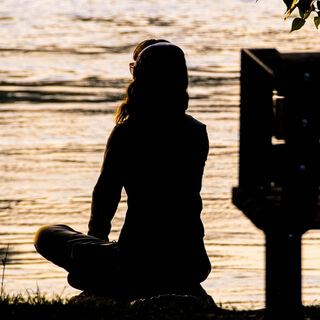
This is a short practice you can weave into your day to step into that space between stimulus and response.
We know when we drop into the present we're more likely to gain perspective and to see that we have the power to regulate our response in moments of stress or pressure.
The acronym that we use for this practice is STOP.
S-T-O-P.
So beginning with S,
Stop what you're doing,
Put things down for a minute,
Put aside your tasks and your worries for the day.
Take a few deep breaths.
If you'd like to extend this you can take a minute to breathe normally and naturally and follow your breath coming in and out of your nose.
You can even say to yourself in as you breathe in and out as you're breathing out if that helps with your wandering mind.
The next step is to observe your experience just as it is including your thoughts feelings or emotions.
You can reflect on what it is what's going on in your mind and notice that thoughts are not facts,
They're not permanent.
Noticing any emotions that are present and how they're being expressed in your body and in your actions.
Research shows that just naming your emotions can turn the volume down on that fear circuit in your brain and have a calming effect.
And noticing your body,
Are you standing or sitting,
How's your posture,
Are you experiencing any aches or pains.
And the last step is to proceed with something that will support you in the moment.
Perhaps just talking to a friend or a family member,
A co-worker,
Maybe rubbing your shoulders,
Having a glass of water.
As we finish up and bring this awareness to the rest of our day,
Perhaps treating this whole exercise as an experiment,
Getting curious about where there are opportunities in the day for you to stop.
Perhaps it's waking up in the morning,
Showering and dressing for work,
Prior to eating a meal,
While waiting in the line,
At a stoplight between tasks at work,
Before checking notifications on your phone.
What would it be like in the days,
Weeks and months ahead if you started stopping more often?
You