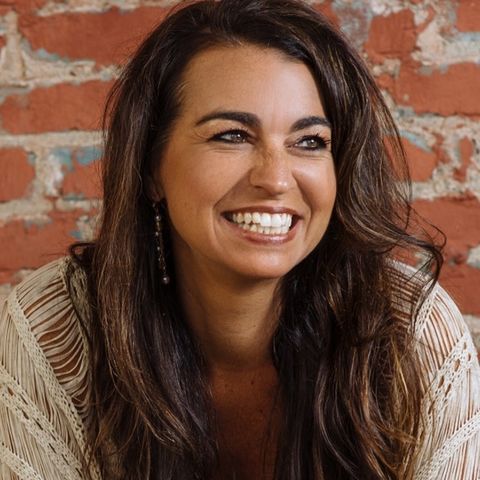
Hi,
I'm Michelle Chalfant,
Psychotherapist,
Holistic life coach,
And human,
Just like you,
Learning to navigate life's challenges.
With over 25 years experience,
I teach people how to get healthy using the adult chair model.
The adult chair model is where simple psychology meets grounded spirituality,
And it teaches us how to become healthy adults.
From anxiety and depression to codependency and relationship issues,
You can use the adult chair for just about anything.
Each week,
I share practical tips,
Tools,
And advice from myself and a wide range of experts on how to get unstuck,
How to live authentically,
And how to truly love yourself,
All while sitting in your adult chair.
Welcome to the adult chair podcast.
Hello,
Everybody,
And welcome to the adult chair podcast.
I am Michelle Chalfant.
Really looking forward to today's show.
We have on the show today Ara Katz,
And we are taking a deep dive today into the microbiome and probiotics.
These are two things that are so,
So important that we have a deeper understanding around.
It was such an interesting show,
I have to say.
You're going to learn a lot,
But man,
We did a deep dive into the microbiome.
This is something I have been studying on my own for years,
And I learned a lot today.
She really,
Really knows her stuff.
You'd be amazed at how the microbiome truly does affect not just our physical health,
But also our emotional health.
When it comes to probiotics,
There are a bazillion out on the market.
How do you know which one to take,
Which ones are important when it comes to the ingredients within the probiotic?
We broke it down today.
We broke it down today.
Do you just eat a yogurt a day,
Or do you take a supplement and all these things?
You're going to understand exactly what you need to do by the end of the podcast today.
Let me just tell you a little bit about Ara Katz.
She is the co-founder of Seed Health.
This is a microbiome science company pioneering innovations in probiotics and living medicines to impact human and planetary health.
Such an interesting show.
I can't wait to hear what you think about it.
Here we go with Ara Katz.
Welcome to the Adult Share Podcast,
Ara Katz.
Thank you.
Thank you so much for having me.
Yeah.
It's so good to have you.
I'm excited to be speaking with you a little bit more about physical health and the importance of physical health when it comes to our emotional health.
I mean,
Again,
Physical health can stand alone,
But how it even impacts our emotional health.
I have this feeling we're going to get into a really good,
Many good conversations about this today.
So thanks.
Thanks for being with me.
Why don't we start out,
Tell me a little bit about you and how you got to be this woman today with.
.
.
I'm going to hold this thing up.
We're going to talk about Seed as well.
So let's start there.
I feel very privileged.
Of course,
I run a science company,
But I am not a scientist.
And so my path here is kind of a bit circuitous.
I've been a science nerd my whole life.
My mom died when I was in high school.
That was really my first experience when she was diagnosed with pancreatic cancer,
My first experience of reading scientific papers and researching clinical trials.
And I started to really understand the way that science kind of made its way to humans.
And I think that I also got a really up close look at what it really,
At a very young age,
She was one of many people I had had really pretty close proximity to terminal illness and experienced a lot of loss actually very,
Very early in my life.
And so I think I just,
Ever since then,
I think that's certainly created a perspective for me that our bodies and our health really is like this body we have is the only one we have.
And in a very young age,
I think sometimes when you're younger,
It's very normal to take that for granted.
I think as you age,
You start to be brought into your body and experience your body,
And of course,
A very different way as it shifts and changes.
And if you have children,
If you're going into perimenopause,
Menopause,
You know,
Especially as women,
I think we live through some of these stages in really meaningful,
Meaningfully transformative ways.
And my whole life,
I really kind of always was that nerd that people always asked health questions to or asked me,
Hey,
Is this bullshit?
Is this real?
And that really wasn't because I dispensed medical advice.
It actually was just because I was really good at research and finding my way to scientists and clinicians and doctors and people who I felt were on the frontier and edge.
And it made sense because I was in adjacent fields because I worked and started my career in tech and a consumer and spent time at the Media Lab at MIT and was in close proximity to I think a lot of the people asking a lot of the big questions.
I had started a couple of companies.
My last one just before seed was a mobile commerce company,
And I had a miscarriage.
And I think that that was a beautiful moment that for me that,
Of course,
Is always so complex.
You know,
It's a complex experience because if you know a lot about biology and science,
You know that miscarriages,
Particularly early stage ones,
Are actually quite miraculous if you understand what goes into them and that the body knows.
Of course,
There's the emotional piece,
Which is,
You know,
There's a sadness and a grieving for what could have been.
And then there's also or who could have been.
And then,
Of course,
There's a for me,
It was a really like I think sometimes an existent for me,
It was a very existential moment because I hadn't planned or was not trying at the time to get pregnant.
And yet,
I think it was a really pivotal moment in my life of just really realizing that like the life I was living wasn't really viable and was kind of killing myself for a tech company.
And it was,
You know,
A female founders in tech or a few,
And especially then few and far between.
And I felt a tremendous accountability to really think through what I wanted to do and what that meant for me in terms of like,
What I wanted my life to be and what impact I wanted to make.
And if I was going to work that hard,
What I wanted to be creating,
And I actually resigned from my company,
And actually got pregnant very shortly after that.
But it really brought me back,
I think the whole experience brought me back to my love of biology,
My love of health and science,
And my beliefs that like I could take a lot of my experience from consumer and tech,
And being at the frontier of those certain aspects of those fields and applying that to,
To something that was meaningful in the microbiome had started to kind of come into my periphery is just like a nerd.
But when I got pregnant,
Very shortly after that,
I met my co founder,
He kind of came comes from pure science side,
I really started to think much more about why the microbiome wasn't being translated both in terms of just content and people's understanding,
But also the way that the science itself was being translated into innovation and products and drugs at the time,
In a way that I felt could use a lot,
Particularly in consumer on the consumer side could use a lot of improvement and microbiome for me,
You know,
There's this critical window of development.
And so when you're,
You're incubating a child,
The more you understand about microbiome,
The more you understand that,
Between the prenatal and the,
You know,
Postpartum and also like that,
Those first like,
Two years,
Two to three years of life of an infant is absolutely critical to like setting the blueprint for their basically their immunity and immune health and their immune system and their GI system.
And what ultimately becomes quote,
Unquote,
The gut.
And the more I understood,
The more I realized that like that,
That was actually where I wanted to spend most of my time,
Not just in that early window,
But also looking across how the microbiome plays a role in so many different biological functions,
Organ systems,
And also ages and stages of life.
And seed,
We got our name from seed seeding,
Which is the biological process by which an infant is first exposed to,
And is seeded with their foundational microbes that ultimately formed that blueprint that I was talking about.
And that really,
You know,
And then of course,
I,
The more I understood,
I felt,
And really,
I think both my co founder and I came from more of the science perspective myself more from like the just everyday human perspective knew and felt very,
A lot of conviction that the microbiome was going to transform and revolutionize health,
Which it is.
I think I agree with you.
I really agree with you.
That's why I was excited to have you on.
And first of all,
I just want to say,
I'm so sorry for your loss of gosh,
Your mom at 19,
And then your last child.
So I'm sorry for your loss.
You know,
These moments make you who you are.
They are.
And I'm thinking about,
Wow,
So you lost your mother.
And then it caught,
As your mother was diagnosed,
It caused you to start reading through research.
And I thought,
Isn't that fascinating?
And then,
You know,
Losing a child,
How that pivot is,
All these pivots you had in your life that land you where you are today.
Not that there's ever anything good about losing somebody by any means,
But wow,
What a story.
Thank you for sharing that.
My sister is a master's in clinical nutrition.
My brother-in-law's a doctor,
They live next door.
So our dinner conversations are all around,
Not just emotional health,
But health and wellness and everything cutting edge.
And so this is our kind of dinner conversation,
The microbiome and poop tests and things like this.
So I'm so excited about today.
But I wanted to know,
For those people that don't know what the microbiome is,
Can you just define what that is and why should we care about it?
Yeah,
The microbiome,
I'll give you the scientific definition.
And then I'll kind of explain when you hear it,
How it's being used a bit more euphemistically and culturally.
So microbiome,
Technically,
Is the collection or community of microbes that live in and on us.
And by the way,
There's microbiomes of different environments.
So there's a coral microbiome,
Honeybees have their own microbiome.
So but from a human perspective,
Which is often the way we hear about it as relates to health,
It's the community of microbes and microbes,
Just to double click into that are everything from viruses to yeast to fungi.
And then,
Of course,
Majority and where I spent most of our time at seed health is on bacteria.
And those microbes and their genes and the metabolites that they produce are collectively known as the microbiome.
The way that and I think the more simple and the more simple definition is it's just think about it as like all the microbes that live in and on you and what's really important and why they're so important.
And then I'll get to like what people mean by kind of gut health.
They truly live everywhere on us and they play a very specific role in different niches and ecosystems of the body.
So if you thought about your body as like a multitude of these little like ecologies or microclimate,
So like your armpit microbiome,
Which is called the axial microbiome,
Is entirely different than the belly button microbiome,
Which is very different than like the nasal microbiome.
But and the skin microbiome.
And then,
Of course,
We'll talk about work area of work we work in very meaningfully is the vaginal microbiome,
Which is an entirely different ecosystem with totally different rules of engagement than the gut microbiome.
But the gut microbiome is the most dense and the most diverse of any microbiome in the body.
And not only is it,
Of course,
Very centrally located,
But it is also connected to and probably by the time we get off this podcast,
There'll be about 10 new papers that have published from around the world articulating the intricate role that it plays and the vast role it plays in nearly every biological function,
Organ system of the body,
And many more that we don't even and haven't even discovered yet.
And the only other,
You know,
The oral microbiome is a great example of kind of what I think will be probably one of the next frontiers of health in the coming years.
The oral microbiome is the second most diverse microbiome of the body that has about 700 different species of bacteria.
But again,
Very different ecology than even the gut and very different role that it plays.
And most of these microbiomes play a role both locally,
Meaning like in a role of like where they are,
And then the more complex they are,
Like the mouth and the gut,
For example,
The more kind of like broad impact they have across the body,
Whereas the belly button microbiome is not doing,
You know,
Not obviously filling some large biological function,
But there is an ecology there.
And then,
Of course,
All of them really,
You know,
At a baseline have,
While many of them perform different functions,
They are predominantly a core part of your immune system.
And really the regulation of,
You know,
Immune response.
And that's true for the oral microbiome.
And again,
They play different roles,
But in many of the major microbiomes,
Of course,
They're such a big part of that kind of immune regulation and the ability and the control and implications of like in things like inflammation,
Which I'm sure is part of your dinner party conversations.
Oh,
Yeah.
We talk about that quite a bit.
Inflammation for sure.
Thank you for that.
So if I condense that way down,
The reason we want to pay attention to the microbiome is because it is directly linked to our immune system.
I think the reason,
I mean,
It is linked,
As I said,
To almost every biological function,
Organ system of your body.
I mean,
You know,
We're here as women,
Particularly like,
I mean,
Just to give you an example of like a little small glimpse of the future.
I mean,
We'll be taking a specific probiotic for bone density and we'll start to understand like muscle recovery.
I think today people think about microbiome as gut health,
So digestive,
Immune.
I think immune health is fairly well,
Like kind of know and take care of your gut,
You know,
Kind of healthier your immune system functions.
People,
I think,
Are throw around the stat of like the 70 to 80% of your immune system resides in your gut.
So,
You know,
I think that's well characterized,
But I think that's undervaluing the like fast signaling and opportunity that exists across the whole spectrum of human health at every age to really deeply understand how by modulating or impacting the gut and or the metabolites or what they call the metabolome,
Which are the things that gut makes,
The compounds it makes,
The signals that then sends out across the body to both human cells and other microbes.
And so when we start to look at,
Like,
It's kind of like impact,
Like looking at it almost like as air traffic control at the opportunity then to think about future of health,
Whether it relates to like the gut lung axis for respiratory health,
Thinking about what nasal applications there might be to introduce microbes into the nasal microbiome and then what that could mean for different aspects of life.
Changing the oral microbiome may have implications for whether or not you develop Parkinson's disease or other neurodegenerative diseases because of proximity to the brain and they're starting to understand the role of the oral microbiome and neurological function.
So,
And specifically neurodegenerative disease.
And so it's like,
We've only really just scratched the surface.
And so I think because of what you see right today,
Anecdotally is people make a big impact in their gut and they do positive,
They make positive changes in lifestyle and other interventions.
And then they start to notice this cascade effect across other aspects of their health,
Including mental health,
Including clarity,
Including energy,
Including and including weight,
Metabolic health.
And so there are certainly things I think we are intuitively already experiencing by some of these that change it.
And then a lot of them,
Of course,
Is being characterized by science itself.
Wow.
Parkinson's from changing the mouth.
Did you say microbiome?
Yeah,
There's early or a lot of early research and people starting to look at the oral microbiome as a really impactful ecology.
And I think it's very interesting because other disciplines of centuries old disciplines of science have always looked at the mouth.
Like if you go to a Chinese medicine doctor,
The first thing they say is stick tongue,
Right?
So there was no,
They didn't have deep sequencing technology,
Obviously,
And the visibility and the resolution we can see these ecosystems at today.
But certainly I think there's been some intuitive,
I mean,
Hippocrates says all disease starts in the gut.
So I think there's been kind of intuition that this community of this non-human part of ourselves holds tremendous potential to unlock probably some of the more meaningful,
You know,
The solutions and also ways of living and optimizing health that we have not yet,
You know,
Are just kind of,
As I said,
Scratching the surface.
Oh,
And I agree with you.
We're barely just scratching the surface.
But the surface that we're scratching already can make tremendous,
Tremendous impact.
So I think that's core.
Absolutely.
What's the,
What was the microbiome that's connected to you said muscle and bone?
Yeah,
They're starting to understand that.
I mean,
As I said,
There's kind of interesting ways of understanding microbiome.
There's areas where the gut and certain microbiome signal.
And then there's areas where there's an actual microbiome in that part of the body that serves a specific function.
So you can kind of look at my,
Like the vaginal microbiome.
So the vaginal microbiome plays an incredibly key role in maintaining and regulating pH.
Lactobacilli in the vagina are incredibly important in the clearing of,
Or making sure there's no real estate or not,
And making sure that the environment of the vagina cannot be hospitable,
Again,
In a healthy vaginal microbiome to E.
Coli,
So UTIs,
To be bacterial vaginosis.
You don't want to have like an,
You know,
It maintains a lot of the balance so that there's no excess estrogen so that you're not like getting Candida overgrowth,
So for yeast infections.
And so,
And things like even making it inhospitable to HPV.
So the vaginal microbiome is a microbiome,
And this is really interesting,
That's like actually where you don't want diversity.
You actually really want a microbiome that's dominated by one specific species of Lactobacillus,
Which is,
It's called Lactobacillus crispatus,
And that has been shown to be the most protective and most stable and resilient optimal vaginal microbiome.
That's just one bacteria microbe.
You do not want diversity,
Again,
In the vaginal microbiome.
You move over to the gut,
One of the markers of a healthy gut microbiome is diversity.
You want diversity,
Right?
It's like looking at a rainforest,
It's,
You want it to look like this kind of lush,
Thriving ecology,
And so it's a,
And it functions so differently than the vaginal microbiome.
All underneath,
Of course,
The common denominator amongst these microbiomes is that they're performing functions for host health,
For your health,
You are their host,
But the way that it happens in different parts of the body is quite distinct,
Which is very interesting.
So we're born with a microbiome that's healthy,
Correct?
No,
We're not born,
So it's very interesting.
There's a lot of controversy in science as to where the very first microbes come from,
Because there's a lot of belief that the womb is predominantly sterile.
What we do know is that the mother's microbiome and the mother,
The metabolites,
Which means what the mother's gut microbiome is producing,
A lot of early research now is showing that,
Like,
There's a lot of priming that happens of the infant's microbiome.
How many actual microbes are in the infant prior to birth is something that is still somewhat controversial.
That being said,
There's priming that happens,
So there's a sense of,
There is the belief that there's some beginnings of the microbiome prenatally.
However,
Majority of the early first foundational microbes come at birth,
And that is either in a vaginally born child,
There's microbes that are,
Of course,
As they move through the birth canal,
And the vagina,
They're bathed in not just microbes,
But also other compounds that the vagina produces,
And that is really the first,
Both their skin is seeded,
They're,
Of course,
Ingesting and taking in certain microbes into their GI tract and through the nose,
And so there's exposure,
That's like their first major microbial exposure,
And remember,
It's not to a lot of very diverse microbes.
Now,
A C-section baby is exposed more to the mother's skin microbes because it's coming out a different way,
So they're not getting the same vaginal microbes.
However,
In the presence of,
And then what's really beautiful,
And you can see how evolution worked very well here,
The breast milk,
About a third of the carbohydrates in breast milk are only food for those microbes to begin proliferating,
As well as there's microbes as well also within breast milk,
So that is where really the seeding and the gardening and the fertilizing actually happens from the mother's own body,
And of course,
After birth,
The mother load,
As I said,
Comes at birth,
There's,
Of course,
Whether or not there's the presence of breast milk or not or some substrate that is going to a compound or what they would call prebiotic that would feed those early microbes,
They can start proliferating,
But then,
Of course,
They start to be exposed to the environment,
So the other parent's skin,
What's in the home,
Whether there's a pet or not,
And then in some instances,
Of course,
Infants are exposed to an antibiotic,
And therefore,
You have to then be thoughtful about,
Well,
If you're actually going to be eradicating or immediately disrupting that ecology,
You have to be very thoughtful about then how you're kind of like reseeding that and what could happen to kind of make sure you kind of mitigate then the downstream impact of like an early intervention of antibiotics,
For example,
Or even in the mother,
Actually,
And so that's really where you're for the first,
And then as they move through from breastfeeding or formula to food,
Food then,
Of course,
Becomes an ongoing,
Again,
Fertilizer for the infant's microbiome,
And then they start to touch surfaces,
They start to be exposed to soil and other,
You know,
Environments,
And they start to prime and continue to prime and then acquire more microbes,
And while they're acquiring them,
They're also,
The microbes and your immune system's learning,
Right,
As well,
And training and understanding what's friendly,
What's foe,
And in a healthy developing microbiome,
They start to have healthy responses,
Where you see unhealthy responses,
Like in allergies or in really severe,
Like inflammatory skin conditions with children,
Like psoriasis,
You know,
Eczema,
That's where you start to know there's something that's misfiring,
Miswiring,
And that's,
Obviously,
A lot of research is going into that area,
As well.
So perhaps changing or,
I don't know what the right word is,
Enhancing,
Making the microbiome healthier,
Could it then prevent a child,
Let's say,
Or even an adult from getting something like an allergy or skin.
.
.
Oh,
Absolutely.
Oh,
There's direct,
There's so much research to demonstrate what a kind of healthy developing infant microbiome looks like,
Is particularly in this,
Like,
Incredibly impressionable and vulnerable stage,
Which is called the seeding,
And then kind of what they call the path to,
Like,
A steady-state microbiome,
Which happens somewhere,
Depending on the child,
And different research says different times,
But somewhere between kind of three and five years old,
Three and six years old.
And then you're in what's called more of a steady-state,
Where you've kind of established that blueprint,
But then many other things as you move through life,
Diet,
Environment,
Whether or not you're taking antibiotics,
Other medications,
Of course,
And other lifestyle factors impact kind of the stability and also the constituency of that microbiome,
And therefore,
How it's functioning.
You know,
I've often wondered,
Often,
Like,
A lot have wondered about when I was a child,
A baby,
I had colic for nine months,
And I cried 22 hours a day,
My mother said,
For nine months,
And I was on Paragoric,
You know,
And I remember learning that,
And I said,
What the heck happened to my microbiome?
I mean,
That's,
Is it like a cousin to opium or something?
Just to,
I mean,
I just wouldn't stop crying.
So yeah,
So I thought,
Oh my God,
My poor little baby microbiome,
I mean,
And I was not breastfed.
Yes,
There's a lot,
There's a lot of,
And,
You know,
Breastfeeding,
Of course,
Has,
I mean,
There's many other,
Besides the microbiome,
There's many other benefits.
You know,
Even the,
As I said,
The evolution is quite amazing.
I mean,
Even the microbes on the nipple have evolved over time to be bacteria that also helps digest lactose.
You know,
So you think about,
Like,
Just,
Even just the nipple microbiome during,
In postpartum is,
Like,
Incredible and really extraordinary.
And so,
Yeah,
Like,
We,
You know,
A lot of us grew up in the antibiotic generation and the very medically and pharmacologically heavy environment,
Which,
By the way,
Antibiotics,
In the right moment,
In the right circumstances,
Will save your life.
So I'm not,
Like,
An anti-antibiotic.
I think we just,
Unfortunately,
Take them so indiscriminately,
And we don't really understand the downstream effects of so many of these medications that we take in addition to antibiotics.
So,
And it has huge implications for our microbiome and microbiomes,
Because when you take that,
When you take antibiotics,
You're not just wiping out your gut,
You're wiping out your vaginal microbiome too,
Which is why so many women get yeast infections,
Other complications when they take a round of antibiotics that,
For something that's not even vaginally related.
Yeah,
It's wild.
And I,
And I see that as I look back,
I lived,
And it's funny,
I'm pretty sure I had a dairy intolerance,
Because then by the time,
And I had horrible allergies when I turned 12,
And then through high school,
I had chronic sinus infections.
I probably,
If I had to look back,
Had candida,
Didn't even know,
Like,
When I look back on how,
I don't,
I never even thought of myself as being quote unquote,
Like a sickly child,
But a lot of like the allergy kind of things going on.
And I lived on antibiotic probably every six months or six weeks I was on amoxicillin,
I had chronic sinus infections,
All of high school.
And then it's interesting,
I don't ever take an antibiotic now.
I take,
I'm so healthy.
I don't have,
I don't have allergies anymore.
I'm never,
Hardly ever,
Ever sick.
And I really attribute it to the microbiome,
But I was always worried that I had damaged it so badly or as a child,
You know,
But we can get it back.
Yes.
Yeah.
I mean,
I think I always like to say,
You know,
It's like we,
We sequence the human genome,
But we don't like go to Whole Foods and buy anything for our genome.
But then the sequencing technology that the Human Genome Project and that work and that science gave us actually is what allows us to understand the microbiome.
And again,
The higher resolution and a much deeper level of,
Of,
Of complexity.
And the beautiful thing about the microbiome is that it is dynamic and ever changing.
And what that means is that while yes,
There are certain things that are probably somewhat insurmountable from early windows of life or really severe,
You know,
And,
And,
You know,
Extreme experiences of health.
It really is reparable and changeable.
And I think that that is like something,
And again,
The vaginal microbiome is another great example of that very different ways you would intervene in both microbiomes,
But for the gut,
Especially,
I mean,
We know that very specific lifestyle factors,
We know that specific dietary inputs,
We know that hydration and sleep and exercise and,
You know,
All the things that are not going to blow anybody's mind that are of course the,
That have impact for overall health,
Not just your microbiome,
But they are of course,
So intimately connected are,
Are profound,
I mean,
Induced profound changes in people's lives,
Profound.
And that's why I said the cascade effective when you improve your gut health is,
Is not to really be underestimated because,
And we,
You know,
I,
We know just from seed and the jar you held up,
For example,
DSO1,
Which is the most genomically diverse probiotic that exists on the market today.
As well as one of the most clinically effective,
We know from the multitude of stories that we hear on a daily basis that you,
I mean,
Something as simple as the right probiotic in,
You know,
It can change someone's life.
I think that,
That,
You know,
As I,
As I said,
That can't be,
You know,
There's many things you can't do genetically and in the future,
We can probably CRISPR some things,
But today,
Today,
The,
The,
The lever that we really have is,
Is the microbiome and it truly is this kind of like radical,
Entirely revolutionary new way that you can have so much agency over your health,
Which is,
Which is obviously a beautiful thing.
I have to tell you,
You guys had sent me this sample of it and I thought,
Well,
We'll see,
You know,
Let me try it out.
And this was months and months ago.
I felt so much better taking this.
I mean,
I really did.
And I've been taking probiotics for probably 20 years,
Like forever,
You know,
It feels like,
And then I was getting my hair done and I walked in and I can't even tell you,
I almost died.
The girl's doing my hair.
She's like,
Have you heard of these things called seed probiotics?
I was like,
Shut up.
She goes,
Yeah,
Someone else has taught me about it.
And they feel so much better.
They have more energy.
And I'm like,
I'm taking them right now.
Oh my God.
I couldn't believe it.
So yeah,
I was really excited.
So tell me,
Tell us a little bit more about seed and what makes them,
You know,
A unique probiotic because I see on here,
It says probiotic and prebiotic supplement.
So what's different about this probiotic or in prebiotic compared to others that are on the market?
And I have a lot of people that will say,
Well,
I eat a yogurt every day.
Isn't that enough?
Yeah.
So tell us,
You know,
Eating,
You know,
Eating like acidophilus or specific lactose,
I mean,
There are certainly some benefits in,
In some yogurts and depends on which one I think one of the most important things to understand.
And just as I speak about like DSO1,
Which is our daily symbiotic,
Which is the product that our gut,
Our gut adult gut health product that is now the number one probiotic in the US,
Which is very,
Very exciting.
Wow.
Congratulations.
I did not know.
And again,
Like,
I'd like to give ourselves credit for that for sure to some,
In some capacity,
But it is,
I mean,
Meaning from like a marketing perspective,
But really it is because it is so impactful for people's lives.
Like,
I think,
To be honest with you,
When we launched it,
I think we knew that the science was extraordinary and we understood that to just give you a sense,
You asked me what's different,
You know,
It is one of the most,
As I said,
It's the most genomically diverse probiotic that exists.
That means that there's not just,
Not just number of strains,
But actually the diversity of their genes,
Which is impactful because it allows us to also be able to ensure that it can work across as heterogeneous as a population as possible.
So,
You know,
A lot of people,
There's responders and non-responders to everything,
Right.
Some people actually Tylenol doesn't work for.
So in general,
As,
And,
You know,
Many people know that you have to try a number of things before you see what works for you.
But the diversity from a genomics perspective is also partially what makes DSO1 so impactful across a really broad population and all different types of communities and people in different health States and ages.
The,
There are 24 strains.
And one of the things that we did very,
Very intentionally when we developed and formulated this product was really looking not just at GI and gut health locally,
But also saying like,
We really wanted to look at benefits both in and beyond the gut.
So yes,
It is extraordinary from a digestion perspective in terms of increasing motility,
Ease of evacuation,
Lessening bloating,
You know motility.
So like the,
How stool like increasing motility.
So how kind of stool moves through your system and then even GI like localized GI benefits,
Like increasing the integrity of your gut barrier and the,
And the tight junction cells and the signaling that happens to do that,
Which is of course a really important mechanistic part of why DSO1 is very effective,
But that's just the local benefits.
Then when you look systemically,
There's strains that are included in the formulation that work on the gut skin access.
So understanding that there's strains that actually kind of can dampen the inflammatory response of things that happen on the skin.
So a lot of people will tell us my skin looks amazing.
My skin looks better as well as,
As well as the gut,
Gut,
In our case,
The gut liver access,
Which actually has cardiovascular benefits because it looks at the prevention,
Preventing of the reuptake of circulating cholesterol,
For example.
So looking at like the LDL and HDL level.
So it's very,
It was really meant to be almost like that,
Like my multivitamin,
Multi,
Multi probiotic for your gut.
So not just looking at,
I think a lot of people take,
And again,
The probiotic,
Eating a yogurt is a great example because the byproducts of lactate acid from a fermentation,
Of course,
Like no one would dispute that there's science and,
And,
And,
You know,
The feeling that yogurt has a positive impact on digestion,
But probiotics are a very specific field of science and every strain is,
Is studied and must be studied.
And you need to look at it as strain specific perspective because different strains do vastly different things in the human body.
And so I think we also are credited,
I think,
With bringing a lot of specificity and more of a scientific lens to the field because before it was more like what you were saying,
Which is like,
Oh,
I take a probiotic.
I drink a Kim,
I eat some kimchi,
I drink,
And there are benefits to those in some cases,
Not all,
Not all,
But in some cases,
I wouldn't say every yogurt is equal.
For example,
I wouldn't say every kombucha is equal.
It depends what strains were used.
What were they being looked at to do if they were looking at being looked at for having a human benefit in the human host?
What dose were they included in?
And,
Or if it's just kimchi,
Which has sometimes 300 plus strains,
And it's more just the fermentative activity,
You know,
You're getting fermented fiber.
I mean,
You're getting cabbage,
You know,
It's,
There are absolutely benefits.
It's just not,
You know,
For example,
Kombucha is very likely the polyphenols from the tea that are most impactful,
Not necessarily that it itself is a probiotic according to the scientific definition.
And so,
And there are some great studies going on,
On specific kombuchas about like,
What are those strains doing?
Is it the polyphenols?
Is it the strains?
Is it the byproducts of lactic acid fermentation?
That's,
But that's very different than saying like we spoke,
We chose these specific strains in this specific dose.
We have a delivery technology,
Which is one of the other major benefits and reasons why DSO1 is so effective is it's one thing to have the right strains.
It's another to be able to get them alive and where they need to go in the body.
And one of our,
We're very proud of our,
One of our core areas of expertise is delivery technology.
And so DSO1 is a probiotic inner capsule inside of a prebiotic exterior capsule.
That's why it's called the symbiotic.
It's a probiotic and a prebiotic.
And that prebiotic outer capsule,
Not only does it have the prebiotic compound that comes from pomegranate,
It's called punicalgan.
It's also non-fermenting.
So you probably have a lot of people in your audience who are on FODMAP diets or have trouble with certain fiber prebiotics because it creates a lot of discomfort because of the fermentative activity.
Our prebiotic is non-fermenting.
So that's another,
Another differentiator.
It comes out of a really,
As I said,
Specific compound that comes from the skin of Indian pomegranate.
But the beautiful thing is that it also works as a very elegant barrier to the probiotic inner capsule.
So it,
The fermentation and the,
The on the,
The opening and the dissolution of that happens in the up more in the upper GI tract,
Getting some of that fermentative activity from that,
That comment.
And then by the time it gets to the colon,
It's opening up and that's where the live microbes are then kind of delivered.
The payload,
Payload,
So to speak,
Is that's partially why it's the product is so,
It is so effective because if you just kind of mixed it in water,
It probably wouldn't be as,
As effective if it was delivered that way.
And so that those are just a few,
Few of the reasons.
And of course we've,
We do human randomized placebo controlled trials.
We publish in top journals.
We,
I can brag for one second on behalf of my co-founder who's put together the,
Probably the one of the top R&D teams in all of microbiome,
As well as a scientific advisory board that is consists of some of the best minds in the field.
And so,
You know,
We really set out to create and bring the rigor of biotech to,
To,
To everyday health and in the biome,
Because of what I said earlier,
Which is that we believe that this field has transformative potential for human health.
And,
And I think that if,
If it just kind of kept going in the direction of gut mania and everyone just thinking that all probiotics are kind of the same,
I don't think we would really be able to realize its potential.
Yeah.
Oh my gosh.
That's incredible.
Thank you for sharing that.
Is there a probiotic that you have that's just for children or?
We do.
Yeah.
It's the only program I can again,
Brag on behalf of our science team.
It's the only probiotic to ever be published in nature,
Which is a nature publication,
Which is for me,
The only probiotic for children to ever be published in nature,
Which is the equivalent for anyone who likes fashion.
It's like the equivalent of being on the cover of Vogue with science.
And so,
Yeah,
We,
Our,
Our trial was on intermittent constipation children.
One in three children in this country don't poop right or well.
I've heard this.
And it includes six grams of prebiotic fiber as well,
Which there's a massive fiber gap in all of our diets,
But especially with children.
And that has nine strains very similarly to DSO1 was formulated for benefits,
Both in the gut.
So digestive and GI and immune health benefits,
As well as out of the gut,
Including the skin and also strains that work on the gut,
On the respiratory gut lung access for,
For respiratory health,
Which comes out of some really interesting research as well.
Wow.
And then tell,
Tell us again,
I'm curious about this vaginal.
Yeah.
Tell like,
How would someone know again,
If they're someone that gets chronic yeast infections or is it bladder infections?
Like,
How do I know that I might need that?
What would be some indications or someone like you were talking about before,
Is it someone that's going into menopause,
Perimenopause?
Like tell us about that.
Yeah.
So it's really,
So the vaginal microbiome,
As I said,
Is the kind of the gatekeeper.
It's,
If you think I like to,
I like to refer to it almost as the immune system of your vagina.
And it plays a huge role in,
In lactobacillus and lactobacillus prospatis,
As I said,
Specifically as like kind of the optimal Holy grail microbiome plays a critical role in the regulation of pH,
Which you want your,
You actually want your vagina to be acidic.
You want,
They play a critical role in protecting and maintaining the health also of like the mucosa,
Like the epithelium barrier of the vagina,
Which is where like,
When you get a UTI,
You don't,
You don't want anyone to have any real estate other than who should be there because of course something can take hold.
That's when you get yeast infections,
BV,
UTIs,
Et cetera.
And so knowing that they play this kind of critical role and,
And you,
It's very important to then say,
Well,
What also destabilizes and what is so disruptive to the vaginal microbiome?
So disruptors,
As we described,
We talk about them and is our menstruation is a huge disruption to the vaginal microbiome because the pH changes often the vaginal microbiome,
The vagina can become more diverse during that period of time,
Blood is coming through and,
And there's a lot of shifts.
Now in a very stable vaginal microbiome,
Right after menstruation,
You see kind of this rebound right back to,
It's resilient,
Right?
It's very similar to like when you get a sick,
How quickly do you kind of come back to,
To sign,
But sex is one of the biggest disruptors and that includes oral sex.
It includes fingers.
It includes really anything that goes in there.
And that is,
And,
And that is a huge disruption to the vaginal microbiome.
Why,
Why so many women experience a UTI or another,
You know,
You know,
Condition that comes from these imbalances or disruptions right after sex,
Particularly sex with a new partner often,
But also things like just swimming in,
In,
In warm chlorinated water,
Intense exercise,
Prescription medications,
Prescription antibiotics,
For example,
Even diet.
There's new early research,
Even looking at Brazilian waxing,
You know,
And so,
So many,
We live like just by living life,
Essentially,
You're exposed to a multitude of factors that can be disruptive to your vaginal microbiome.
And from research with Dr.
Jacques Gravel,
Who is the leading,
One of the leading vaginal microbiome scientists in the field,
He's,
Who is our partner in developing VSO1,
Which is our vaginal symbiotic.
We know out of his data set and a recent analysis that almost nine out of 10 women have an unstable vaginal microbiome.
That does not mean that you're always having a condition,
But it is,
It does mean the majority of those women,
I think when you start to ask women,
Which we do often,
Whether or not they're,
They just kind of intermittently feel quote unquote off,
Like something's just kind of like off or you hear from a lot of women,
Like,
I know I'm going to,
I'm going to have sex with this new partner.
And like,
I know I'm going to get a UTI the next day.
I just know like,
And,
And so I think we,
You know,
I think for,
I think that there are people for whom you would take VSO1,
Which just to,
I'll explain what it does first,
And then we can,
I can talk about kind of who it's for.
So we know that these disruptions,
We are exposed to them on an ongoing,
Very similar to the way you would care for your gut health.
Like many people are generally healthy,
But they still take DSO1 because they understand that like when you travel,
When you,
You know,
You,
You go,
You know,
You,
You have a night where you drink a little more,
You are not always able to stay in your routine.
And even if you are,
You're,
You generally believe that supporting your gut health is a,
Is a,
Is a good part of your well,
Well,
Well-being routine.
Similarly for the vaginal microbiome,
While it's earlier and people don't know about the vaginal microbiome the way they know about gut,
Gut health.
And I don't have to get into why women's health suffers from so many things,
But awareness is probably,
Of course,
A symptom of that.
You know,
There's only so many centuries of medical,
You know,
Medical misogyny that you can,
You know,
One,
One can,
You know,
Attribute,
Of course,
Why these fields didn't,
You know,
Necessarily come online sooner.
But now that we know what we know,
It's a beautiful opportunity to say,
Well,
How can I create a stable,
Resilient vaginal microbiome?
Very similar to what we're all,
What we all think about now as relates to gut.
And the challenge is that you can't feed your gut fermented foods.
I mean,
Your,
Your vagina fermented foods.
You can't do a lot of the things you can do for your gut health.
That vagina,
Vaginal microbiome needs to be changed.
And the only way to change it and introduce new microbes,
Because you can't eat and is,
And,
And one of the ways that women sometimes intuitively thinking about doing it is like they'll dip a tampon in yogurt.
And because they,
Because if you go on Reddit,
You can read a multitude of things that women do because the problem is,
Is that so many,
I mean,
46 million women in the United States,
Even just last year experienced some kind of vaginal discomfort.
And that's just what we know about.
I mean,
We know that as women,
Like this is,
You know,
This is a,
This is not a,
Like a static usual part of a very small part of the population.
It's static for many women,
It can be symptomatic or asymptomatic.
We know that like,
That we've gotten,
You know,
You've experienced things at different parts at times in your life.
And so what we developed was the first vaginal symbiotic.
So it's a probiotic,
Three specific strains of lactobacillus crispatus,
Which are,
Which come,
Come out of almost 15,
Almost two years,
20 years at this point of vaginal microbiome research at a Dr.
Revell's lab.
It comes out of longitudinal studies that came out of a strain bank of,
You know,
Over 600 isolates.
And these three were identified for their gene by their looking at their genomes to say these three together create the most stable coverage such that any woman in fashion,
The equivalent would be like,
How do you create a one size fits all t-shirt?
And so these three strains together,
Plus prebiotics,
Which means the nutrients that these microbes need to survive are put into a tablet and used as a,
As a,
As a,
As an ovule.
Basically in a,
In month one,
It's,
We administer it as like almost like a reset,
Almost like if you were doing a cleanse.
So you six tablets go in intermittently in the first month.
And that's what reestablishes that healthy vaginal microbiome dominated by L-crispatus.
And then after you've kind of planted that garden,
It's two tablets a month on day one and 14,
And that's it.
And ongoing basis.
And so that's it.
Not to take anything every day.
It's six once a day for a month.
Yes.
And then,
And no,
No,
No,
No,
No,
No.
It's six tablets over the course of one month.
Oh,
Over the course of,
I was like,
Wow,
That's a lot.
Okay,
Cool.
You just put day one,
Four,
Seven,
14,
21.
And then after you started right after menstruation,
If you don't menstruate,
You can start at any time.
And those first six tablets are the like planting of your garden.
And then after that,
You've,
Once you've invested in the modulating and the changing of your vaginal microbiome,
Which in our clinical trial,
We have a 90% success rate,
Which is science.
You just don't see,
We just presented the data at IDZOG and it was just published,
Which is very,
Very exciting.
And we have other,
We have a 200 person trial actually finishing that just finished as well.
After you've kind of seeded that vaginal microbiome,
After that,
It's just two tablets a month to kind of,
You know,
Tend to the garden.
Maintain.
Yeah.
You want to maintain.
For sure.
And that's it.
And we were able to demonstrate that it not only shifted and sustained through menstruation,
A sustained L-crispatas dominated vaginal microbiome.
So the most optimal protective vaginal microbiome.
And,
And of course that also means regulated,
It maintained regulated pH,
Which is very exciting.
And then of course that,
That is the holy grail to kind of that stability and resilience and protective function that the vaginal microbiome,
The role that the vaginal microbiome plays,
Which have then of course protects from some of these imbalances.
And then,
You know,
Of course there's,
There's other,
Other benefits to that.
One more question before we,
We,
Before we hang up,
Before we end here,
One more quick question,
If I can,
If you can answer this.
So does the vaginal,
Do the vaginal,
What are they?
Tablets.
Okay.
Do they help with menopausal symptoms or is that just hormonal?
Yeah.
So it's really,
It's noble.
Estrogen plays a huge role in the vagina and in its relationship to the vaginal microbiome.
So estrogen,
And we don't have to get into all the science,
But estrogen plays a role in like glycogen production,
Which then gets broken down into,
Sorry,
Glycogen and then gets broken down into glycogen,
Which is very then important because that is the food source for lactobacilli in the vagina.
So estrogen plays a really big role in the lactobacillus in the vagina.
Now,
Of course,
During menopause,
You're losing estrogen.
And so they're losing the abundance of lactobacillus.
And so we're just starting.
And now the other part is that,
So what happens because of that is you end up with one of those symptoms of perimenopause,
Menopausal women experience is dryness.
And so one of the things we're starting to do is we do recommend that if you are very dry and menopausal,
That you use VSO1 with whatever like lubricant or hydrating gel,
We're developing one,
But just you know,
So that there's some lubrication and hydration for the tablet to dissolve.
And we are starting to look at,
We have not yet studied,
Even though menopausal women have been included in our trials up until age 55,
We are starting to look at new data and what new data we can generate and whether or not VSO1 will be effective for very specific symptoms of menopause.
But certainly we have a lot of women who are menopausal anecdotally that are using it with positive impact,
But we haven't generated like a trial just specifically for menopause yet.
Oh my God.
Wow.
This was so good.
Thank you.
Thank you.
Thank you.
First of all,
For all the research that you've done.
And I can't believe this is the number one in the United States.
I believe it.
I really do.
Like I feel really good on this.
Yeah.
I'm very grateful.
You are one of millions at this point.
Yeah.
I love it.
Have a beautiful rest of your week,
Everybody.
And I'll see you seated next week,
Right here in the adult chair.