Hello,
Everybody,
And welcome to the Adult Chair on RashPixel FM.
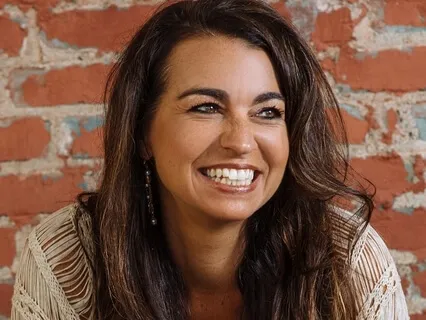
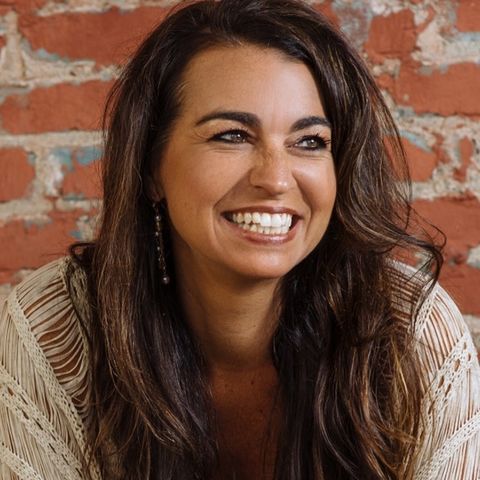
I am Michelle Schelfont.
And today,
I am thrilled to have a very,
Very special guest and friend of mine on Raya Wright.
She is a therapist and a life coach.
And we are going to be discussing finding peace in our pain.
It's a really,
Really cool topic that we have discussed in the past.
We're going to talk about it today on the show.
And it's based on a lot of people asking me how they do this.
So I thought Raya would be the perfect guest to have on and discuss this with me.
But first,
Remember,
You can find out more about the show at TheAdultChair.
Com.
And you can subscribe for free by signing up for our mailing list or find us anywhere the finest podcasters are served with a quick search for The Adult Chair.
You can join the conversation on Facebook or Instagram.
You guys know I'm on Instagram,
Having a lot of fun there.
And make sure to request to join The Adult Chair private closed group on Facebook.
Here you all know you can learn how to live in The Adult Chair.
Again,
I say this all the time,
Blows me away what's happening in this group.
It's a phenomenal way to not only help get information on The Adult Chair and on your own issues,
But also to get support.
It's a beautiful,
Vulnerable group.
So come join us at The Adult Chair closed group.
It's a private group.
Okay,
Everybody.
Today on the show,
We have Raya Wright.
Raya's deep passion in life is to help people live joyful,
Healthy,
Vibrant lives.
A passion she gets to fulfill in her practice as a psychotherapist,
Coach and soap maker.
She says,
I love helping people dive deep to reclaim and reconnect with the lost parts of themselves,
Wake up to their full potential and generally find their way in life.
I love that.
She has a deep interest and curiosity in the mind body connection.
And with 25 years of experience as a licensed professional counselor and coach,
Raya brings a depth and momentum to her clients that is both unique and transformational.
She has a private practice and facilitates several workshops,
Groups and retreats every year.
Welcome Raya Wright.
Well,
Hi Michelle.
Wow.
Thanks for that lovely introduction.
And thanks for having me on this wonderful show of yours.
Oh,
Well,
Thanks for being here.
You know,
So as you know,
You and I,
Whenever we talk,
We can talk for days and days and days.
And this,
You know,
Both of us have very similar practices.
And one of the things that I love about you is you're not only an LPC like myself,
A licensed professional counselor,
We've also combined coaching and in my opinion,
What I would call spirituality,
Which is that mind body connection.
It's understanding that there's more to us than we really think and that's what I would define as spirit or part of being spiritual.
Would you agree?
Oh,
I think completely.
I think living intuitively,
Trusting our instinct,
Being connected with the larger universe is all part of the process.
I don't think you can have one without the other.
And interestingly,
Science is really catching up with this intuitive knowing we already have,
Like scientists are not talking about the mind body connection in terms of neurotransmitters being all over our bodies or neuro receptors being all over our bodies as opposed to just in our brain.
So yeah,
I'm reading about that in the gut.
Like it's so important that we have gut health or good gut health because of the neurotransmitter receptors in the gut.
Yeah.
So I don't think that things like anxiety,
Depression,
Anything like this is just in the mind anymore or in the brain like for many,
Many years we've thought.
So I think the mind body connection and the spiritual connection is hugely important.
And you and I are completely on the same page.
So thank you for being here.
I really want to talk with you about,
You and I obviously we have a lot of clients and workshops and things of this nature,
But we work with a lot of people that are in pain,
Whether that be physical pain or emotional pain or mental pain.
And our job,
I think,
Is to help people find peace within that pain.
So how do you,
Can you give us some ideas on how you do that with your clients?
What can you give our fans of the show as far as help with that?
Well,
I guess part of what you are really talking about is sort of this finding some sense of balance or finding some sense of peace around unbearable heaviness of remembering,
Right?
A lot of us,
So many of us carry around this trauma from early childhood or have had experiences that are really,
Really difficult that tend to come up repeatedly and over and over again.
And while you can't erase all that pain,
I think it's really important to maybe find some sort of peace or humor or connection to something that provides a counterbalance to the overwhelming pain.
And I think that is what ultimately helps people successfully navigate unbearable pain and trauma.
And so when people do come to see me both in my counseling practice and my groups and in my coaching,
I do a lot of listening and I do a lot of processing,
But I also inject a certain amount of humor and wit and some lightness.
And I really encourage people to start thinking about what it is they really want and how they can find some sort of creative expression for themselves.
Because I think that helps to balance some of this real heaviness.
And when I say humor and wit,
I'm not talking about making light of the pain,
But to find moments within it that can bring a little lightness to it,
Can bring a little more fun and energy back into one's life.
Does that make sense?
It does.
And I just want to bring up a point you made.
You said people that carry this pain from childhood.
And that word is I think what keeps many people stuck.
And I'm going to speak for myself and just for my own clients,
But I want to explore that a little bit more with you.
But I know that when something happens to us in childhood,
Anything,
Whether it's traumatic or,
You know,
We had,
Again,
Trauma,
Some of it's mild,
Some of it's major trauma.
But what I find,
And I'm just going to use myself as an example,
I blamed so many people in my childhood for my depression,
For my anxiety,
For my life.
And I carried it with me like a very,
Very heavy suitcase that I kind of dragged with me.
And it wasn't until I had to choose to let that go until that was when I started to find my own lightness where what I would say,
Where are you pointing your attention?
I was looking backwards for many years and blame,
Blame,
Blame,
Blame,
Blame.
And that keeps us stuck because we're just carrying this.
And again,
I'm not making light of it,
Not at all,
But I had it too.
So all this crap I carried with me and that was painful.
And I kept this cloud of darkness around me and I could not see the light in the darkness,
But I was looking in the wrong direction.
Does that make sense?
Yeah.
And you know,
When people come in,
I think that's one of the reasons people are afraid to come in as well.
So the blame keeps people stuck.
But I think the blame or fear of blaming those people who they really love is one of the reasons people don't come in and do their work.
And so one of the things I say right off the bat to people is that this is not about blame.
This is not when you come into therapy,
When you start looking at yourself and you start looking at your past and you start looking at your childhood,
It's not about blaming anybody.
You know,
Your parents did what they did.
They did what they could.
It's really about looking at the impact of what happened,
The choices they made,
The things that happened,
Looking at the impact on you and then choosing to make some changes,
Some new decisions about how you want to live your life.
And that process involves a lot of grieving and all of that.
But it's not about blaming your parents.
You can be angry with them.
You can be really,
Really sad.
And I'm saying parents,
It could be anybody in your life.
But it's not about blame.
It's about really,
It's about you.
It's about looking at the impact of all that crap on you.
And so if people can sort of shift that perspective a little bit,
I think that helps tremendously.
And also this understanding that it's not just in your mind.
Like your mind is in your entire body.
It's the body mind.
It's not sort of mind and body.
I like just calling it the body mind because it's so interwoven and so interconnected that I think of our beings as body minds.
I love that.
And just to put it in the frame of the adult chair,
Because so many people ask me,
Well,
How do I do that from the perspective of the adult chair?
And with the three chairs,
You guys,
The child,
The adolescent,
The adult,
The adolescent is the part of us that blames.
That's that egoic part that we get stuck in and it points the finger backwards and says,
I'm like this because so and so did this to me so many years ago.
My mom didn't leave my dad or my dad was an alcoholic or my so and so abused.
Whatever it is,
When we're pointing backwards,
We're in that adolescent.
So what you just said,
Ray,
Is like really beautifully sliding into our adult chair.
And I say this to so many times when people come in for their very first session,
I'll say,
Give me just a brief background.
Like what happened?
Tell me from zero to the age you are today.
Give me all the highlights.
And the highlights,
I mean,
You know,
Was your mom an alcoholic?
Is your dad whatever,
You know,
And I'll just say,
Give me the highlights.
And I always say,
I'm not sitting here blaming anybody.
We're just trying to gain.
I'm trying to gain a perspective on what happened to you.
And we want to see it from that perspective of the adult as facts.
My mother was an alcoholic.
Okay,
Fine.
Move on.
You know,
It's not staying stuck there.
It's just meeting those facts.
You know,
There's another part to this.
When you talk about sitting in blame or blaming parents or whoever,
I think you don't make it about you.
You're making it about them.
So you're following this pattern where once again,
You're not making,
You're not,
It's not about you.
It wasn't about you in childhood.
And now it's not about you in adulthood because you're blaming them.
As soon as you turn the focus towards you,
As soon as you start thinking about the impact on you,
It becomes about you and your healing and your nurturing and your care,
As opposed to sitting in this very stuck place where it's all like,
You did this and you did that and you,
You,
You,
And it's not about the self.
It's about everybody and everything else.
Love that.
Yeah.
And what I,
What I hear you say is we have to take responsibility for our lives.
Take responsibility where you are today in your life and then what are you going to do about it?
And again,
Let's point the energy.
Of course we want to live in the moment,
But let's look forward instead of looking back and get out of that blame.
And then what can you do now for yourself,
For your life in order to heal,
In order to overcome what happened in the past and find that light in the dark as we were talking about,
Right?
Yeah.
And I think I'm not saying don't be angry,
Don't be hurt,
Don't know what to work through all of that.
And within that you have to find some hope and some lightness as well.
So there is this looking backwards and also looking forward,
Right?
This notion of balance is one that has become increasingly important to me that even within moments of incredible pain and incredible sadness and incredible suffering,
We as human beings have the ability to also hold moments of incredible joy and happiness and excitement.
And I think being able to hold both those very opposing experiences and emotions is part of the whole,
What makes us fully whole.
It's that holding the yin and yang and the light and dark and balance.
That's really,
Really important and very powerful to our healing.
I was just reading yesterday,
I just grabbed a book off of my bookshelf.
Have you read A Heart as Wide as the World,
Sharon Salzberg?
I have not.
I read it many,
Many years ago and I was reading it and I was thinking about our show.
Well,
Actually I was reading it,
Not thinking about our show today.
And then in reading it,
It made me think about what you and I are talking about.
And I just want to read this little bit of what she wrote about pain.
I think it's the perfect time to talk about this.
There you go.
We often believe that we should be able to make pain go away.
Rarely do we sit down and in an open,
Relaxed,
Non-judgmental way,
Genuinely explore the pain in our lives.
Meditation practice is a powerful tool for revealing our conditioned reactions to unpleasant experiences,
Allowing us to penetrate to their very depth.
Connecting to painful experiences does not mean a passive acceptance of pain.
Rather,
We learn to go to the heart of each moment's experience,
Even if it's painful because there,
Unclouded by conditioning,
We discover our lives.
I thought,
Oh my God,
Beautiful.
So you're right.
I like the other thing you just said,
Which I encourage my clients to do the same thing.
Go into the pain and feel the emotions that are there.
Let them free.
We don't do well with going into the pain.
We want to steer away from the pain.
And blaming other people is one way of not taking,
Again,
Not that we take responsibility that we were abused because it's our fault.
That's not what I'm saying.
But we want to take responsibility for our lives today,
But feel the pain that is around you,
Whatever happened in the past so you can move forward.
And that's the balance I think you're talking about.
Looking in the past,
Feeling the emotions,
And then pointing your energy and your attention forward.
Now,
What are we going to do?
Yeah,
Absolutely.
And here's the thing.
When we avoid the pain or we don't want to deal with the pain,
The fact is you've already felt it.
It's already embedded in your body.
Your body has memory of it.
So you're unconsciously feeling the pain.
You may just be blocking all the energy that could be freed up for you to go on and focus on the future.
So I think in some ways we almost kid ourselves in terms of maybe the mind shuts off and the mind cuts off,
But your body still has that memory.
It's still holding all the pain.
What do you think about the physical body having,
Again,
Having pain?
How does that relate to the emotional body?
What is your belief about that?
Well,
I think the two are entirely interconnected.
I was telling you about this book by Candice Pert,
Who is a biochemist,
Or a bio-neurologist.
I can't remember exactly what she is,
But the book is Molecules of Emotion,
And she talks about how our neuroreceptors,
The stuff that your brain is made of,
Are located all throughout our body.
So your body has tangible memory,
Physically holds emotional energy,
Physically holds that emotional memory.
So it's this notion that your brain is only up here in your head is one that I think science is increasingly debunking.
It's like your brain is all over your body,
Which goes back to that idea of body mind.
It's fascinating because I grew up with trauma,
So of course I had PTSD for many years and still pops up.
But I was working with someone that was myofascial.
You know what that is?
Working with a fascia.
Yeah.
And I was on her table,
And now it's part of my.
.
.
Actually,
I go every other week now.
It's just part of my self-care.
I go every other week to release and help me stretch the fascia.
Anyway,
For one of the first sessions I had with her,
I was laying on her table and I was so relaxed.
I was completely relaxed.
I thought,
Oh,
I wonder what she's going to work on.
And she puts her hands on my leg.
I remember she said,
Wow,
So you're in fight or flight.
She can sense what's happening in the body.
I said,
What?
No,
I'm not.
And she said,
You are in fight or flight.
I thought,
How is that even possible?
I feel completely relaxed.
She says your body's not.
Right.
Exactly.
I mean,
That's a beautiful example of exactly what I'm talking about.
That's crazy.
Yeah.
Our minds have this remarkable ability to cut off and separate and detach,
But our bodies still hold all the memory,
Which is why I think we really got to find balance in all of this.
You know,
You got to focus on physical healing as well as emotional,
Mental,
Spiritual healing.
So what else can people do?
Again,
I like what we were saying,
Finding the light in the dark or the peace in the pain or the balance in the pain.
So we've talked about dropping blame,
Taking responsibility,
Feeling emotions,
Going into the pain.
And I really do believe going in helps us to find our way out.
We have to walk straight into the fire.
We have to go into the things that scare us.
And we have to do it alone.
We got to go in and just face whatever is scaring us.
And then what we find is such a transformation while we're in there.
And we do come out with more peace.
But what else would you say to people in order to help them find peace in this pain?
Like how can they do that?
What are some other tools?
Well,
I'll give you a personal example of that.
But before I do that,
I just use that you've kind of got to do this alone.
And in many ways you do have to do it alone.
But I think it's also important to reach out and find connection,
I think,
Which is why your your adultery group is so powerful.
I think people are yearning for that kind of connection and support that's very real.
And that those connections that are incredibly supportive and loving and caring,
Caring.
I think groups are very powerful.
They're very powerful way to find sisterhood and support as you process all of this stuff.
So I agree.
And I knew when I said that I thought,
Oh,
Boy,
People are going to come back at me for that.
You got to go in it alone.
And what I mean by that is thank you for saying that because I'm sure a lot of people are going to be like,
Ultimately,
It's your stuff.
And that's what I mean.
Like if I'm feeling anger or I'm feeling sadness or I'm feeling rejection,
I can have a hundred people around me supporting me or my best friend sitting next to me supporting me.
Ultimately,
I need to walk into that blame all by myself.
So somebody or excuse me,
Not the blame,
The sadness or rejection or whatever it is,
I'm like,
I've got to dive deep within me.
Now someone might be holding my hand while I'm doing it.
That's support.
But ultimately,
It's me that has to walk in.
That is what I mean by we have to do it alone.
But yes,
Having a support group around us and people that love us and somebody to call when we're crying or whatever it is,
That's absolutely important.
So I did say that incorrectly,
But that's what I mean.
You did say it incorrectly.
I was just clarifying.
Thank you.
Yes.
Thank you for clarifying.
Thank you.
So back to what you were asking me initially about some other avenues of ways to deal with things.
I think my personal example of that is that I've been doing therapy with people for close to 25 years or over 25 years now,
Which is a long time.
It's a long time to sit and witness and listen and deal with people's pain.
So there's,
Well,
I love being a therapist.
It's a large part of my identity.
There's also this heaviness and darkness that comes with it.
And there were times when I was burnt out and really struggling and wondered whether I wanted to continue doing this because I'll be honest,
As a therapist,
I stay up at night worrying about people.
I still bring some of the stuff home.
I know we're supposed to let it all go,
But I'm a human being.
It doesn't always work that way.
That's what I'm saying.
Like,
We're humans.
I never understood that.
How in the world am I supposed to let that go?
I can read about somebody in the closed group and I'm thinking about them for days because they're going through something.
I think as human beings,
That's just,
You know,
I think that actually makes us great therapists because we do have emotions and we are connected to our clients in a healthy way though,
Of course.
Right.
And as we're asking our clients to feel their emotions and be with them and go into them,
We've got to do the same thing.
I think that's what helps us become better therapists as well.
I do too.
As I was sort of balancing the heaviness,
I think for me,
What saves me is finding a creative outlet.
And so early on,
Oh,
I don't know,
In the early 2000s when I had little kids at home and I'd started my private practice and there was a lot going on in my life,
I really reached out to find a creative outlet for myself,
Something that was fun,
That was energized me,
Gave me hope.
And for me,
It's when Mood Indigo was born and Mood Indigo is about joyful,
Vibrant,
Happy living.
But for me,
Mood Indigo is an incredible amount of fun.
It has allowed me to be creative.
It has allowed me to connect with some incredible women.
It has helped me create new and different friendships.
I have found a level of support that I probably have never had in my life.
People don't know what Mood Indigo is,
So just tell them what it is.
Mood Indigo is more than just a soap and body care company.
So back in the early 2000s,
Looking for this creative outlet,
I couldn't be a potter anymore because I couldn't be a potter.
I was becoming a bad mother because all I wanted to do was stay in the studio.
And so I got curious about soap because I didn't know what soap was made out of.
And so I got intrigued in this chemistry and science behind it.
And I started making soap.
I made an original bar that was made out of the way the pioneers did.
And that involved and my focus became about creating soap and other body care products that are all natural and good for you because so many people have allergies and asthma.
Oh,
Yeah.
So this became sort of the creative outlet,
But also connected me to the body.
And so this side business was born because people loved the soaps I made.
And that slowly evolved and grew into this wonderful business.
So I am a soap maker.
I'm a therapist by day and a soap maker by night.
Wow.
I've got this wonderful following and this little business has grown.
And it brings me incredible fun and pleasure.
So recently on the news about Anthony Bourdrain and Kate Spade and this heaviness settles over me when I think about that and I think about the impact of everybody struggling with dark feelings and aloneness and all of that.
And I start feeling,
You know,
I physically have this heaviness settle on me.
There's this deadening almost.
But then I have mood indigo,
Which brings me incredible pleasure.
And I'm able to sort of balance the two out in a way that I have not imagined before.
I mean,
Another example of sort of holding this light and dark and balanced was I have this group of women who come over.
They just come over and help me make bath bombs.
And so I feed them masala popcorn and brownies and give them beer and wine.
And we put on bad 80s music and we're dancing and singing,
Having,
You know,
A lot of fun.
And so a year ago,
That's what we were doing.
And then I started getting these texts and messages about the fact that my beloved aunt was dying.
And so here I was with this incredible joy,
But also getting this incredible,
Incredibly sad and painful and difficult information around the death of my aunt,
Who was like a mother figure to me.
And so,
Again,
Being able to hold these two very different opposing experiences and feelings and balance.
I mean,
It's just life.
What I hear you saying though,
Is that while you're doing the soap making,
Even while you're with your friends that are helping you,
It sounds like,
Again,
Going back to our spiritual conversation in the very beginning,
You're connecting back to yourself.
And you're in the moment.
When you're making your soaps,
It's a way or a means for you to get in the moment and reconnect to that bigger part of you.
And in that space that we're all looking for,
There is no pain.
Right.
It's not there.
Beautiful.
Yes.
Right?
And I think that's what creativity brings,
Allowing yourself to be,
I think we're all innately creative.
We may not be artistic,
But we're all innately creative.
I do too.
And I think that connects us with this very deep part of us.
It takes us back to child,
Being creative,
Taking back to that free child,
That core,
Spontaneous,
Creative essence of who you are,
Which is why I think it's so powerful.
Yeah,
For sure.
Well,
That's part of that child is the creativity.
So that would be then another tool for people if they're looking again to find peace within their pain,
Is to find some sort of creative outlet.
Go painting.
Go make your own soap.
Go,
You know,
Whatever it is,
Find something that brings you back to you,
Whatever that may be.
And you know,
I think people are really scared of this.
The word creativity scares people.
So what I tell a lot of clients is go back to basics,
Like go get a coloring book and go color outside the lines.
Go get some fat crayons.
Go get some finger paints.
Just get down on your hands and knees and just be messy and see what comes up.
Right.
Just see what comes up.
I took horseback riding lessons last year.
I hadn't done that since fourth grade.
And it was,
I was so in my child.
It was so much fun.
And oh my gosh,
So it doesn't even have to be painting.
It can be anything that you're drawn to.
We all have these.
I really feel like we all have these desires,
Whatever,
That are coming from the child that we're just not in touch with.
It's like we got to open that door and let them out.
And again,
These activities connect us back to who we really are.
And there is no pain there.
But one of the things also that I said in that book by Sharon Salzberg is meditation.
We haven't even talked about that.
I mean,
That's a beautiful way to stay in the moment,
In the present space where again,
We then become the observer of our pain.
We are,
And in a healthy way can disconnect us from that pain and bring us back and connect us to that oneness energy.
Absolutely.
And I think when we meditate,
We're very much more in our adult.
And I think when there is trauma,
It is kind of scary to go back and make contact with the child part of us.
But in TA,
In transactional analysis,
We talk about the adapted child and the free child.
They're these two different parts of yourself.
And the adapted child is the one that's more trying to cope with all the trauma.
The free child is sort of the essence and core of who you are.
So if you can figure out how to get access to that part of yourself,
That's a very powerful thing.
Yes,
Absolutely.
And just doing that is sort of meditative as well.
Coloring is meditative.
Being creative is meditative.
We think of meditation as sort of sitting in the lotus position and detaching and focusing on our breath.
And I think we need to think about meditation in all kinds of different ways.
Like when you're on your horseback,
That can be a meditative experience.
It's about really,
I think,
Connecting deep within and connecting to the universe outside.
Into the moment.
I have said this before.
Even this morning when I woke up,
I went outside on my front porch and it was pouring rain.
And I sat there and I did a traditional,
What I would call a meditation,
Where I'm closing my eyes and just observing my thoughts.
But then I opened my eyes and listened to the rain and watched the rain.
For me,
That was just as powerful as the closing of the eyes meditation.
And the other thing that I love to do is sit in my backyard.
And I love birds.
So I have all these bird feeders and I watch the birds.
I could do that for two hours.
Like I love that.
To me,
I call that my bird meditation because I'm just watching.
But it's putting me in the moment.
I'm not thinking of anything else.
My brain isn't racing.
I'm just in this moment of watching these beautiful birds or listening to the rain.
You can do a walking meditation,
But don't put your earbuds in.
Just walk and be present.
Notice the sound of the birds,
The animals.
If someone's moving their lawn,
Listen to everything that you're hearing and feel the road on your feet or the path on your feet and notice how your body feels.
That's a meditation as well.
It's just putting you in that moment.
Yeah.
One other piece of this that's really important to me is also really trying to find some humor.
It's important that we take ourselves and our traumas and all of that seriously.
But it's also important that we not take ourselves too seriously.
So it's important to have,
To insert humor and wit and that kind of lightness even when we think about all of that.
I'm trying to think of a good example of that.
My personal example of that is I was once in a car accident where I was hit head on by a drunk driver.
It's a traumatic memory for me because I can see,
I can still now,
I can do it in slow motion,
See him approaching me and smashing into my car.
But then what I remember,
I wasn't badly injured.
Thank God my airbags deployed,
But my glasses flew off my face.
And when the airbag deployed,
There was all this powder in the car.
And for some reason,
I thought the car was on fire.
So I started shrieking,
The car is on fire,
The car is on fire.
I find I reach out to that moment all the time because.
.
.