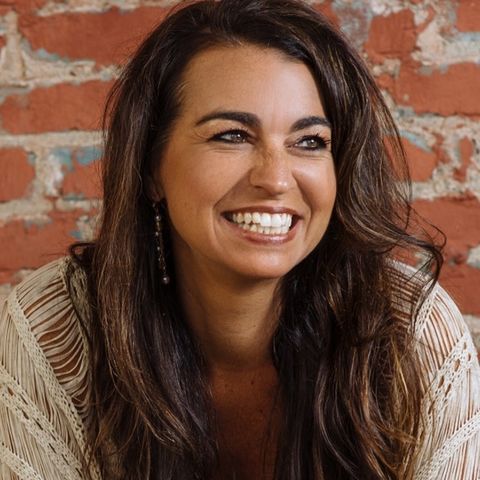
Welcome to The Michelle Chalfant Show,
The next evolution of the Adult Share Podcast.
I am Michelle Chalfant,
And my goal is to help you to awaken to your true self.
Together we will break through your barriers so you can find your purpose and live a soul aligned life.
Each week,
I'll bring you powerful conversations with thought leaders,
Spiritual teachers,
Healers,
And change makers,
Along with actionable insights to help you to transform your life from the inside out.
Welcome to The Michelle Chalfant Show.
Hello everybody and welcome to The Michelle Chalfant Show.
I had a really good show today.
I talked to Mark Sisson.
You probably know him,
But if you do not know him,
He is a former elite athlete.
He is the forefather of the primal and paleo lifestyle,
CEO of Primal Kitchen.
Mark has a lot going on.
He's had a lot going on.
He still has a lot going on.
He is here today to challenge us and to inform us about exercise,
About diet,
About getting well,
Wellness,
Overall health,
And how we live the healthiest lifestyle possible.
But he's challenging us.
I'm not a runner,
So it didn't challenge me at all.
It validated me,
Actually.
He's challenging the runners,
And I'm telling you,
A marathoner who's challenging is running the best way to lose weight.
What if walking is exactly what we need in order to live an incredibly healthy lifestyle?
So we got into it today.
We talked about all things eating.
We talked about paleo.
We talked about keto.
We talked about fasting.
We talked about the benefits of ancestral eating in modern life.
How about this one,
Optimizing health with minimalist exercise?
Who doesn't want to hear about that?
We talked about it,
How recovery and rest are just as important as exercise for achieving optimal health.
Let me just say this.
Mark knows his stuff,
Yeah,
And he talked about,
Too,
The myths of traditional fitness regimens.
I mean,
We work out too hard,
People,
And he's here to talk about it and educate us on this exactly,
Why common workout routines may not be the best approach for long-term health.
His book,
Born to Walk,
It's really incredible.
I'm excited to,
If you do not know Mark,
To share him with you today.
Let me tell you a little bit more.
Again,
Mark Sisson,
He's the forefather of the primal and paleo lifestyle and former CEO of Primal Kitchen.
He's the pioneering force behind the primal and paleo lifestyle movement known for his best-selling books,
The Primal Blueprint and The Keto Reset Diet.
He's a former elite athlete.
He has competed in,
Gosh,
Multiple,
Multiple,
Multiple marathons,
Hawaii Ironman triathlete experiences that fueled his passion for optimal health.
Anything at all to do with health,
I'm telling you,
Mark knows.
As an innovative entrepreneur,
He founded Primal Kitchen,
A line of healthy condiments and Paloova,
A minimalist five-toe shoe company.
Mark's work continues to inspire a return to ancestral health and well-being lifestyle.
All right,
Here we go with the one and only Mark Sisson.
So welcome to the Michelle Chalfant Show.
Mark Sisson,
It's so nice to have you.
So great to be here,
Michelle.
Thanks for having me.
Yeah.
I'm really excited to talk to you about a lot of different things because,
Ooh,
From eating to health to walking,
We're going to talk about walking and the importance of walking and the benefits of walking.
But you are Mr.
Fitness,
Mr.
Someone that really knows so much about fitness and wellness.
And it can be really confusing in this day and age to know,
What do I eat?
Do I eat keto?
Should I do intermittent fasting?
Should I eat paleo?
Should I.
.
.
Do I fast?
I don't know what to do.
I don't know how to.
.
.
And,
You know,
Oftentimes it's not even about losing weight.
It's about just maintaining good physical health.
So let's start there.
You talk about workout routines,
But I want to talk about eating first.
Tell us about what you know about ancestral eating,
As you call it.
Well,
You know,
You bring up a good point,
Which is people are frustrated or confused or they tried things that didn't work and they're like,
Oh my God,
How do I know what's right?
How do I know what the answer is?
And so my job in my career has been to educate people on how the body works so that you can choose for yourself maybe the best answer for you.
So there is no right answer.
There are a lot of wrong answers,
But there's no real right answer,
You know?
So some people that,
You know,
Through my career,
I've promoted paleo,
Which became my brand of Primal,
Which is an adaptation of paleo.
And then I'm sort of moved on to keto and carnivore and omnivore.
And I've kind of woven a path through all of these different ways of eating.
But what I realized about 10 or 15 years ago was that the really the holy grail of all of this is establishing what I call metabolic flexibility.
So people,
Whether you,
However you choose to eat,
Your goal should be to be able to burn off your own stored body fat.
Whether you're eating or not eating or exercising or not exercising,
You should be able to access your own stored body fat.
And when people say they want to lose weight,
That's really what they want to lose.
They want to lose fat.
They don't want to lose muscle.
So the idea behind metabolic flexibility starts with sort of the opposite,
Which is people who are not metabolically flexible,
Which is most Americans.
They're good at burning sugar.
They're good at burning glucose in their bloodstream.
And they're sort of relying on a meal every couple of hours to stave off the hunger.
And in that meal,
They're eating a lot of carbohydrate or some carbohydrate that gets their blood sugar up.
And over a lifetime,
People create these patterns where they're not forcing their body to burn off its own stored body fat.
And yet they're out of energy because they haven't learned that skill.
And yet they've burned through their glucose,
Their blood glucose.
The typical pattern is you consume a meal,
You eat a meal,
And insulin is secreted by the pancreas,
Which wants to get all those nutrients and sequester them into the cells.
So the glucose goes into the cells and the glucose goes into the muscle cells,
Sometimes in the fat cells too.
And the amino acids go into cells.
And that's the purpose of insulin.
But most people,
Insulin works its way in.
And because of the high carbohydrate nature of most diets,
There's an overreaction.
And too much insulin goes in,
And then it sops up too much glucose.
And then you get a low blood sugar kind of thing,
And you get hangry at 10 a.
M.
Or mid-afternoon or whatever,
And you have to eat a snack or whatever.
And this sort of perpetuates itself through a lifetime.
So my path has been to discover ways in which we can build metabolic machinery to burn fat,
To become metabolically flexible so that we burn the fat on our body,
Or we can burn the fat on our plate of food,
Or we can burn the glucose in our bloodstream,
Or we can burn the glycogen in our muscles,
Or the ketones that the liver makes in the absence of glucose.
And this flexibility allows us to cruise through life never being that hungry,
Because we always have fat.
Look,
I'm a pretty skinny guy,
And I have enough fat to walk 350 miles on me.
So everybody has access to their stored body fat.
So how do we craft an eating strategy that prompts the genes to upregulate and build more mitochondria where the fat are burned,
Build more muscle tissue?
So lean muscle is metabolically active tissue.
That's what consumes calories.
That's what gives us energy to move throughout the day.
How do we craft an eating strategy around that?
And I've written 10 books on it,
And each one's kind of a different approach.
But some people would say keto is the way to get there.
I wrote a book called The Keto Reset Diet.
And in that book,
I don't say you've got to be keto for the rest of your life.
I would suggest you use a ketogenic diet for a couple of weeks to reset your metabolism to become more metabolically fit,
More metabolically flexible.
But it could be just the low-carb,
Typical low-carb eating strategy,
Which would be just to cut your.
.
.
Look,
If you get rid of the sugars,
The pies,
The cakes,
The candies,
The cookies,
The sweetened beverages,
And all the stuff we know we shouldn't be eating,
You cut out the sugar,
You cut out the processed grains,
Which convert to glucose in the bloodstream,
And you sort of leave yourself with this list of very tasty,
Healthful foods,
Meat,
Fish,
Chicken,
Turkey,
Cheese,
Nuts,
Fruits,
Vegetables,
All of that,
You'll trend toward this ideal body composition because you are cutting the amount of excess carbs your body takes in and only getting carbs from,
Say,
Those that are locked in a fibrous matrix that is vegetables.
And now the body says,
Okay,
We're not going to get that much glucose every couple of hours.
Let's start to build some metabolic machinery to burn fat.
And it's a gradual process,
But over time,
A combination of withholding carbohydrates,
Of timing your meals so that you only eat when you're hungry.
In other words,
Most people eat because it's mealtime,
Right?
Oh,
My God,
I already heard that breakfast is the most important meal of the day,
And don't skip that.
I'm absolutely not a fan of that saying.
So if you gradually,
Starting with your choice of materials,
Your choice of foods,
And then realizing that there are times a day when you're not that hungry,
And you don't have to eat when you're not hungry.
And during those times you're not hungry,
Your body is accessing your stored body fat.
It's actually starting to burn your own body fat.
And so the longer you can go without eating,
Within reason,
Without getting hungry,
Because that's the goal,
The longer you can go without just saying,
Oh,
My gosh,
It's time to eat,
The more your body starts to get into this mode of,
Oh,
I know,
I'm building the metabolic machinery to burn fat.
I'm going to burn fat easily.
I'm going to access it whenever I want.
I don't have to think about topping off my blood sugar or anything like that.
It becomes a wonderful thing.
It becomes the most freeing aspect in life for most people,
And particularly for women.
That was my next question for you is,
Is it different for women versus men?
Because I know so many of the earlier studies were done on men,
As far as intermittent fasting,
Even the way we eat,
All these things.
And I realize it's not one size fits all,
By any means.
I mean,
Even two women shouldn't eat the same way.
So.
.
.
Right.
So,
That's a great point.
There are so many hormonal differences.
I did a podcast this morning with a guy in England,
And he asked me sort of the same question.
And I haven't had this question for a while.
And I said,
I'm out of my league here.
I can't talk about women's hormones capably,
But I do know that there are so many differentiations,
Different factors surrounding women in general,
Whether it's in puberty,
Whether it has to do with pre-menopause,
Peri-menopause,
Post-menopause,
All different factors that have,
That will play into this.
Ultimately,
This comes down to understanding how your body works,
And then being willing to experiment and notice what happens.
So don't engage in some brand new eating strategy and go,
I'm giving this 45 days,
No matter what,
No matter how uncomfortable it is.
No,
Notice within a few days,
You know,
How you feel,
And is this going to work for you?
Is there a treatment?
Is there a tweak that you can make here and there?
Many women find that a ketogenic diet works very well for them.
I don't know if you know Candy over at Primal Bod,
But she's a huge proponent of this,
And she's got thousands of women doing her program.
I guarantee you,
Not all thousands of women are succeeding on her program,
But it works for her.
So keto works for some women,
Doesn't work,
Makes others miserable.
And so there's,
But it's worth a try.
It's not going to wreck you to try it for a little while and see,
Or intermittent fasting,
You know,
Waking up and saying,
Okay,
I don't,
I'm not necessarily hungry yet.
I'll see if I can go till 930 this morning without eating.
And then you do it and then you go,
Okay,
That was doable.
And then the next day or two days later,
You go,
I'll see if I can make it till 1030.
And so experimenting with just your energy levels,
Again,
Always,
Always with this appropriate basket of food available,
Right?
You can't do this if you're eating Cinnabon and slamming down Coca-Colas all day and,
You know,
In that regard.
So there has to be some framework here,
Michelle.
Yeah.
So tell us,
What is the difference between paleo and keto?
Well,
I mean,
Keto is just a more strict version of paleo that doesn't involve as much carbohydrate.
So paleo would say it almost doesn't matter how much carbohydrate you eat,
As long as you confine it to that list of vegetables and fruits and starchy tubers and natural things.
Now,
If you confine it to that list and you're pretty rigorous about that,
You can find yourself consuming 200,
225 grams of carbs a day within a paleo context.
With keto,
The almost definition of keto is less than 50 or 60 grams of carbs a day.
So you have to be really aggressive about cutting your carbs,
Which means you get rid of the starchy tubers and you get rid of any of the stuff that,
You know,
Even if it's sort of keto breads and things like that,
You can get into trouble.
Not get into trouble,
It just doesn't get you where you want to go in terms of cutting the carbs.
Because the reason for going keto is to prompt your body to be good at burning fat and be really good at using ketones in the brain.
And that's really where the magic happens,
Is when the brain becomes good at burning ketones and then it doesn't have these,
Because the brain sort of controls the mood and appetite and all this other stuff.
And if the brain's happy,
Because it's being fueled by ketones,
Then you can go long periods of time without any lapse in energy or any change in mood or any of this stuff.
So my,
So paleo was like really about the food choices,
Not about the macros.
Right.
Primal came,
Yeah,
Go ahead.
No,
I was just going to say macros,
Gosh,
I hear,
I've heard so much about that for the last couple of years now.
I want you to talk about that after,
Like,
What the heck does that even mean?
Because I don't think a lot of people even understand what it means to eat that way.
Go ahead though.
Want to talk about it now?
Yeah,
Go,
Go for sure.
So macros refers to macronutrients and those macronutrients are protein,
Fat and carbohydrate.
And so most people would say,
Most dieticians would say,
You know,
You have these requirements that your body needs throughout the day.
And of those macronutrients,
Remember micronutrients are the vitamins and minerals,
The phytonutrients,
The little plant compounds,
But the macros are fat,
Protein,
Carbohydrate.
They would say,
You know,
You probably need 100 to 120 grams of protein a day.
And in the last couple of years,
People would say,
Well,
Base your diet largely around how you access protein,
Because protein is the most critical component of what I would say,
A good healthy diet that is leading toward an ideal body composition.
So pick your macros first,
Make sure you,
So you know that you're going to have to get out the app and go,
Okay,
How many grams of protein in a four ounce piece of salmon or a jar of tuna or whatever.
The next level would be carbs from vegetables.
But if you look at fruits and vegetables as a totality,
Those carbs are almost like free because the carbs that are in vegetables are locked in a tight fibrous matrix and they don't release into the bloodstream in one fell swoop the way say a potato,
A baked potato or a bowl of rice or pieces of bread or a bowl of pasta would.
Those convert to glucose very quickly.
Vegetables take a long time to slowly sort of drip into the system,
Into the bloodstream.
So you don't even worry about that.
And then fat,
The third macronutrient,
Usually you get a fair amount of fat in combination with the meat or the fish or the chicken that you're eating.
So there's some fat there.
And then you would get a combination of maybe some healthy oils,
Olive oil,
Avocado oil on the dressings that you put on your salad or the butter that you drizzle over your vegetables or that you saute your vegetables in.
And then some people like Stephen Gundry would say then also take two tablespoons of olive oil a day because if you just adhere to the program I just described,
120 grams of protein,
Which is a lot for a woman,
By the way,
It could be 80 to 100 for a woman.
But let's say for,
I never get more than 100,
120 grams of protein,
Only 400 calories.
And then the fat that accompanies that and the other fats that you get with the oils and the butter,
If you get 100 grams of fat a day,
That's only,
Only,
That's 900 calories from fat.
Now you're only at 1380 calories.
And then if the rest of it is vegetables,
And if you've already discounted the fact that you're,
You counted the oils that you're going to put on your salad and the butter that you're going to drizzle on your vegetables,
And you're just talking about straight three cups of steamed broccoli or peas or,
Or bowls of,
Of salad,
You know,
It's maybe 50 or 60 or 75 grams of carbs.
And if it's 75 grams of carbs,
That's only 300 calories.
Now we're like at 1780 calorie,
It's covered all the macros.
So you think you're so well,
We're,
How is it that people are eating 3,
500 calories a day?
Well,
They're eating a lot of,
You know,
600 grams of carbs and they're,
And they're,
And they're over consuming fats in the form of,
You know,
They might have,
Instead of baked potatoes,
They have French fries with,
You know,
Nasty oils on them or,
Or a bag of chips.
And you know,
This is a serving size of chips,
A little bag.
And oh,
By the way,
This bag is also a certain size of chips.
So if you,
If you were to focus on your macros and said,
All right,
Mark said,
As long as I get enough protein and I eat plenty of vegetables and I make it up with fat,
I'm only at 1,
700 calories.
So if I'm playing around with keto and I'm not feeling right,
I'd say,
Then you add in a sweet potato,
You know,
Or you add in a baked potato or you add in some brown rice,
Not a lot,
Just,
You know,
Maybe it totals a hundred grams,
Additional grams of carbs or 120 grams of carbs.
You're still around 2,
200 calories.
Nobody's going to,
If you're in the least amount active,
You're going to trend toward your ideal body composition.
You're going to achieve this metabolic flexibility so that when you were just sitting around doing nothing,
You're burning fat.
When you're sitting around low level activity,
You're burning fat.
When you're outside walking,
You're burning fat.
You're not burning glucose or glycogen.
You're not cannibalizing muscle tissue.
You're not going catabolic because of this.
That sort of leads us into the concept of exercise and how we- Yeah.
I'd like to talk about that.
How we orchestrate- Wait,
Can you pause before we jump into exercise because I certainly want to go there.
How do we know how many cal- I mean,
I've heard so many calculations over the years.
Oh,
If you are a woman that wants to weigh,
Let's say 140 pounds,
Then you need to eat 1,
400 calories.
You just add a zero at the end.
That's how many calories.
And then I've read other things.
And then now there's,
Again,
The macros,
It's like,
How do we know how many calories that we can eat in order to just at least maintain our weight and then to lose weight on top of that?
Yeah.
You have to play around with it.
And when I say play around with it,
I say you start with the template I just gave you.
So start with protein.
Make sure you get your protein needs met.
That's critical.
Lots of vegetables,
Lots of plant stuff,
And then some fruits if you like fruit.
And then healthy fats in the form of healthy primal kitchen salad dressing.
Yes,
Which is delicious,
By the way,
I love my primal kitchen salad dressing.
I mean,
I made this product because I wanted a product I could put on salads and use with what I call reckless abandon,
Right?
I didn't feel bad about because it was a good fat I'm putting on.
I didn't feel like,
Oh,
My God,
I got to use it sparingly or else I'll compromise my health.
No,
I'm like,
I want so I can put a half bottle on a big salad and just,
You know,
Feel great.
And not feel guilty about it.
Exactly.
Not have salad shame,
Because of your salad dressing.
Okay,
And then one more thing before we jump over to exercise.
So protein,
Again,
If I want to weigh,
I'm going to just use this example 140 pounds.
Doesn't that mean I need to be eating 140 grams of protein every day?
I just don't understand that.
I know Gabrielle is,
She's big on that.
This is what I hear all the time.
I'm like,
Damn,
It is hard to get that much protein in my day.
I can't get 140 grams of protein in a day and I'm a grown man,
You know,
So it's just,
I don't get it.
It's a lot of protein.
So I think if you strive to kind of come close to that,
Good.
But what I've noticed with a lot of women who try to do that is then they get stuffed and bloated.
It's like too much food.
Then they're not hungry.
And now they're forcing themselves to eat just to get protein in.
So there's a point at which,
And again,
Self-experimentation is still the only way to go ultimately,
But you need to be armed with the information to start that.
Okay.
This was so good.
So this is a lot about eating,
Which is very helpful.
You also are an expert in exercising,
Running,
Walking,
All the things.
So let's talk about that because we need to do- What did you say?
You said I'm an expert in exercising and you're right.
I'm good at exercising.
So I know a lot of,
It's different from I know a lot about it,
Which I do,
But I'm also good at exercising,
Which I'm not proud of.
So let's unpack that,
Shall we?
You know,
I was a elite athlete,
A marathon runner for a long time,
And then I was a triathlete and I've always done endurance sports.
To my detriment,
I suffer a little bit now from the years that I overtaxed my body and my heart doing these things that I thought were good for me and were up to a point,
But then stopped being good for me and started being bad for me.
And armed with that information,
I started looking a bunch of years ago at what I thought would be like,
What is the minimum effective dose of exercise that I need to have all those attributes that Peter Atiyah talks about,
That Gabrielle talks about,
That,
You know,
That all,
You know,
The,
Whether it's the VO2 max is the big thing,
Right?
Rhonda Patrick talks about VO2 max.
Can you explain that though,
For my audience?
They don't know.
VO2 max is the VO2,
Volume of oxygen,
The maximum volume of oxygen that you can take in to your lungs per minute while you're exercising at a high rate.
And that's a measure of your metabolic,
Your cardiorespiratory fitness,
Because it's the lungs and heart that are distributing oxygen to the muscles.
And they're only doing so because the muscles are working so hard,
They're demanding this.
So the point at which the supply meets the demand and there's no more coming in is called VO2 max.
So it's a great measure of cardiorespiratory fitness.
Where it gets,
I think,
Oversold is that it's not just one metric.
I mean,
There are a lot of metrics that I would look at for a quality longevity,
Like living a long quality life.
So I want to be able to not just have great lung capacity,
But I want to be able to lift heavy things.
So I want to be able to deadlift twice my body weight.
I mean,
One and a half times my body,
One time,
Whatever that number is,
I can almost lift it twice my body weight now,
You know,
Do X number of pull-ups or push-ups or do a three-minute plank or hang for a minute and a half or stand on one foot with my eyes closed and my arms crossed for 30 seconds.
All of those are equally important metrics for the proxies for longevity.
So to look at VO2 max and just say,
Okay,
That's what I'm really going to work on.
I know a lot of people who are my age who have,
They're in the 1% of the VO2 max,
But because they worked so hard and they went so catabolic and they did so much aerobic stuff to get there,
They sacrificed their strength,
Their balance,
Their mobility,
Their agility,
Their resilience.
And so it costs them in all other areas.
So I would rather be in,
Rather than the top 2% or 1% of my VO2 max and go,
Yeah,
I'm going to live longer.
I would rather be in the top 10% of VO2 max of deadlift strength,
Bench press strength,
Dead hang strength,
Plank time,
Breath hold,
All these other metrics,
You know?
And that's,
Again,
My friend,
Peter Atiyah has quite like what I,
I don't know,
The Centenarian Olympics or something like that,
But you want to be competent across all those modalities.
So now that's a preamble to what I'm going to say,
Which is to say that so many people have taken on running as the quintessential human movement and running tore me down.
It was my sport.
I was good at it.
I was an ectomorph.
So I was a skinny guy with long legs,
Lungs,
And a great pain tolerance.
And so I ran competitively for years.
I was one of the few people that probably should be running,
But most people should not be running.
And yet there's been this running boom over the past 50 years that has promoted running as the be-all and the end-all,
And it's the best thing that you could do is put up,
Lace up your running shoes and go out for a three mile or five mile or whatever and do it multiple times a week and sweat and get your heart rate up there,
And it's all valuable,
Good stuff.
Well,
Again,
It turns out that most people are not benefiting nearly as much as they thought they would or think they are from this work that they're doing.
So I wrote a book called Born to Walk,
And it's kind of a play on a book that came out 15 years ago called Born to Run.
A great guy,
Chris McDougal,
Wrote this amazing book in which he posited that our ancestors were born to run.
We have this anatomy that allows us to run,
To be able to run,
And that we rose to the top of the food chain through this thing called persistence hunting where we would track an animal for two hours and outlast and outwit and outplay the animal for the hours that we're chasing it down and then jab a spear in it and have dinner.
And it was an interesting story,
Good story,
It makes for great entertaining thought.
But the idea that we were born to run,
Which suggests that now every one of us should run every day metronomically at eight or nine or 10-minute mile pace,
It doesn't jibe with that story.
Our ancestors walked a lot,
They walked 10,
15,
20,
30,
000 steps a day every day.
They didn't sit,
So even their resting posture,
Which was kneeling or squatting or cross-legged or side saddle,
Was still putting the body through different ranges of motion.
They climbed trees,
They lifted heavy things,
So they lifted weights in the sense that they were lifting boulders or logs or building shelters or whatever or carrying babies.
And they sprinted once in a while,
They sprinted to get away from danger or towards something that they wanted to eat.
So lots of low-level activity,
Like 85% to 90% of their activity is low-level activity,
Some lifting of heavy things,
And some sprinting once in a while.
And that combination of life training,
Lifestyle training,
Enabled them to go on a persistence hunt.
And now the men went on the persistence hunt,
And that hunt wasn't really,
It's not like you're out running an animal to a finish line 20 miles away.
It's literally crouching,
Stalking,
Sniffing,
Jogging,
Sprinting,
Crouching,
Collaborating over a period of hours to tire an animal out that's skittering around trying to avoid you while you're using your brain and a team of people to surround the animal and eventually make it tire out.
The idea then that we were born to run sort of emanated from this misapplication of anthropology,
In my estimation.
So we were born to walk,
And we were born to be able to run,
Yay,
Once in a while,
But not every day.
And the only ones who should be running are the ones,
Again,
Who are genetically gifted,
Ectomorphs with high pain tolerance,
And who race.
Now how does that manifest itself?
People say,
Well,
There's tens of millions of people that are running,
And they seem to be doing okay,
But they're not.
Runners get injured at a rate of 50% a year.
So 50% of runners get injured every year.
At any one point in time,
25% of everyone who calls himself a runner in this country is injured.
Many people engage in a running program to lose weight.
It's a horrible way to lose weight because most people run at a pace that's too high for them to burn fat.
I'll take you back to our metabolic flexibility.
If you haven't developed metabolic flexibility,
If you haven't learned how to burn fat,
Now you go out for a run,
And your body's burning glucose and glycogen.
The brain goes,
We don't know how to use ketones that well,
And we're out of glucose,
And I'm getting hangry.
And I did this amazing run where my watch says I burned 600 calories,
Holy smokes.
But the brain says,
Let's go eat,
Let's eat more,
Let's overcompensate with carbohydrates because we're going to do it again tomorrow,
And the next day,
And the next.
So over time,
What you see is people who are doing a lot of work,
And they're struggling and suffering,
And sweating,
And groaning,
And they slink over to the couch and slump down on the couch and think,
Oh my God,
What a great run that was.
But they didn't burn fat.
They didn't get any better.
In other words,
They didn't improve their performance,
And here's why that is true.
Because running performance depends on a strong,
Broad aerobic base,
Lots of capillaries,
Lots of mitochondria,
And the ability to burn fat,
And then a high-end VO2 max,
Anaerobic threshold.
So if you want to get faster and faster at your 5K or your 10K or a marathon,
You have to do lots of this zone one,
Zone two training,
And a little bit of very high-end stuff like either lifting weights in the gym and or sprinting,
Or once a week,
Some kind of VO2 max threshold stuff.
Well,
Most people just run their run every day,
And their heart rate is too high to be burning fat,
So they don't get the benefits of the capillary perfusion and the metabolic and the mitochondrial biogenesis,
But it's too slow for them to improve their speed or their power or their anaerobic threshold.
So all they're doing is practicing hurting themselves,
Courting injury,
And because it's too stressful for the body to do on a regular basis,
They're catabolic,
They're producing cortisol every single time they go out and run,
And that cortisol,
As you know from what we've been talking about in this space for the last 10 years,
Cortisol is a life-or-death hormone that in chronic cases suppresses the immune system,
Which is why runners get colds and flu a lot more than anyone else,
And it encourages the deposition of belly fat,
Visceral fat.
How is that a good thing?
At the end of the day,
I look at tens of millions of people,
And I'm like,
I'm so sorry that you've chosen this activity that you were sold a bill of goods on,
You were sold it by the running shoe industry that said,
Hey,
Try these shoes,
They feel like you're running on clouds,
And all they're doing is literally increasing your risk of injury,
Because if you're an overweight person and you don't know how to run,
You're running with bad form,
The shoes,
All they do is they forgive bad form for the immediate time,
But they're still,
So now your feet don't get pounded immediately,
But all of that stuff gets pushed further up the kinetic chain,
So you get knee issues or hip issues or lower back issues or neck issues as a result of this misapplication of your kinetic chain because you're running too hot,
Too hard,
Too stressfully,
And again,
All in the name of no pain,
No gain,
If it doesn't hurt,
It must not be valuable.
With this book,
Born to Walk,
I'm saying,
Look,
I can craft an amazing workout schedule for you if you tell me,
If you tell me that your goal is to be strong and lean and look good naked and fit and healthy and happy and productive and sleep well and have good sex,
Then I'm going to create a strategy for you that has next to no pain and suffering.
It's going to be a lot of walking,
And it'll be dedicated walking,
And we'll talk about what that looks like,
And again,
We have programs in the book,
But you're not going to be having your heart rate get way the hell up there so frequently,
And then you're going to go,
Now,
If you get this strong aerobic base and you're not catabolic,
If you're not tearing down muscle tissue because of all the running you're doing,
Now,
You go to the gym twice a week.
I mean,
You can go more,
But if we're talking about the minimum effective dose of exercise,
Twice a week is all you need.
If you do these lifts right in the gym,
If you work the muscle right,
If you do the resistance training correctly,
You can't do it the next day because you're not doing it hard enough the day that you're doing the work.
You need to do it so that you get a little sore,
And it takes you two days to recover from that particular exercise.
Recovery being defined as the point at which you can do it again.
So lots of low-level activity.
Most of it walking.
Can be easy cycling.
It could be swimming.
It could be a lot of things,
But walking just is the most available to most people.
Lift twice a week and sprint once a week,
And sprinting doesn't have to be running.
It's doing an all-out activity as hard as you can for 10 seconds to maybe 40 seconds,
Depending on your level of expertise,
With a rest in between of two minutes to three or four minutes,
Depending on your fitness level,
And doing one sprint workout a week.
And that could be on a bike,
On a treadmill.
It could be just walking up a 15-degree incline at two miles an hour.
You don't have to run.
Could be an aversive climber.
Could be an elliptical machine.
Could be in the pool.
It doesn't matter where it is.
You just want to do a hard,
Hard activity like that once a week.
And those workouts are probably the most beneficial and also take the least amount of time,
A 10-minute warm-up,
And then only about 20 minutes of actual two minutes or 30 seconds on,
Two minutes off,
30 seconds on,
Two minutes off.
And you walk away tired,
But not beat up from those types of workouts.
Wow.
So much you just said.
I'm like,
Oh my God,
I have so many questions.
So it is important,
When you think about walking,
It is important also to go to the gym and lift heavy weights.
That seems to be a universal truth at this point.
And I hear,
As far as women go,
Throw the little pink dumbbells away.
We need the little two-pounders that we do this with.
We need heavy weights.
Yes?
Yes.
And here's one of the issues that you see.
I see a lot of the cardio Barbies out there,
The cardio bunnies who are,
They're doing,
If they're not running five miles a day and then bringing the pink weights and doing this stuff at the gym because they need to do two-a-day workouts in their head,
They need to do two-a-day workouts.
Or they're doing Orange Theory five times a week.
Or they're doing Barry's Bootcamp in the morning and Orange Theory in the afternoon.
And like,
So grossly overdoing this.
CrossFit is hard.
So they don't,
You don't need to do all this stuff.
And it becomes catabolic.
It breaks you down if you do too much of this stuff.
So walking is anabolic.
If you do 20,
000 steps a day,
I'm not suggesting you have to or need to,
But if you do,
It's not too much because it's not going to beat you the way running would.
And walking is also reinforcing an appropriate gait,
An appropriate footfall,
An appropriate kinetic chain.
Now,
I talk a lot in the book and,
You know,
I have a whole company dedicated to a type of shoe that reinforces healthy walking.
So I've designed a shoe,
The Paloova Footwear,
Which is a five-toed shoe that encourages your,
You know,
It's a thin sole that allows you to feel the ground you're walking on so the brain is informed of exactly the tilt,
The texture,
Whatever of the ground you're walking on,
And then informs the toes how much to bend the arch,
How much to stretch the ankle,
How much to roll outward or inward to absorb the first part of that change so that it doesn't all go up the knee and you tweak a knee doing this,
How deep you need to bend the knee if it's a dip in the thing.
And all of this information has to become available to the brain in order for everyone's kinetic chain to work perfectly.
And if you're wearing thick,
Cushioned,
Heavy shoes with high lifted heels,
Now you've got an arch support,
Now your arch isn't working,
Now your big toe is scrunched against your other toes,
Now your calf muscle is shortened,
Which has caused problems on the Achilles,
And all of these things,
They get exacerbated over time.
And that's why it's sort of a two-pronged attack on this walking thing.
Like walk either,
I would always have people walk barefoot if you have the chance.
If you live near a golf course,
And you can walk barefoot on a golf course in the morning,
That's heaven,
Right?
But if you don't have access to soft surfaces to walk on,
I created a shoe that kind of recreates that sensation of being barefoot on a nice,
Soft,
Sandy surface.
We say it's like walking barefoot on a putting green.
Nice.
So what about,
I know I put arch support in my walking shoes.
So what happens to those arch supports?
We just stop needing them if we just wear the polo boots?
Yeah,
Why do you think you wear an arch support?
I don't know,
Because the guy at Fleet Feet told me I need them.
I don't know.
Do you run,
Or do you walk?
Do you just walk?
No,
I'm definitely not a runner,
Definitely.
I have tried.
That is not me.
I'm a walker,
Though.
Like I was saying to you,
I think I started walking when I was 14,
And I've never stopped.
Like it just,
Every day,
Minimally an hour,
Probably more like an hour and a half,
Sometimes twice a day,
Early morning and then later.
Oh,
I got to get you my shoes.
I got to get you my shoes.
I've created an army of women over 40,
Not that you're there yet,
But over 40 in Miami who are walking six,
Eight,
Nine miles a day on brick and concrete,
Because we're in Miami.
And that's their thing.
And every day,
And they would never,
And these are women who used to wear the regular shoes,
You know,
The regular shoes,
And like life-changing.
Like,
You know,
One woman who was unable to walk because of her bunions and now walks beautifully because- Get out of here,
Bunions?
Yeah,
Plantar,
That's a classic one that we have.
Plantar fasciitis,
People are improving their experience not having plantar fasciitis.
Now,
I can't make any of these claims that we're going to fix this,
But it's certainly worth,
Most natural podiatrists now would say spend as much time as you can barefoot or wear minimalist shoes and or wear toe spacers at night.
Yes,
I wear those.
I have the socks too that separate the toes.
I've created a company where the footwear that we make is a toe spacer,
And now you get to wear it all day long and you get to move your toes individually according to whatever rock you step on.
Like we look for uneven surfaces when we're out for walks.
We look for cobblestones and rocky trails and all kinds of craggy things because we're not running,
We're not incurring the 7x g-forces of a landing on an uneven surface.
We're walking.
We're just the body weight,
And every time we land,
The brain,
Because of the thinness of the shoe,
The brain knows exactly,
Again,
How to accommodate that push off in a way that best utilizes all of the joints in my particular body,
Which are different from the joints in your body,
But my brain can't tell your body how to work.
Feet and brains are connected,
And that gets back to your expertise,
Your area of expertise here,
And if you've studied any reflexology,
You know that the big toe is the head.
Every part of the foot in reflexology has an afferent nerve ending that corresponds to some part of the body.
My gal comes over tomorrow,
And it's one of my favorite days.
I get an hour and a half foot reflexology session once a week,
And she will tell me by feeling tension or inducing pain in parts of my feet,
Oh,
Your neck's hurting today,
Or oh,
When I had hip replacement surgery two months ago,
I'm 100% recovered.
It's amazing,
But through this whole process,
She would sort of assess just from my feet how I was doing,
So the feet are,
Look,
They're our connection with the universe.
They're how we contact the ground and how we orient ourselves in this spade,
And to think that we're going to encase them in these tight crypts,
Squeeze the big toe over,
Rocker the front part of the toes up,
Elevate the heel so we shorten the calf,
Artificially support the arch so the muscles never have to work,
And the reason people have flat feet or arches isn't because they were born that way.
Everyone is born with perfect feet.
I don't care what they look like,
Whether they look flat.
There's still a muscle there,
And they still work.
They don't have to be shaped like,
You know,
People of love.
I mean,
They're just a musculature that needs to be worked,
And when we don't,
When we unburden them with these orthotics and with these heel things,
Then all of the intrinsic,
The small muscles of the feet atrophy,
And what we've even seen this in,
Like,
This happened years ago when the book Born to Run came out,
And people,
He was also a big proponent of minimalist footwear,
So a lot of runners who read the story about these barefoot runners,
A lot of runners went out and bought minimalist footwear,
And they said,
No,
What a great idea.
I love that,
And so many,
Thousands of them got in trouble because,
Like,
The first day they went out to do their seven-mile run,
They severely damaged their feet.
Well,
These guys have been running 50,
60,
80 miles a week.
Why would a seven-mile run do that?
Because wearing this crappy footwear,
These shoes,
These elevated,
Cushioned,
Restrictive shoes,
All the work's been done from the ankle up,
And the foot had to do none of the work.
Now you put on these minimalist shoes,
And now you go out for a run,
And now they were getting plantar fasciitis immediately.
They were having Achilles issues because they've never worked the small muscles of their feet.
The foot muscles were atrophied,
Even though they were,
Like,
Wickedly fit people,
But their foot muscles were atrophied because they just didn't pay attention to that part of their gait.
What about Birkenstocks?
Are those good for your feet?
I mean,
They're okay.
I don't want to downplay Birkenstocks,
But it's any type of sandal that has your toe,
You know,
Like the flip-flops,
The thongs,
Those are not good because you have to work your toe muscles sort of the wrong way to keep them from falling off,
But,
You know,
We would always say that minimalist shoes that allow your toes to splay outwardly and articulate up and down individually are ideal.
So we say wide,
Thin,
Flat,
Flexible.
So wide enough for the toes,
Thin enough to feel the ground,
Flat so your heel isn't elevated,
And flexible so that you can feel the ground and so that you can accommodate changes in the shape of the terrain that you're walking on versus,
Say,
Having a stiff hiking boot with a stiff upper that comes up around the ankle.
And now if you step sideways on a rock,
Not only do you not feel it,
But all of that energy goes into tweaking your knee sideways because you can't accommodate the change in terrain that way.
Oh,
My gosh.
What about.
.
.
So I'm so floored by this.
So you're seeing people improve from plantar fasciitis,
Bunions,
All things like that,
From wearing.
.
.
It makes sense because that's how we started out.
We didn't have shoes way back when.
Like,
There were no shoes.
There weren't,
Like you said,
The thick soles.
So here's the thing,
Michelle.
Your bunions.
.
.
One's bunions are not a genetic defect.
If your mom had bunions and now you have bunions,
It's because she bought you your shoes.
And bunions.
.
.
We don't get bunions if we.
.
.
Like,
Nobody who's barefoot gets bunions.
You know,
Indigenous peoples and ancestral communities around the world who go barefoot all the time,
They don't get bunions.
It's ridiculous.
Their feet splay outwardly.
Most would say,
Ooh,
I don't want my toes to look like that,
But they don't get bunions because they're using all of the muscles of their feet.
You get bunions because you've squished this big toe against the others in a narrow,
Cute heel.
Oh,
Yeah.
I can't do that.
I don't do that anymore.
What about the toe.
.
.
You've seen toe crossovers.
You know how that happens with people?
Their toes start to cross over?
Same kind of thing.
Same thing.
It's just from shoes.
It's not genetic.
It's not like.
.
.
Now,
It's only genetic in that if you have a weak gene pool,
Rather than that same thing happening to everybody who wore regular shoes.
Some people are more resistant to that sort of dysfunction,
But because you had some genetic predisposition to doing that,
Now the fact that you put your foot in these cases for years that you actually shrunk your feet intentionally,
Now you pay the price.
Damn,
That's powerful.
Talk about walking.
Someone's never walked or someone like me that's an avid walker.
What's a good regimen?
What do you propose?
What do you talk about?
What do you think we should be doing?
So,
I try to walk a couple times a day.
I don't try to do all my walking at once.
The human body is designed to be moving around a lot.
The irony here is that our ancestors moved around a lot at this low level of activity,
But running for them would have been antithetical in so many instances.
First of all,
It's a horrible waste of energy to run,
But walking is so energy efficient.
It's not about burning calories.
You have to get this idea that how many steps did I get and how many calories does that represent?
Forget that.
The body burns calories because of your metabolic flexibility.
The body,
You want most of your fat to come off your body when you're not working out as opposed to just in that 45 minutes that you're working out,
Which most people think that's the way.
You're flipping my brain.
Like,
Wait,
I thought that's why we were walking.
That's why we go to the gym.
That's why we do these things to burn the fat then.
But I like what you're saying because you're saying,
No,
No,
No,
No,
No.
We want that fat to burn just on a regular basis when we're not just at the gym or not just walking.
Now you walk a lot.
Now you're burning fat while you're walking.
That's inevitable,
But don't count that.
I mean,
Okay,
If you want to visualize you're burning fat because you're good at it and now you've developed metabolic flexibility,
But the walking isn't about burning calories.
It's about the movement.
It's about getting your body to move all the time.
The body movement and when you don't move,
It gets inflamed and it gets depressed and moody and everything else.
The lifting weights is to build muscle and muscle is metabolic tissue.
So it's the more muscle you get from those days lifting weights.
So it's not about the 600 calories you burned that day in the gym lifting weights.
It's about the muscle that you made that's now going to burn fat the next 24 hours and on and on and on and on.
So you're building this metabolic machinery in the gym.
So you don't want to think in terms of real time,
Like,
Okay,
I'm doing this workout and my whoop or my watch says I did a thousand calorie workout.
I don't care.
That's going to make itself up with the food you eat and the stuff you do or the activities you choose not to do in the next 12 hours because you're so tired from the work you did.
So it's going to even out.
But it's the muscle you build that's going to be the active calorie burning,
Fat burning tissue that takes you through the rest of your life.
Now,
If you're a runner,
And here's one of the issues,
If you're a runner and you're catabolic,
Every time you run,
You're tearing up muscle tissue.
So when I was a runner,
I weighed 140,
I weigh 172 now,
32 pounds more,
Same body fat,
Same 20 pounds more muscle,
Probably five pounds more bone,
Probably a little bit,
A little bit more water.
I lifted weights when I was an elite marathoner,
I was,
I was in the gym lifting weights,
And I was strong,
Couldn't keep it on because running is catabolic.
When you run,
The body says,
We don't,
We don't want this extra body strength.
So running tears muscle tissue down.
And you'll see it in every elite runner,
They're just skinny,
Like rails.
And so they self-selected to be a runner in the first place.
And then secondly,
They just,
They just,
The profession they've chosen,
They've made a deal with the devil,
I'm not going to get any,
Any lean muscle tissue,
I'm just going to,
It'll be legs,
My legs will be great,
But no upper body of any kind.
So people who say,
Well,
I'm going to run,
I want to combine my running and my lifting,
Almost invariably,
The running interferes with the quality of the lifting.
So you can't,
It's very difficult to orchestrate for the average person.
Now I can tell you,
I can show you CrossFitters,
You know,
Who are combining all this stuff,
But for the average citizen who's just trying to get in shape and lose weight and women in particular,
The way to do this is to walk a lot,
Lift weights in the gym,
Orchestrate your diet in a way that has you metabolically flexible and,
And move around throughout the day.
So the original part of this question was when,
When do I walk and how do I set up a walking schedule?
It may be that five,
10 minute walks spread throughout the day is better than one 50 minute walk because you're moving throughout the day.
I think that is such a great point.
I know in between meetings,
I'll grab my dog and we go walk down the street and back.
It takes 15 minutes.
And if I have a little bit more time,
I might do a conference call,
But I'll go,
I have,
I live on a lake,
So I'll go walk around this little peninsula over here and it's exactly 30 minutes,
But I love when I can just to get out there.
So it's not this power,
You're not even suggesting this big power walk that I'm doing.
It's just moving and looking at our ancestors,
Like you said in the beginning,
They were moving all the time,
Whether it be I'm tracking this animal or I'm home building a garden or attending to my garden or my children or the crops or whatever I'm doing.
We didn't sit around and watch TV.
There was no TV.
We were moving all the time.
And now even doing podcasting like you and I are doing,
Like we sit and I'm sitting,
I know it's,
I know it's,
And by the way,
When I stand up from this,
It'll,
I'll be creaky.
It'll be,
It'll be too much and I have to,
You know,
But it goes quickly and I'll go for a walk.
I'm heading right down to walk on the beach,
On the sand after this podcast.
Yeah.
And I stretch,
I think stretching is important.
I mean,
I'm stretching all the time.
I'll get up from here,
I'll stretch or I'll go walk.
So such good points.
Now,
Just on the concept of like,
How intense do you walk?
Some days I put on a weight vest,
You know,
I add intensity.
Some days I do,
If I'm in the gym and it's nighttime,
Sometimes I'll get on the treadmill.
I'll walk backwards uphill for 10 minutes as a,
As a way to break it up.
I'll put a walk uphill on a treadmill.
I'll do brisk walking.
The point is you can get to the most people,
Again,
Myself,
Probably not included,
But most people can walk fast enough and get their heart rate up high enough to be at the high end of their fat burning maximum zone.
And if they start to run,
They cross over into that.
So they're better off just walking briskly to develop that aerobic capacity than they are to jog at a,
At a higher heart rate and then negate all of the benefits of that zone two zone one type training.
Good stuff.
Can you hold up your book,
Please?
Yes.
I see it for anyone watching.
Yeah.
Such a good book.
Thank you.
Born to Walk,
Available now.
And I would highly encourage people to,
To get it up.
What I'm doing is I'm giving runners permission to walk again,
Because I think a lot of runners go,
You know,
I don't want to walk.
It's just like,
That's like,
I'd rather do nothing than walk.
And a lot of couch potatoes,
A lot of people who haven't engaged in a fitness program,
Don't walk because they've heard that the best thing they could do is run.
And if my knees hurt,
My feet hurt,
I can't run.
And I don't want to waste my time walking if it's no good for me.
No,
Walking is the single best thing you can do.
Walking is the quintessential human movement.
So the more you can do of it,
The more human like you are.
Where would someone start?
Like if someone is just like,
I don't really walk.
I don't work out.
I don't do anything.
Like,
Hey,
Can you go for a 10 minute walk?
Where would,
Where would you tell someone to begin if they are not doing much of anything?
10 minute walk is great.
And again,
You know,
Try to like,
See if you can find a place,
A grassy place to go barefoot.
If you can't get some minimalist shoes,
Doesn't have to be mine.
It'd be good if it was,
But get some thin,
Wide,
Thin,
Flat,
Flexible shoes and start walking.
But you know,
Don't do,
If you haven't walked,
Don't do an hour and 12 minutes the first day.
You know?
Yeah.
Gosh,
I am so glad to have you on.
I'm letting go of my runner shame because I'm not a runner.
My knees don't,
I've never been a runner.
It's just,
I would try to run.
I look funny when I run.
I'm like,
It's just not my thing.
But I am a walker.
Like I've done it again,
Like most of my life.
I mean,
Again,
Like I said,
Since I was about a year old,
But also really when I was.
No,
No,
No.
Here's the thing.
Most people,
Most people are not runners.
Yeah.
Even those who try to run.
Oh yeah.
They're not runners.
You can tell those people.
And everybody is a walker.
Yeah.
Everybody's a walker.
Yeah,
For sure.
And I,
You know,
I do my morning loop.
You know,
I do again,
My hour,
Hour and a half every morning.
And I'm so glad to see so many more people out there walking.
Like I see the same people every day.
I'm like,
There are more and more and more people.
So I think there's a trend happening with that.
So I remember having someone on the show.
I think she was like a neuro something,
Neurobiologist,
Neuroscientist,
Something.
And she said,
When you walk,
You're giving your brain a scrub.
Like it's so good for us.
And so many.
That's that big toe connection too.
So if you can walk,
If you can walk to the point where you're rolling off that big toe,
Because you've got wide toe box shoes,
Or you've got palovas,
My shoes,
Or you've got,
Or you're barefoot somewhere,
It's that connection between the brain and the big toe,
Which is,
Again,
If you scrunch it over in a shoe,
You don't get the full benefit of that.
It's so ironic,
Because this is what people talk about.
Like,
Oh,
Go,
Like you said,
Like,
I'm going to go to the shoe store,
And they've got the Brooks and the hookahs and all the hookahs that are like,
Gigantic soles.
And they're more comfortable.
But gosh,
It's counterintuitive.
Like you would think that would be the best thing for us.
But you would think and that's what they're,
That's what they're banking on.
They want your dollars,
Because,
You know,
The injury you had last year from wearing thick shoes,
They're gonna,
We made,
We made thicker shoes for you.
So we can,
You know,
And it's no,
That's what caused my injury was the thick shoes.
Now you've made thicker shoes,
Because you think it's going to feel better when I,
When I put them on and run down the shore that the aisle of the shoe store.
Yeah.
Yeah.
Wow,
Such good stuff.
Thank you so much.