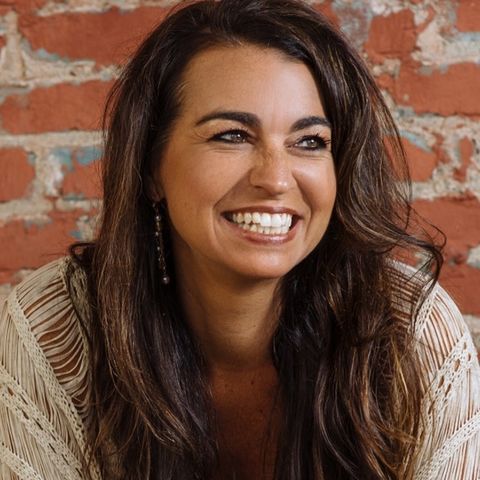
Welcome to the Michelle Chalfant Show,
The next evolution of the Adult Share Podcast.
I am Michelle Chalfant,
And my goal is to help you to awaken to your true self.
Together we will break through your barriers so you can find your purpose and live a soul aligned life.
Each week,
I'll bring you powerful conversations with thought leaders,
Spiritual teachers,
Healers,
And change makers,
Along with actionable insights to help you to transform your life from the inside out.
Welcome to the Michelle Chalfant Show.
Hello everybody,
And welcome to the Michelle Chalfant Show.
I am delighted to be here with you today.
We've got a good guest for you today,
Thomas Hubel.
If you know Thomas,
He is an expert in trauma.
Oh my gosh,
We had not only a deep,
Deep conversation around trauma,
But also one where you're going to walk away with,
Which I love of course,
Tangible tools,
Things you can do right now to deepen your understanding around not just trauma,
But collective trauma.
We talked also a lot about attunement and what the heck does that even mean,
And self-attunement.
It was an incredible show.
He is a renowned teacher,
Author,
And international facilitator who works with the complexity of systems in cultural change,
Integrating the core insights of the great wisdom traditions and mysticism with the discoveries of science.
Since the early 2000s,
He has led large-scale events and courses on the healing of collective trauma.
He's the author of Attuned,
Practicing Interdependence to Heal Our Trauma and Our World,
Among other books.
I got to tell you guys something.
This was probably one of my favorite podcasts that I have done,
And I know you are going to love the conversation that Thomas and I had.
So without further ado,
Here we go with Thomas Hubel.
So welcome to the show,
Thomas Hubel.
Yes,
Thank you for having me.
Yeah,
I'm so,
So happy to speak with you.
I was just sharing with you that,
Gosh,
I have seen your work.
I have watched you on YouTube for many,
Many years.
So it's an absolute delight to have you with me today.
So thank you.
Thank you.
All right.
So you have a book that came out.
Was it September,
You said,
Right?
Yeah,
Last year,
September.
Last year,
September,
Meaning 2020,
23,
September.
But I love this book called,
And it's called Attuned,
Practicing Interdependence to Heal Our Trauma and Our World and Healing Collective Trauma,
A Process for Integrating Our Intergenerational and Cultural Wounds.
That's a lot.
And I want to talk about this because it's so important.
Can you start out with defining what is trauma?
Let's just start very basic here.
What is trauma?
Very basic,
Right.
It's basic,
But it's important.
I think it's good to start here.
My understanding of trauma is that trauma or the trauma response is the process that happens in a person that experiences a strongly overwhelming or life-threatening or whatever overloading events.
And that inner process that we call trauma response is actually like an intelligent protection function that helps us to survive better or to go through something really adverse.
But of course,
It has side effects.
And often we talk about trauma as if it was something bad that happened.
Of course,
The experience is adverse or difficult.
But the internal process that we process later when we do trauma healing or trauma integration is actually an intelligence that we need to learn to work with that is millions of years old.
And I think that life evolved and developed that process to survive over a long period of time.
So when we say,
Okay,
There is a very difficult experience like an event,
But the internal process that we call trauma,
It's an intelligence.
And I think we want to understand that intelligence better.
Ooh.
So when you say an intelligence,
Would you say it's an energy that is happening?
It's an energy?
Yes.
Yes.
It's like that our nervous system learned over a long period of time that when we go through strong overwhelm or pain,
That the nervous system is in a high escalated stress,
But has the capacity to shut down.
It's like you see a war scene in a movie and you mute the screen.
It shuts down the pain so that you can still,
I don't know,
Run away or protect yourself in a way.
But it doesn't mean that the impact that it has on our system disappeared.
It's just muted or it disappeared.
It's absenced.
And so in the moment that happens,
We create two.
And it's also interesting when we look at spirituality,
Because a lot of spiritual practice is about non-duality,
But trauma actually creates a dual world.
It creates a split inside.
And so from that moment on,
We experience at least a part of our life as separate.
And so that's a very interesting process because when that's a collective pandemic situation that the collective is traumatized,
Then separation becomes normal.
Ooh.
Okay.
When you say it creates two,
You did this with your hands,
The two,
What are the two parts that happen inside then?
What are the two energies that you're talking about?
Yeah.
One is that I'm very stressed.
So we see even when people get triggered in their trauma,
Most of the people say trigger is the part that I overreact,
The part that I'm very stressed,
I become either I want to run away,
Fly,
Do I want to fight?
I become very aggressive.
But the other part that we feel numb,
Disrelated,
We are not anymore in contact with what's happening,
Not inside and not outside.
So we become indifferent,
We become disconnected from the situation or dissociated.
So then I lose connection with my environment.
So inside and outside is not anymore a data flow,
A relational data flow,
It's cut.
So there's two.
And then in other parts of my life,
I might feel related and great.
But if you'd speak to my trauma,
You become a threat,
You become other,
You become the group in society that is really threatening for me.
And then there's this two-ness.
I cannot allow you to be hosted in me anymore.
So we become separate.
So is that then when our trigger,
As you just said,
When we get triggered,
When we can disassociate freeze,
We don't even know what our name is,
We're overwhelmed,
We feel like we're a child,
Whatever it may be.
So that's that other that you're talking about.
So we go from being the healthy adult self that we are today.
And then we shift into that other where that trauma is,
Right?
Exactly.
So you mentioned the word or the phrase collective trauma.
What does that mean?
Yeah,
That's interesting.
Often we talk about trauma when we speak about stuff that happened in our childhood,
Traumatic events like car accidents or accidents or whatever,
Like stuff that is traumatic that we know biographically.
But through my work,
I started to see more and more,
Wow,
In large groups,
A lot of stuff came up that was not just from people's childhood experiences,
A lot of pre-existing trauma that was in that society before we were born.
Trauma is already here.
It's not always trauma,
But part of our society was already traumatized before.
So when I started to work in,
Let's say,
In Germany a lot at the beginning,
Because I was born in Vienna,
And my work started first in 25 years ago in the German speaking area.
And then every group that was longer than a few days,
Like the Second World War,
The Holocaust,
Collective pain surfaced through many people at the same time in a group.
It was literally like 50 people started to cry at once,
Or there was a release,
A collective release.
And so when I began to look into that,
I found more and more,
Wow,
Trauma,
Of course,
It's important biographical trauma,
But it's also important that ancestral and collective trauma is already there.
We grow up in it.
It's like in the water that we grow up in.
And so we might call that that's how life is.
And I often say we need to start to reframe at least a part of life.
That's not how life is.
That's how life is when it's hurt,
Because once we can name that it's hurt,
We can also find a remedy.
If not,
Then we just struggle with the symptoms all the time.
And so I think collective trauma is harder to pinpoint because it's normal.
It has been normalized.
And so we need to identify how that lives in our language,
How that lives in societal structures,
How that lives in political discussions,
How that lives in social symptoms that we see and,
And,
And,
And,
And,
Yeah.
So what you're saying is almost that the trauma from our past,
And I mean,
Ancestor,
I mean grandparents,
Great grandparents is passed down,
But it feels like it's an energy.
It's not anything that we might've experienced,
But it is in our history.
So when we're born,
We're born with it and we haven't even experienced it.
So that's,
Would that be intergenerational trauma?
Yeah,
That's exactly,
That's the intergenerational trauma transmission.
And then there is something in the social system that our grandparents or great grandparents lived through,
Like the historic impact,
Like a big archeological layer of the first world war,
The second world war,
Or racism and slavery in the U S or the native American genocide or colonialism around the world.
So there are large scale social wounds that we,
That is the fabric of our society.
And our ancestors lived in that,
In that social system fabric.
And that fabric is bigger than what the individuals experience.
So it's an ecosystemic thing that we need to take in account,
I think,
When we do deeper healing work,
Because it's not just individual,
It's also the relationships and the whole system of individuals is bigger than what happened to the individuals at that time.
So then it was,
You saw it activated when you were in a group.
So as we are living in today's world,
What are you seeing in today's world with the activation of this old intergenerational trauma?
Yeah,
I think we see a lot of all the polarization that we see in around the political conversations,
The polarizations that we saw around COVID,
That we,
Like we regressed collectively into hating each other for having different opinions about vaccines and about like all kinds of things.
Wearing a mask.
Yeah.
Yeah.
Or wearing a mask or,
Or,
Or political opinions is like,
Okay,
We can have different opinions,
But that's not the reason to be so polarized that the canyons between us that we can't even communicate anymore,
Or the other becomes like an enemy.
That is,
That's not the,
That's not just a political opinion.
That's another process that gets triggered and then comes up in the society.
So fragmentation,
Polarization,
Othering,
All like this kind of collective stress that we see that is being reinforced by sensational media that we,
I think we over consume data.
So we either become very activated,
Anxious,
Mental health issues explode in a way,
Or we become more and more numb and indifferent and we shut down because we cannot process what we read on social media,
What we read,
What we read on the news.
So the data became so fast that our nervous system,
I think,
Cannot keep up with receiving that information,
Digesting that information and integrating it as learning.
So then once we get too overwhelmed,
Like you eat all the time and social media is like eating all the time data.
So that's not healthy.
And so I think we see a lot of reinforced polarization also on social media.
And I think that's really that,
I think that's also one reason why we see such an explosion of mental health issues.
And then our nervous system is getting programmed as we're activated all the time now.
Like you said,
That social media,
This thing right here is what keeps us activated.
Whether even I'm thinking of,
Cause I own a business.
So outside of social media,
It's,
I have five email accounts.
I have Slack.
I have WhatsApp.
I have all of these.
It's like,
It's,
I have turned note,
I had to turn the notifications off on everything.
So I manually check it throughout the day because it was just constant,
You know,
And that's not even social.
I hardly go on my social except for business,
But I noticed my nervous system was triggered.
Like I was like,
I can't take all the,
But the buzzing,
But I look at people that are on social all the time.
And there's this like just constant shaky stress,
Anxiousness that's happening because of social and our nervous system gets programmed like that.
So then when we do things like do yoga or meditation,
It's harder to do because we're like this all the time and it feels unnatural to relax and get out of that state,
Right?
Which brings us to attuned.
Let's talk about this.
So what was it that inspired you to even write this book?
Yeah,
I wrote the book before,
Which is called Healing Collective Trauma,
Where I wrote all my experiences around collective trauma.
And then I felt I also want to write a book where,
Like I describe a bit the individual work that we are doing,
What it's based on,
And this I,
What we call IAC,
Like individual ancestral and collective mapping.
So that every one of us is an individual,
Of course,
But we are also part of an ancestral context and we are part of a collective context in which we grew up in.
And all of that is encoded in our nervous systems,
In our bodies,
In our definition of health,
In our definition of belonging and becoming.
So I think that,
So I wanted to write a book that speaks also more to the individual process,
To the individual skill building that we need,
I think,
In order to work with trauma.
The second part of the book is more for professionals.
And so,
Yeah,
And then,
And then that was the motivation.
So let's talk about attunement and what does attuned even mean?
Yeah,
Attuned means like now,
When I sit here with you,
Like my body is like a tuning fork.
It's like my nervous system feels your nervous system and you feel me and I feel you feeling me becomes like a dance.
And that means that our nervous systems,
When we have a conversation and we resonate with each other,
Then we create a mutual space.
And within that space,
Our conversation happens.
Let's say you triggered me and I pull out of that space,
We will have a different experience.
So you will experience me as distance,
Or more shut down or more removed.
And then I will feel,
Oh,
You're asking me stuff that I don't want to answer,
But I'm not saying it.
I'm making this up.
And then we drift apart and then we are less and less in the same space and we start more and more living in separate spaces.
So when we say Michelle right now lives in Thomas's central nervous system,
The Michelle that I see lives deeply in me,
Is in my perception and vice versa.
And relating is the update.
So you update Thomas in yourself moment to moment,
When you feel me,
Thomas in you stays updated.
When you stop feeling me,
Thomas in you gets old and Michelle in me gets old.
So which means I start to relate to the image I have of you and all the associations that I might have when I see a person like you.
But when I feel you,
I'm not in that part of my brain.
I'm more in the fresh,
Relational,
Explorational,
Curious part of myself.
And you will feel this and I will feel it from you.
And then it becomes,
It's a fluid dance.
And so attunement,
I think,
Is the process where my body feels your body.
My emotions resonate with your emotions.
My mind,
Of course,
Resonates with your mind.
And there is a data flow.
And in trauma,
That data flow is either disorganized or shut down.
And that's where we cannot feel each other.
So and then this is,
I think,
Where communication gaps emerge,
Where then frictions or conflicts or misunderstandings and all kinds of other stuff happens.
So it's important then that we attune with others when it comes to healing our trauma,
Would you say?
So can you talk about that a little bit more?
How does that help someone that has trauma?
Yeah,
Because like trauma sits in the,
Like the trauma response is a biological response.
It sits in the body.
And then there is like a mental framing on top of it.
Like sensemaking,
When things make sense,
Means that the part of my brain that has higher cognitive functions,
The part of my brain that has an emotional experience and the physical experience are one data flow.
So when data flows,
My physical,
Emotional and mental expression is one.
It's like one flow.
It's authentic,
It's vulnerable,
It's open,
It's feelable.
But often when there is trauma in the body,
The mind is kind of a bit disconnected and has a function to suppress that content.
So the mind says a bit different things than actually happen in the person in the body.
So it sends out messages.
And so when in the healing process,
We talk a lot about trauma,
Doesn't mean that we heal our trauma,
But we use the mental function either as a way to slowly deconstruct this defense mechanism to be able to feel more,
Or we use the storyline of the traumatic event just as an entry gate into a deeper sensing.
Because only in going deeper into the somatic sensing,
We can release some of the traumatic content.
We can release this process that I described before with the two-ness and create more synchronization.
And then these parts of us that need to grow up become more mature and expand the mature perspective of a human being.
Or I believe a similar process happens also in collectives,
By the way.
The collectives become more mature when we heal trauma.
Okay.
So I'm going to break that down a little bit.
So the way that we then would heal trauma,
And I hear what you're saying.
So this trauma,
When I think of trauma,
I think of something that's frozen in the system.
So an energy,
Really.
And that part of us freezes in time and it just doesn't move and it's frozen.
And then what you're saying is on top of that,
Then we have the mental construct that makes up the story around what's underneath it.
So in order then to heal or transform that trauma or release that trauma,
Might even be another way of saying that,
Just so that energy can start flowing through and out of that part of the body.
It's about going in and feeling that trauma.
Is that what you're saying?
Going in and feeling the emotions or what happened or what,
Tell me a little bit more about that.
Yeah,
Exactly.
That's beautiful.
So on the one hand,
We want to go to slowly melt that frozenness and release the information that the energy that's stored in it so that it can reintegrate itself as learning or post-traumatic learning.
At the same time,
That's where attunement comes into play.
I need,
For that process,
I need self-attunement so that I learn to attune to myself.
And I need,
When I hold space,
Let's say for you or for anybody,
That my nervous system becomes like an external processor,
Like a second computer that helps your computer or my client's computer to process their pain.
So it's not something that I just do alone.
It's something that happens in that attuned synchronization.
Or in my understanding,
When I see 25 years of group experiences,
Because we work a lot in large groups,
When 500 people presence one person's process,
And we do it,
We build this that we can do that as a group,
Then it's actually an amazing amplification and acceleration of a healing process because 500 nervous systems begin to hold a space for an individual process.
And the individual process ripples out into the collective space and touches maybe 50 other people in the room that have a similar process in them.
And so it actually activates the whole community to heal together.
And I think that's even more powerful.
But let's say in a dyadic relationship,
My attunement,
That my body can feel frozen areas that can feel stress,
That can feel the traumatic content or the numbness,
The absence thereof,
Is a signal to the person's nervous system that it's safer,
That there is a space where the nervous system can relax into,
There's an appropriate relationship today,
Even in the past,
There was an inappropriate relationship,
And so on and like this.
The safety creates a detox process in the nervous system so that can melt.
We call this melting.
And then we see,
Oh,
Part of the person grounds itself.
Part of the person becomes more alive,
More relational,
More inspired.
So yeah.
I love that.
You said two really important things that I preach this all the time.
I have a coaching program and something that I say to all my coaches when they go through my training is you have to do your own work because you can only take someone as far as you've gone.
So it's not about learning how to coach.
So in my program,
We do a lot of personal work.
And something that I've taught them is how to hold space.
It's not about fixing.
It's exactly what you're saying.
It's this holding space so that person in front of you with the trauma,
With the wound,
Whatever it might be,
Can relax into it enough and melt that trauma.
And it just happens.
It isn't,
It's actually more simple.
I've been trained as a therapist and a coach and all the things,
But I realized when working with trauma,
It is more simple than I ever thought because it has so much to do with me making sure that my nervous system is regulated and being able to hold space for you.
I'm holding you in my energy field and my energy says,
I don't care what you've got going on.
I've got you.
And I'm just going to sit here and breathe and be present and in balance with you.
And man,
I can't get over the healing that people can do.
And we just sit and do that.
There is no fixing.
There's no talking you through it because I don't want you in your head,
Right?
I want you in your body.
I want you to feel that.
Anything you want to add to that,
Because I'm so,
I feel so validated because I've said this for years.
It's not about fixing.
It's about being able to sit in our stuff and feel,
Get in the body.
We need to learn how to reconnect and we don't know how to do that into our bodies.
And I want to highlight one thing that you said,
I think for every professional,
Like a coach,
A therapist,
I also think it's absolutely true.
You cannot go further with your clients than you went in yourself.
You need to walk the talk.
And that's why we need to all be committed every time in a client session,
There's some stuff coming up or any kind of difficulties that I have in my personal or professional life.
I need to look at this because that helps me to clear my own nervous system so that I can hold more and more space for more and more diverse nervous system compositions.
And I absolutely agree with that.
And also we don't want to be,
We need the mental process as a tracing device to trace back the trauma,
But we want to be in the experience and it's so easy to escape that experience and it's also needed for many people.
But,
And then there is another thing that I often say is like,
Where is the pearl of hope for people?
Because when the definition of trauma that we started with,
We could also say trauma in the traumatic moment,
Life says here and now is not good for me.
In the abusive,
Violent,
Whatever difficult life situation,
Adverse life situation here and now is not good for me.
Not here and not now is better.
So there is an intelligence in the phrasing,
There's an intelligence in the fragmentation of space and time.
So when people say also in spiritual practices,
Oh,
It's great to be present.
And then they effort to be more present.
It's working against not here,
Not now,
Because that's an intelligence that was needed to protect oneself.
And so when we work with that,
Then not here,
Not now can slowly come back into here and now in this body,
In this emotional system,
In this nervous system,
I can begin to ground myself again with your help because your nervous system gives me like an entry gate,
A support.
And that's why I can begin to digest my stuff again.
But for many people,
Then the hope is also not here.
For many people,
Hope is in the future.
Tomorrow will be better than today.
But in the trauma healing,
We actually,
That's an illusion.
That's an important defense for many people,
Especially for people that live in ongoing traumatic situations like war zones or conflict zones or racism.
It's important to have that defense,
But at the end of the day,
The pearl of hope needs to come back into the agency that I feel I can co-create this moment with you.
I can co-create my life situations.
It's not happening to me.
It's like I have an agency to co-create my reality.
And so in the terms of collective trauma,
When the hope is in the future,
We feel powerless to change climate change,
You know,
Because our hope is in tomorrow.
But tomorrow,
That tomorrow will never come because it's a defense mechanism.
But if billions of people carry that psychologically inside,
And when I do supervision with coaches or therapists,
Then how often the same part in a professional might collude with the same part in the client.
And so then we are together,
Not here,
Not now,
Because it's hard to be here.
And if I don't do my work,
I will have that often.
And then we talk a lot about this stuff,
But we never get into that.
Yeah,
So true.
So well said.
So how does somebody,
So can we self attune?
Oh,
Yeah,
We have.
How do we do that?
How would we do that?
What if I don't have anyone in my life that has a healthy nervous system,
And I would like to learn how to balance my nervous system?
How do we do that?
Yeah,
First,
I think we can,
If I don't have somebody in my immediate circles,
I can go online and I can look for people where I feel that,
You know,
They put out content,
They put out guided meditation,
I'm sure you have recorded meditations or guidances.
We have many people that I know have that.
So even if I don't have,
And a lot of this stuff is free for free is accessible.
It's like we can go online,
There's so much material that helps us to just even if you listen to a guided inner journey of somebody,
And the person is more regulated inside that even the voice transmits regulation into our nervous system,
And we listen,
It's not just the voice,
It's the whole transmission of that person.
So I can go and find resources also online that helped me to begin a regulation practice and just even a few minutes every day to look,
Okay,
What's my state?
How am I feeling?
Many people don't ask themselves,
How am I feeling?
They're just running,
Running,
Running.
So stop for five minutes,
Or for 10 minutes and just say,
Take a cup of tea,
Sit down or meditate a bit,
Whatever.
And how am I feeling?
What's my body telling me?
What's my emotional state?
My mind,
Is it racing?
Is it open?
Is it curious?
Is it tight?
And just to have an awareness and then to deepen that and say,
Okay,
Through my breath,
I can begin,
If I exhale a bit slower,
I can begin to regulate my stress.
I will feel,
Oh,
My breath can help me to downregulate stress,
I feel my body opens up,
Then I feel my body more,
And I do it more,
And I feel again more,
And like this,
I ground myself.
And I think for many of us,
It sounds so simple,
But it's not that simple to digest our daily experience,
Especially with what we were talking about before,
Social media and media and the whole fast paced life.
I think many people do not digest their experience.
That's why also we have a mental health crisis,
Because we need to,
Like,
It's like,
We cannot eat all the time.
Yeah,
I like that analogy.
Yeah,
You couldn't eat all the time,
And so we don't do it,
And we cannot take data in all the time.
We need space to digest the data.
And even if,
Before I go to bed,
And I take five minutes,
And I say,
Okay,
I'm breathing,
I'm feeling the stress level in my body,
I downregulate that stress by feeling it,
Breathing,
Feeling my body,
And then I see what happened today,
What are still the experiences of today that triggered me,
That weren't easy for me,
And I just make space to feel that.
So then I don't take it into my sleep so much,
Then I can sleep better,
And then I begin to create an upward spiral,
Because I'm more rested,
I don't need to process so much through my dreams,
Because I did it already consciously before I went to sleep,
At least part of it.
And like this,
I create,
Of course,
If I do it one time,
It doesn't work.
But if I do it as an ongoing practice,
It will become a capacity,
A skill.
So we can do many things.
And of course,
I can also look if I don't have anybody like yourself in my close environment,
So maybe I need to look a bit more and increase the,
You know,
These apps that are looking for cabs for you,
For taxis,
Start close to you,
And they start to expand,
So we need to expand.
Yes,
I love that.
I love when you said we have to digest the data,
Because people would say,
Well,
I am,
I'm looking and I'm moving on.
No,
No,
No,
No,
No,
No,
No,
You're not digesting the data.
And I like that you said,
This is what I say to anyone that I teach is,
You got to learn how to feel what's going on inside the body,
And exactly what you said,
Tune in,
Get to know yourself again,
Get to know your body,
What am I feeling?
We have gotten out of touch with that.
We have forgotten how to ask ourselves,
What am I,
It's not just the emotion,
Because a lot of people say,
I don't know what emotion it is.
But can you just slow down,
Like you said,
Go get a cup of tea or coffee,
Anything,
Take a few moments and just feel what's going on in your body.
You know,
Are you,
You have a nervous stomach ache or tightness in your heart or your throat?
What is that?
Get curious,
Look around,
And it will start to unwind itself.
It'll give you information if you spend a few moments and you,
And you are with it.
We don't know how to be with ourselves.
It seems like we're uncomfortable with ourselves or something like we don't know how to be there.
Is that true?
Would you say?
Absolutely.
And it also reflects like all the places we needed to leave as kids that weren't comfortable.
We couldn't,
You know,
Where does a kid go?
I often say to parents,
Be aware that your child is your prisoner.
If it's a good,
It's a good party,
It's pleasant to be there.
If it's a bad party,
The child cannot go anywhere.
So if you cannot regulate your outer circumstances,
You need to over-regulate your inner circumstances and moving out from your body into fantasy worlds,
Into addictions,
Into games,
Into all kinds of stuff is maybe the only chance some of the kids have.
And so when then as grownups,
We don't feel ourselves,
We can say,
Well,
I can't feel myself or we can also say,
I managed to turn off the discomfort in my body when I needed it.
So it's actually not a dysfunction,
It's a function that maybe doesn't fit into my current time zone,
But it's a function on a different time zone.
And so when I begin to,
As you said,
Become curious about that,
Then it's not just I cannot feel my body,
It's also,
Oh,
I become aware that I needed to turn off the sensitivity in my body.
So from pathologizing that process,
We actually turned it into a necessity that my intelligence did that.
It's not just that I can't do it,
It's like it was needed not to do it,
Because for kids that are constantly afraid or that are constantly neglected or that,
You know,
That it's like it's we can stay in the feelings of what we miss and what's not there and the nourishment that we don't get or the violence or the threat that is in my family.
It's much better to turn that off.
And so I think that's also important,
What you said,
Become curious.
And it's not that it will work immediately,
But it's a process that I commit to.
And over time,
I see how it changes literally my life.
So that's important.
And I think the other thing to that process is,
I think that's exactly how collective trauma works.
So once I flew,
I took some of our training programs to many years ago to Kathmandu,
To the Himalayas for long meditation retreats.
So there were three year training programs and they had one long retreat.
And so the first time I came on the plane to Nepal,
I said it was night.
And I remember,
I said,
I look at the city and,
You know,
In Kathmandu,
They need to turn off the electricity in different quarters because they have not enough electricity,
Like not enough money.
So and I look at the city and I said,
Wow,
That dark spot,
I don't know if that's a mountain,
If that's a lake,
If that's a forest,
If that's a part of the city that is without electricity,
Or what that is.
I just,
From my perspective on the plane,
From the perspective of the self,
The parts of the nervous system that are shut down appear as nothing.
But I don't know what,
Because if that's a part of the city from the plane,
It looks like nothing.
But there might people be sitting in this area with candles or with small lamps in their houses and homes.
So there's a process going on in that quarter of the city.
But for me,
It looks like nothing.
And then I thought,
Wow,
That's a genius explanation of the unconscious,
But that's also a genius explanation of the collective unconscious,
Because there are patches in our society and we are all shareholders of that.
So when I read the news and I see,
I read about a school shooting.
So it looks like,
Oh,
I'm a contemporary witness of the school shooting.
And I would say,
No,
No,
No,
No.
Many people are actually not contemporary witnesses because they don't know when they read that,
How triggered they become or how numb they become when we read about news,
About wars,
About,
Yeah,
We are often emotionally overreacting maybe,
But that's not us being able to feel the situation because the situation is very painful.
And so when we individually numb or we don't feel ourselves,
One part is our personal life.
But one part is also that living in a collective where we are viewing so many painful or traumatic events that sometimes feel less and less,
Or we are too triggered,
But also too detached,
I think creates a lot of societal polarization,
Amplifies societal polarization.
And we need to find a remedy for that because that's how the collective unconscious is represented in millions and millions of people,
In all of us.
Yeah.
What do you say to somebody that has experienced,
Let's say I'm thinking about horrific weather,
Hurricanes with massive destruction,
Like I live in North Carolina.
I mean,
Unbelievable destruction.
It will take years to repair what happened,
But not just weather,
Think about wars and what's going on in the world,
Israel,
Ukraine.
I mean,
There's so much going on in the entire world.
How do we regulate ourselves when we are experiencing such destruction and so much fear,
Whether it's in my home,
In my town or in the collective where I live?
How do we stay regulated with so much happening?
Yeah,
I think that's a very important question for our time.
Like one is that we need to slow down.
We need to notice regulation means,
Regulated eating means I eat,
I enjoy,
I like food as long as I really need it.
And when I don't need it,
I don't need to eat.
So I know when it's enough.
I don't eat until I feel sick or nauseated.
So there is a regulation and I think we need that regulation when we read about stuff where we are confronted or we see it in our neighborhood.
First of all,
To acknowledge that it has an impact and that it's human to be impacted by catastrophes,
The pain of others,
Destruction,
Wars.
Of course,
We are not machines.
We are like we are impacted by that and that's healthy.
But when it hits our trauma,
Then we are getting over reactive or we are overstimulated by the content.
So it's not anymore my natural human response to the situation that I feel the pain of people in war zones or I feel the pain of people that lost all their homes because of a hurricane.
But because that emotional connection in the society is important for care.
Why would why otherwise would people go out and help people?
Because they feel something they feel for them.
And then that's,
I think,
Very important.
We need to actually,
I think it's even sad how little we cry over the things that are happening in our world.
Where are all our tears like the decrease of biodiversity that many people,
As you said,
In climate catastrophes or in all kinds of catastrophes around the world,
Where is our compassion that it's painful?
And I think it's supposed to be painful because it is painful.
And I think we need to own this.
And then,
But the regulation is in saying,
Yes,
I'm affected by this.
And because I'm affected by this,
I need enough space to digest it.
And that's not because I can't do it.
That's because it's human that we need time to allow our emotional intelligence to respond to things that are happening and get to know our emotional intelligence enough that it's not just a burden,
But it's actually a natural human response.
And not just a mistake that evolution did on the way.
No,
Our emotions are the fabric,
Why we care,
Why we love,
Why we are passionate,
You know,
Why we are able to defend ourselves and or protect ourselves.
And I think the other part is also that often we try to do this alone.
And we lost the sense of healing is a communal effort.
We need rituals.
We need collectives.
We need groups.
We need to be together.
We need to talk.
We need to move energy through us and let this get digesting together.
And if there's a hurry,
Let's come together in healing spaces.
Let's let the energy move through and create resilience from,
You know,
The pain and the challenge instead of shutting it down.
And then it becomes another trauma layer,
Another archaeological layer on top of the former one instead of moving it and learning and growing a society.
And I think that's why your question is very,
Very important for this time,
Because we need that collective space more and more.
But I think currently we're not doing enough for that.
And I and I hear what you're saying around weather,
But when we're sitting in a situation where there is ongoing war and you know this firsthand,
Right?
I mean,
And there's what if you don't have hope for the future?
Like,
When is this going to end?
When is the end?
How do you stay out of fear,
The negative thinking,
Awfulizing your thinking?
How do you stay out of that space and find balance when you don't see any light at the end of the tunnel?
Like,
You don't know,
Is this going to go on for 10 more years or six more months?
We don't know.
That's right.
And I think you're saying it beautifully,
Like we need the defense mechanism.
We need to hope for a better future.
But when it's on the expense of my agency now that I feel even in this difficult situations,
I have something that I can contribute.
I can I have some agency.
I can move.
I have some possibilities,
Even if the amount of possibilities is decreased because my agency,
The fact that I can still be operational and do stuff and contribute stuff or help other people or engage in society or care for my family or there is stuff I can do.
And that's a resource that we really need.
So when I completely give my pearl into the future,
Put my pearl there so that then I become hopeless here.
I need enough hope in the moment and trust my strength that I can go through this and work here and work here and create something meaningful in the adverse situation that is bigger than me.
I cannot control it.
If I if I had the on off button,
I would turn off the war.
But I don't have that.
So so I need to be in it as long as I have to be in it and then make the best out of my experience in it because I'm in it.
It's so because otherwise I become completely depressed,
Disconnected,
Hopeless.
And then I have no that I have no resource anymore.
So I need some of it.
And you said it's like how can we also in adverse situations come together,
Speak,
Share,
Listen to each other,
Let our fears move instead of holding them inside,
Because then they become anxiety,
Sleepless nights,
They become panic attacks and they escalate more and more become physical symptoms,
Health issues.
So we need a way it doesn't matter in which situation,
A way to be able to process some of that material in a community.
And it can be even my family that I have people in my family that I can talk to,
That I have friends that we come together or,
As I often say,
I think we need a healing architecture for collective trauma.
We need to do something as states,
As nations to create a new structure that doesn't exist at the moment,
That we can work on the residues,
Like what we have been born into and the new things that are happening.
How many integration spaces for COVID did you see?
What's that?
Exactly.
What's that?
I mean,
We went through a crisis for two years.
The world was up for that.
International crisis.
Yeah.
And how many places,
Organizations,
Big companies or communities do you see?
Let's for a moment slow down.
Let's come together and just speak about what happened.
We went through massive polarization in the society.
Half of the people didn't talk to each other.
Like,
What is that?
Like,
What was that?
And if you look forward and you say in 20,
30 years,
A billion of climate refugees,
How will we deal with that?
If we don't have the collective skills to even slow down for a moment and say employers and employee relationships got hurt.
It's not only that we are working more from home.
There's more,
There's more alienation.
There's more,
OK,
I look at my benefit.
You look at your benefit.
We will.
It's less committed.
It's less related.
In the societal fabric,
Many people lost relatives in ways that they couldn't say goodbye to them.
It was very painful.
Did we?
Where is our capacity to say we need to slow down and digest this crisis to learn from it for the next challenges?
That's resilience and resilience building.
But I don't know of many spaces that do that.
Gosh,
That's such a great point.
Yeah,
I don't know of any now.
Now that you've mentioned that,
Other than going to maybe therapy or coaching,
I don't know of any organization.
I mean,
I don't know that that actually helped people when COVID was over or going through it,
Unless you're working one on one with someone on Zoom.
What are people,
What were people supposed to do?
And then it just ended and there was no processing of that.
There's a lot of trauma that happened with all of us worldwide.
Such a great point,
Such a great point.
We swept it under the carpet and just moved on.
Exactly.
And we have to look at this.
We have,
Of course,
It's understandable that we collectively defend ourselves against that,
But we can't continue like that.
That is the repetition compulsion.
And many people say,
Oh,
History repeats.
Yeah,
But there's a reason why it repeats,
Because we don't look at it properly.
So if we stop and say,
Listen,
The COVID is a turning point.
We will create,
We commit to creating in big organizations.
How did we feel together going this?
How did big layoffs feel?
How did we feel with losing many relatives?
How did we feel with the societal polarization fighting over vaccines and masks?
And so let's slow down and look at this.
There is something we need to learn.
And that digestion function,
Not the running,
Running,
Running,
That digestion function to slow down,
Digest the experience,
Integrate the experience and expand the sense of self or the sense of collective self.
That cycle is something in modern societies that is very,
Very compromised,
I think.
And individual one on one therapy sessions don't do that.
They do part of it,
Of course,
But they are not sufficient for this,
For what I'm talking about.
So,
Yeah,
I think that's a great point.
And I think other like the hurricane after hurricane,
Of course,
It needs some basic life circumstances to be in place.
But did we,
How much processing happened?
Not much.
School shootings.
There are so many shootings in the US.
How do we come together and say,
Listen,
Wait a minute,
Millions of people,
We will come together and we will look at this together.
What is that phenomenon?
It's not just weapons.
It's like there's some weapons,
Of course,
Also,
But there's something else going on.
We have to look at this.
What is going on?
What is this phenomenon?
And how are we all relating to that?
And how do we change that process in society?
These are just examples.
But and so I think because otherwise we externalize this.
And of course,
It's it's important to have regulations for for arms.
That's that's one point.
But that's not the whole thing.
There's something in our psyche that the collective psyche that needs to be looked at.
So true.
Gosh,
There's so much we could talk about here.
This is so good.
Thank you.
Is there anything that you feel like that we haven't covered?
I mean,
I know there's a lot,
But anything else for today?
Yeah,
I want to say,
First of all,
I really enjoy our conversation.
I feel a lot of resonance.
It's very lively.
And I think we are passionate about very similar things.
So that's great.
So thank thank you,
First of all,
For that.
And what I feel in you,
What and what you just said before is I think it's very important to say,
Even if it's sometimes hard and if it sometimes feels like there is no light at the end of the tunnel when we look at the events in our world and in our neighborhoods and maybe in our own lives.
But doing this inner work really has the power to change the course of our lives.
And even if it takes some time,
But investing energy and time and passion into really looking deeper is,
I think,
A core calling of what it means to be a human being.
And I think the more we do it,
It's really worth it.
I've seen thousands and thousands of people changing their lives,
How their lives started to flourish,
How more and more,
You know,
More and more movement has been generated.
And it's so beautiful.
So I maybe the thing that we need to underline is this path of inner work,
Healing,
Collective feeling is really worth it.
And we will become more resilient.
And at the beginning,
It looks like,
Wow,
There's such an iceberg of trauma in the world.
How can we ever deal with it?
But the more collective competence we are building,
The iceberg will shrink relatively to the capacity.
And so we will get better and better at it.
And and I think it's really worth it.
And I feel this also in you.
I feel your passion.
I feel your fire.
You have the experience that you have in this work.
And so it's it's amazing.
Yeah.
Thank you.
Thank you so much.
I really appreciate that coming from you.
And gosh,
And you know,
You have said this many times,
The power of group work.
I'm do I do.
I do small groups right now with people.
I lead them.
And it is to watch people start to resonate like they're they're tuning their nervous systems when they started tuning.
The whole group starts shifting.
It's it's like miraculous to watch.
It's so fun.
Yeah,
We need more of that.
I think we're so isolated as humans right now.
We're so isolated.
People sit at home like this.
You know,
That's their this is their social outlet.
No,
We've got to come together in groups.
There's power,
Power,
Power in groups.
So,
Gosh,
Thank you so much for the work that you're doing in the world.
It's so powerful.
And I'm so grateful for you.
Thank you so much.
Michelle,
It was a lovely time.
Thank you.
Thank you.