Greetings everybody,
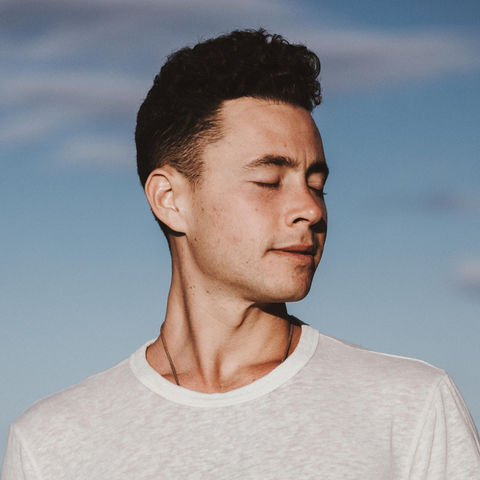
This is Michael Steiger and I'm excited to be sharing this brief guided meditation with each of you.
We'll meditate for about 10 or 15 minutes,
But first I'm going to spend about a minute or two introducing the practice that we're going to be doing today and just a little bit about myself and my journey.
So,
I've been practicing meditation for about nine years and teaching for about four.
And I used to practice and teach meditation as focusing or concentrating on the breath.
And that means every time the mind wanders you come back to the breath and it's sort of like this training of the mind.
And that was good,
You know,
That did the trick,
You know,
It got me to be more peaceful and in fact it changed my life.
So,
It's a very good practice.
But in the last year or so I really dived into a different form of meditation that really rocked my world,
My meditation world.
Before when I was meditating I would feel peaceful,
I would feel like,
Yeah,
This is good,
But it would take a lot of discipline,
A lot of commitment to be able to sit down and it was pretty plain,
You know.
I mean I would feel good after,
Sort of like going to the gym,
You know,
You feel good after but during not necessarily feeling amazing.
And I discovered a meditation teacher named Ajahn Brahm who teaches meditation a little bit differently and that's kind of the flavor that I'm going to share with you today.
And the first couple of times I did a meditation practice with him I started feeling blissful.
I started feeling really,
Really good in my body,
My mind and it started to become really enjoyable.
And a lot of people think that they can't meditate because their mind wanders so much but I would actually encourage everyone to think about why does your mind wander?
Instead of just taking for granted that the mind wanders and it's the nature of the mind to wander,
Perhaps let's ask that why does the mind wander?
And usually it's because the mind doesn't want to be where it is.
So if the mind's wandering because it doesn't want to be where it is,
The next logical step is to make where you currently are more enjoyable.
So that's what we're going to do today and to do that it takes really just one thing and that's kindness.
It's caring for your body and your mind and asking it what it needs.
And so let's get into it.
Let's take a comfortable seated meditation seat and that could be really anything.
It just could be on the ground,
Could be on a cushion,
Could be sitting on a chair.
I'm sitting on a chair right now.
And it doesn't really matter as long as you're not going to start to doze off.
But that's honestly OK too because if you start to fall asleep,
You probably need it more than more than meditating.
So as long as you're comfortable,
Let the eyes fall closed.
Feel your feet on the ground.
Feel the seat or the ground beneath you.
Just bring your awareness to the general shape of your body,
Making some high level adjustments if you need.
Once you feel generally comfortable.
Bring your awareness to your feet.
So we're going to start with making our body as relaxed as it can be.
I shouldn't say making your body,
But allowing your body to relax.
So bring your attention to your feet and then your mind or quietly just ask your feet.
How are you?
How are you feet?
It might sound kind of silly at first,
But.
If you start to listen,
Your feet will let you know.
Whether or not they're comfortable,
How they're doing.
And then.
The next question is to ask,
Is there anything I can do to help you be more comfortable?
So right now,
I'm just gently adjusting my feet so that they're more aligned,
More comfortable,
More relaxed.
And once your feet are comfortable,
Move up to the ankles and ask your ankles,
How are you?
How are you today?
Is there anything I can do to help you feel more relaxed?
The simple asking.
The simple kindness of listening.
Asking and listening,
Caring for.
Changes.
Your experience.
Of your body.
So do what you can do for the ankles and move up to the shins.
And the knees.
Ask your knees and shins,
How are you?
Is there anything I can do to help you feel more at ease?
Pause and listen.
And it's not words that will come.
From your knees,
I don't think they know English or any other of our languages.
But feel.
Feel their response.
And then the thighs.
And the hips and pelvis.
Continuing on your own now.
And if you get to a spot.
As you move up the body,
That is.
Not.
Feeling more comfortable that you can't necessarily find.
A good adjustment for it.
If it just feels painful,
If it just feels tough.
Or uncomfortable.
And stay with it for a little while.
And let it be.
And realize that what you've done is good enough.
And move on.
So I'll move up my back first.
My low back tends to be a tricky area for a lot of us.
Ask my back,
How are you?
I'm a little bit sore.
Is there anything I can do for you?
So now I'm just going to scoot my chair in.
Give my back a little bit more support.
Move up to my shoulders and upper back.
Moving down my arms.
Into my hands.
And asking my hands,
Are you comfortable right now?
Is there anything I can do?
Going up to the front of the torso,
The belly.
Just checking the internal organs and the heart,
The lungs.
Moving as slow as you need.
Up to the neck and the throat.
The jaw and the face.
The face is such a picture of our emotional world that really conveys our emotions.
And so as you move up to the face and you start to allow the face to relax,
Notice how it affects your emotional state to your mental state.
In particular the jaw and the eyes and cheekbones and temples and forehead.
Letting it all soften.
And now,
Feel your entire body in space.
Your entire body.
The energetic quality of your body.
More relaxed than once you began.
And notice that in this state of relaxation,
See if you can find a feeling of delight.
That spark of joy.
Feeling good.
A relaxed body is one that feels good.
In meditation when we are feeling good,
The mind wants to stay.
Joy creates stillness.
And stillness creates more joy.
So this is a path,
A practice of developing joy and stillness hand in hand.
So now that we've relaxed the body as much as it can,
Be relaxed right now.
We'll move to the mind.
So going into a deeper layer.
But it's the same process.
You can ask the mind,
How are you?
How are you?
You might even use your own name,
If that helps.
How are you Michael?
Is there anything I can do to help you feel more at ease in this moment,
In this very moment?
Usually it's like something like letting go of the past and letting go of the future.
And just being here in this moment.
Once you learn how to let go.
Once you find that,
You allow yourself.
The letting go.
You may find that it brings you a lot of joy.
A profound contentment.
So now,
With a relaxed body,
A relaxed mind,
Just enjoy,
Enjoy being here.
And if the breath comes into your awareness,
Great.
You can be with your breath.
But if it doesn't,
That's fine too.
The purpose of meditation isn't to focus on your breath.
It's to learn peace and happiness.
So if you're feeling happy,
If you're feeling content,
Be where you are.
I'll be quiet for another couple minutes and then close out the meditation.
Okay.
Wonderful.
You you you you So getting close to the end of the meditation and check in with yourself and ask yourself how you're feeling notice the changes from the beginning of the meditation until now and reflect on what you did to allow those changes to arise good So as you're ready,
You can wiggle the fingers and the toes and you can give yourself a nice little stretch and as you're ready,
You can open your eyes and come back So this meditation was the meditation that the Buddha taught somewhere along the line when meditation was being distributed into the West that was a very good thing but an important word was mistranslated there was a word that was mistranslated as concentration or focus which is how we get the focus on the breath,
Concentrate on the breath the original meaning or the better English translation is stillness so that's what we're doing here,
We're cultivating stillness by relaxing the body and relaxing the mind and allowing a sense of delight and joy and contentment to arise So thank you so much for engaging this practice with me today and until next time,
Wishing you the best,
Many blessings,
Take care