This program is brought to you by SoundsTrue.
Com.
At SoundsTrue.
Com you can find hundreds of downloadable audio learning programs,
Plus books,
Music,
Videos,
And online courses and events.
At SoundsTrue.
Com we think of ourselves as a trusted partner on the spiritual journey,
Offering diverse,
In-depth,
And life-changing wisdom.
SoundsTrue.
Com.
Many voices,
One journey.
You're listening to Insights at the Edge.
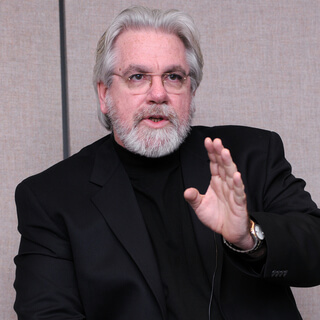
Today my guest is Michael Carroll.
Michael Carroll is the COO of Global Coaching Alliance and a former executive with Simon Schuster and Disney.
He's consulted with many large companies,
Including Starbucks,
Procter & Gamble,
And Google.
Michael began practicing meditation in 1976 and is an authorized teacher in the Kagyu,
Nyingma,
And Shambhala lineages of Tibetan Buddhism.
He has also lectured all over the world on the topic of bringing mindful awareness into the workplace.
He's authored several books,
Including Awake at Work,
The Mindful Leader,
And Fearless at Work.
With SoundsTrue,
Michael Carroll has published a new audio series called The Mindful Leadership Training.
Today Michael and I spoke about the relationship between sitting meditation and being able to be unbiased,
Courageous,
And confident at work.
We talked about inspiring the best in others through our openness,
Which Michael describes as a type of complete generosity.
We also talked about creating fearless cultures at work and what this requires both of a leader and of an organization.
And finally,
Michael shared with us a description of a classic mindful leader and the qualities that this person embodies.
Here's my conversation on mindful leadership with Michael Carroll.
In the last few years,
Michael,
We're hearing more and more about mindfulness at work.
And I'm happy to talk to you,
One of the pioneers,
You could say,
In this movement to bring mindfulness meditation to the workplace.
You wrote Awake at Work approximately 15 years ago,
And I'm curious to know what you think of this current surge of interest in bringing mindfulness meditation to the workplace,
The good,
The bad,
The ugly,
As you see it.
Well,
I think the first thing is that I have to pinch myself often at the developments.
Back when I was on Wall Street as a meditator in the 80s,
You would never mention this to anyone,
Because it was woo-woo,
You know.
You have crystals too,
To your head,
And that kind of stuff.
And it has really developed now into,
I think,
A very serious kind of understanding that one of the main,
If not the main resource that we bring to our livelihood,
Our careers,
Our work,
Is our hearts and our minds.
And that it is not to be something to be taken for granted.
And it's a wonderful conversation.
I mean,
I'm actually going to a mindful leadership summit in Delhi,
India.
So it's actually going global.
I was in Korea around the topic as well,
Sao Paulo.
So I'm very enthused about it.
I think the two sides of the coin,
One is clearly there's very authentic and genuine interest in training the mind with mindfulness awareness meditation for a variety of benefits,
Including heightened social intelligence and emotional intelligence,
The ability to listen more effectively,
Develop an agility,
As well as a whole range of leadership talents,
Which is what our product that we did together is about.
I think the warning that I often bring to the conversation is that we have a tendency in the West to misunderstand the practice,
Which is,
You know,
Genuine,
No blame there at all.
Often people want to do mindfulness awareness meditation to,
In what I call,
Become a better version of themselves.
Someone who's a better leader,
More successful,
More effective,
Better listener,
More compassionate,
Which I think is all well-intentioned,
But it actually misses the mark as to what the practice is about.
Say more about that,
Michael,
Because I think most people would say,
Wait,
Aren't you contradicting yourself?
I thought you said I was going to become a better listener and more emotionally intelligent,
Etc.
Yeah,
It's kind of like a,
It's kind of like a koan,
A Zen koan in a sense,
That the practice is not about becoming a better version of who we are,
It's actually becoming familiar with who we are already,
And that is a subtle element of difference.
It's a subtle difference in effort,
That if we're trying to become a better version of ourselves,
We're overlooking the natural talents that we're already expressing,
And mindful leadership is about becoming familiar with our natural leadership talents,
Not about developing some new version of who we are,
And it's about unleashing rather than developing something new,
And that's why the practice is tricky.
You know,
In many respects,
When you do mindfulness awareness meditation,
All we're really doing is just sitting there,
But in order to sit there,
It takes a tremendous amount of courage and genuineness as a human being.
So that's kind of my answer there,
Is that,
You know,
The good news is that it's a very vibrant conversation in organizational settings about why would we want to train our minds this way,
And it's exciting.
I have to pinch myself every day that so many organizations are interested in,
And I'm happy that that's the case.
The area where I do have some concerns is misunderstanding the practice as a way to become more efficient,
So to speak,
Rather than becoming familiar with who we are.
Now,
I think this is a really important point,
And one of the unique features about how you go about bringing mindfulness to the workplace and just teaching people about the practice of mindful awareness,
This idea that we're coming into touch with who we already are.
I can imagine a lot of people would have the response,
Look,
You know,
Who I already am is someone who is deficient in this way,
Slovenly in this way,
You know,
Not such a great human being in all these ways.
I don't want to just become in touch with who I am.
I want to be better.
I want to be better.
That's why I'm meditating,
But that's not your approach,
So help me understand that.
Well,
I don't think the ambition to want to become better at something is beautiful,
Right?
So you take a young woman who goes to university,
Works really,
Really hard,
Graduates,
Becomes a physician with an MD and is able to help others.
That's beautiful.
She wanted to better herself,
And she did.
So there's no question about that effort.
That effort's a beautiful thing.
All I'm saying is mindfulness is about a different form of effort.
It's not the effort of trying to achieve something or accomplish something.
It's the effort of being able to relax into who we are and in the process of doing that,
Discovering that we've overlooked something.
We've actually sped past our lives rather than actually living them.
We've actually tried to become someone else rather than actually recognizing who we are,
And this ability to recognize and acknowledge and become familiar with who we are,
We actually can discover a form of confidence,
An ease of presence that by definition begins to express a whole set of talents that frankly we've permitted to grow a little flabby,
You know,
The sense of openness to one another.
So there's many of them.
I'm not going to go through them all here,
But the ability to just even be self-aware.
You know,
Many of us can't,
Many of us,
I can speak for myself,
Most of my life I actually thought that who I was was my thoughts.
It was only after many years of meditation that I realized that I'm not the voice inside my head.
Those are just thoughts.
Even just making that distinction,
Just becoming familiar with that fact of life has enormous impact on how we conduct ourselves in life and in organizational settings.
Talk more about how the discoveries that happen in meditation on the cushion translate in your experience to the workplace.
How does that translation happen?
Yeah,
This is kind of almost,
I think,
The magic frankly,
Which I think is beautiful.
There are many elements to it,
But I'll just bring our attention to one which I think is really vital.
For those listening here who are familiar with mindfulness awareness meditation,
There are very subtle kind of contemplative moves you make in the practice,
None of which is escorting your attention from a thought to an object.
They're very boring.
You do it over and over probably,
You know,
Several million times in your life if you do this your entire life.
It's just escorting your attention from thinking to a breath to an object.
This escorting of the attention back from the thought to an object on the surface is very boring.
You do it for long periods of time.
However,
When you get up off the cushion and you live your life,
Be it at a work setting or just ordinary life so to speak,
You begin to notice that you're you increasingly are not trapped by fixed mindsets,
That you have an agility of perspective.
So if you're a CFO,
There's a tendency to see things as a number,
Which is beautiful frankly,
But if you can't distinguish,
You can't let go of that mindset and move to another mindset like a customer,
Take the view of a salesperson.
This ability to move among mindsets,
This agility of resonance,
Resonating with other people,
Being able to see their views is a natural outcome of the practice because you have developed this ability not to sort of be frozen by your own opinions,
Your own views,
Your own priorities.
You can escort and look and be kind of unconditionally unbiased.
You can de-bias your curiosity.
That de-bias curiosity is very,
Very powerful when it's permitted to have its own momentum so to speak.
It's interesting because one of the traditional qualities of a good leader would be something like decisiveness,
And I'm curious this de-biasing ourselves and decisiveness,
How you see them paradoxically being able to coexist successfully in a mindful leader.
Yeah,
That's a good point.
That's a very good question.
A mindful leader can move with the same level of urgency as any leader,
I mean any human being.
This is about being human.
So having a sense of urgency and decisiveness and clarity of purpose,
Even ambition,
Is not a problem.
I mean it's in fact,
From a certain point,
It's a beautiful part of who we are as human beings.
The difference is that a mindful leader also is astutely aware of the space around all of that.
That when we make a decision,
It's not trapped necessarily by a preconceived notion,
It actually can see what's around it,
The conditions around it.
And this sense of spaciousness,
Psychological spaciousness,
Makes it less likely that we're going to miss important bits of information,
Insights,
As we make our decision.
Too often we're blinded in our decisiveness.
We're blinded by our priorities.
We're blinded by the goals we're seeking to achieve.
Whereas a mindful leader can have a goal but not be blinded by it,
And therefore make a decision that is taking into account a much richer social setting,
Business setting,
A much richer set of insights in making decisions.
Okay,
So the sitting practice of meditation trains us in this de-biasing and being more attentive to the space that's around us.
You also talk about how qualities such as courage and confidence become manifest in someone's life from the practice of sitting meditation.
So talk a little bit about that.
How does a leader or anyone become more courageous and confident as a result of sitting meditation?
Well,
Confidence and courageousness have obviously overlapped.
In the practice they are distinctive qualities in the mind.
So I'll cover each one a little differently.
The courage,
What happens with the courage issue is when you,
Again we go back to the discipline of letting go of the thought.
If you do this consistently for a long time you'll notice that when you let go of the thought there is a gap there.
And the gap has a kind of a quivery quality to it or an easiness maybe.
But essentially what we're doing when we let go there is we're letting go of me.
Don't put me in big quotation marks.
We're letting go of keeping track of my agenda,
My life,
My priorities,
What's going to happen to me next,
Am I going to be okay.
This internal sort of storyline of trying to get purchase on our experience in order to give ourselves some level of assurance about our experience.
For a moment we've dropped that agenda.
In a doing that's why the practice is very challenging because it's psychologically that's a very brave thing to do.
It's almost the essence of bravery that you wouldn't put yourself first.
This ability to drop me and attend to my world,
Bring my attention out here,
Is a fundamentally brave act,
Courageous act,
Because I'm not putting myself first.
So this fundamental courage off the cushion in our everyday life begins to blossom in this ability to not put myself first.
I'm not always trying to get what I need first.
I'm actually becoming increasingly,
Which is very narrow,
It's really narrow possibilities.
There's so many other possibilities besides me.
So this,
But it takes courage to drop me so to speak.
That's part of what happens in the practice and we increasingly develop this courage of not putting me first.
Now when it comes to confidence,
The confidence actually is actually deeper than the courage.
And the confidence is this fundamental discovery that the experience that we're having is fundamentally confident with or without our permission.
Now what do I mean by that?
If for any of us,
The audience that's listening now and you and me Tammy,
If we just take a moment to notice 99 and 9% of who we are right now sitting wherever we are,
It's fine.
Our eyebrows aren't arguing with itself,
Our earlobes,
Our earlobes,
Our feet,
Our feet,
Our shoulders,
Our shoulders,
Our hair isn't arguing with itself.
In fact,
If we just scan our experience,
There's a fundamental confidence to our presence that isn't arguing with itself.
The part that is arguing with itself is very tricky.
It's actually a thought.
The confidence of the mindful leader is getting in touch with this very primordial confidence,
Unconditional.
It's a confidence that has to do with presence and it has an ease to it.
Very somatic,
What I refer to as synchronized.
So this confidence we become increasingly familiar with,
Which is natural by the way,
You have to make this up,
It's just our natural state of mind,
It's a relief.
Oh,
You mean all I'm doing is sitting here?
Yeah,
That's all you're doing.
That's all you've ever been doing.
That sense of relief and ease begins to really create a sense of poise for a mindful leader and that's a natural outcome of the practice.
Now you use this interesting word synchronized.
Synchronized with what?
What synchronized with what?
Right,
And I should say that that phrase came from my teacher,
Chogyam Trungpa Rinpoche.
And what Rinpoche was trying to describe was,
For many of us when we sit meditation it seems to be an unruly project.
You know,
Our minds all over the place,
Our emotions are really intense or meandering,
Our body is not comfortable,
We're in a room that might be unfamiliar and the whole thing seems like a project that just is not coordinated.
And we're trying to,
In many ways characterizes our life.
You know,
We're trying to make our life behave itself.
You know,
We have this mind that's all over the place,
We have a body that won't behave itself,
It gets athletes booked,
Cars won't start,
Kids won't obey us,
And it's like,
Oh my god,
It's just this whole project we're trying to get it to behave itself.
But what happens on the cushion at some point is we notice that our emotions,
Our body,
Our thoughts,
This phenomenal world that we're in,
Is not an uncoordinated set of circumstances,
It is actually a synchronized undifferentiated fabric of presence.
There's only one thing happening.
And we discover that we're synchronized by nature,
And that since a synchronized presence is the ground of mindful leadership.
And that phrase synchronized comes from my teacher,
But I think it's an apt description of the awareness that comes out of the meditation.
Now let's talk about that for a moment though,
Especially in the context of the workplace.
There's all these things that have to get done,
And I don't feel synchronized with my environment.
My natural feeling at the moment is to lie down and take a nap,
But I'm on a deadline.
So instead of dropping into the synchrony of the space and lying down,
I go against this natural somatic call to be synchronized with the moment,
I go have a cup of coffee,
And I,
You know,
Gut it out.
Isn't that the workplace?
Well,
I like gut it out,
But the issue isn't like we're trying to reach some perfected state of like,
I'm continually synchronized,
And the non-synchronized experience I reject.
That's not what we're saying.
Noticing that you're not synchronized is actually quite interesting.
That's fine.
Sometimes we're in situations where it's like,
Oh my god,
Like as I was saying to you earlier,
The tree fell on my house.
You know,
Synchronizing with that is really quite,
Everything turned upside down.
It's intense.
So,
But noticing that we're maybe not as synchronized with our circumstances at the time is also part of the practice.
So,
And often what happens with practitioners is when we do that,
You take a breath.
Just take a moment.
Notice the melody of circumstance.
The practice comes forward,
And you're here,
And then you engage.
And these simple moves of,
You know,
Stop,
The be-see-do is the one that I use,
Be,
Stop,
Be,
See the situation,
And then do,
Be-see-do.
So these little moves to reorient ourselves,
To resynchronize,
To notice that we are in fact synchronized naturally,
Is how we conduct ourselves as mindful leaders.
It's not like a permanent state of synchronizing.
If you do find yourself permanently synchronized,
If you would call me,
I would very much appreciate it,
Because I'd like to take notes about your experience,
You know.
Michael,
We're talking about applying the discoveries and how naturally sitting meditation spills into,
If you will,
The qualities of mindful leadership.
And I'm curious how much sitting meditation is required.
And I'll tell you why I'm bringing this question up,
Because I think a lot of times in the contemporary environment,
When people are being introduced to mindfulness and mindfulness at work,
It's like,
Okay,
Here's your new app.
You can do this for five minutes a day and bring mindfulness into the workplace,
And have the discoveries that,
Potentially,
That you're describing here.
And I wonder if you think that's possible.
I mean,
I'm familiar enough with your training,
I think,
As a Tibetan Buddhist meditator,
To know that you've probably spent long hours on the cushion in your life.
Well,
You know,
I think there's one extreme,
There was an article the other day,
I read,
I forget where it was,
New York Times,
About the fact that some researchers had finally been able to conduct a rigorous social study of mindfulness,
Or experimental study of mindfulness,
Using proper control groups,
Which is very difficult to do,
Apparently.
I'm not a scientist,
But I've read enough about it that much of the mindfulness research,
While,
You know,
Encouraging and insightful,
Does not adhere to the most rigorous of standards for scientific studies.
And this particular scientist had been able to create control groups and blind studies,
And finally had come with some results,
And they were very excited about the fact that they were able to master these scientific techniques for study.
And he was going through it,
And control groups,
And blind studies,
And at the very end,
The scientist said,
Now the challenge is dosage,
Which he was meaning,
How little amount of meditation do you need to do in order to get the results?
I can pretty much guarantee that that approach to mindfulness will probably cause further confusion than anything illuminating or wakeful.
Trying to get a return on the investment of the practice is a further expression of the very strategizing that has created some of the mess we're trying to clean up.
But with that said,
Just putting that aside,
The issue of engaging the practice is very human,
And it's very intimate,
And it's very personal,
And there is no formula.
And if you do the practice,
You will notice that you're going to need to make friends with yourself.
And that is not something that making friends with oneself,
Or anyone for that matter,
Is not something that we try to sort of calculate how much does it cost,
Or how much time do I have to put in making friends with you,
You know,
Your neighbor,
Your lover,
Or your mother,
Or your child.
It's a very real and deep human experience,
Very powerful human experience.
And it is really up to each of us to decide how far do you want to go,
How deep do you want to go,
How willing are you to actually get to know who you are.
And I suggest to people who are new to the practice,
Don't practice a lot.
Just do 10 minutes a day,
But do it every day.
Take a shower each day in a sense.
Get to know this quality of just being,
Simply being still here with yourself.
And by doing that,
There's a certain natural quality of the mind that begins to unfold that is quite inspiring.
You're going to want to do this more.
And you know,
And I think trust that.
And trust that inspiration,
And see where it leads you.
I mean for myself,
As you were just saying,
You know,
I've been doing this for over 40 years now.
And I used to do a lot of solitary retreats.
And I think for the first couple,
You know,
Maybe a dozen or so that I did,
It was just a hell of a frankly.
It was scary and tough.
But now I can't wait.
So much fun.
So for all of us,
You know,
It unfolds in a very human way,
In a very personal way,
A very intimate way.
And I don't,
I think trying to get some return on the investment in terms of dosage,
And it's not what this practice is about.
You know,
I want to circle back to something that you said,
Michael,
Which I thought was so interesting.
And it sounded that it was very important for you,
And it was accompanied when you said it with a certain kind of deep chuckle that I'm starting to associate with you.
Which is,
You said there was a moment when you discovered that you weren't your thoughts,
That you didn't believe your thoughts,
You didn't invest in your thoughts in the same way.
And what a big change that was in how you approached your life.
And I'm curious to know what that discovery process was.
Did this dawn at a certain moment in time?
Was it a gradual kind of dawning?
And now that you don't believe your thoughts,
How do you relate to your thoughts?
Yeah,
It's interesting.
You know,
I think this relationship with my internal landscape,
This internal thinking process,
It unfolded over years,
Obviously.
But there were certain points,
Kind of defining moments,
Tipping points,
Where I could,
I could let go in a much deeper way.
You know,
I could tell the stories,
But they'd be too long.
You know,
One was when I was on a 30-day retreat.
Many of the people who do long sitting practices are familiar with this.
There's a point where you exhaust,
You just go,
I can't do this anymore.
I can't sit here and continue this tape,
This rerun movie.
You know,
It just can't.
I can't.
And you let it go.
You let it go.
And that gently laying down the burden,
That is an act of friendship toward ourselves.
And it could be,
My butt's too big,
I never liked myself for that,
Or why did Mary leave me,
Or no one likes me,
Or whatever it tends to be.
How we hit ourselves with rubber hoses and spiritual rubber hoses.
At some point we gently lay those down.
And you know,
Again,
It's very personal.
And for me it happened probably three or four times.
I think the last,
I weighed my 40th,
I just finally gave up.
But in terms of how I relate with thoughts now,
I mean,
You know,
I think like everybody,
Yeah,
But my orientation is far more about this.
I mean,
I'm not,
Throughout my life I was oriented toward trying to think my way through my life,
Rather than actually have it,
Have a life.
So now I just look around,
There's a tree out there,
My cat walks in,
And I'm on the phone,
I'm petting my cat.
So my way,
I think it's true for meditators generally,
Is that our orientation increasingly grounds itself in the immediacy of our world,
Versus rehearsing our lives.
This is the natural outcome,
You know,
It's just a natural outcome in the practice.
You're listening to insights at the edge produced by sounds true we welcome you to learn more about our collection of more than a thousand learning programs and receive three free gifts just for visiting us go to sounds true comm back slash free that's sounds true comm backslash free and now back to insights at the edge okay I want to read a quote from your book the mindful leader and here's the quote opening is the primary and indispensable act of leaders because it requires that we fully understand and appreciate our circumstances first before we act the Tibetan word for this vulnerable openness is jimpa which means complete generosity and traditionally cultivating jimpa is considered the basic practice of the mindful leader so talk some about this idea of it's a good quote huh good good writer but well said right to the point cultivating jimpa this complete generosity vulnerable openness how do I do that I get yeah again I have to say that this comes from the training from my teachers and my lineage I I would never have been able to figure this out never without getting some guidance from my teacher in my lineage so with that said essentially when we think of generosity we think of being a generous person is is we're willing to give our possessions our resources to others to try to be helpful to our world and that's a beautiful thing and generous people you know make life worthwhile for sure in this case the notion of generosity or jimpa is the ultimate act of generosity which is to give of yourself completely to your world and that means to open just open yourself completely to whatever is occurring and that requires as I said earlier enormous bravery because you are exposed that is the ultimate gift of a human being is this exposure and it takes courage to do that now by the way this this generosity this openness is vulnerability you know when we hear those words we may think of you know weak or you know a condition that should be you know be careful it's a quite to the contrary mindful leaders point of view this is the source of power this is where power comes from that one can be agile because I'm not beside my mind trying to strategize my way through it I'm in complete touch with my situation because I've had the courage to become to give up myself completely and there's a enormous freedom there there's enormous freedom and mastery that comes from that kind of gesture over and over and over and over again and it's it's a fundamental move now the subtitle Michael of the audio series that you created with sounds true called the mindful leadership training is the art of inspiring the best in others and leading from the inside out so I think this part about leading from the inside out I feel like we've addressed that some but this idea of inspiring the best in others I know you've studied a lot of leadership training leadership pedagogy if you will what brings out the best in others well I think that the issue for mindful leaders is the tradition of mindful leadership points out that we are hard wired to do that it's it's human beings if you're a human being you are hardwired to inspire the best in others this is a kind of a fundamental proclamation so to speak and and we when we think of inspiring the best if you're running a giant corporation how you inspire you know tens of thousands of people to you know bring their best out yes that's personally I think that's a fun challenge frankly but that's not really where it happens it happens at the intimacy of a human moment and understanding how that spark works and truly understanding how that spark works is where the skill comes in and it can be done by anyone anywhere anytime and you know I tell a story in there about that toll taker but you know children you know a child can inspire the best in someone very easily you see it seen all the time a little child is playing with a toy they're curious about it and someone looks over and they're curious with the child to or child plays hide and seek or peekaboo or whatever and it brings out a playfulness you know a neighbor who's having a barbecue we come over we dress up nicely we bring a gift this ability to inspire the best in one another is our nature in mindful leaders that's what they spend their time doing is helping each other inspire the best in one another and doing it him or herself and it's actually a lot of fun now you mentioned a spark there's a you know spark between us in an interpersonal encounter of some kind and that's what allows us to be inspirational is noticing that spark so say more about that yeah this is actually quite profound you know so my experience I'll just speak from my experience is when we when we actually drop all of the I would just say preconceptions and biases and various barriers that we have in our lives toward our experience and all the veils are dropped completely and we see our world for what it is and it's in its naked profoundness my experiences that the gaze upon a human being is the single most profound experience period and that profoundness actually we're glancing it all the time but we're rushing past it we're papering over we're inside our head rehearsing rather than noticing that but it's there it is happening all the time but we miss it and this tenderness is fundamental goodness of the human beings is profound and to glimpse it is is vast and it's there all the time it seems that one of the big challenges is the speed of our lives the speed of our workplaces so when I when I hear you talk about that spark I think yeah I could have that with the hundred people I work with but I actually have to get back to my desk when I go to the bathroom and not you know talk to everybody in the hallway and have that spark moment I'm in a hurry I have stuff to do well look there's a difference between urgency focus and intensity drive and blind speed hecticness sloppiness speeding inside our head rehearsing our lives rather than actually living so there's a difference there I do not I've been in business a long time and I still am I work in in organizational settings that are very intense and I can accomplish a lot I'm nothing I'm not saying that we don't have urgency and we shouldn't work with a level of intensity what I am saying is a lot of the speed is self-inflicted and a lot of this intensity that's hecticness and distractibility is is is a puppet show so real so it's happening inside our heads so being able to distinguish those two in terms of urgency focus deliberateness versus hecticness speed distractibility that's a key distinction here mm-hmm okay let me ask you a question Michael what aspects of mindful leadership are the most challenging for you for you personally it's one thing to teach it's another thing to live it which part is hard for you on the living it side yeah well the whole thing really I mean I don't want to avoid the question here you know the fundamentally what we're talking about when we're talking about mindful leader the tradition of the mindful leader we're talking about the Mahayana path of the bodhisattva and the paramitas for those who in the audience is not familiar with this very traditional Buddhist element of the journey you know I think that I think the essence of it is being afraid you know there's always it's always a little haunting fear that this isn't going to work out and it still haunts I find it more amusing now than potent but it's real you know that we're I'm still somewhat afraid of my life and it's something that I continue to be fascinated with and still want to taste it smell it understand it I still go on retreats for that very reason I would say that's probably it but I'm still afraid of my life well I have to say I love the I don't know if I would call them metaphors but this idea of meditation as befriending ourselves a deep friendship and deepening and deepening and deepening that friendship and then this the other side of it being afraid of that friendship with ourselves I mean the the fear that has us distance from other people you know other people in our life who maybe were friends with but our friendship could get deeper but you know we we distance in different ways I love the the framework that you're presenting yeah you know I copied it off from my teacher's blackboard so I'm glad to pass it along mm-hmm okay here's a curious point that you made in the mindful leadership training that I'd love to talk to you about you say that striving towards harmony isn't always a good thing at work and that it actually runs counter to achieving real breakthroughs and productivity and effective communication it can so can you say more about this because I think I have put a lot into wanting to create a harmonious workplace yeah I would say that in my work this mistake that managers and leaders make about harmony is it's common and it and it's and it's a it's a common error from my estimation in the workplace and essentially on the surface you know first off and work there's so many conflicts so many difficulties deadlines pressures relationships you know budgets resources expectations and then we can go on and on and it's filled with tension conflict difficulties and from a certain point of view our first are from a certain point of view our first tendency is to say hey can we make this a little more harmonious here I mean it makes sense right so I'm not saying that seeking harmony is dumb but it has a real big blind spot and the blind spot is in trying to seek harmony there is an unspoken message that says that conflict is kind of the enemy abrasion is part of the problem difficulties should not really happen you know that they should be you know sort of avoided and what happens then when you have a culture that's that is really seeking for harmony you you end up having a lot of cheerleading and politeness but no one wants to ask the tough questions no one wants to really deal with conflict because conflict is actually healthy mm-hmm abrasion is actually how creativity grows so the issue in how I work in organizational settings and work with leaders is what we really want is first fearlessness and what I call fearless harmony so if you have a if you have a beautiful bottle of wine for example just a beautiful bottle of wine it's harmonious beautiful but the amount of work that had to go in to getting that wine and that beautiful bottle is intense you watch somebody play play tennis but a harmonious beautiful thing it's fearless so the issue here is in the pursuit of harmony we often actually try to cover up conflict difficulty abrasion and we try to create an atmosphere it gives us a false impression that everything is okay and many cultures who live trying to seek harmony rather than resolve conflict with all the respect it tend to create cowardly some cowardly corners in their organization mm-hmm that really really need to have to be looked at yeah I mean you're really talking about artificial harmony or surface level harmony I like your phrase fearless harmony and so let's talk a little bit more about this fearlessness at work what I'm curious about is often I've wanted people to speak up more in all different parts of sounds true and all different parts of the organization and I found there's a handful of people who do but there's a lot of people who I know have a lot of intelligence and a lot to share that would improve the organization but they don't speak up probably for fear of some kind of punishment even though we've done our best to create a non punishing culture I still think this is just this deep-seated fear that if I say what I think you know I'm gonna lose my job so I better not speak up so my question is how in any organization do you generate a culture of fearlessness where people actually do speak up all kinds of people across the whole organization yeah well yeah I think this is one of the great fun frankly leadership challenges how do you cultivate fearless culture candor openness trust reliability clarity of purpose this is all part of a fearless culture and really it takes time it isn't a one-shot deal it's it's how one leads how one creates an atmosphere and there are you know a variety of elements in that broom that need to be constantly taken care of in terms of cultivating a cult of fearless culture you one of them is how do we promote candor now on the one hand being candid candor when really cultivated well in in in cultures requires a certain level of elegance you know when you say this and I've been in many cultures some very tough rusty nail cultures some very refined you know that kind of thing but ultimately if we're going to be candid with one another we have to be skillful you know you don't you know oh we're gonna be candid well I'm gonna go into the boardroom and tell those guys what I think I thought this was a candid place well that's not very skillful okay so being able to be candid and skillful is really kind of what you want to cultivate in cultures is a level of skillful conversation and why mindful this is brilliant for this is because in order to be skillful in your candor you have to listen really really well really really well can you listen with no bias to really what the person is saying that's just their words the tone of the voice their body language they're you know like if you ever listen to an arrogant person they were very annoying and I know that firsthand because I'm very arrogant myself so I'm very annoying person I get that but but if you listen to an arrogant person really really carefully without any bias without any anything so you you'll notice that there's a fear in that the lack of confidence hmm interesting well how how many maybe that's part of what I need to help with here a little bit you know how do I work with that you know how do I listen well how do I help him just him or her dismantle that dollar boundary and you don't do it right now maybe it's over a glass of wine maybe it's when you're not taking a run together or something so this ability to be skillful and candid is a real big challenge in organizations because it requires social and emotional intelligence that are so much but there's a lot of other elements in creating a fearless culture you know I mean modeling it for people you know I was just on the phone with a leader of a pretty large organization this morning who said to me you know I I don't want to hurt people I think my style hurts people I don't know I can get pretty direct and I said well have you ever told people that and he said no I haven't I said you know I think you need to tell people now that level of candor when you in a room say you know something I think I may be hurting people's feelings here and I that's not my intention that models for other people oh you can be exposed around here Wow that's pretty cool maybe I can take a risk so there are a whole range of things Tammy that good leaders and mindful leaders and leaders of organizations that want to create fearless culture there are a whole range of behaviors rituals skills that really foster those kinds of cultures and it takes a lot of work and a lot of good leadership frankly have you encountered many workplace cultures that you would call fearless yes I have not many I've I've I have I've been surprised I'll tell you that I've been surprised I I tend not to name the companies that I go into because it's a confidentiality and things but this is a fortune 50 company and I would not have imagined how that this culture was that fearless and I was very impressed and one of the reasons why I think it's you know it's a big firm as you can imagine as a fortune 50 and I got to work at the senior most levels one of the reasons why I felt that this organization was so fearless is that everybody every single person in the company including the CEO had to go through I think it was a day long or half day long training on how to respectfully talk to a colleague about a conflict everybody hadn't learned how to do that respectfully they had like a little ritual I forget what the ritual was but if someone came into your office and said Tammy do you have a moment for me to actually share a concern that's a signal that we're going to now have a ritual and the other persons would also have a ritualistic response so they kind of standardized hmm a way of opening to one another a ritual everybody had to be trained in it every scientist every researcher every marketing person every salesperson had to know the ritual I was it wasn't as if there wasn't toxicity there there was problems and things but there is everyone was willing to open to one another I was very impressed with that so on a case and yes I do meet cultures that that work hard at the screen listeners and have accomplished it and I've been pleasantly surprised mm-hmm you know that was a very helpful for me to hear that example and what it brings up for me as I would love for you to describe one or two mindful leaders you don't have to give me their name or you know any of the details I'm not so much interested in the specifics as what the qualities are of in your view a fabulously successful mindful leader if you were to put them in their organization for a moment so not so much in an abstract way but kind of how they actually interact in their day you know it's funny I'm sitting here thinking of all these we all have aspirations and weaknesses and strengths and I'm trying to think of food and this person just came into my mind and I'll just describe this person very senior executive and that's not typically what a money you don't have to be you know the senior person be mindful leader I mean that's very important understand that you can be a truck driver and that I'm sure I can come up with this person came to my mind so I'll just describe this person he was the senior most physician chief medical officer for a very large pharmaceutical company and if you know pharmaceuticals I mean it's just in the clinical side it's just chock-full of really bright men and women who are scientists physicians statisticians and it's really amazing I'm a real fan of the pharmaceutical industry I'm sorry to say a lot of people and this gentleman was in charge of all these folks and I got to have maybe four or five conversations with him and I knew his reputation and whenever I met with him he was clearly a highly trained scientist and it's just a brilliant brilliant kind of strategist around clinical development of drugs so we'll just give him his kudos on the technical side of things but what really made him his distinction was how comfortable he would make me feel whenever I sat down it was almost as if we were old friends and I would remark this to other scientists that I was working with it he go yeah isn't that cool he's so much fun to be with everybody's comfortable with he's just being such a great guy and there was just a sense of presence about him that put me at my ease immediately when I would walk into his office there was no kind of ritual and this guy's a tough guy too though I mean he had to make tough decisions often but the way he would make him was authentically but I think the the main kind of distinguishing element for me as I remember this gentleman was how at home I felt in his presence at ease and not at ease from the point of view of sloppy but like I can be here this is good this is a wholesome place to be and it wasn't just me it was it was widely recognized throughout this business that and also he had an accent like Brooklyn so he thought it's kind of normal you know kind of good so he felt kind of like you were talking to your uncle mm-hmm so there was a sense of invitation presence ease his poise made me feel he wore his authority comfortably he respected feel there was a deep respect of anyone who came into his room he had nothing to prove he was authentically curious so that would be a description of one person that comes apart yeah beautiful it's helpful okay Michael I have one final question for you this sounds true podcast is called insights at the edge and I'm often curious to know what someone's growing edges in their life meaning for you right now what would you say is the thing that besides the fact that you have a tree that fell in the middle of your house 24 hours ago from a storm but what would you say in terms of just your own journey as a person is your current growing edge in your work yeah yeah I think it's very clear to me it's getting old you know I'm 62 years old and I'm fascinated by this it's absolutely fascinating to me what this is like to get old you know I have a lot of physical pain and I find it fascinating it's like oh my goodness and I think of my parents and I think of all the people who came before me how did they do this if you don't ignore this you don't ignore getting old you don't try to Botox your way through this this is like amazing getting old and I it's kind of like a friend of mine said at 60 the warranty is up you know prior to 60 you know like in the 40s if you got her oh I got my leg back or I'll lose a little weight or you know you know you're always sort of trying to get back to something you know or whatever there's no getting back to anything anymore you know the and it's I'm actually there's a sadness a very deep sadness as I'm getting older but there's also this kind of freedom of really not knowing anything is about to happen tonight I'm it's a great challenge and I really have come to a deep respect for all the human beings that came for me who grew old and I you know I'm one my mother was the only kind of parent that I have jobs and I love talking to Catherine about her life and seeing how intrepid she is so that's that's the edge for me right now is just getting old and I'm kind of loving it even though it's painful well that in and of itself is a very interesting perspective a lot of people wouldn't say that they wouldn't say loving it even though it's painful they would say this stinks or some version of that not the loving it part well I didn't encourage him to come on along now I'm also a very fortunate man I know that people suffer in this world profoundly you know and I I very very fortunate you know drinking a cup of coffee right now it's a little cream and it's just the right amount of cream for me you know so I'm very I work hard to make sure that I'm not entitled but I'm very fortunate for every one of me there's hundreds of thousands of people who are struggling and I respect that too and one thing about getting old Michael is somebody like me when she introduces you and now as we close the program gets to refer to you as a pioneer an elder if you will and bringing mindfulness to the workplace you get accolades like that so that's pretty cool yeah hey look hey look I get a credential lucky me I've been speaking with Michael Carroll who was one of the early writers on bringing mindfulness into the workplace three seminal books awake at work the mindful leader and a book called fearless at work and what sounds true Michael has created a new audio teaching series it's called the mindful leadership training the art of inspiring the best in others by leading from the inside out thanks Michael I could feel the spark between us in this conversation well I'm grateful for that thank you so much sounds true calm many voices one journey thanks for joining us