Well-Being An Essay by Maggie Stephens I confess,
I don't care for the words happy or happiness.
They taste cloying in my mouth like artificial sweetener.
The words seem shallow and transactional to me,
Like I'll be happy when I have x,
Y,
Or z.
Even the phrase in the Declaration of Independence,
The pursuit of happiness,
Has become a hamster wheel in our acquisitional culture.
So no,
I do not pursue happiness.
I seek well-being,
Which is defined as a state of health and comfort.
Well-being equates with enoughness.
I am content with who and where I am and what I have.
I don't need the next novelty advertised on Facebook to reach this state,
Although in full transparency it does take a moment for me to remember that fact when I'm scrolling.
Well-being implies that we are well in our body,
Mind,
And emotions.
Of course,
This doesn't mean that we'll never catch colds or find ourselves in grumpy moods.
Instead,
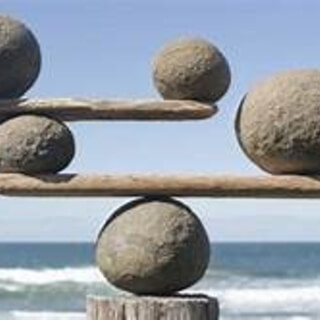
It means that we can find a place of balance within ourselves.
I have enough.
I do enough.
I am enough.
Reaching this point of stasis isn't easy.
We all have an internal stash of recordings pointing out all the ways we fall short.
Media and our culture thrive by selling us their products and telling us that we need them to make us more beautiful,
Successful,
And likable.
None of this is true,
Of course.
In fact,
You heard the truth decades ago from a soft-spoken man in a red zip-up sweater.
Mr.
Rogers told each of us,
I like you just the way you are.
The Buddha told us that suffering comes from our discontent.
We want the good things in our lives to stay and the negative things to go away.
We answer life with either a fist,
Grasping our likes and wants,
Or a raised palm,
Like a stop sign,
Pushing away our dislikes.
There is another way.
The Buddha called it the middle way.
We can,
Instead,
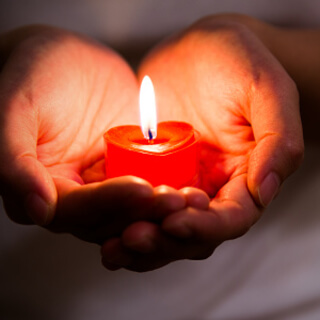
Hold out our palm,
Allowing experiences to settle right there before passing away.
We can let joy come and rest like a butterfly.
No one is sheltered from the negative or positive consequences of this world.
We will have heartbreak and joy.
Remembering that I will share these experiences with every human being born helps me to not take it personally.
The world is neither plotting to harm or delight me.
It just is.
The only part of life that I have any control over is my own reactions to the unfolding of life.
I can easily get angry about a story I heard on the news.
I can get annoyed over the person blocking the aisle in the supermarket.
I can get frustrated by the insurance company's rate increase.
I can be hurt by what I perceive is someone's slight.
I can stew for hours or days with any of these emotions.
Yet,
None of these reactions bring me to well-being.
It's not the emotion themselves that are the issue.
Rather,
It is the holding on to them and feeding them that harms us.
Instead,
We could just recognize,
Wow,
That was frustrating,
Annoying,
Painful.
Feeling the emotion?
We can feel it in our bodies.
Maybe we feel the rush of adrenaline,
Or we can notice how it rises and subsides.
Maybe it's the tension in our jaw,
Or our face becomes flushed,
Or there's a twisting in our stomach.
We can allow our bodies and minds to feel it,
Let it subside,
And then return to a calmer state.
The writer Richard Carlson's axiom,
Don't sweat the small stuff,
It's all small stuff,
Reminds us not to make mountains out of molehills.
We tend to be far more triggered by small,
Inconsequential issues than we are by the bigger ones in our lives.
Our well-being is more dependent on how we react to life than the current state of our health or finances.
Consider when you meet a friend and they ask you,
How are you?
What do you choose to share?
Perhaps it could be the simple response,
I'm well,
Thank you.