So great to be in front of you with you today.
My name is Brian Ford.
I'm the host and founder of a podcast called self-improvement daily.
I have a nonprofit called the four purpose foundation.
My mission is to turn human intention into action.
So your desires to change your life,
To be the healthiest,
Most productive,
Most connected version of yourself and your intentions to change the world,
Right,
To give back the causes you care about,
To get involved in the community and to be able to use your skillset in service of others.
That's what I'm here for.
And if you're fired up about that,
I'm fired up about it too.
So we should connect.
And I would love to introduce you to my counterpart for our conversation today.
Megan,
Could you please give us a quick introduction of who you are and why you do what you do?
Yeah,
Absolutely.
I'm feeling fired up as well with you.
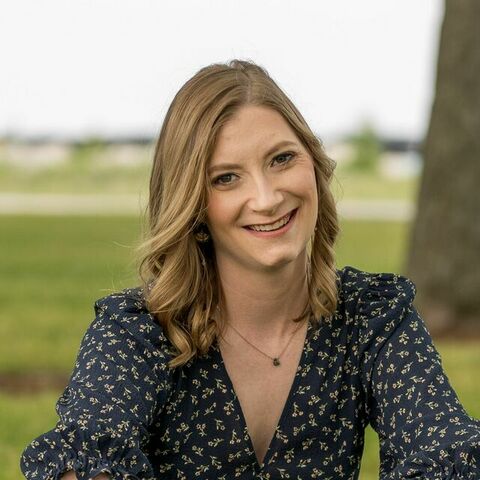
My name is Megan Whitney.
I'm based in Chicago and my pronouns are she,
Her,
I've worked in the nonprofit world for the past 17 years and I'm deeply committed to supporting people and making a difference in the world.
Brian and I have a lot in common in that area and I believe that collective change really starts with interchange.
So I support people in the social impact and nonprofit world through one-on-one coaching and through public speaking and workshops and specifically support people around navigating burnout in the nonprofit sector as that is all too pervasive and something I've experienced myself.
So that's something that I get passionate about and it's all really grounded in this life-changing practice of mindfulness.
Perfect.
Yeah.
Let's get into that.
I love how you teed it up.
So we got a lot of change makers in the house,
Right?
People who want to make a difference and people who want to maximize their ability to do.
And two of the things that are core to your and my personal philosophies are mindfulness and intentionality,
Right?
And we have this bold claim that mindfulness and intentionality can in fact change the world.
So I'd love to dive into what we mean by that.
And of course,
How these tools of mindfulness and intentionality can be vehicles for achieving that.
So first,
If you could,
In your own words,
Megan,
Tell us a little bit more about what mindfulness means to you.
Yes,
Absolutely.
I'll share a little bit about mindfulness and intentionality,
And then I would love us to experience it together through a short practice called Minute to Arrive.
The way I appreciate talking about mindfulness is that it's paying attention.
And a longer definition of mindfulness is paying attention to what's happening in the present moment,
In the mind,
Body,
And environment with an attitude of curiosity and kindness.
So I'm practicing mindfulness right now,
As I notice that my heart is beating a little bit fast and I'm feeling a lot of joy right now,
Mindfulness does not need to take additional time.
It's really an umbrella term that just means paying attention.
And meditation is one of my favorite ways of practicing mindfulness,
And we can do it in literally any moment.
So we're talking and I'm deeply listening and being intentional about the words that I'm saying.
Beautiful.
Yeah,
No,
Thank you for sharing.
And that's a perfect opener into experiencing it for ourselves.
So if you could lead us through a practice that is near and dear to your heart,
Please tell us about the practice and then lead us through it.
Yes,
My pleasure.
I find that the best way to experience what mindfulness really means is to take a moment to pause and actually do it together.
So feel free to close your eyes,
My friends,
Or you can lower your gaze.
You're welcome to practice this sitting,
Standing,
Stretching.
So whatever feels comfortable to you.
I'm going to close my eyes and invite us to take a few deep breaths together.
Filling up the belly completely.
And letting go completely on the exhale.
Bringing awareness to the breath.
And welcoming yourself into the present moment.
Feeling the sensations of your feet on the ground.
Sensing into being fully supported and held by the earth below.
Imagining there is a beautiful basket at the bottom of your feet and taking a moment just to imagine that you're dropping any thoughts that you'd like to save for later into the basket,
Allowing yourself to relax into this moment.
Connecting with your intention for being here.
Taking a collective breath as a community as we close this practice.
Thank you for joining me.
That practice is called a minute to mindfulness.
And I do it often in meetings with nonprofits that I'm working with and a part of,
And you can simply set a timer for one minute,
If you don't want to guide it yourself,
It can be really simple and just a way to really intentionally have your mind and body be in the same moment at the same time,
So that you don't have to be in the same place at the same time,
So that you don't have to have your mind and body be in the same moment at the same time so that you can fully show up and connect in relationship.
Yeah,
The energy is already instantly shifted and that's what I feel mindfulness has the opportunity to do is it takes you out of sympathetic or aroused state,
Which is all of the banging and clinking clattering of the world around you.
And it brings you back into what's always there,
Which is yourself and the present moment,
The way that you're experiencing it,
Because we are experiencing so many things that we're not aware of and mindfulness helps us to do that.
I see Karen put in the chat that she does the minute to arrive practice before her meetings.
Karen,
If you could also put in the chat what that has done for your meetings and how that's transformed your meetings,
I'd love to hear that as well.
To piggyback off of what you shared,
Megan,
About mindfulness intentionality and this intersection here,
I love the way that you described it as just paying attention because there is,
Like I said,
So much noise and so much our attention is always being directed and focused somewhere.
And oftentimes that attention and focus are on things that we do not choose.
It's the things that people are asking for us to pay attention to instead of the things that we want to pay attention to.
So when we have an intentional mindfulness practice like minute to arrive,
It brings us into the focus of who we want to be,
How we want to be and how we want to experience it.
So that's it's almost an empowering practice because you realize that this has been inside of you and possible the whole time.
And it's just a matter of choosing to do it.
And that transitions me into intentionality.
I think intentionality is all about choice.
I think choice is the it is the foundation of everything that we do.
Choices lead to actions,
Generate results,
And results are just the realities that we experience in our life.
Right.
It's a result in our health.
It's a result in our relationships.
It's a result in our work.
Right.
Those are just realities.
And when I define intentionality,
I define it as being fully aware or as aware as possible of the choices that we're making.
And that's not only intentional in the moment when you are making the choice and actually following through on the action,
But it's also in advance so you can plan and prepare and be intentional about how you want to take action.
And it's the combination of connecting with what you ultimately want from this place of mindfulness,
Of without the stress and the anxiety in the world around us telling us how to feel or what to do.
We tap into what we authentically,
Genuinely want to do.
And we let that drive our choices.
And then from there,
The choices create the actions that create the results that then manifest in the ways that we want to live our life and the things that we want to experience.
So that's where I see mindfulness is this awareness,
Paying attention piece that then helps us to make the intentional choice to then live the lives we want to have.
And that's the way that I see it coming together.
And and now,
Of course,
Transitioning it to the next step,
Which is,
All right,
So we have these pieces in place.
Now,
How do we use it to change the world?
I want to read Karen's comment here about how she's incorporated this practice.
It's given people permission to pause and be in the moment and shift their focus to the right now into the meeting at hand.
And that's exactly,
I think,
The next part of this conversation,
Which is,
OK,
So mindfulness and intentionality puts us in this space to then be conscious of what we're doing and how we're doing it.
And how does that then go on to impact the world?
How is that sense received by others?
How does it change the way that we go and navigate?
Megan,
As someone who is aware of the power of mindfulness,
How have you seen that mindfulness has then rippled into teams and the teams of teams and the extensions of the people that are involved in the teams to be able to change lives?
What's coming up for me is this quote from Sharon Salzberg,
Who's a meditation teacher,
And she says,
We don't meditate to get better at meditating.
We meditate to get better at life.
And so I am not here just to evangelize that people meditate.
In fact,
I think there's a lot of ways to be meditative and it doesn't need to be involving like an hour on a cushion.
Maybe for you,
It's taking a walk with your dog and being present or cooking mindfully with your senses.
Mindfulness is moving us from reacting in fear to responding with love.
So you really touched on this too,
It's making a choice.
And I think so often myself and our culture is unconsciously being run by fear.
And there is a lot to fear.
Don't get me wrong.
There are a lot of systemic injustices and violence and so many things you all know.
And mindfulness allows us to make a choice rather than being so reactive,
Letting our fear cause us to say things that may be harmful,
Whether that's like snapping at our family because we've had a long day and are not aware of how we're feeling in our body or just for me,
Like it was really overworking myself into burnout.
It's like you said,
Brian,
It's deciding like I'm going to choose to show up for myself and it's empowering when we decide to lean into love.
And for me,
I think love is very much tied into presence.
When we give our attention to others and to ourselves,
That is an act of love.
And it's moving toward something beautiful rather than running from what our brain is making up as a threat.
So not to diminish,
There are very real threats.
But a lot of what our brain is conditioned to do is just imagine things are going to go wrong.
It's trying to keep us safe.
But but deciding like,
OK,
I'm going to breathe for this moment before this difficult conversation that impacts the energy that I bring to a conversation.
And I think the way it ripples out is that we are constantly interacting with folks and we can sense each other's energy.
And we speak nervous system to nervous system.
And so showing up from a place of groundedness and centeredness.
That allows someone else to calm their nervous system because we mirror each other.
And the other thing I want to say before hearing your perspective is that.
Shout out to my friend and teacher,
Anu Gupta,
Who recently wrote a book about breaking bias.
And it's really linked in to how mindfulness allows us to be aware of the conditioned biases that are happening in our brain.
And when we can see something and acknowledge it,
Then we're able to change it.
But if we don't acknowledge it or try to pretend it's not there,
That really doesn't allow us to speak our truth or fully show up in service of justice.
I love that I just said justice.
And then I see my friend Vernon,
Who is just a social justice advocate,
Saying,
I'm always trying to see how to address energy with my coworkers.
Anyone else is easy,
But the place that pays the bills is a little tough sometimes.
Super interesting.
Can I jump in on that?
Yeah,
Go for it.
Yeah,
Vernon,
That's an awesome point.
And to piggyback off what Megan was sharing about fear,
Right?
So you think about people in the workplace.
That is their livelihood.
And if you don't perform,
Then your livelihood could be taken away from you.
So there's always this underlying threat detection system standing on guard,
Making sure you don't mess up.
You're playing not to lose rather than playing to win at work because you have so much to lose.
And that's where this fear system comes in and overrides some consciously.
And then,
As Megan described,
It then manifests as this ripple effect in the conversations and energies that then are passed along throughout the organization.
And that's what,
Megan,
You were describing so beautifully is there is this infinite potential that comes from the energy that we put into the world.
And if we choose for that infinite energy to be love,
It's one person to the next.
And we can show up with love because the mindfulness allows us to quiet down everything else that's happening.
But without the mindfulness,
Then it is the fear,
It's the scarcity,
It's the let me take care of me energy that then is passed along from one to the next and next to the next.
And in particular,
In the workplace,
Because frankly,
Money is involved and money pays for things and money keeps us safe and alive.
Right.
It covers our baseline needs.
There's a reason why there's this extra energy that's passed along with our employment.
So hopefully that perspective is like a tangible application of why this fear mindset comes in and starts deteriorating the culture within organizations,
Because there is this unconscious influence that fear injects into the conversations that's happening.
So all right,
Vernon said,
That's true.
Thank you.
I know I can love everyone.
I just can't give everyone the same access to my soul and mindfulness.
And so that's where I'll elaborate more of a direct response to our original question,
Which is about that ripple effect and how I'm more of a behavioral economist.
Right.
So we're talking about how energy moves from one to the next.
Right.
It's all environment.
Right.
So you talk about your social environment,
Your work environment.
What we do as creatures,
As species,
Is we receive our environment and we're hyper aware and hyper attuned to our environment because any deviations,
Disruptions or anything within it actually flags a difference of uncertainty within us.
And uncertain is not safe.
And again,
Our core mechanism,
Our unconscious bias is always to keep ourselves safe.
So the behavioral economist in me is reflecting on the fact that we need to be intentional about the energies that we're putting into others and the energies that we're receiving from others.
And that's where as a conscious leader,
As a mindful leader,
You then are the beginning of the environment that ripples around.
So if there are ways to have intentional practices or moments or reflections or opportunities and spaces for people to outlet some of the things that they don't necessarily have a want to give a voice to or feel like they're safe to give a voice to.
That then has a safe place of being handled so that these other positive influences can then be the ones that are incorporated in our decision making processes.
So that's the way that I see intentionality and mindfulness changing the world is when the leader is mindful,
They then inspire the next person to be a little more mindful,
Who inspires the next person to be a little more mindful.
And that inspiration is all unconscious and felt as the energy that we sit with and rest within.
So Vernon,
My recommendation is you keep shining bright and it's making more of a difference and it's leaving more of an impression than you realize because of this unconscious force that is our environment acting upon our behaviors.
So thank you for sharing that reflection,
Brian.
And I want to say as well that because we're talking about energy,
I think a common misconception around mindfulness is that it requires us to be positive all the time or be calm.
And what I really appreciate about the practice is that it is bringing awareness to what's here,
Whatever that may be.
And so when I am better able to check in with my emotions and name frustrations here or tiredness is here,
Then I can make a choice about how to work with that and how to be authentic to the extent that I want to be with my colleagues.
So it's not about toxic positivity or faking it till you make it,
But I think it also leads to more human trusting workplaces when we have that self-awareness.
And I'll just offer a quick practice for folks if you're wondering,
How do I do this?
It's called head,
Body,
Heart.
And so you can check in with your head,
Your thoughts on one breath,
Check in with your body,
Feel free to do this right now.
Like what sensations are here?
Just notice without judgment and then check in with your heart and notice what's my intention right now.
So that's a practice I do regularly that just allows me to connect in with what I'm thinking,
What I'm feeling so I can move from autopilot to aware.
Yes.
Awareness is everything.
And that's where I want to take this next too,
Is you think of awareness and talking about the topic you just brought up,
Megan,
Which is we don't need to,
It's not like a toxic positivity,
Right?
It's let's be fair and accepting of what's happening.
And it's cultivating that awareness that then gets to direct what we choose to do about it.
Cause again,
The unconscious conscious dynamic is there's so many things that we were just reflexing in response to,
Right?
It's a reaction rather than a conscious,
Proactive response.
And with the mindfulness practice and the consciousness and allowing yourself to accept how you feel,
You then get to choose what the healthy outlet for that is like,
Oh,
I want to be authentic in the way that I share this.
Or,
Oh,
I want to be inspiring and encouraging in the way that I process this,
Or,
Oh,
I want to be mindful and I want to rest,
Or I want to have grace or whatever it is.
So instead of feeling like we need to be a certain version of ourselves and always defaulting down that path as a reflex,
What we can do is with the mindfulness and the consciousness,
We can choose what that ideal response is.
Given the circumstance and the context,
Which allows us to be as effective as possible in our homes,
In the workplace with our friends,
Wherever we go.
So that's,
That's where I see mindfulness as this great unlock because the mindfulness promotes awareness.
The awareness gives us choice,
Which is intentionality.
Those choices lead to new intentional actions that are most supportive of who we want to be and how we want to show up,
Which then impacts the realities of our life through the results that we manifest and create.
This is awesome.
Megan,
If you could summarize what we're talking about here and maybe add one extra layer on top of it,
Just related to making mindfulness a consistent routine.
So not just something that we talk about.
I know Moment to Arrive is one of those,
But what is,
What would be your number one recommendation for someone who just wants to incorporate everyday mindfulness in their life to say,
Hey,
You know what?
When you do these things,
Just pause and try this or what is the easiest path forward for those of us who want to have one more moment of mindfulness a day?
Oh,
You left me with such a big question,
But I'll say it really is about to me experimentation and finding a customized path because what I'm about to offer,
You may think,
Heck no,
That's not for me.
So I'll just share some of the things that I regularly do.
One of the biggest game changers was not looking at my phone for anything other than a meditation app.
So I can meditate for the first hour or so in the morning.
So choosing to check in with myself rather than to absorb all the voices and chaos of social media and the news and email.
That waits 95% of the time because I'm human,
I'll say,
Until after I do my morning practice.
So the other thing I'll offer is that it is helpful to be consistent with how you practice mindfulness because we are rewiring our brain and our body to respond in a calmer way and to be more aware of when our mind has wandered.
So consistency is key,
So I do think it's helpful to pick a certain time of the day that you want to practice.
For me,
It's meditation for 10 to 30 minutes in the morning.
Maybe for other folks,
It is that you want to do some stretching.
The last thing I'll offer is just don't underestimate,
My friends,
The power of one conscious breath.
It doesn't need to be all or nothing.
We can choose to wake up in any moment.
How about you,
Brian?
What do you want to leave us with?
I love that.
There's that deserves more of a conversation.
I know we got to wrap up,
But yeah.
So piggybacking off what you shared about,
It works if you work it and it's best to be consistent with anything to get the results that you want from it.
And that's where my recommendation and thought around it isn't about mindfulness directly,
But it's about doing the mindfulness practice.
And that's the insight that I've really been dissecting recently is the power of systems over actions.
So Megan,
Everything you were describing about,
Hey,
My system for more mindfulness is I'm doing it while I'm flossing,
Or my system for mindfulness is I have a certain time of day where I'm doing it.
So if we're more intentional about establishing empowering systems that then basically put mindfulness on a plate in front of us to say,
Hey,
You're doing it already.
Just do it like this.
It overcomes the friction that's required to get yourself to take action.
But so many people think about,
Oh,
I need to meditate.
I need to meditate.
I need to meditate.
No,
You need to set a timer at noon to remind you to meditate.
And then maybe you'll meditate more often,
Right?
That's the system.
And it's those things that happen behind the scenes that help us do the things we want to do more often to be more disciplined to the things that most serve us.
But they're the things that I call them super habits.
They're the things that set up your environment for success rather than the thing itself.
And it makes the thing itself that much easier.
So that'd be my encouragement is as you're exploring what your new mindfulness practice might be,
I'm going to take you up on the check the phone one.
I love that.
So my system for that is when I,
And this is how it works,
Right?
I just like getting tactical.
My system for that is when I charge my phone,
I already charged it across the room so that I have to get up out of bed and I don't snooze,
Right?
That's a system for not snoozing.
But I've got this little coin that when I'm working,
It says RTA on it.
When I'm working,
I put this coin on my phone so that anytime I reflex to grab it,
I see the art,
This RTA coin that says daily excellence is what it means,
Right?
Oh,
That prompts my awareness to say,
No,
I don't want to check my phone.
I didn't even realize I was doing that.
And it reroutes my behavior away from that.
So same thing in the morning to follow through on this intention to not check my phone in the morning.
It's a great idea.
What does it look like in practice?
The idea is I'm just going to move this coin with it and I'm going to leave it there so that when I go to pick it up,
I'm reminded of this commitment I just made right now.
I'd be like,
Oh yeah,
That's right.
I don't want to check my phone in the morning and that will help me to,
To follow through on that intention.
It's a system,
Right?
Putting the coin on top of my phone at night is a system and it'll help me with the action itself.
So that's my,
That's my addition to what you shared is yes,
More mindfulness and let's make sure that we're doing it by establishing the system behind it that supports you in doing it consistently.
Yes.
I'm going to steal that one.
Wow,
RJ,
It reminds me of Reggie Hubbard is a social justice activist and yogi that I really just love everything about.
And he has a video y'all can check out.
He says,
What if we checked in with ourselves as much as we checked in with our phones?
What would the world be like?
It would change the world.
Just like mindfulness and intentionality change the world.
I think that's a perfect place to end.
So Megan,
Thank you so much for everything that you provide to your community in this movement of helping us to be more conscious leaders,
Being the tip of the spear that helps others to be better themselves and,
You know,
Have their energy felt throughout their organizations.
So I so appreciate you and the work that we're doing.
This was super fun.
Thank you to everyone that watched live.
Thank you everyone that's watching the replay right now as well.
And until the next time,
Everyone,
Thank you so much.
Thank you all so much.
Thanks,
Brian.
Feel free to reach out to us if we can support in any way.
Just so appreciate you all and wishing you a beautiful day.
Take care,
Everybody.
Thanks everyone.