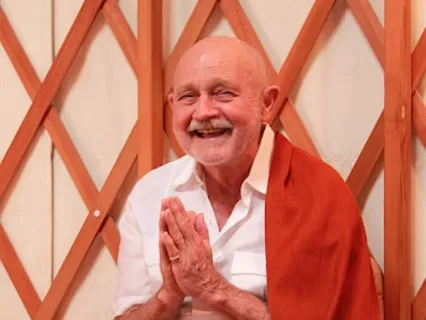
In this episode of the Project Mindfulness podcast,
We talk with the author of The Mind Illuminated,
A complete meditation guide integrating Buddhist wisdom and brain science.
Welcome to the Project Mindfulness podcast.
We'll take you on a journey across the globe and talk with other meditators about their practice,
The lessons they have learned,
And what they want the world to know.
Good day and welcome to season two of the Project Mindfulness podcast.
This is episode number one of season two and I am Christian Netesen.
Thank you for joining us.
In this episode,
I have a talk with Dr.
John Yates,
Our Upasaka Chuladasa.
We talk about his current book,
The Mind Illuminated,
A book that best-selling meditation teacher Sharon Salzberg writes about how the mind is connected to the mind.
Raves brings the path of meditation to life.
We talk on why he wrote it and what are important things to know when reading it.
We talk about his new upcoming book,
What the Buddha Really Taught,
Online internet forums and insights,
The somatic and psychological aspects of human development,
And what exactly is awakening.
Enjoy listening to the end,
Where Chuladasa shares an important advice for meditators wanting to improve their practice.
Today,
Joining me on the podcast is Chuladasa,
Who is a meditation master with over four decades of experience in the Tibetan and Theravadan Buddhist traditions.
As a former professor,
He taught physiology and neuroscience and later worked in the field of alternative medicine.
He's the author of A Physician's Guide to Therapeutic Massage and the writer of The Mind Illuminated.
The Mind Illuminated is a complete meditation guide integrating Buddhist wisdom and modern science written for a Western audience.
Thank you so much for joining me today on the podcast.
Well,
Thank you for inviting me.
A pleasure to have you here.
I would like to start from early on in your journey.
In your book,
It's mentioned you're always a seeker for the truth.
You mentioned diving into Christianity and from that in the 60s,
Learning about transcendental meditation from the Beatles.
Now,
I hear transcendental meditation come up regularly in our community,
Where some say it's a scam and others say it's a cold.
What is your personal experience with transcendental meditation back when you started?
Well,
I found it very useful.
I had been trying to meditate for a couple of years with very limited sources of guidance.
For those that are familiar with Patanjali's Yoga Sutras,
I was trying to use that book and some other books that I've gotten from the Vivekananda Vedanta Society and didn't really have much success meditating on my own.
When I was introduced to TM,
I felt like I was really meditating for the first time,
So much so that I became enthusiastic and was going through the process that's required to become a teacher of TM.
My views on TM have changed since then,
But at the time I found it a wonderful introduction to what meditation was really about.
Right,
And from there you mentioned you bought a sitar and found someone to help you fix it,
And you learned about the Buddha Dharma and sort of made it your own.
Is that correct?
That's correct.
There have been manuals written in the past about how to work with meditation,
How to apply it,
And what led you to write this specific manual?
Well,
It was a discovery of how many people were meditating,
Had been meditating for a very long time,
And were basically by the standards that I've been practicing in,
According to the standards that I was practicing too,
And the instructions that I had had and the way my practice had developed over decades of study,
I realized that most of these people,
In spite of all the time that they'd spent in practice,
Wouldn't even have qualified as a.
.
.
Well,
They'd still be beginners.
They wouldn't be considered to be truly meditators yet.
Well,
I had no intentions of becoming a teacher.
I did become involved in online discussions of Buddhism and meditation,
And I ended up sort of becoming a de facto teacher online because people asked so many questions about meditation,
Which I was able to answer and help them.
So the mind illuminated grew out of a document that I had created and posted on a Yahoo discussion group.
It covered the first six stages,
And then a few years later.
.
.
Let's see,
Quite a few years later,
I guess,
Now that I think of it,
I decided to go ahead and complete that,
Write it up thoroughly,
Because yeah,
I felt like I had something to contribute,
And there were a lot of people out there who needed the benefit of this kind of guidance.
Makes a lot of sense.
I mean,
For me,
Reading a bit about it,
And I know a lot of people in our community also benefit from using it,
Because it seems to speak very clearly to a Western audience as opposed to maybe a more mystical or esoteric audience.
It's very straightforward and very pragmatic,
At least that's how I find it.
And that was my intention.
Very good.
And since the book has been written,
Has there been additional studies about meditation in the field of neuroscience that uncovered more about how our brain works when meditating and deepening that practice?
Well,
There is ongoing work,
And there have been new information has come out about some of the neural correlates of various meditation states.
I'd say that one of the most interesting things is a branch of study that is called cognitive neuroscience,
Or something which is cognitive science,
Where as much emphasis is being put on the different functional aspects of various mental activities,
As is the neurophysiology behind it.
So now this is an area where the interesting thing is that many of the things that are described in the original Buddhist literature and many of the things that I discovered in my own meditation experience and described in the mind-eliminated are subsequently being validated in cognitive neuroscience.
For example,
The distinction between attention and awareness,
Which I was aware of from the perspective of neuroanatomy and the kinds of functions that were associated with the two different sets of brain areas that were associated with attention and awareness.
Well,
Subsequently,
There's been a lot more work done along the same vein,
And there's a greater illumination of these different mental capacities that meditation is training.
I would add to that,
I have recognized in some of the recent cognitive science literature what I would describe as a very accurate description of what a particular mental skill known as vipassana or vipassana would be the correct poly pronunciation,
But I think most people are familiar with the term being pronounced vipassana.
And there is a very widespread misunderstanding that the word vipassana means insight,
And it's often used interchangeably with insight.
Grammatically,
There's a sense in which that's correct,
But in terms of our understanding of our normal understanding of the word insight,
Vipassana does not refer to that.
Vipassana refers to a particular way of using attention,
And there is something that's called predictive processing,
And another area that's called information integration theory.
There's a description of the way that the brain and the mind process information and different ways that attention can be used.
And so there's been some significant clarification that's come out of that work of what exactly it is that the Buddha meant by vipassana.
So yeah,
There's a lot of good work being done.
There's a whole lot more work needs to be done.
A lot of people are interested in various forms of brain stimulation and neurofeedback,
Even experimentation with various psychoactive substances,
Basically trying to find a way to augment the meditation practice and to bring people to awakening hopefully more quickly.
In the process of this,
Of course,
The same kind of work is revealing more and more about the underlying neural processes that are involved in meditation development over time.
Right.
And with these neurofeedback methods like EEG or other ones that possibly can assist us in practice,
Sometimes I hear that,
You know,
People,
Some people use music,
For instance,
To start with the meditation practice or they use certain things.
And then there are certain people who say,
No,
You really have to do it yourself.
And like with psychedelics and what with neurofeedback methods,
It seems that there is a slight danger coming up that we become dependent on these ways of doing it,
Even simple meditation apps.
What is your vision about that?
Do you think it's okay to use these neurofeedback methods to deepen your practice or would you say,
No,
You really need to do it yourself?
Well,
Ultimately you need to do it yourself.
Now these things can be helpful.
There's,
When you say neurofeedback,
There's a broad range of very different methodologies that are referred to there.
There's one particular form of neurofeedback that we have used and found was actually very helpful in allowing people to progress more rapidly in the development of stability of attention and more powerful mindfulness.
Now most neurofeedback is intended to induce a particular state by providing feedback based on the particular frequency of the EEG signal or combination of frequencies.
So it can help to induce a state.
Now that can be helpful in some ways,
But what we're talking about with meditation is not states.
We're talking about eventually producing permanent traits.
The brain is rewiring itself when you are practicing meditation properly.
And if you're developing the particular mental skills and capacities that are necessary for awakening,
This involves a significant change in the way that your brain works.
This happens over time.
If you meditate for an hour a day and then you just shift modes back to ordinary,
You know,
Your ordinary way of thinking and behaving,
Then the time it takes for those changes to become significant is going to be very,
Very long.
If you meditate for longer times or if you go into intensive retreats,
It will accelerate that process because you're asking the brain to do something that it's not used to doing in your normal daily life and you're doing it consistently for more and more time.
So although the brain can do that temporarily at a fairly high energy cost and inefficiently,
The response to increased hours of meditation,
Consistency every day and doing longer retreats can only accelerate and enhance the changes in neural function that allow you to have the ability to have insight,
To see things more as they really are and to have this recognition penetrate deeply into your intuitive perception of the world.
So things that induce states like neural feedback can be helpful with that.
But more in the way of just showing the brain how the brain can get to particular places.
What has to happen is you have to ask the brain to do that over and over again until it changes itself in some fundamental ways so that that becomes your new norm.
And then at that point,
Mindfulness and some of the other qualities that you're developing in meditation becomes part of your daily experience.
And as you can imagine,
That in turn only accelerates the process even more.
Right.
And is it accurate to say that in a way you're mentally training yourself as a weightlifter lifting weights?
And is it true that you need to build that up and it takes time?
Because I remember also from reading your work is that you say sometimes someone can suddenly go to a stage nine for a little while in a practice or that can happen.
But ultimately,
It seems like a gradual process.
Is that accurate?
Well,
In order to become a permanent shift in perception and way of perceiving that leads to permanent shift in the way you respond to life events and the way you behave.
That is a process that appears to be much more global in the mind brain and it does take more time.
It does take some time for that to occur.
Now,
It is possible to temporarily enter states that correspond to insight or states that correspond to the advanced stages of samatha practice,
Samatha asana.
Yes,
People can have an experience of stage nine,
Things like this.
These are temporary states.
You don't know exactly what caused them,
But and so they're not reproducible and not only the brain,
But the brain hasn't undergone the necessary changes in order for this to become a permanent trait.
So these states are wonderful.
They give you an idea of what's possible.
Many people who come to meditation come to meditation because they've had a profound insight experience.
In other words,
They've had a period of time where they perceive the world from the perspective of somebody who has mature insight,
But it doesn't last.
It's something that they always wanted to experience again and so they're attracted to meditation because this promises to be a way to make that a permanent part of their personal experience.
Right.
And this experience of awakening or genuine insight,
Is that something that just you can't predict?
It's random?
Is it like the one that you also talked about?
So when someone really has a change of perspective that leads them to start meditating,
Because when I read,
I practice Zen myself and when I,
You know,
There's this whole thing about gradual versus sudden enlightenment that was in the history of Zen very important.
And is there really no way,
So to say,
To predict when someone will awaken?
Well,
Let's put it this way.
At this point,
We don't,
You know,
When I say awakening is an accident and practice makes you accident prone and acknowledge the fact that sometimes people experience awakening very early in the meditation process and sometimes even without that,
What I'm doing is acknowledging that we don't really completely understand what is happening that leads to insight and causes insight to mature to become awakening.
Now,
I think I have a pretty good grasp personally of some of the essential features of that,
But not enough so that I could predict whether a particular student is going to experience insight and awakening at stage four or stage six in the process that's described in The Mind Illuminated.
What I do find is that by stage seven,
Sometimes as early as,
Not infrequently as early as stage six,
People begin to have profound insight experiences and these often set in motion the process of maturation of the insights.
But I can't tell when they start meditating whether they're going to be somebody who experiences that very early on or whether it's going to,
You know,
Take a little longer.
Right.
Because the term potentiality is something my teacher uses to sometimes describe it and I know that there is this idea that some people are so to say more potent,
But there's for me it seems like such a mystery why.
It's like,
It seems such a mystery to why someone seems more potent to,
You know,
Get this to the state of unified mind quicker than someone who maybe practices for way longer.
It doesn't seem to correlate necessarily always with the amount of time someone practices.
And I think not only speaking for myself,
But for other people too,
That can be very frustrating to see that happen.
That is,
Yes,
One of the poorest measures of somebody's meditative development is how much time that they've spent practicing.
Unfortunately,
Most of the research that's been done on meditation has used that exclusively as a standard.
Somebody who's had more than 2,
000 hours of experience compared to a group,
A cohort of people that have more than 10,
000 hours of experience or somebody who's a beginning meditator compared to someone who has so many thousand hours of experience.
It just doesn't correlate.
There's a lot of individual variations.
There's also so many different things that are called meditation.
And each of these has certain strengths and weaknesses.
If you're lucky,
Somebody might be matched up with a form of meditation that something about the way their own mind has been conditioned,
That will work better for them and they'll have more success with it.
But,
Okay,
So there's fundamental differences in all these different meditation systems.
There's fundamental differences within a meditation system of how well the teacher understands what they're teaching and how well the student follows the instruction.
The measure of how many hours somebody sits on a cushion tells you absolutely nothing at all about what's going on in their mind as they're sitting there on the cushion.
So these things really serve as much of an indicator.
Yeah,
That makes a lot of sense.
Now,
Another question is with the internet and online communities,
YouTube videos,
Books,
And podcasts,
I've noticed there are people who don't seek out a teacher in real life.
What else,
If anything,
Do people seeking awakening need to add to their practice?
If they have been using text-based resources and online forums,
Chats,
Communities as support,
But have basically been trying to figure things out without a teacher and with no in-person interaction?
And is this a valid way to practice the path of meditation?
Well,
It's,
I wouldn't recommend it.
I think that it's best to practice with somebody who has personal experience of what they're teaching and has been trained to teach in the method,
Not just to practice the method,
Because you can attend a series of retreats and classes and things like this.
You might have insight,
You might reach one of the paths of awakening,
But that doesn't mean that you have understood that method you practice fully enough to teach it to someone else.
So then,
Yeah,
There's all these different things enter into it.
Right.
Yeah,
That makes sense.
And how important is it that a teacher is validated?
Because I think that has been happening in the East,
But you also see it in the West that there's people coming up who practice for a long time and they claim a certain attainment or they claim a certain insight,
And they don't seem necessarily connected to a lineage or to a person who validates that.
How important is the validation or that sort of lineage behind it?
That's very important,
Christian.
Well,
You're not quite asking the right question here,
Because the trouble with lineages is that when it's not necessarily the case that the next person in the lineage really has understood fully what the previous teachers in that lineage have taught.
And what we see with the entire history of Buddhism is that the content of what's taught in these lineages does get distorted over time.
And many people aren't aware that in the Theravada meditation almost disappeared completely about a millennium ago,
And that it was essentially rediscovered and reinvented during the colonial period,
And this is what's referred to as Buddhist modernism.
So the meditation methods that we received from Japan,
Thailand,
Burma,
All of these other places,
Are basically reinvented versions of Buddhist meditation that date back only to the 19th century.
Most people don't realize that.
So this is a problem with lineages.
So even the kind of lineages that we look at today only date back for a limited time.
Even the Tibetan lineages don't date back that far.
Although their contact with the West and colonialism and the changes to their practices didn't undergo the same kind of change that Buddhism did everywhere else during the colonial era.
The problem is right now is that there's a lot of people who don't really understand what the Buddha taught,
And because they don't understand it,
They end up reinventing what it means to be awakened.
So you have a lot of people who are claiming to have attained various paths,
Anywhere from stream entry to arhat,
And they're basing this on definitions that really don't correspond at all to what the Buddha taught.
Now,
They can attract people to them as students because of their supposed attainments.
But you can,
Well,
The best that you can expect from that is that you might achieve the version of awakening that this person has either invented for themselves or subscribes to.
If you look at these discussions online,
You'll find what will impress you most if you read them.
First of all,
There's all these people speaking as though they're very knowledgeable.
But if you read enough of these online discussions,
What will come across more than anything else is just how massive the confusion is out there.
Yeah,
That makes sense.
That has been my experience too sometimes when reading about it,
How people also,
They make such an absolute of certain teachers or lineages.
And not to discredit it in any way,
But is there a way for someone like me or someone listening to discern what is worth their time,
So to say,
What is working for them and what might be a good teacher or lineage to connect to?
Well,
I would say if you see the characteristics that correspond to what you would like to develop yourself in a lineage of teachers,
And if over time those characteristics are consistently manifested,
Then it makes sense that that's a teacher to go with.
Right.
Makes sense.
Yeah,
That's very good advice.
Thank you.
So in the book you talk about the 10 stages of meditation,
Which seems to indicate a common aspect to a lot of meditative traditions and approaches.
You also mention a sort of,
So to say,
Holistic approach to these traditions,
Incorporating different aspects into the method as a unity.
Do you believe different traditions,
Approaches,
And meditation monsters should unify in a greater community to foster meditation and mindfulness throughout the world?
What is your vision for this?
Absolutely.
I would love to see meditation teachers get together and discuss very openly with each other the methods they teach,
What they see,
The kind of results they see,
To work together to try to understand more thoroughly what the particular techniques that they teach and use are intended to,
What effects they're intended to produce,
And share that information.
You talk about the 10 stages.
Now,
If you look at those 10 stages,
They just follow a very,
Very straightforward developmental progression,
The same way a child has to learn to crawl and then stand up before they can walk and to walk before they can run,
Or you could think of so many other developmental progressions,
Everything from learning to play,
Learning a particular skill like playing an instrument or a sport or something like that.
But I think the best comparison to me would be any kind of childhood developmental process that you want to look at.
You start at the beginning.
You build something that serves as a foundation for the next level of skill set.
And the reason that I like childhood development models as something to use as a metaphor for meditation is that you are actually producing changes in the way your brain and mind work,
Just as a child from learning to crawl to learning to walk and then run is undergoing changes in their body and their brain to allow them to do that.
And they're achieving those changes by doing particular things.
If you had a child and they were never given the opportunity to move around,
They might reach the age at which most children were walking and running.
But if you took them out of whatever container you kept them in and asked them to walk and run,
They probably wouldn't have a lot of luck.
Right.
Makes a lot of sense.
It's a developmental process and it has a logic to it.
The more we can understand it,
If we look at the various techniques and we see what they do,
Then we can choose the ones that are going to best bring about this developmental process.
The step further is to understand them so thoroughly that we can begin to tailor them to individuals.
If this method works and it works for a lot of people,
Is there still a need for different approaches?
Or is this the magic bullet?
From my point of view,
I could expand on what I've written there.
I could modify and clarify parts of it.
Expand and extend it.
I see some things that are obviously missing from traditional practices.
There's a somatic component which should be a part of these practices.
Yoga,
Tai Chi,
Qi Gong,
Things like that.
There are spiritual practices that tend much more toward the somatic and energetic.
Related to that though,
Is that there could be a lot more in the way of psychological healing and practices that are conducive to psychological healing,
To dealing with emotions and things like that,
Incorporated into meditation.
I have a hundred or so students that are teachers in training.
Many of them are therapists.
Many of them are much more body centered than I am.
I encourage them to take what they learn from me and to improve upon and make the method more effective by introducing some other practices that emphasize both the bodily and the emotional aspect of ourselves.
Ken Wilber has pointed out this.
It's a deficiency that he finds in meditation and mystical practices in absolutely every tradition,
Not just Buddhism,
But every tradition.
He refers to it as cleaning up,
Which would correspond to dealing with your psychological and emotional baggage,
Growing up and showing up.
He's pointing out that this is the weakness of these mind focused meditation practices,
Is that they're leaving out a lot of what is very important.
So there's room for improvement,
As well as just taking all of the various techniques and methods that have been developed in different places at different times and figuring out how they all fit together and how to best use them.
Right.
It seems to leave a lot of space actually for development,
So to say,
Combining therapy,
Combining these somatic practices into meditation.
Is that something that you also work with?
Because from my understanding,
The mind illuminated focuses very much on meditation.
But do you have any advice on integrating,
For instance,
Qigong or yoga and Aikido in combination with the mind illuminated?
All of those,
I do encourage people to consider taking up those practices.
I definitely do.
Right.
And so therapy is also still very much part of a human developing.
It's not that through meditation alone we can come to a state of… One of the things that we stress in the mind illuminated,
And you won't find it to near the same degree if you find it at all in most current meditation methodologies,
And that is dealing with emotional,
Psychological issues that arise,
Internal conflicts,
Things like this,
This is an extremely important thing.
It has to happen.
And in many meditation systems you're encouraged to just,
Even though emotions and that kind of stuff come up inevitably as a part of meditation,
You find some mini systems just basically tell the meditator to leave that aside and continue doing the practice.
And so they don't get dealt with.
Then they can come up all at once in a massive form when a person begins to undergo the process of insight leading to awakening,
And those insights can't develop until a certain amount of that kind of psycho-emotional baggage has been dealt with.
So they go through a very traumatic transition to awakening,
Which is not necessary.
But at the same time,
Meditation is not therapy.
Meditation produces a great therapeutic benefit.
Sometimes it can be the equivalent of years of psychological therapy in its benefit,
But sometimes it doesn't work and somebody has to combine it with therapy.
Other times,
Meditation clears out what needs to be cleared out in order for insight to develop and for awakening to occur,
But there's unresolved stuff that remains in the mind.
And there's nothing in these meditation systems at this present time to deal with that.
So this could explain some of the bizarre behaviors that everyone wonders about by people who are acknowledged or who claim to be awakened.
Yeah,
I'll be honest.
My idea of the Buddha when I first came to know about Buddhism wasn't maybe the best idea.
It was really of a sort of complete human,
Which might be true,
It might not be true.
But I saw it as this sort of complete human,
And from that I thought,
Okay,
Well,
If I practice these meditative aspects,
I will become a complete human too.
And you will.
There are four paths that are defined in Theravada Buddhism and that the Buddha described in his own teaching.
And actually there are more paths than that,
It continues on.
So these are degrees or levels of awakening.
Now,
When you get to fourth path,
You come to be in a place where if you have unresolved psychological material and you get some help with resolving it,
You can resolve it very quickly and very easily compared to someone else.
But it still has to be done.
There are still those things there that have to be dealt with if you want to become a complete human being.
Now,
When we look at the suttas,
We find a lot of superlatives being applied to the Buddha.
And then if you look at descriptions of what it means to be a Buddha,
Once Buddhism turned into religion,
The Buddha began to take on more and more godlike properties.
And people expect a degree of perfection in somebody who has achieved,
For example,
A third or fourth path of awakening,
But it's just totally unrealistic.
But somebody at those levels can achieve a much greater degree of,
I hate to use the word,
They can approach that ideal of perfection much more closely if they realize that there's still some inner work that has to be done rather than just enjoy the place that they're at,
That they've arrived at.
Right.
Yeah,
And from that,
Is it possible to become fully enlightened in this life?
Is it?
Well,
What does fully enlightened mean?
They mean that,
The thing is,
My experience is that so far at least it's open ended.
And as a matter of fact,
What I have learned,
What I do,
The deep knowledge and understanding that I have,
It's not conceivable to me that the kinds of things that people would posit as fully enlightened or fully awakened would be achievable by a human being in the sense that there is always more.
There are limits to the knowledge that our human mind and brain are capable of assimilating.
Compare us to animals that lived 200 million years ago.
Capacities are just way beyond those,
Or just to other animals that live in the world today,
Lizards and frogs and like that.
Now,
Assuming that evolution continues in the same trend that it's shown for the last billion years or so,
A thousand,
Ten thousand,
Hundred thousand years from now,
There are going to be organisms with mental capacities that exceed ours to the same degrees that ours exceed amphibians.
And so what does,
Yeah,
I did get my point.
What does it mean to talk about fully enlightened?
Also,
An essential part of waking up is realizing that you are not a separate self.
You are a process within a much greater process that is unfolding.
And once that fully sinks in,
No matter how much you may personally be free from suffering,
How much you may personally feel like you're experiencing an almost godlike state of being in human form,
When you truly realize that you are not separate,
Then you haven't completely overcome suffering,
Dukkha,
Until all sentient beings have achieved that.
And that's exactly what the Mahayana recognized.
That's what the Bodhisattva vow is all about.
Complete enlightenment,
If we really were separate entities,
Which is antithetical to what it means to wake up anyway,
If we were separate entities,
Then as a separate entity you could achieve some kind of perfect,
Ultimate,
Complete enlightenment.
But since the most fundamental principle that you learn in this process is that you're not a separate individual,
Well then it's pointless to speak about an individual achieving the problem.
Right.
Yeah,
That makes a lot of sense.
And from that,
In the past,
When you read about meditation in the East,
Have been,
You know,
These cities mentioned as supernatural powers that someone developed through meditation.
Is that a byproduct of storytelling,
Or is there really some aspect that,
You know,
Yeah,
If that makes sense as a question.
Yes,
It does.
Some of the higher powers are real,
And they may appear supernatural,
But they're not.
They appear that way because of limitations in our understanding of what is actually natural.
Others are the product of storytelling,
And sometimes behind them there is a truth that the story that's being told is metaphorical.
Now,
The ones,
Part of our non-separateness actually relates to a kind of non-duality.
I mean there's a non-duality of self and other,
But there's a deeper kind of non-duality,
Which is the non-duality of mind and matter,
Of the physical and the mental.
We recognize science has explored the interconnectedness of everything that is physical.
If mind and matter are of the same stuff,
Then the same must be true of mind.
And in fact it is,
And this is one of the things that you will learn from meditation,
It's one of the things you will discover,
Is that mind is interconnected.
And so things like being able to essentially recall the lives of people that have lived in the past,
Or a closely related thing is to know what's going on in the mind of somebody and somebody else in the present.
What's referred to as seeing at a distance or hearing at a distance are just different manifestations of the same thing.
Putting your mind into resonance with another mind,
And this is even true of a mind of someone who has already died,
Because that is still part of the present moment.
The entire history of the universe is part of the present moment.
So yes,
Since mind is interconnected,
You can tap into that the same way the historian or an archaeologist or a paleontologist or a cosmologist or astronomer and things like that can tell the history from what's present today.
They can tell the history of the universe,
Of evolution of everything else.
So yes,
That's true.
Now when you get to things like multiplying your body and being in multiple places at once,
Walking through walls and things like that,
These are in the category,
There's so many supernatural qualities that have been,
Oh omniscience is another one,
That have been attributed to the Buddha and to highly awakened people.
And as I say,
Some of these are really metaphors for something that is,
It's just a reflection of a much more profound understanding of reality that an awakened person has compared to most people.
That makes the most sense to me too when I read about them and heard about them.
Some of them,
Like being able to read people's mind seem to be more about someone so sensitive that they could understand from,
For instance,
Body language or certain signals what the other person really was trying to say or what they felt.
And those really made sense.
But some of them,
Yeah,
They go a little bit beyond the realm of… Yes,
It goes beyond the realm of body language and things like that,
Definitely.
And yeah,
I've heard you talk about the process you are in of writing a new book.
Could you tell us a bit about this book?
What will it be about and what can we expect from it?
What it will be about is my understanding from the suttas and other traditional literature of Buddhism and to some degree of other traditions as well.
And my personal experience and the experience of my students of what insight is,
How and why it develops,
What's necessary for it to occur and how insight leads to awakening.
Why the Buddha chose to divide the continuing process of awakening into the four paths and he defined those four paths on the basis of ten fetters.
And it's because those four paths are significant aspects,
In the same way that TMI is developmental for developing samatha vipassana or samadhi vipassana and sati.
These four paths,
The awakening and the ten fetters that the Buddha described,
They're the same way.
They're just a basic fundamental,
You got to do first things first and then you do the next thing that you have to do.
And then this makes it possible to do the thing after and so forth.
So it provides a very good description of how you arrive at the goal.
So what I'm going to be discussing is what it means to be awakened and what it means to have insight.
What are the skills that we need to develop and I've named the three main ones there,
Samadhi,
Sati and vipassana and explain the process from my experience,
As I say,
From the experience of my students and from everything I've read and studied in my lifetime,
How this works,
How it happens,
Maybe to help sort all these people on the internet to sort out where they really are in the development of the paths of awakening and the development of insight.
So I'm not saying that this is the absolute ultimate answer and for the next 2500 years everybody should be following what I say in this book.
Definitely my understanding,
My experience extended by the experience of hundreds of others and everything that I have been able to read and study and understand in something like about 50 years of working on this project.
That's incredible.
And is there a date already set for that or a certain aim for when you would like to publish it?
Well,
I'd like to see it be ready for publication within a year from now,
Say,
But one of the things that's happening in the process of writing this is that,
And I have a couple of people co-researching this with myself,
Is that we're discovering so much of the new work in cognitive neuroscience and we are going back to the suttas and we're examining line by line and word by word many suttas and different versions of the same suttas and the picture keeps developing and getting clearer.
So just,
You know,
When I started to work on it,
I was starting sort of with this assumption that,
Well,
Okay,
I'll just basically put down what I know and understand.
But then of course you want to validate and verify certain things.
So you go back to the suttas or you go to the corresponding neuroscience.
Every time I've done that,
I've opened up a whole new area that adds more clarity and illumination to what it was that I intended to do in the beginning.
Right.
So it keeps evolving.
It keeps evolving and it's wonderful and it's so exciting.
You know,
It's like what I mentioned earlier,
The meaning of the word would possible and the degree to which the misunderstanding of that word has created so much incredible confusion.
And it's exactly the kind of thing that I was wanting to be able to clarify,
But I didn't,
When I began,
I didn't actually,
You know,
I was making the same assumptions that everybody else was about what that word meant.
I went back to the suttas and found there's no way in the world that could possibly mean that.
It doesn't say that it does,
But it does.
It's more importantly,
Is it very accurately identified a particular mental skill and capacity that must be developed.
And then we go to neuroscience and find,
Ah,
It's being described.
Cognitive science is describing it.
There are theories of how the mind works that are actually laying this information out.
So I can go back and I can put,
What was,
I can say to myself,
What was it the Buddha was really trying to communicate?
He didn't start using the term lapassana.
And so it's in what are referred to as the latest,
Uh,
Strata of,
Uh,
Of the suttas of his teaching.
And it appears,
Not that many times,
It only appears in,
I don't know,
Less than 20 suttas.
And it always appears in combination with the word samatha,
Except for two suttas,
But it always carries a particular meaning that absolutely doesn't correspond to what everybody has assumed it meant.
What that means is that based on that mistaken assumption,
People have been prevented from recognizing in a clearly conceptual and articulable way,
Exactly what it is that you were trying to do when you were,
Uh,
Doing a meditation that,
Uh,
Is called a lapassana meditation.
So,
You know,
Uh,
Yeah,
It's exciting.
I'm excited to read that.
And,
Um,
The mind illuminated is also very clear guide on meditation,
How to navigate our practice.
Um,
There's already incredible advice contained in this book,
But still,
I would like to ask you,
Um,
What would you advise to anyone listening to the podcast right now,
But in terms of what you found to be,
Um,
Most important in your,
In your path along the way of practicing meditation,
Um,
What could possibly help,
You know,
Um,
Other people are practicing that they can take away,
Uh,
From this talk and yeah.
Well,
Maybe the best thing I could do would be to say,
Um,
I,
I do believe that anybody who chooses to follow the path that's described and the mind eliminated is going to be successful,
But the biggest obstacles to their success are going to be first of all,
Striving.
Striving is self centered.
It assumes that there's somebody that is going,
Is making this happen and you will get in your own way and you will get stuck and you'll become very frustrated.
So strive,
There's no place for striving.
The place,
What,
What is required is simply to form clear intentions around the instructions for the stage that you're at in terms of what's actually happening in your meditation each time you sit down and meditate.
And that can change even in the course of a single meditation,
But it's obviously going to change over time.
It corresponds to the stages.
So all you do is form the intention to follow the instructions for what to do when precisely those kinds of things are happening and you'd be diligent about doing it.
Um,
No striving,
Just trust in the process.
The instructions are all really simple.
Another thing that holds people back is they will over interpret.
They will mistake the means or the end.
And there's a lot of different techniques and practices that we introduce for people to use at every stage.
And what I find,
A lot of type A personalities especially,
That they will lose sight of what the goal is for the particular stage that they're at and end up spending a lot of time trying to be absolutely perfect in the performance of the techniques that are suggested.
Not,
As I say,
Losing sight of the end and focusing on the means and thereby holding themselves back.
Another obstacle is when somebody assumes that they know and understand something because they read it and they don't actually do the practices.
Now,
The biggest problem with this is people who have practiced in some other tradition and then they come to the mind illuminated,
They will read the mind illuminated and say,
Oh,
Well I'm obviously at stage five.
And so they'll start off practicing at stage five.
But there are certain skills that are unique to stages two,
Three,
Four that they haven't developed to the same degree.
And so then this becomes an obstacle.
Or sometimes people will just be in a hurry,
You know,
I want to get to these advanced stages.
And so they won't develop the skills that they need to the degree that they need.
Fortunately,
This is self-correcting.
They'll find themselves suddenly unable to practice it.
You know,
The example of somebody that figured they were at stage five and they started practicing that way and it seemed great.
And then they try to move on to stage six and they find all of a sudden they're back at stage three.
Well,
What happened?
Well,
They ran into a situation where it revealed the fact that they hadn't developed certain skills to the degree that they needed.
So that's my advice about using the mind illuminated as a way to achieve this goal.
The other thing that is really important is learning to,
There's a variety of words we can use.
And this kind of relates to the striving thing,
Striving being an extreme form of it.
But it's,
There's a lot of letting go,
Even to the point of surrender,
Just surrendering to what is happening,
Rather than resisting or trying to mold your experience to meet some preconceived notion of what you think it should be.
This is a,
This can be a tremendous problem.
In terms of,
In order to assimilate insights,
You can have an insight experience and you can say,
Oh,
Wow,
Right.
This is the way things really are.
And then that kind of wears off and you have the memory of it.
But what you need to do is to let go of the tendency to chase after things and to cling to things and to think that you're the one doing things and allow yourself to just allow these things to unfold in a very natural way.
And all the way along and,
You know,
The Anatta concept,
From the very beginning,
We are telling people,
Notice that you are not in control of your mind.
All you can do is hold intentions.
Notice that there is no one part of your mind that is always the I,
That is in control.
As you go along in the process,
Give up,
Keep giving up this idea that I'm doing it,
That there's an agent here inside my head that is responsible for making things happen.
And if you do that,
By the time you get to stage six,
Stage seven,
That aspect of self-clinging has largely disappeared.
And if you've been carrying your practice over into daily life,
You've been discovering more and more in daily life,
How much the idea that you're doing things,
That you're the agent in charge,
Is just an illusion.
But every aspect of insight,
Maturation and development involves a kind of surrender,
A kind of letting go,
A kind of relaxing into it.
And so that would be the most important,
That would be one of the most important pieces of advice that I would give to somebody,
Regardless of what practice they're following,
Is,
And the unfortunate thing about a lot of practices is that they're all in the form of do this,
Do this,
Don't do that,
Don't do that.
If that happens,
Go back to noting or whatever it is.
And rather than encouraging all the way along to notice the reality,
To see the actual fact that there is no agent in charge.
But ultimately,
The moment of awakening to first path is a moment of total surrender.
And the more a person practices that letting go,
Then the sooner that's going to happen,
And the more easily that's going to happen,
The more painlessly it's going to happen.
That's beautiful.
Chuladasa,
Thanks again for joining me on the podcast and for your interesting talk.
There's a lot to take away here.
And I'll make sure to re-listen to it again and again to take it up in my practice.
Thank you so much for joining us today.
You're most welcome.
And thank you,
Christian.
If you enjoyed what Chuladasa talked about,
Make sure to check out his website mentioned in the description of this episode.
Shout out to our patrons.
Thank you very much for supporting us.
Next week,
I am talking with Mark Lesser about mindful leadership.
Mark worked together with Facebook and Google to implement mindfulness into the company.
Remember to subscribe to our podcast.
If you enjoyed this talk,
We are able to do what we do because of your help.
If you would like to support us without making any donations,
You can leave us a review on the platform you are listening to.
In this way,
More people will be able to benefit from this podcast.
Thank you for listening and have a great day.