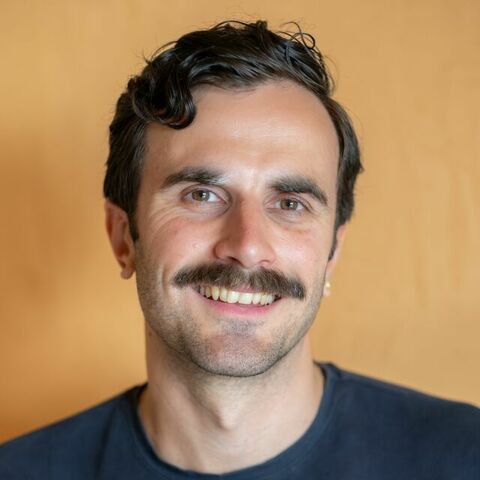
Episode of the Meditation Mind podcast,
We talk about the multiple selves model and how to work with it.
Honest and open to all religions,
All traditions,
All ages,
And all levels of experience.
Radically accessible,
Pragmatic,
And eye-opening.
Simply for everyone.
Welcome to the Meditation Mind podcast.
We'll take you on a journey across the globe and talk with others about their practice,
The lessons they've learned,
And what they want the world to know.
Good day and welcome to the podcast.
I'm your host,
Christian Nateson,
And I'm incredibly grateful you've joined me on this journey today.
My intention is to give you hands-on insights and advice to deepen your practice and come closer to achieving a happier mind.
Today on the podcast,
We welcome Janus Wellen.
He's a Brooklyn,
New York-based mindfulness and meditation teacher,
Specializes in creativity practices,
Emotional and group intelligence practices,
As well as the ways meditation can facilitate social justice work.
So Janus has nearly a decade of dedicated mindfulness practice in the insight meditation tradition,
And Janus specializes in one-on-one meditation mentorship and developing custom meditation courses and strategies for individuals and organizations.
So thank you so much for joining me today.
Lovely.
Thank you so much for having me.
And I realized that usually it's no problem and I don't think about it twice.
And since this is going to be recorded and go out to more than one person,
Just so you know,
It's pronounced Janus.
Janus.
Janus,
Yeah.
Gotcha.
It's a special name.
It's from Eastern Europe,
Is that correct?
Originally?
Yeah,
Exactly.
Yeah,
It basically translates to Jonathan.
Or if I like to be dramatic,
I'll tell people it translates into the light of God,
Which it also does,
But it also just means Jonathan.
Nice.
So tell me when and how did you find out about meditation in your own personal life?
Yeah.
So I first was introduced to meditation when I was a teenager.
I was about,
Let's say 12 or 13 and meditation was just something that was kind of happening around my house.
I was raised in this little hippie farm just raised by my family in this small little enclave in Rhode Island.
And meditation was just something that was around.
And it was something that was interesting.
It was sort of like a different weird way to rebel,
I guess.
And yeah,
It ended up being one of the more durable tools that I learned as a teenager as opposed to like,
You know,
Skateboarding and being punk rock and stuff.
Meditation stuck with me more over the years.
Yeah.
So you at a really young age already jumped into the meditation boat of practicing.
And I mean,
How did you practice back then?
Was it just you sat silently for a few minutes?
Or did you have a certain like book or teacher that you really got into?
Yeah,
There was one particular book when I was young called Dropping Ashes on the Buddha,
Which is a Korean Zen book.
And it emphasized a koan practice and a sort of general continuous practice.
So holding a question in the mind and relating to the world through the lens of that question.
And just trying to continue to have continuous awareness throughout the day.
So that was generally how I practice and I tried formal seated practice a few times,
But because I didn't really have any direction,
I didn't really have any one in particular to guide me,
I sort of tended to rely on books and I tended to unintentionally shelve any of the personal questions that I had and just sort of look for whatever answer popped up on whatever page or that kind of thing.
This is pre sort of the explosion of meditation on the internet.
So even searching for a question in particular or particular teacher wasn't really available.
It was really just,
You know,
Practicing and if I had a question,
Just forgetting it because no one's gonna answer that.
It's interesting that you that we sort of land on this,
Because our in our community,
There were actually a talk about the need for teachers and how much you know,
You can find online,
You can find in books,
You can find on forums.
So sort of tapping into that,
When was a point in your life you realized,
Like,
I need a teacher or was there never a point?
Yeah,
I think that I definitely had those points.
And I think what happened for me was I unintentionally kind of came across what I would call now teachers just in a sense,
Guiding individuals throughout my life at different points.
And realizing that I just never had someone who could provide direction,
Provide a kind of a sense of support in in the areas that were important to me in my values.
And so I think the first teachers I had were,
Like I said,
Through books,
And then actually,
Strangely through through artwork.
Work was one of the big ways that actually learned to begin to effectively look to masters to show me different ways of perceiving.
And that's really what art making was for me.
That was my form of meditation for many years was making fine art.
And the teachers that I looked to were not ones that I had direct contact with,
But always ones that I was sort of looking at through books and this kind of thing.
And then when I went to school for fine art and I focused in conceptual art,
The guides were,
Some of them were the teachers around me.
And really,
There's one teacher in particular,
A gentleman named Hugh Pocock,
And a therapist at the time who at the time,
They just were guides.
I looked to them and said,
You know,
That's that they're people who can help me when things really hit the fan and I can just turn to them.
And it ends up later that I found out that both of them were pretty dedicated in meditation and both of them were,
You know,
Had sort of developed the kind of continuous practice methodologies that I became interested in later on.
And you know,
Later on when I stopped drinking and using drugs,
Like when I was like 25 or something like that.
And so the people I came in contact with then were,
You know,
Like people like sponsors or those kind of things.
And they were just people who dedicated their lives to helping other people and to trying to be better in the world.
And so those were the,
You know,
Sort of teachers at that time.
And that was your,
You know,
In those kinds of situations,
You're immediately thrust into those roles where you're immediately asked to support people who,
You know,
Have less stability than you do,
That kind of thing.
So you're immediately asked to support others.
And then I started to come in contact with more sort of what we might think of as traditional meditation teachers and masters,
In particular a teacher named Xin Zhen Yang,
Who I know you're familiar with.
And he in particular was able to pull all of these parts together because my experience from very young was that,
You know,
There's this kind of meditation versus this kind of meditation and this one says it's better than that one and that one says it's better than this one.
And I didn't really understand why they even called all of this stuff meditation.
And through working directly with Xin Zhen for some time,
It became very clear how these different pieces interacted and how,
You know,
In one meditation you're holding a question in the mind continuously,
Whereas in another meditation you're,
You know,
Moving the rosary beads in your hand and,
You know,
Connecting with the beatific image of,
You know,
The Holy Mother.
In another meditation you're pretending or you're saying,
Using a mantra or any of these things how they actually directly interrelate and applying those to my life.
So that was pretty significant.
That was after I stopped drinking somewhere after 9-11 and then coming in contact with Xin Zhen not terribly long after that.
So you say everything sort of came together with Xin Zhen Yang and his unified mindfulness teaching.
And so is it like,
For our listeners who may be not that familiar with it yet,
Is it like a holistic approach to meditation and he uses different techniques for different situations?
Is that correct to say?
Yeah,
And,
You know,
Holistic is a good way to put it,
Kind of elemental.
The way that I like to say it is that he's developed a kind of periodic table of the world's meditation elements and because he's sort of organized things in this way from his own deep personal experience and scholarship,
Because of that you can discover places in the sort of map of these different meditation techniques that really haven't been explored,
You know,
Or at least aren't explored in very popular ways around the world.
So you might say,
Okay,
Well we can meditate on the breath and we can meditate on sound or this kind of thing,
But what about the sound of the mind or what about the sensations of emotions as they're coming and going in the body or what about,
You know,
Our sense of mental image,
The sort of the thing that locates us and creates ourselves as the center of this sort of perceptual universe.
If anyone's listening to this,
You can check in right now and check,
Hey,
Where do my senses tell me reality is centered?
And they all sort of point to this middle space.
So it's not terribly surprising that we have this sense of a self that's continuous and always there,
That kind of thing.
So it's a very broad based view of meditation and it's very,
Very flexible based on people's individual needs.
So if one person needs to work on their relationships or if one person needs to,
Like you mentioned in the intro,
Work on creativity,
The tools are right there and it's not just,
Hey,
Watch your breath.
It's also,
That should spill out into your creativity,
It's very specifically built to unpack the details and the structural elements of what is,
You know,
What is a good relationship or what does it mean to be fulfilled in life?
So for me,
That's the big focus is helping people guide them towards fulfillment and sometimes the path of classical awakening is part of that.
And that's,
I think another important thing about Shinzen is that he talks really openly about classical awakening in a way that isn't woo-woo,
Doesn't require you to,
You know,
Abandon reason,
Which for me was very helpful because I'm a pretty skeptical person by nature.
And at the same time,
I'd had some pretty significant spiritual experiences and needed a place for those.
And so that was another thing that drew me to Shinzen.
Right.
So Shinzen Young,
I believe,
Trained for years in a Zen tradition and came back to sort of America and worked on this unified mindfulness teaching.
And what I,
We actually read his book,
The Science of Enlightenment,
I believe is the title in our book club not so long ago.
It's a super.
Yeah,
It's a super interesting book.
And he really refers a lot to this one poet,
I believe Wells is the name.
I forget.
I thought that he refers a lot to Eliot,
But I realized in that book,
He might be referring to Wells.
Right.
And I think it's so interesting to really incorporate this more poetic sense of reality and understanding reality.
And as you say,
You know,
Through creativity,
There's a lot to be found and a lot of insights to be seen that sometimes cannot be communicated through words.
It's this sort of wordless transmission of insight.
And yeah,
I like that you really also mentioned that this seeing someone really good at what they're doing,
And seeing their work and being able to understand what that work means.
It's super valuable.
But it taps into sort of the non spoken realm and or sort of the wordless realm.
And I think another thing that is really inside that realm can be emotional healing and our subconscious and the things that are going on there all the time.
And you talk about the multiple selves model.
So what is that?
And how do you actually apply the multiple selves model?
Yeah.
And do you mind if I jump back to something you said a moment ago before I talk about that?
Yeah,
Sure.
Yeah.
So something that is significant that you've mentioned is this idea about the non linguistic or some of what I like to think about is the pre linguistic experience,
The primordial experience.
And what that means for me is that we're,
You know,
Our world is built out of these pieces,
These concepts that we hold things together with,
We hold our reality with these general concepts.
And I mean that very broadly.
So are you know,
The idea of a tree or the idea of a self or the sense of a narrative.
So we all have the sense that there is a narrative of life,
That earlier in life,
I was x and today I am y and I'm,
You know,
A member of that narrative and it's moving forward.
And that idea that I'm the central character in this sort of narrative of my life is very useful in doing things like,
You know,
Developing our sense of identity and developing,
You know,
Things that are important to us and getting all sorts of things done.
It's really useful.
And it's also potentially incredibly restrictive and potentially brings about a great deal of suffering.
So as individuals,
We have this sense that there is a self and it needs to be protected at all costs.
So suddenly something arises out of,
You know,
Some an interaction and suddenly there's this intense sense of being affronted or an intense sense of sort of pain,
This kind of thing.
And so what we're doing in a meditation process in general is what I like to think about as deconstructive.
So the deconstructive side is looking at the raw sense data that is coming in that we're experiencing,
The seeing,
Hearing and feeling,
The way that the mind is aware,
The way that these different pieces interact.
And something I've been very interested in recently is the way that the mind packages this raw data and turns it into concepts and narrative and this kind of thing.
So the mind is doing this and adding things together and we can call this effectively language.
These each little piece,
You know,
Like the idea of a tree or the idea of,
You know,
Mary Sue or my wife's name is Raquel.
Like these concepts that we hold are helpful for navigating reality.
But if we look very,
Very,
Very closely at the elemental pieces of our perception,
Those narratives begin to break down and we start to have contact with a sort of pre-linguistic universe.
And what's really interesting about that is you come back from some random,
You know,
Pre-linguistic experience and you can describe it in any way you want in part because you're getting below the level or underneath the kind of formed material.
So when you come back and you reform as a self into a world,
You have this ability to have a kind of poetry in relationship to it.
So maybe that undifferentiated flow experience is God,
Or maybe that undifferentiated flow experience is emptiness or it's a true being.
Any of these sort of pieces.
So we have this undifferentiated experience and we have the choice of how to bring those pieces together.
And so to circle back,
The multiple self model is one where we are dancing between these two places of the deconstructive realm,
But also the reconstructive realm.
So we can rearrange and come back in a way that is optimal or best for us and what our values are.
And so in general,
What the actual multiple self model is,
Is looking at the fact that we have a variety of selves that arise.
We can imagine,
You know,
We can say,
Oh,
You know,
Part of me says I want to work real hard and another part of me says I want to take a nap.
Those different parts,
Those different selves are often in conflict with each other.
And so much of our experience of the world is observing these different selves as they interact with each other.
And often privileging oneself over the other one.
We'll say,
Oh,
This one that wants to work really hard,
This one's good,
But this one that wants to rest and eat potato chips and watch Netflix,
That one's bad.
And it's partially like a denial of nature.
Well,
It's part of our nature to want to relax and it's part of our nature to want to explore.
And part of what we need to do is to allow these selves,
These different parts to have their needs met without treating them as though one is alien and one is natural.
And that's a very common theme for me that comes up a lot is,
Is what does,
What does my body mind treat as alien?
Stress,
Oh,
That's alien.
This pain in my knee,
That's alien.
And what I try to do,
What I,
Myself and my wife try to do is guide folks towards clarity that each of these different parts is natural and that beneath any one of these drives,
Any one of these sort of,
You know,
Even clinging in a version,
Any of these sort of pushing and pulling elements is a fundamental need that is wholesome and the need is wholesome.
And that's,
You know,
Important because we want to meet that need.
And at the same time,
The execution of that need can be very problematic.
So an example that I like to use is,
Okay,
So I want to feel connected with other people.
I want to feel kind of really,
Really excited.
I want to,
You know,
Have a spiritual experience.
So I'm going to try crack cocaine.
It's like,
Whoa,
You know,
I was with you right up until that point.
And now suddenly it's,
That seems like a really,
You know,
Poor use of your,
Of those,
Poor way to meet those needs.
So often we confuse the execution of the need or the sort of way that we try to have a need met with a need itself.
So we might say,
You know,
I just want to relax.
And that turns into like,
I ended up watching Netflix for days or whatever,
Whatever the,
You know,
Bad behavior that we prefer not to have.
That's more execution than the need itself.
And if we can actually meet the need itself we don't actually have to execute it in a way that is harmful to ourselves or harmful to others.
So that's,
Those are broad brush strokes.
And then there's a lot of mechanics in the detail of how to do that through using meditation.
And it's worth mentioning that there's a lot of overlap between what we're describing and what's called internal family systems.
And if that's of interest to folks,
And there's a lot of,
Of the meditation tech that Raquel and I have been developing on top of that system.
So there's a lot of psychology looking around the corner here.
A lot of looking at the mind and also the needs of a person and looking at the behavior of that person.
And then I imagine transforming that behavior in a way that sort of is in line with all the other selves.
Is that sort of accurate to say or saying that?
Because for me it's really,
I recognize a lot of what you're saying.
And to me it seems that you know you have all these parts of yourself that are trying to get represented.
So they're trying to get sort of you're navigating this,
This I don't know what it is.
Like this suit of body and mind and you're working towards goals and you're doing things.
And as you said there's all these different kinds of needs that choose different ways to express itself.
And it seems like,
And I'm not sure if that's,
Correct me if I'm wrong,
But is there like a central sort of consciousness that navigates all of that?
And is that then the consciousness that is the one that observes?
Or is it a little bit more layered than that?
It's a little bit more layered than that.
And I think that again,
Because we,
And this is why I often emphasize this,
Because we're talking about material that is in the realm of the transcendent stuff.
It's not just the psychological side where,
You know,
From a psychological perspective we're trying to have as cohesive and stable of an ego or self as possible.
And that's good.
I think that's very important for most people.
And often if people come to me and say,
Hey,
I'm interested in the path of awakening,
The first thing we assess is,
Okay,
How stable is your experience of reality?
How much can you lean on that stability?
That's one side.
But because we're getting into the pre-linguistic material,
It ends up being very sort of,
It gets very linguistically tricky where you're saying,
Oh,
It's a little bit of this,
A little bit of that,
But just,
It's worth noting that this is the way that I describe it and somebody else might describe it very differently.
And so that said,
Typically I think that there ultimately is no,
And this is why it relates very closely to Buddhism,
There's no one continuous self and there is no self that is,
You know,
The one true perfect self that,
You know,
Underneath all of it is the observing self or the aware self or this kind of thing.
It's more that each of these things are functions.
So awareness functions,
Awareness is aware.
That's what it does.
I don't even get into it because it starts getting into like redefining words that I don't,
You know,
It's a very old discussion,
What is consciousness?
So I just talk about it in terms of awareness.
There's a part of the mind that simply knows whatever is occurring is occurring and your listeners can check right now,
Like whatever's occurring,
There's a part of the mind that knows,
Okay,
This is my experience of what's happening right now.
You know,
The experience is known by the mind and that's the awareness.
And the awareness itself is very,
Very,
Very neutral.
It doesn't,
You can tell if you're observing your experience,
Is there part of me that is preferring anything right now to be different,
Even wanting time to move forward.
So something I'll sometimes do in a class is I'll just stop talking and say,
Yeah,
Do you want time to move forward?
And the whole system sort of lights up and is like,
Um,
Oh,
Excuse me.
Like I'm expecting,
You know,
Like,
So even that subtle thing of the system wants something that isn't happening.
So even that preferring,
Which is very common,
It's natural,
It's okay.
Even that preferring is an indication that there's some self or some part that's arising that wants something to be different.
Awareness doesn't prefer,
Awareness doesn't need anything to be different per se.
So it's this very neutral knowing quality of our experience.
And I could,
I could describe how to,
How to come in contact with that or how to,
How to get there,
But to save time,
We'll,
We'll just slide past that for now.
Um,
You know,
Basically it's like,
I always want to just go into guiding and meditation,
But yeah.
So maybe if we have time,
We could,
Yeah,
Absolutely.
Yeah,
No,
As always.
And that's like,
I mean,
That's the thing I love doing the most.
So happy to,
Um,
So awareness is very,
Very neutral.
And at the same time,
That neutrality isn't always exactly what we need.
So you said that there's a lot of psychology here.
And so we're dancing at this edge of what's called insight,
Meditation,
Or mindfulness and psychology.
So on one hand,
We're just observing whatever's occurring,
The sort of,
In a sense,
A deconstructive practice.
And then there's the psychological,
Which is reconstructive.
And we're sort of dancing at the edge here,
Looking,
Observing,
And then saying,
Okay,
Let me be of support.
So we're not just being aware.
The awareness is a caring awareness.
So the awareness is,
It knows the experience,
But there's this very,
Very,
Very slight,
Very,
Very subtle charge.
And I emphasize how subtle it is because people really overdo it.
I found people really,
Really overdo it.
This incredibly subtle charge.
In fact,
The less you effort,
The more valuable it often is.
Charge of care,
Of kindness,
Of compassion that charges the awareness.
And the term that my wife and I use for this is what we call true being.
And it's not a true self.
It's just in a sense,
The being that we can rely on,
That we can turn to in difficulty.
The being that is there and is present and can absorb what's occurring without needing to change it.
So whatever self is arising,
It can say,
Cool,
I see you and I understand.
And just a little technicality on the meditation.
So the image I think of is like,
There's a center point and different selves have their own little view.
And so one self is like,
Oh,
Like it's the anxious self.
And everything it sees is like a little slice of the pie going out from the center.
And it just sees this little slice.
It can't see the whole pie.
And it just says,
Everything is anxious.
Everything is,
It's nerve wracking.
And then there's the other self that's maybe hopeless.
And it's like,
Oh,
Woe is me.
Everything is just like this.
And then there's the self that's like easy going,
Happy,
Chill,
Carefree.
And each one of these selves tends to say,
I'm the one real self.
Whoever's listening to this,
If you can have a sense of the self that's arising now,
Whatever self it is,
It tends to say,
I'm the one who was always here.
And that really sad self that was there before,
Or that really anxious self who was there some other time or whatever self is arising.
Those other ones,
Those are just distortions.
This one is the real one.
And they're always very insistent in that way.
However,
Awareness can navigate all of them.
Awareness can know all of these selves and effectively know,
Ah,
Look,
This self is arising.
This is natural.
And from that position can bring the care and say,
Hey,
I hear you.
So a large part of the multiple self model is getting in contact with awareness and from that position speaking to and connecting with the parts that feel like they're having a more difficult time and then saying what needs to be said in order to soothe those parts.
So here's an important example.
Have you ever,
I'm sure you've had this experience,
Have you ever done a heart practice or a loving kindness practice or this kind of thing?
And some part of your mind says,
You're like,
I love you,
I love you or whatever the word is phrase you use.
And some part of the mind sneaks in and says,
This is stupid.
Why are we doing this?
This is the dumbest thing I've ever boring.
Boring.
I have a million things to write.
I'm sure you've had that experience.
Anyone who's done.
Yeah.
So that is a part rising up to indicate,
Hey,
What's happening right now isn't meeting my need.
That's all that is.
This these phrases,
These things that they don't meet my need.
And so what that does is that pushback that we get in those experiences,
Usually it's a distraction.
Oh,
This boring,
Whatever.
Okay.
Ignore that.
Ignore that.
We'll go back to our loving phrase.
In this case,
We might use a phrase that's,
You know,
Could be sure I love you,
Whatever we want.
It could be less cheesy or whatever.
It could be like,
Hey,
I'm right here or whatever.
And the system is going to push back.
Could push back in the form of arguing,
You know,
Mental audio could push back in the form of just a lot of distraction or,
Or showing you,
Hey,
This other thing's really interesting,
But it'll push back.
And so we know,
Hey,
There's a part of me rising up that feels like it's a needs aren't being met,
Which gives us an opportunity to say,
Hey,
And say whatever words are needed,
Whatever way of relating to that experience that's needed in order to help it feel soothed.
And that's one of the central parts of this kind of dialogue within the system awareness,
This kind awareness,
What we call true being can navigate and converse with or interact with or just hold these selves that feel like their needs aren't being met.
Yeah.
I,
I can imagine for some people when they hear this,
They find it hard to believe that some of their more destructive behavior or their more subconscious needs are able to come up or so to say,
Be expressed in in a in a less destructive or,
You know,
Less.
You could call it evil or bad way.
Sure.
But is it true that any any sort of emotion or behavior coming up ultimately can be brought back to a sort of beginning and the behavior can be changed from there?
Or is there really something like,
For instance,
If you look at,
You know,
Evolution theory and looking at how we always want to reproduce and,
You know,
Because of that,
A lot of behavior would come up,
Like we get jealous and you know,
These kind of things like,
How do you look at these things from from sort of the multiple cells model?
Yeah,
Absolutely.
Yeah.
Well,
I think that that is that is one of the things that can be very confusing is like,
We can think,
Oh,
Yeah,
Sure.
But I want to,
I want to,
I want I should,
You know,
Maybe I can grow through maybe I can change or maybe I can approach these in different ways.
But not that part,
That part that's like,
Man,
I you know,
I hate,
I hate puppies or what I know,
Like,
Or some part of our mind that's like,
You know,
Or the part that is actively using substances we prefer not to or the part that like,
You know,
Physically has done something strike stricken,
You know,
Struck someone in the past,
It's like,
We can,
You know,
All these different parts.
Is it possible that that part of us is also wholesome?
Or even the part that's not the part that's judgmental?
This is one people have a lot of trouble with.
They're like,
Oh,
I had a student a long time ago,
I was a young guy is very sweet.
And at some point,
I said,
Hey,
Man,
It sounds like you're,
You know,
You're judging yourself really hard.
He's like,
Oh,
You're right.
I'm such an idiot.
You know,
Like,
We don't want to let go of the judgmental self,
Because we think that you know,
The judgmental self,
You know,
It's like judging us like,
Oh,
What's wrong with you?
You're so stupid.
Like,
Why are you always,
You know,
You're if you weren't better,
But even the judgmental self is wholesome.
Which is like,
Wait a minute,
I thought I was supposed to let go of judgment.
Well,
We want to look at it from the perspective that its need is wholesome.
Its expression is often quite harmful.
So the need if you think of a judgmental self,
Just as an example,
It's like,
Oh,
This is stupid.
These people are stupid.
Right?
That's a,
That's a classic one that this person or these people,
This is dumb.
Right?
So let's break that down a little bit.
Okay.
This person is dumb.
This group is dumb.
Well,
What that means is,
Okay,
That means that this is bad.
Something else is better.
There's another better thing over here somewhere.
Right?
Or this is boring.
I don't want to do this.
Okay.
I want to do something better somewhere else.
In other words,
I want this other thing.
This other thing will,
Will,
Will satisfy something.
In other words,
I'm not okay with this thing.
I want this other thing,
Which will make me feel okay.
Which ultimately is just saying,
I don't feel okay.
I don't feel okay.
Which is,
It seems like a big leap to go from this group of people is stupid to like,
I don't feel okay.
I'm scared.
Yeah.
I feel alone.
But really ultimately we're looking for the underlying need and an assumption that,
You know,
All these different parts of ourselves aren't bad because good luck if you have parts of yourself that you think are bad and you're going to get rid of them through,
You know,
Self will,
And then,
You know,
You're going to be free eventually.
Cause I haven't,
I've,
I've met people who've had really incredible transcendent experiences.
I have yet to meet someone who's transcended human.
Yeah.
Well,
It's,
It's the classic question of can you kill your ego?
Yeah.
And I think that that's one of the things that people get caught up in is like,
Oh,
There's no self,
This kind of thing.
And any sense of self is bad then,
Or any sense of distraction.
This is so,
It's so tough in meditation.
It's so sad when people have this sense of like,
Well,
I'm distracted.
There's,
I shouldn't be distracted.
It's like,
What are you talking about?
Like,
Of course,
This part of your mind that is naturally going to be looking for things.
That's nature.
All you're doing is gently saying,
Hey,
I get that you want to be distracted.
Come on back,
Distracted again.
Oh,
Come on back,
Distracted again.
It doesn't serve us to be like,
You're so stupid for being distracted.
Like it just,
That's just more distraction.
So it's,
It's very much ultimately this sort of sense that everything that's occurring is nature.
And really what we're trying to do is honor nature by respecting the fact that these different parts are going to push and pull in different ways.
And it's up to us to cultivate a kind of harmony.
And the only way that we can navigate that harmony is through contact with this kind awareness,
This true being.
And from a perspective of you know,
Different kinds of religions you have,
Like Buddhism,
Hinduism,
Christianity,
There's a lot of restrictiveness,
So to say,
I wouldn't say that is the goal.
I wouldn't even say,
You know,
That is the purpose or the intent of the religion itself.
But it seems to sort of correlate with people trying to practice something like,
Let's say Buddhism there,
There,
There are certain,
You know,
Rules and regulations and things what to do and not to do if you,
You know,
Choose to follow this path or that path.
And I think,
You know,
Without any judgment on that,
It can seem sometimes like you have to change or even get rid of certain,
You know,
Desires,
For instance,
Of yourself.
Yeah,
Absolutely.
Yeah,
And I think that that's,
When people say that they have the experience of,
You know,
These things being completely uprooted or uprooted,
Or they don't have any anger anymore or these kinds of things.
Typically what they mean is that the experience of anger or lust or whatever arises,
But it can't grab on because there's nothing really to grab onto or it has a large enough container that it really doesn't take over.
I like to think of it like momentum.
There's a gravitational force.
So we're meditating,
We're observing whatever we're observing.
And then this thought comes up,
It's like,
Oh,
Remember that Twizzlers commercial from way back,
You know,
Whatever it is,
Like some silly thought and it has its own gravitational force and we get pulled into the gravitational force of that thought.
And so then they're like,
Whoa,
Where was I?
And we sort of have this sense of coming back to what we were doing.
Part of it is that if we're in a large enough container,
Sure,
That thought about the old commercial arises,
But it doesn't really have anything to grab onto because there's no,
You know,
The,
The container is much larger than this sort of very narrow view.
So it's hard to get pulled into that particular stream.
And that's part of what we're describing is,
You know,
These aspects of ourselves that are changed or uprooted.
The premise is partially that actually they do arise.
And I think that,
Um,
That's a much more human way of looking at it than a strict,
Like,
You know,
You shouldn't have these feelings and you won't have these feelings.
Now that all of those things are going to arise,
There's,
You know,
I forget who it was.
I think it might've been Elie Wiesel,
But he said,
Someone,
I think it was him said,
There's nothing any human being has ever done that I can't imagine myself doing in my worst,
Uh,
In my worst self.
And this is,
You know,
This is someone who lives through the Holocaust.
So the implications of that,
Uh,
Statement are,
Are,
Are dramatic,
Right?
They're seeing people actually killing the people they love and yet it would be hard for them to imagine,
Uh,
A thing a human could do that they couldn't imagine themselves doing on their worst day.
And I think that that's,
We have to respect that.
We have to respect that if we have this idea about what classical awakening is,
For instance,
Or what really being a really deep,
You know,
Uh,
Meditative person attain having these attainments means,
And it seems like very distant or beyond human to us.
Well,
That distance is how bad of a person we are.
Like we're just,
We're this not good.
It's like what I call the piece of crap gap.
Like it's like,
I'm here,
This,
You can imagine yourself,
Especially anyone who has ambition right now.
So observe your current experience at this moment and then observe some part of yourself that says,
Oh,
But I want to be here.
This is,
I should be here.
My life isn't there.
Right?
That's how big of a bad person.
That's how big of a piece of crap that my mind,
That part of me thinks that I am.
And so part of what I want to do is come to what actually is what,
Okay,
This is the experience of existing.
This is experience of being a human being.
And by deeply accepting those,
The irony is then suddenly the behavior can change our relationship to it can change.
And we have a much more free relationship to all of these natural impulses.
Since I mentioned Buddhism,
You have the eightfold path.
And I think that's such a useful model to look at to sort of,
I wouldn't say compare it to,
But sometimes to look at these things that describe,
You know,
Good behavior,
But right intent,
You know,
All these things that can sort of show maybe to refer to the idea of someone,
The perfect human.
I wouldn't call it that,
But it's sometimes helpful to see like,
Hey,
Where's my behavior right now?
What am I doing?
Or what is going on inside me?
And what is sort of the model or the idea of the person I want to be?
And I find that that reflection,
I mean,
It can have a lot of,
You know,
Judgment,
It can have a lot of jealousy of comparing that is negative,
But it can also sometimes show like,
Hey,
Okay,
So what I'm doing right now is not yet in line.
So that means I can work on that,
Right?
It shows sort of the path of,
Hey,
This is where I can go and work on things,
Because it's not in line yet with,
Well,
For instance,
A model like the eightfold path or certain idea of yourself.
And I don't know,
Is that something you also work with even towards yourself that you have sort of this is where I want to ultimately go to,
Which could be awakening,
Which could be,
You know,
Complete enlightenment,
Whatever stage or model.
Is that something you somewhere maybe in the back work towards?
Or is that something you completely let go?
Yeah,
Well,
I think that very much so.
So I very much so consider and think about people's values and people's goals.
So that's one thing that for me was very important in developing the way that I teach,
That I recognize that,
You know,
Even having no goal or having no,
You know,
Direction is a direction,
Right?
It is a way of being,
It's a way of relating to reality and saying,
Okay,
I want to have no direction,
But that's a value.
That's something that's important to us.
So for me,
I really strongly emphasize that it's okay to have a direction.
It's okay and important to have a sense of where we want to be and to negotiate that with what actually is.
And I think of it like a,
You know,
Like a staircase of steps.
We get no advantage by trying to throw our leg up onto the seventh step,
Right?
We get all the advantages from getting a good footing where we are and putting one foot in front of the other.
So part of it is to say,
Hey,
I see this,
You know,
This thing that I could move towards and at the same time really accepting where I am.
And that's where we actually get the strength to make these particular changes or move in these particular directions.
So it feels at first like a kind of paradox.
How is it possible?
And this is a classic,
You know,
Spiritual question.
How is it possible that we could have acceptance and take any action whatsoever?
How is it possible that I could have deep,
You know,
Abiding peace and take action in a political environment that is like insane?
Like,
How is it possible?
I have to choose one or the other.
And at first I think it really does feel like these are different worlds.
And over time it becomes clearer and clearer that it's simply a matter of,
Again,
It's,
It has a lot to do with execution,
How we actually execute,
You know,
What we're doing.
And I like to think of it as it's important to have these sort of an awareness of these two different settings.
We have our internal setting,
How we experience our own self and world,
Sort of how we read what's occurring.
And then there's the action that we take and we want our internal reading of our experience of our perception of reality set to zero.
So set to a beautiful,
Even,
You know,
Nonjudgmental experience of what is occurring.
But does that mean then that we can't,
You know,
Help someone who is suffering or take action when there's a lack of justice occurring?
Well,
No,
Actually it gives us the power to do that because we're not fighting internally.
And then externally we can put the dial and set it to plus one so we can improve the world.
So in a sense,
We want our internal experience to be neutral,
To be zero,
And our external experience to be plus one where we're trying to improve the world around us,
Trying to improve ourselves within that world,
Trying to support other people and having the equanimity to accept what's happening internally.
Right.
I think that's a subject that is not that easy for a lot of people.
You know,
Practicing meditation,
Practicing mindfulness is,
You know,
Politics,
Social justice,
These kind of things that happen around us that,
You know,
You could get involved in.
And it seems very hard to navigate in between sort of practicing meditation,
But also working on a better world in whatever way you see that you should do that or not.
Because it seems a lot of emotions come up now.
There's a lot of energy that can come up like anger,
Like the feeling of,
You know,
Injustice.
It's a very strong sense of feeling also for me personally.
And so how do you sort of recommend someone navigating in that space?
Because it's tough,
I think.
Really?
I hadn't noticed.
Yeah.
I mean,
I completely agree.
And I think that that's a big question for all of us is how do I navigate this effectively in line with my values?
Right.
So it's probably not within the,
In line with our values,
Most of the people listening to this that they would,
You know,
Be effective politically if it meant that they had to harm many innocent people.
So that's very clear.
They probably wouldn't want to,
You know,
Change things in the direction that they want them to go if it meant that they had to,
You know,
Make tremendous,
You know,
Suffering or make the world a worse place for somebody else.
We have these values that we're trying to balance.
So one of the values,
And another way of saying what you're saying is how do I have an internal experience of peace,
Which we're talking about,
How do we learn to set the dial to zero and interact with a world that is very chaotic,
Very triggering at times,
Very painful at other times.
How do I do that?
How do I learn to do that in a way that is effective and doesn't crush me?
And if I were to give a very sort of broad and general answer,
What I would say is to respect nature.
And that might sound amorphous,
So I'll clarify,
But respect the nature that we are human beings who have a whole set of motives that are not just justice and that those are natural and that they're okay.
There's going to be a sense that,
You know,
We'll get fired up and say,
Okay,
I want to fight and help,
You know,
With the environment,
For instance,
You know,
This,
This sort of calamity that we're in the middle of.
But the more I think about it and the more I read about it,
The more overwhelmed I get and the more I feel like there's nothing I can do and I feel hopeless and,
You know,
Et cetera.
So it's a good to indicate and good to be clear to ourselves,
Hey,
Maybe I don't need to look up quite that much and maybe I can only do a certain amount and to respect that.
You know,
That with this current pandemic,
People are realizing,
Hey,
Maybe if I watch and listen to the news constantly,
I actually don't feel so good.
A friend of mine recently said,
You know,
Like the question always about Twitter is like when you're on Twitter,
Like just check in,
How do I feel right now?
And it's like,
You know,
It's often the case that we feel pretty terrible.
So just checking in and respecting that and just respecting that,
You know,
We're human beings and we need to know our limits and we're not machines.
I can't,
You know,
I like going on these like intensive retreats where I'm a,
You know,
A month and I'm in a monastery and it's like really like,
You know,
Continuous meditation and you're just on and on and on meditating.
But right now I'm not in a place where I want to trade my wife and my lovely new puppy and all these things to live in that place.
So I have to create a balance.
And so for me,
The balance is doing that if I can once a year and this kind of thing and recognizing sort of not only what my system can do,
But also balancing the different pieces is often the sense is that what we need to do is go super hard on this one value and then we'll succeed there.
But the challenge is that often that leaves other values,
You know,
At the wayside and there's a lot of alienation that will stem from that.
You talk about the ways meditation can facilitate social justice work.
Is there like a certain maturity that one has to reach?
I mean,
It seems obvious,
But like I think for a lot of people,
Maybe to clarify is that I notice a lot of people very fast turn toward the external world and external things happening around them.
And Stephen Covey in like this book,
Seven Habits of Highly Effective People talks about circle of influence and circle of concern.
I think that's such a great model because it talks about,
You know,
Two things that you can work with and one makes you happy or at least can make you happier and one can make you even more frustrated,
More angry and,
You know,
Create these feelings that,
Well,
You won't feel happy because of that.
And what my question is,
Is like,
Is there a certain point where you can say,
Okay,
Now I'm ready.
Now I'm ready to go into the world and change it.
Yeah.
Yeah.
I think that that was the other something else that I was thinking when you asked the question a moment ago and my response was don't wait.
You know,
Often people say,
Hey,
I'm going to get ready and then I'm going to,
Let's say be in a relationship is a,
Is a sort of simple example.
I'm going to get ready and I'm going to get all the tools together and then I'm going to be in a relationship and then it's going to succeed.
Partially,
You know,
We learn how to be in a relationship in a relationship.
We learn how to be in the world and have an effect in the world through being in the world.
And it's scary and it's bumpy and that kind of thing.
And you know,
That's really how we do that.
And that said,
You know,
We generally want to move at our own speed rather than moving at the speed that we think we should.
And so much of life has built out of someone else's speed.
You know,
Like advertising itself is selling someone else's desires,
Right?
They just show some beautiful,
Slow images of some chocolate or whatever,
Whatever thing they're selling today.
And it's like,
Ooh,
I want that.
And so they know how to like use the camera to look like it's desiring something and then it makes us desire that.
And that's not my speed.
That's the speed of whatever thing is around me.
And our society works like that.
It's,
You know,
Like what's the desire set of Instagram or what's the desire set of any given thing.
And part of it is to start to know ourselves enough to not need to be continuously pushed and pulled from all of these different sort of speeds of desires,
Different needs that aren't necessarily her own.
So generally,
My general suggestion for folks is to get very clear on your values and begin to act from those values.
I think that one example,
This might be a little vague,
So I want to give an example.
Different people have different values and they can take the same action for different values.
And if we're clear on what our values are,
We can start living them today.
So I was working with someone giving them some support and this is a friend and they were saying,
I really want to create this off-Broadway show.
I want this so bad.
And it's a great,
Why?
And we drilled down like,
Why do you want to do that?
What's the reason you want to do that?
And for some people it might be,
I want to actually get a lot of money.
Or for some people it might be,
Hey,
I want to be very famous.
I want a lot of people to pay attention to me.
His were a little different and his motives were that he wants to express his artistic experience and he wants to experiment and he wants to give back to people who are interested in that kind of experimentation.
And so I said,
That's great.
So now you have a clear sense of why you're doing it.
So now like forget this,
The shape that it's taking,
Forget the execution.
You're clear on the need.
So how do you fill that need today?
And he was like,
Ah,
I don't know.
I mean,
I guess I could go like start knocking on doors of different Broadway shows and different,
You know,
And I said,
Whoa,
Real simple.
We live in New York.
What would stop you from going to Union Square and doing a,
You know,
A one person monologue based on what you're talking about?
And he's like,
Oh,
And there is this recognition.
Oh wait,
I could have this right away.
I don't need to actually,
You know,
Execute this vision,
This image of what I want because I know why I want it and I can fulfill that immediately.
I can get the sense of connection.
I can get the sense of creativity.
I can get the sense of supporting other people today.
And that's part of what it is,
Is to know our values and know how to connect with those on a daily basis and return to it and return to it and return to it.
And eventually life typically unfolds in a way that we really,
Really couldn't expect.
And yet it's in line with our values and people living in line with their values is a greater prediction of fulfillment than any amount of money or any,
You know,
You know,
Any outside thing that we can connect with.
That's really,
Really central.
Well,
It's part of being present,
Of course,
But also by,
By not making things so far away,
Like saying like,
Once I become this or once I do this or once I get there,
But just being like,
What can I do now?
Yeah.
I mean,
That's,
It comes back to this idea of an imagined future where everything will be better,
Even in these subtle ways,
Like,
Oh,
Once I gain that one more piece of understanding from a teacher or once I,
You know,
Do X,
Y,
And Z,
I'm going to be,
I can finally pursue being free.
And honestly,
If we can't really accept and be present with what's happening right now,
Our likelihood of being able to do it later is dramatically reduced because all that happens is we get to that moment and our system is leaning towards the future again saying,
Well,
What about this other thing?
Once I get this other experience,
Super interesting stuff.
And I want to ask you a sort of a last question for the podcast that we,
That I usually ask someone is to share something for the listener right now that they can work with,
Something practical.
And I think because we talked about the multiple selves model,
We talked about how to navigate them.
Is there something you can maybe as a practice even give right now to people listening so that you can,
You know,
Start on this journey of working with these multiple selves and how to navigate them?
Yeah,
Absolutely.
So a couple of things.
One is I want to,
There's a set of guided meditations that I use with every student that I work with.
So if it's a,
If it's a new class that we're doing or if it's a new,
You know,
One on one student,
This kind of thing,
It's the same fundamental meditations.
So one is I'll,
I'll give you that link and if you can include that,
That's great because people ask me a dozen questions.
I'll say,
Great,
You know,
Do you have clarity on how mental image is playing into this experience?
And they'll say,
Well,
I'm a Melham and Hahn,
There'll be no sensor or where is that emotion occurring in the body?
And they'll say,
Oh,
You know,
You want to have a real clarity on the senses because that's the,
Those are the building blocks of our sensory experience.
So that's one thing.
The other thing is that,
You know,
You know that we have a huge variety of resources that are available online,
Your live stream,
Like all of these different pieces.
So generally I'm going to,
I'm going to steer people towards those.
Not because I'm like,
Hey,
Pay attention to the thing I'm doing,
But it's,
You know,
I've spent a long time getting very clear on what's important to me and what's important to the people around me and what I find is the most helpful.
And that's all we're trying to do is produce that exact material for folks.
So there's those resources.
But what I would say on the most practical level is there are three main ways that people can advance their practice.
The first one is to begin a,
Some kind of regular practice,
Some kind of practice that is embedded in their lives.
So whether that means a seated practice or if they can learn to practice throughout their day in their interactions with the people around them,
Et cetera.
And this is also important to have contact with a community that shares similar values.
It's,
It's a almost complete fantasy that we've created in the last,
You know,
30,
50 years.
This idea,
It's such a,
Such a new idea that it's amazing.
It's so pervasive that the contemplative process is a solo one.
That it is,
You know,
The,
The ideal image is the monk in a cave alone,
You know,
Contemplating.
And then once they're completed,
They can then go out into the world and be a meditation master or something like this.
Just universally meditation and,
And,
And this kind of growth has happened within a community.
So one thing is getting a,
An ongoing practice,
But having that be supported by a community,
Whoever that is,
Just other people who share the same values,
That would be one.
Number two would be to find a teacher,
Someone who you can hear them and they can hear you.
And specifically what I mean there,
Specifically what I mean is someone that you find speaks to you,
But also who can literally hear you,
Who can hear what you're saying.
You can ask them questions because that was probably the biggest gap in my practice for many years was doing this solo thing and okay,
I'm going to read the books and I'm going to move along.
And then once I unlocked the part of my mind that could ask a question and found ways to get those questions to be addressed pretty directly,
My practice expanded very dramatically,
Very quickly.
So that's two.
And then the third thing is to find a way to get on retreat as often as possible.
And I can,
I can clarify that ideally at least a week of silent retreat a year is going to be one of the most significant,
You know,
Things in someone's life if they can move in that direction.
Now right now of course,
Residential retreats are all canceled because of coronavirus.
However there are virtual retreats that are very valuable and we're actually making a video right now on how to do your own solo retreat at home and turn your life into a sort of mini monastery for a week or something like this.
But even if it's,
It's lovely,
But even if it is a shorter period,
Even if it's four hours or even if it's a day or if it's a couple of days to start to have these bigger chunks because it's a little like,
You know,
Something that's entirely theoretical,
Like,
You know,
We're going to send a rocket to the moon,
But all we ever do is plan or all we ever do is maybe,
You know,
We fire bottle rockets or we do these small things and we're really getting a sense of how rocket propulsion works,
But never actually firing the large rocket.
And the longer retreats and these more intensive time periods will help people break through so much of this material that,
You know,
It's,
It's,
It's remarkable when you see people who start doing retreats,
Even if they're day long or half day long,
You just burn through so much of the sort of the hiccups that slow a practice down and then the practice really starts to accelerate in that way.
So that's,
Those are generally my three things.
A personal practice and community that supports that finding a teacher who can hear you and you can hear them and to get your way to retreats as often as you possibly can.
Awesome.
Well,
Those are very good tips.
And yeah,
I'll definitely include a link to your work.
Of course,
I've watched several streams are very helpful.
And you also did a guided meditation in our community was also a,
You know,
I see that a lot of people resonate with it.
So it's great.
Yeah,
I love it.
Thank you so much for joining me on the podcast and talking with me.
It was great to have you here.
Thanks so much for having me.
If you want to know more about Janusz,
Check out the description of this podcast to find his work.
Shout out to Krish,
Ken and Hungry Ghost for supporting us.
Remember to subscribe to our podcast.
If you enjoyed this talk,
We are able to do what we do because of your help.
If you would like to support us without making any donations,
You can simply leave us a review on the platform you're listening to.
And this way,
More people will be able to benefit from this podcast.
Thank you for listening and have a great day.