Let's take a long deep breath and let's sit or lay down in a comfortable position.
You can lay down as you wish,
You don't need to be in an upright position or you just need to be comfortable.
Now let's start counting the breath,
Inhaling 1,
2,
3,
4,
Hold,
1,
2,
3,
4,
Exhale,
1,
2,
3,
4,
Again,
2,
3,
4,
Hold,
2,
3,
4,
Exhale,
2,
3,
4,
And again,
2,
3,
4,
Hold,
2,
3,
4,
Exhale,
2,
3,
4.
Now just be aware of your breath and relax into your posture,
Into the way you are laying down or sitting,
The way your body feels against whatever it is your body is against.
Today we are diving into our natural presence in the world and how we are already natural beings and there isn't exactly a separation between being natural and being human.
When we start to walk more in nature and sitting still in nature and listening to the sounds,
Sometimes for those of us not very connected with the natural world,
We feel that somehow we are certain kind of foreigners,
Somehow a bit scary,
The woods become a bit scary and the sounds can be a bit scary,
But when we are used to being amongst plants,
Flowers,
Trees,
Somehow belong to the bigger family,
You know,
And more than a disconnection from it we have to remember that we are part of that family.
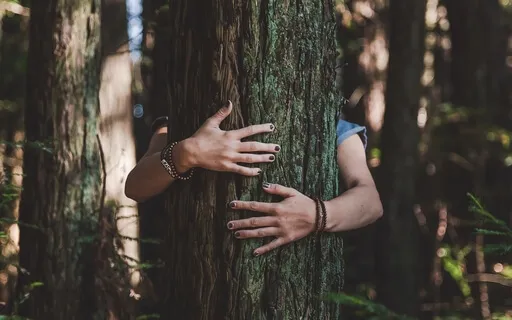
I often talk to trees and the wisdom they share is often very sensitive and sensible.
In our everyday living we spend way too much time trying to connect to things that we need to do or we want to do,
But our intrinsic needs sometimes,
The food we eat,
The water we drink,
The conversations we have and the relationships we have sometimes are a bit neglected in light of news,
Media,
Information,
Opinion,
Politics.
Not that those things are not important because they are part of our natural habitat,
But they are not the most important.
But today we are diving into the relationship we have with ourselves as a natural part of the natural family and when we think about embodying our natural selves we are speaking about getting away from the dissociation we have with nature.
In the English language and most languages nature is almost like a separate entity from us and we see it as God or as something that is intrinsically powerful and always more powerful than us.
And that's very interesting because it's not that it is a lie,
But that we see it as something foreign and something to be understood in the light of science and spirituality more than observed as an intrinsic family member or something or someone who belongs to our every second.
And when I moved from the city to the countryside a few years ago I remember coming home from walks and as soon as I got into the door it was like nature was outside of the door and I started trying to understand that kind of relationship I have with the natural world and in which nature is always outside of the closed door and something I have to go to and not the air I breathe or the dirt that comes in with the shoes or the wood from the shelves and the tables or the fabric from the sofas and the beds and somehow the food became something that it was more than an intrinsic need to be alive but something belonging to a bigger family and my relationship to that bigger family.
And I'm a vegetarian,
I sometimes eat meat but I'm mostly vegetarian and often I wonder if my fellow lettuce or my fellow tomato or my fellow zucchini understands more than I do about its role in what is the food chain.
So a big part of our relationship with nature comes from being so far away from the food chain at this point in human condition that we kind of feel like we are not,
We are either superior or we are not valid enough to belong to the bigger family because when a leaf falls it decays and is food for the soil and when a wild cat eats a mouse or a dog eats a bug sometimes we forget that these are natural parts of our intrinsic relationship with the family that is nature itself and us and when we close the door of our houses and nature is outside of it sometimes right in the backyard sometimes we have to walk a little farther we stop to think about that relationship as soon as we get inside the house and when that relationship belongs to a deeper sense of self and our understanding of our authenticity and uniqueness sometimes we need to reappropriate the natural part of belonging to a family as nature and what the roles of our houses have to do with all that because I don't think a bird builds its nest to be separate from the remaining family but to be comfortable enough to have a safe place to sleep and have babies.
So we tidy up and we disinfect and we clean and we shower and we have comfortable linens and we clean our feet before we get in the house and we shut the windows and shut the doors to allow ourselves to be comfortable and safe from everything because our houses are like the cocoons in which we move from tomorrow butterfly selves and the sense of home whether in nature or outside of nature or on our own perception of what is outside of nature like a city or a car sometimes we tend to neglect that the intrinsic value of something it's not about the resources it was needed for it to be built or the money it cost but what it means our relationships to it some people feel like their cars are almost a part of their families but they don't feel that about the trees in their backyard and the trees in your backyard know every little thing about you because they are intrinsically connected to you by every way possible in their own being here and when we mow lawns or plant some carrots sometimes we neglect to remember that we are taking care or making it tidy the relationship we have with those things so no one likes to walk into a yard who is completely unattended and not cared for right but sometimes the most beautiful lush forest are unattended and uncared for by the human being so we tend to relate our values with the natural world for the way we care about it and how beautiful it is and how beautiful we make it to be but sometimes we forget that it's beautiful just the way that it is and maybe we do attach our self-worth about it and about our relationship to it in that sense the way we tend to our gardens is very much attached to our own feelings of self-worth this was a very harsh winter here where I live and it was we had an arctic front cold and it's not usually very cold place actually it's southern Portugal so it's very warm maybe most of the year and but this winter was really cold and it was always icy and my lemon tree really felt the winter as we say around here it really felt the winter and as soon as spring arrived it sprouted back up and it's doing great again but I remember being really worried about it like I used to talk to it and okay you're going to be alright it's just the winter it's not usual around here but it's going to be alright and I remember feeling that I was so connected with that lemon tree because it's right outside my window and I'm so connected to it and I tend to it mostly most days and I sometimes I forget that it's just as a part of this home and as of this family as everything else that is here and I even made a joke in my head at my fridge my relationship with my fridge was my more important than my relationship with my lemon tree and I started trying to see the levels of importance of things around here and the rooms I give most or spend most time in and the places I tend to the most sometimes are what the most practical relationship is right like the bathroom and the kitchen and the living room where I eat and my office and my bedroom to sleep and meditate and sometimes I tend to think that life is all about human life is all about being practical and I was watching some deer the other day and they were all just laying there and sitting there and eating grass and I thought well what a comfortable way to just be you know like just being so trees just are and they are just there they don't think about the practicality of moving somewhere or having a bedroom you know and the fact that we have all this built things and inventions human inventions sometimes it helps us forget we are part of the natural family and we tend to hop around a lot we're all part of the natural family and should learn more from trees and how practical it is to stay put and have connections and roots to somewhere and just communicating with everything at all times and being very much aware of how part of the natural family we all are so when we think about our bodies we don't feel they are either as pretty as someone we saw on Instagram or they are not as sculpted as we wish them to be but we tend to even make a slight disgruntled face and feeling about how natural it is to have aging bodies and to embody that relationship with the natural world and to relinquish that dissociation with being part of the natural family we need to have a certain kind of relationship with our bodies that are not that is not connected to what is not natural so we don't have to need that much to be a part of it and to be in our bodies and to be our own bodies than to feel part of the natural family and our bodies are the connection to everything around us our eyes see the world our mouths communicate with the world our ears hear the world our senses touch and feel the world and our emotions feel everything around us as well and it's quite an astounding moment when we realize that is all absolutely natural and that's the only human condition and that's what makes us part of the natural family not some sort of separate human entity from away from the food chain but a natural entity who decided it wouldn't be a prey anymore and would try to make a stand and try to understand its own level of importance in the natural family so let's take a moment to relax in our positions and let's think a bit about what's your relationship with your seeing the way you see things do you notice colors do you notice shapes do you notice imperfections or beauty do you judge those imperfections of beauty and how that is connected to your emotions and the other parts of your body like digestion and walking and muscle pain and now let's take some notice of how our hands feel are they tingly warm cold you really need to move your hands to notice them and how does your belly feel does it feel like a part of the human world or does it feel like something to be hidden and how do your thighs feel do you show them a lot do you go out in nature and just show your thighs around is that something weird to say when we covered up our entire bodies for winters to come some conformism to a way of being human with making up invention of clothes of clothing and how to cover up ourselves we invented fashion right so when we invented that we made a stand because no other animal has fashion and wants to look pretty by the adornments of clothing but it's quite incredible because i saw a bird yesterday and i thought wow what a beautiful fashion statement that bird is making you know because he was so pretty and he was showing himself and he was all puffy and happy and playing around and i thought well i don't make that much of a statement with my funny clothing you know and i thought it's all really interesting how my relationship with how i dress either pushes me toward being more connected with the natural family or being more disengaged with the natural family so this wound we feel we have with our relationship with the earth and the natural world and the natural family it can be just that we are a bit ashamed of feeling so separate from it and we want to reconnect with that family and make peace with it and have our own get togethers and our own special relationship with all things natural so the way to heal those connections is just to be there and be present about it and taking deep breaths and understanding the connections we have with things and i think the best people are people who acknowledge that it's possible to have a conversation with a tree or a dog or a raccoon and that the multiplicity of natural language and understanding of the senses and how we communicate with the senses is much more beautiful than all the imaginative types of communication we humans invent with ourselves to be more separate from the remaining natural family okay now deep deep breath and thank you for listening and please try to reconnect yourself to your natural authenticity and the way we all find ourselves in nature is always a beautiful moment take care