How do you show compassion to yourself?
In order to look deeply into your shadow without flinching,
In order to take risks and survive failure,
You must first learn to be compassionate with yourself.
You must learn to care for yourself the way you would care for a small,
Inquisitive child who's stumbling through the world,
Following his or her curiosity and making mistakes along the way.
You wouldn't yell at a child for tripping over a tree root,
Then why would you mistreat yourself when you make a mistake?
Instead,
We can choose to pick ourselves up,
To brush ourselves off,
To give ourselves a little hug and wipe away the tears and carry on.
You know,
Learning to forgive ourselves for making mistakes enables us to be more forgiving with others.
The most damaging thing to our psyche is the negative self-talk we subject ourselves to every single day.
Things like,
I'm not good enough,
I shouldn't have made that mistake,
It's no wonder people reject me.
The dialogue can go on and on and on in lots of different formats.
So practicing self-compassion will enable you to have the courage to speak your truth.
It will enable you to live authentically to you,
To take risks and also to love deeply.
Hello and welcome.
My name is Maria from Mindful Connections and I'm going to take you through today a series of questions,
Explorations and ways that can help us step towards being willing to be more compassionate to ourselves.
You know,
In law of attraction,
They often say what you believe for yourself will come true.
And sometimes it's just an opportunity to take time to listen to our own thoughts and to recognize whether the thoughts are what you'd like in your life.
Louise Hay once said,
I find that when we really love and accept and approve of ourselves exactly as we are,
Then everything in life just works.
And let's be right,
We are our own biggest critics.
Scientists have studied how many thoughts we have a day.
I have no idea how they've done that,
But they estimate we have between 60,
000 and 90,
000 thoughts a day.
Now,
How many of those do you think are positive thoughts about yourself and your life?
And how many do you think are negative?
And if your negative thoughts are more than your positive,
How do you think that affects your daily basis?
And of course,
There are lots of positive things that we also tell ourselves and it's getting that balance.
Positives and negatives all get mixed together and they show up in our self-worth and our self-esteem.
And ultimately,
Kind of leads to our behaviors and how we feel about ourselves and then how we treat ourselves.
So I'd invite you just to close your eyes for a few moments.
And we're going to do a really short meditation just so we can explore some of those things and how they sit for us.
And during this meditation,
You'll become aware of the thoughts that you have during different parts of your day.
So just take a moment to get really comfortable.
Close your eyes if that's comfortable for you to do so.
If it's not,
Really lower your gaze so you're barely looking through your eyelashes.
And just bring your attention to your breath,
Bringing,
Noticing those slight movements in your body,
Just bringing it into your body,
Kind of sinking down into that deep well,
That well of stillness within.
And so I will begin.
Just allow these words to come through to you and just answer in your own mind.
So when you first wake up,
What are your typical thoughts?
Are you grateful to be alive?
Are you excited about your day?
Are you neutral?
Or are you dreading getting up,
Moaning and groaning?
Now becoming aware of your thoughts as you get ready for the day.
That might be work or other activities.
What do you tend to think as you're getting dressed and see yourself in the mirror?
How do you react?
Are your thoughts usually kind and loving?
Or is it automatic for you to run yourself down?
What kind of thoughts do you have as you commute to wherever you're going?
And if you are on your way to work,
How do you react as you see your co-workers or your boss?
Are you judging them?
Or do you know that they are doing the best that they can?
When you go to lunch,
Are you worried about the calories that you're eating?
Do you feel good about choosing healthy food?
And then just become aware of your typical thoughts as you continue through your day and go home and do other evening activities.
What are your usual thoughts last before you prepare for bed and go to sleep?
Are they peaceful?
Are they loving?
Or are they berating?
Now if you wish to do so,
You could pause this recording here and get your journal out and write briefly about this exercise.
Or just continue to sit with your eyes closed and just think about what thoughts did you become aware of that relate to you being loving and kind?
Or how often were you criticizing?
What are those criticisms that run in the background throughout your day?
You know,
Self-compassion is the foundation for kindness towards others.
When we're accepting of our own idiosyncrasies,
We become more accepting of others.
For example,
If I'm ready to criticize myself for not dressing stylishly,
I'll probably think unfavourably of poorly dressed people that I see on the street.
If I feel humble and loving towards myself as I walk out the door,
In spite of my flaws,
I'll also greet others with a soft smile.
That short passage was from The Mindle Path to Self-Compassion by Christopher Germa.
So now,
Moving on just a little bit,
I'd like you to think about you and just one thing you would like to do for you in your life.
If there were no barriers,
If there was absolutely nothing to prove,
You could have anything you wanted that fits in with your life,
That fits in with your values and your dreams.
What would that be?
And just go with the very first thought that's come into your mind.
Do you feel you deserve to have it?
And I wonder what the first image that popped into your mind was then.
Was it,
Yes,
Or I'd need to earn it,
I have to work for it first,
Or I haven't got the tools for it yet,
I'm not good enough yet.
When will you be good enough?
So it's a nice time to question what do you deserve?
Do you feel that you deserve love,
Joy and all good?
Or do you feel deep down that you deserve nothing?
Why?
Where do those messages come from?
In your mind,
Can you see somebody telling you those things?
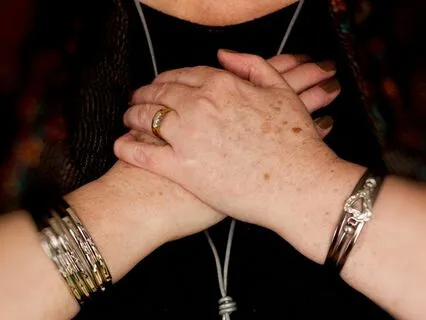
And just place your own hands on your energetic heart,
Kind of in the centre of your chest.
Just for a moment,
Just hold your own heart gently.
I place my own healing hands on my own dear heart.
I choose to give it the love and kindness that it deserves,
So that it can be strong,
So it can have courage,
So it can be vulnerable and just breathe.
And just breathe.
So next we're going to explore some questions about your self-care and how you show yourself kindness and compassion.
So to begin with,
Some of the answers may show that there's a gap in the way you would like to treat yourself and your current actions.
I'd just like to say this is not an opportunity for you to beat yourself up.
All these questions are designed to do is to simply open your awareness to this.
And once we're aware,
It gives us a chance to make small changes.
So each question will give you the opportunity and you can either again answer this in your mind or have a journal by the side of you.
And before we start,
The self-care are words that are used so regularly now that they can become quite a throwaway word.
But they're still as important as ever.
So what does self-care actually mean to you?
For me,
Self-care means taking steps to getting my needs met,
Taking responsibility with actions to achieve this.
It's about being true to ourselves,
Walking in our truth,
Walking through our truth in relationships,
And just allowing our authenticity to run through to our actual core.
Instead of just always trying to keep the peace,
Being the yes person that appeases others,
Or molding ourselves into being something that we're not,
Being afraid of showing up who we really are.
For me,
It's about accepting ourselves completely and loving ourselves unconditionally.
Carl Jung said,
The most terrifying thing is to accept oneself completely.
So a few questions.
The first one being,
What does self-care mean to you?
And how do you already apply this in your life?
Parker Palmer says,
Self-care is never a selfish act.
It is simply a good stewardship of the only gift I have,
The gift that I was put on earth to offer to others.
I love that quote.
I'm going to reread it for you.
Self-care is never a selfish act.
It is simply a good stewardship of the only gift that I have,
The gift that I was put on earth to offer to others.
And that was written by Parker Palmer.
So I guess the first thing is really recognizing our needs,
Our unmet or not fully met needs.
And as always,
That's raising our awareness within.
What's important to us?
What do we value?
The things that we don't have in our lives feels unsettled.
It can feel distraction.
It can feel disconnected.
So I'm going to run through some different elements and just make it a mental note to yourself,
Actually,
Or again in your journal,
Which ones you feel aren't met for you.
And you might want to do a column of actually,
No,
These are met for me as well.
You know,
Having that balance.
So the first one is connection,
Which incorporates acceptance,
Safety,
Respect,
And being heard.
Physical well-being,
Incorporating our basic needs,
Honesty,
Being authentic,
Presence,
And our integrity,
Play,
Humor,
Joy,
Belly laughing,
Peace,
Beauty,
Harmony,
Stillness,
Inspiration,
Silence,
Autonomy,
Incorporating your own choice,
Your freedom,
And a space,
Meaning,
Awareness,
Clarity,
Having hope and purpose.
So what are the top three important values for you?
And when you look at them,
Are they actually really fully met in your life?
You know,
Quite often,
Even if something's important to us,
Our actions don't fill that through.
And so there is an obvious gap.
So I'll give you an example of this.
And this is really looking at your basic bodily needs,
Knowing that you're thirsty,
But not going,
Getting up and giving yourself a drink,
Needing the toilet and waiting because you're busy,
Knowing that you're tired,
But watching something so you stay up longer,
No longer knowing if the signs in your body are hunger or thirst,
Being cold and not really doing anything about it,
Staying in wet shoes or socks all day long.
They are really small,
Tangible things we can do for ourselves.
And quite often,
We just dismiss it.
Quite often,
You know,
They are really,
Really basic needs,
Aren't they?
So what do you already do in your life?
And this is about building small steps that we can take that starts to build the bridge to change that gap between our actions and our values.
And I always encourage everyone,
It's baby steps.
You know,
We can't go from zero to 100 all in one go.
But looking,
You know,
If there's anything that really identified and you're missing of your needs,
What could you do more of on a daily,
A weekly or a monthly basis that would make you feel more valued?
What could you bring into your life that would align you more to how you want to feel?
I'm a nature and forest therapy guide.
So for me,
Walking in nature,
Grounding exercises,
I do barefoot,
I do sit spots every day,
Tree bathing,
Baths,
Reading,
Music time.
I personally need a lot of silence,
Stillness and quiet time,
Alone time.
That's,
You know,
I'm an introvert.
So that's how I refill.
Everybody is different.
You know,
If you're listening to this,
And that's way,
Way far away from where you want to be,
That's absolutely perfectly okay.
This is about you and your needs.
And what are those small,
Really small little things that you can do?
Caring for your skin.
You know,
A lot of people,
Male or female,
Do a skin routine,
Just taking a little bit longer and a little bit slower,
A little bit gentler,
Just to care for nurturing your skin,
Putting hand cream into your hands,
Recognizing that touch and that care as part of the acknowledgement when you're actually putting cream on.
So part of our journey and self compassion is just aligning ourselves to our values,
Really,
It's coming back to being true to ourselves,
It's coming back and reconnecting and coming home is putting our needs first so that we can be there for others.
On our next recording,
I'm going to kind of talk a little bit more about boundaries,
The importance of boundaries,
And how stepping out can feel quite vulnerable,
Really.
So we'll touch on some of Benny Brown's work as well.
I've done lots of trainings over the years,
I have actually trained,
Done some of Benny Brown's trainings,
I'm also a holding space facilitator,
Thread facilitator,
As well as a coach.
I trained under Louise Hayes umbrella,
So both for coaching and also a variety of her different workshops.
I'm a law of attraction practitioner,
You know,
So I've done quite a lot of different stuff that we can all pull in together.
I do work mainly out in nature nowadays.
But all of this kind of underpins the work that we do out there as well.
All of it is about coming home to yourself.
So this is the end of this recording,
But I'd really encourage you to take a little while after this and maybe do a mandala for yourself.
The mandala is a process,
It's not the outcome.
And it's just about any drawing an outer circle,
Which is your room,
It's your container,
It's the edging or your boundaries.
And then maybe drawing lots of circles inside,
Using colours,
Using words.
And within that,
See if you can't commit to your own needs for self compassion,
Maybe have some bubbles on how you can best take care of yourself.
What do you need that you're not getting at the moment?
What one small step can you take today and every day that will help you to bridge that gap,
You might want to bubble on how it would feel for you to say no.
What do you actually need liberating from?
And how would it feel for you to feel so nourished and cared for?
I'm going to leave you there and thank you very much for listening.
And as I say,
I will do another recording,
Really focusing on the importance of having boundaries and how that can play out in your life.
Thank you then.