Hi,
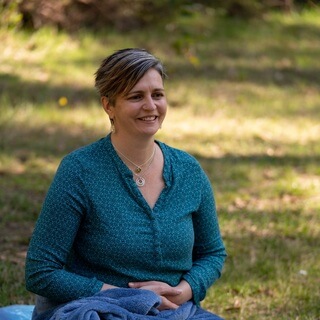
It's Mandy here.
Welcome to this short guided practice of the physiological sigh.
It's a simple breathing technique,
But many people I've worked with have found it to be surprisingly powerful.
It can help to bring a sense of calm,
Regulate your nervous system,
And even soften the stress and tension that can so often come when we live with chronic pain.
Before we begin,
Just a reminder,
All of this is just an invitation.
You don't need to force anything.
So if at any point it doesn't feel right,
Just pause,
Open your eyes,
Return to your natural breath.
Of course,
You know your body best,
And you may even want to just pause and listen the first time.
There's actually really good evidence behind this technique.
It's a natural reflex that the body already knows how to do.
Like when we just take a deep breath if things are starting to get a bit stressful,
Or sometimes that really long exhale that you might notice if you've been crying for a while.
So when we actually practice this type of breathing on purpose,
It can be a really great safety signal to our nervous system.
And you can try it when you are feeling stressed,
But also practicing it during calming moments can be really helpful too.
And that way,
Like Jon Kabat-Zinn says,
We're building the parachute before we need it.
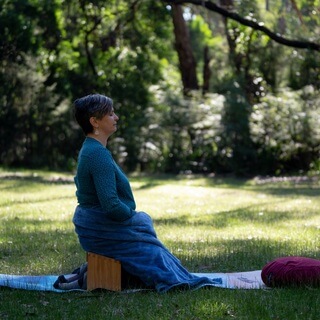
So just taking a few moments to get comfortable in whatever way suits you today.
You can try this practice sitting,
Standing,
Lying down,
Whatever feels most supportive.
Just let your body be in a position where your lungs can expand easily,
And if it's comfortable you can soften your gaze or close your eyes.
And just arriving here for a moment,
Noticing where your body makes contact with the ground or the chair,
Feeling into your feet,
Your seat,
The back of your body.
Just checking in if there's any areas of the body that are holding a bit of tension that you might be able to relax a little.
Really giving the weight of your body up to gravity.
You don't have to hold yourself up all on your own.
So let's give this physiological sigh a go.
This is how it works.
It's a two-part inhale followed by a long exhale.
The first inhale is slow and steady through the nose,
And just before you finish that inhale,
You take a second smaller sip of breath,
Filling the lungs just a little bit more.
Then exhale fully and slowly through the mouth,
Maybe longer than the two inhales combined.
And that's it,
You've just done one physiological sigh.
So let's try it again.
Take a gentle full breath in through the nose,
Another little short sip of air,
And exhale through the mouth,
Letting all the air leave.
Again,
Inhale through the nose,
A small little top-up of breath in,
And then release slowly,
Steadily through the mouth.
Maybe just practicing a few more here at your own pace,
In your own way.
And when you're ready,
Just allowing your breath to return to its natural rhythm.
No need to try and control it or wrangle it anymore,
Just letting go,
Noticing the natural rise and fall.
And sometimes people can feel a wave of calm or a bit of softening after this practice.
Some people notice their breathing just a little easier.
But no matter what's showing up for you,
Whatever your experience has been,
That's perfectly okay.
Your nervous system is still learning.
So practicing this breathing technique,
The physiological sigh,
Even if it's maybe just one or two times a day,
You're teaching your body that it can come back to safety.
And over time,
The more we practice,
This technique can help us ride out some moments of stress,
Maybe even dial down pain over time too.
And so this is a practice you can return to.
You know,
Maybe listen a couple of times,
Maybe come back tomorrow and try it again.
Mix it up,
But just keep practicing.
Because when we do this,
These kind of techniques become second nature.
They can become something in our pain toolkit that we can rely on at any moment,
Almost by default,
Choosing safety rather than fear.
So just remember,
The physiological sigh is here whenever you need it,
As a way to help slow your heartbeat,
Lower stress hormones,
And most importantly,
Signal to your body that it's okay.
It's safe to relax.
It's safe to take a deep breath.
Well done.
You've learned something really supportive for yourself today.
And I hope you keep practicing with me.
Thanks.
I'll see you next time.