So welcome everyone to tonight's talk.
Tonight,
I'd like to talk about insight into the reality of impermanence or anicca in Pali.
So we're all getting old,
If you haven't noticed.
We're all destined to die.
And often impermanence is happening,
But we don't attend to it.
We don't acknowledge it.
We don't recognize it.
We all live,
We often live busy lives.
If you're like me,
You live busy lives and it's easy to say yes to aging,
Like intellectually.
Oh yeah,
I know aging is happening,
But I haven't got time to think about it right now.
There's other things that are my priorities.
Like I've got jobs to do and tasks to complete and projects to run.
So we might look in the mirror every day and see our changing faces and notice our changing bodies,
Occasionally in photographs.
But it's kind of incremental,
Because we see it every day.
We don't kind of,
It doesn't kind of grab hold sometimes.
And it may not make much of an impact.
Again,
We're often too busy to contemplate it,
Because it's not what is the priority.
And we tend to avoid reflecting on death as well,
Which is the ultimate example of impermanence,
Mortality.
Mortality is a classic example of impermanence.
And there is a theory called terror management theory.
I think that's what it's called anyway.
And it's about how we handle difficult things,
Experiential things,
Existential issues in our lives,
How we handle death.
And even though intellectually we may say I'm gonna die,
But when we think of death with terror management strategies,
We often say it's not me.
Someone else is dying,
But not me.
It's kind of just doesn't kind of take hold.
And the other strategy we use is that not now.
Somehow,
Sometime distant in the future,
Too far away to think about right now,
That I'm going to die.
I mean,
This is called terror management.
It's the way we deal with it.
So it's because we just can't kind of fathom it.
It's kind of hard to understand how we will change and somehow disappear and not be me anymore.
So there's a book by Yalom,
Who's a psychotherapist.
And it's a book he wrote about death anxiety.
And it's called like staring into the sun.
It's kind of like hard to do.
Like staring into the sun is kind of so not right for our eyes.
We don't want to do it.
And that's like looking death,
Looking at death.
It's like looking at this ultimate example of impermanence.
And it's difficult to do.
Our egos and patterns of young view just stop us contemplating it.
It really takes a lot of effort to stop and consider this ultimate impermanence,
Our death,
For example.
But it also takes a bit of stopping and stilling and calming to actually see the realities of impermanence.
And in Buddhist meditation,
Insight,
There's basically two aspects to Buddhist meditation.
One aspect is called insight.
The other aspect is called serenity.
Another way you could think about this is as directed and undirected meditation.
Directed meditations have an object.
And with serenity meditation practices,
We usually have an object.
And with undirected meditations,
There's no object,
But there's just a kind of an awareness.
It's like a,
It's a more passive.
It's rather than going into something.
It's a passive stepping back.
It's undirected,
It's opening.
And this is one way we could describe insight.
Insight practices,
Insight meditation.
You've probably heard of insight meditation.
Vipassana,
Vipassana literally means seeing clearly,
Seeing distinctly,
Seeing things as they actually are.
So some of the things,
Some of the ways we practice serenity meditation is by choosing an object and focusing on it and becoming absorbed into that object.
With serenity,
With insight meditation,
However,
What we attend to are three characteristics of existence and other insights.
Three characteristics of existence referring to anicca dukkha anatta,
Anicca,
Impermanence,
Dukkha,
Unsatisfactoriness,
And anatta,
Meaning not self,
Meaning that there's no one single thing in all of this.
There's just the coming together of streams of dependently arising processes and interactions.
So with insight meditation,
We don't necessarily pick a single object,
But we open our perception to these three characteristics of existence.
And the other thing,
Well,
The other process that we open up to or attend to is called dependent arising.
Dependent arising is the principle behind how things arise and also how they cease.
And it's quite complicated.
It's sometimes described as 12 interdependent links of psychophysical connections,
Links going around in a cycle.
But generally in the suttas,
It's explained as in this simple phrase,
When this is,
That is,
With the arising of this,
That arises.
When this is not,
That is not,
The ceasing of this,
That ceases.
Meaning that processes are conditioned.
There's a conditioning with processes.
So that's the other thing we attend to with insight meditation.
So coming back to insight meditation and impermanence,
Usually the first thing that we attend to is reality of change.
And for most people,
That's probably the easiest thing to attend to.
It's pretty tangible.
You can sort of attend to it.
But some people have a predisposition to attend to dukkha,
The dukkha nature,
The unsatisfactory nature.
Like everything is unsatisfactory.
Everything that's conditioned is not able to provide us with enduring happiness.
So it's called unsatisfactory.
It's called dukkha.
And sometimes people are more inclined to perceive anatta or not-self,
The fact that there's dependently arising processes and interactions.
So with mindfulness,
Well,
With the seven factors of awakening,
I won't go into details about that,
But the first three factors of that group,
There's seven factors.
The first three factors are mindfulness,
Investigation,
And energy.
If we can attend with mindfulness,
With investigation and energy,
We'll start to develop insight.
If we can attend to experience,
If we start to notice experience,
If we settle into this experience and see things as they are,
We start to see impermanence.
And that seeing is liberating.
That seeing is called insight.
And it's liberating because it's not just an intellectual understanding.
It's a direct perception.
It's a direct perception of the way things are.
And what it does,
It shifts wrong view.
Wrong view is something that keeps us bound in this wheel of samsara.
There's many ways you could describe wrong view.
One way you could describe it is as taking things as permanent that are not permanent,
That are anicca or that are impermanent.
Taking things as the source of enduring happiness that cannot deliver enduring happiness.
And the view that taking self,
A view that there is a self where there is no self,
Where there is no solid lasting entity.
The other aspect of wrong view is not understanding or not seeing karma,
Not believing in karma.
And I think I gave a talk here two months ago,
I think,
On karma.
Was it then I gave it on karma?
Or was it,
I can't remember yet,
On karma.
And karma refers to actions and actions give rise to experiential fruit.
Every action we do has a consequence,
Whether wholesome or unwholesome,
There's gonna be a fruit to that action,
There's gonna be a result to that action.
So wrong view is the belief that that doesn't happen.
So I can get away with murder.
As long as nobody knows,
There's gonna be no consequences.
So this is what we get caught up in into when we start to see things with wrong view.
We get caught up in this bound of samsara,
This binding of going around in cycles.
So I think I mentioned that if we can realize one characteristic,
We can realize them all.
It's like they kind of go together.
I mentioned earlier that sometimes people have a predisposition to see impermanence.
Some other times people have a predisposition to see dukkha.
Some other times people have a predisposition to see anatta.
It is as if when we can see the impermanence of something,
And that's,
As I mentioned earlier,
That's the easiest thing to latch onto.
Not that we latch onto anything,
This is all changing.
But it's the easiest thing to perceive for most people.
If we can see that,
We naturally also see the dukkha nature of experience.
And we also naturally see how there's nothing substantial and there's nothing lasting,
There's nothing enduring.
It is not self.
It is empty of conditioning.
It's empty of thingness.
The other thing about these three,
Another generalizing feature about these three characteristics of existence,
These three universal characteristics of existence,
Is that they can generalize in another way too.
If we can see,
For example,
The impermanence of a falling leaf,
Like you're looking at,
See a tree,
See impermanence,
A leaf is falling.
That can also be generalized to the impermanence of a tormenting thought,
For example.
Or that can also be generalized to how what's called the five khandha,
Which is the way we understand ourselves,
Like form,
Feelings,
Perceptions,
Mental formations and consciousness.
So realizing impermanence with one thing can generalize to realizing impermanence with all things,
All conditions.
So I mentioned earlier that sometimes we just think about this stuff and it really doesn't hit the mark.
I mean,
I'm here talking about impermanence and you say,
Oh,
That's an interesting concept.
Yeah,
Yeah,
Yeah,
I believe it's impermanent.
I believe everything's impermanent.
However,
If we consider deeply such as the reality of oneself dying,
If there's a kind of a rub,
If there's a kind of a sting somewhere,
If there's a sense of discomfort in that,
Then it gets really juicy.
Like I've done death meditation for years or I've done the five recollections,
Which is recollections about aging,
Aging illness,
The realities of aging illness,
Death,
The fact that everything that is dear to us will be parted from us.
And the realities of karma,
Which are the way we say it in these five recollections are I'm the owner of my actions,
Heir to my actions,
Born of my actions,
Related to my actions,
About supported by my actions,
Whatever actions I shall do of those actions,
I shall be the heir.
So this,
If we really kind of get into this rather than just a superficial reflection,
We really kind of hit something and it feels like,
Wow,
Yes,
I'm really gonna die.
There's a sort of a discomfort there.
If you can catch that discomfort,
If you can recognize that discomfort,
It becomes juicy.
This contemplation is actually hitting the mark because you're realizing impermanence and with it goes unsatisfactoriness,
That kind of,
That sting,
That bite.
So most of us live busy lives.
We have deadlines to meet,
Responsibilities and tasks and a full schedule.
Often we are rushing from one thing to the next.
And sometimes,
As I was mentioning at the beginning of the talk,
It's not a priority for us to reflect on these things because we've got other things to do.
And sometimes it takes something really serious to stop us in our tracks,
To halt us in our busy lives,
To reflect on this reality.
And it could be that we get a diagnosis of a terminal illness,
For example.
That's something that often stops people in their tracks.
And as I speak right now,
My partner is traveling to Canberra,
For example.
Her brother is,
She has two brothers.
One is up here,
Another's in Canberra.
He's currently in SCU,
What do they call that?
Not SCU.
ICU.
Sorry?
ICU,
Sorry,
Sorry.
Yeah,
That's right,
ICU.
What's that stand for?
Intensive care unit,
Yeah.
He's starting an intensive care unit and the medical people have said for Mary to go down,
Come down,
His death is imminent.
So things like that.
And I remember when my brother died,
Was dying about 12 years ago,
My older brother,
I was actually running a mindfulness course and I had to put in other people to take up where I was leaving off.
And fortunately some people could take my place.
And I went down to Repton where he was living and he was put in hospital and we hung out there,
We rented a place.
We're going and visiting him every day.
It's this direct experience of him dying,
Like seeing him,
Seeing someone.
There's no time to be busy anymore.
You're having to face up to this reality and it's uncomfortable.
It's dukkha.
That sort of thing helps us directly perceive the realities of impermanence.
And I,
There was a certain level of focus on seeing him there.
I mean,
This is someone who's been,
He was my elder brother,
So he's been there for the whole of my life,
As long as I could remember,
This person who's been in my life.
And to see him eventually dead is a real taste of this impermanence.
The Buddha recommended when we do death meditation,
For example,
The meditations on impermanence,
That we definitely need to say just like this,
I am the same.
I think I mentioned in one talk I gave here,
I think it was in 2021,
A couple of years ago,
I was talking about the five recollections I gave a talk on that here.
And I mentioned that as a monastic,
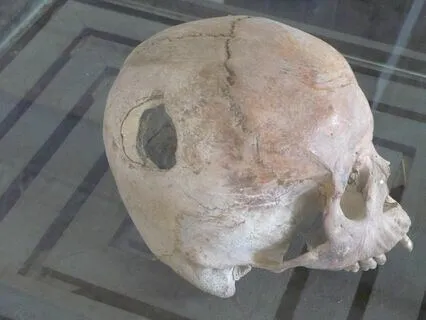
I used to visit the morgue and have just see corpses of all stages of decay.
And that's one of the meditations.
It's actually in the,
It's one of the mindfulness meditations,
Reflections on corpses.
And what one needs to do is just like this,
My body is the same.
Just like this,
I'm the same.
And it takes a bit of effort.
The other thing that really helps with all this in the cultivation of insight is that,
Is to sort of stabilize and settle our minds.
And this is where we bring in the relationship between serenity and insight or shamatha or samatha and vipassana.
This relationship of how they work together.
And it's kind of like,
Sometimes I think,
Sometimes it's a bit like,
You know,
Those snow domes that you shake up,
You know,
The snow domes,
You shake them up.
It's like our lives are so kind of busy that we're shaking up the snow dome and we can't see anything.
It's kind of all the snowflakes are floating around.
And then we just stop,
We stop.
And this is my experience the other day.
I came into work to see somebody and I was getting ready to go.
And there was a downpour,
There was a heavy rainfall.
I'd ride my bike into work.
I just ride down the hill.
And I thought,
Well,
If I go out right now,
I'm gonna get really wet.
Why don't I just sit here,
Just sit here?
As the rain was pouring down,
I just sat there.
And it was like the snow dome,
All the snow and that,
I'd kind of put it still.
And all the snow dome,
All the flakes had kind of settled down,
Settled down,
Settled down,
Settled down,
And my body relaxed.
My breathing became even.
I could focus on,
I started focusing on my breath.
Just got quieter and quieter,
Stiller and stiller.
And what happens when we do that?
We actually have mental clarity.
We can see things as they are.
So there's this relationship between serenity and insight.
And when I was a monastic in Northeast Thailand,
The instructions were basically,
Well,
There was more instructions than this,
But they would basically say,
The teachers would say,
Still and calm your mind.
Then,
Picharana,
Picharana is a Thai term.
It means consider,
Investigate.
More than reflection,
It's about inquire,
Inquire into what's going on.
So generally one would,
I mean,
And this is this relationship between serenity and insight.
So we settle our minds,
We settle our minds,
And then we inquire.
And one can also just be very,
Very mindful.
All one's waking hours,
One's waking moments,
Mindful with investigation.
So there's this kind of a very strong concentration where you're just seeing things as they are.
Every moment,
Again,
Impermanence,
Not self.
There's other insights,
By the way,
And I'm gonna talk about those insights on a talk I'll give on Saturday.
Today,
I'm talking about impermanence,
And it's usually a short talk on these evenings.
On Saturday,
I'll be doing a longer talk on the same topic,
And I'll probably repeat a few of these things.
But on that talk,
I'll talk about,
There's other insights that kind of unfold,
Such as conditionality and suchness,
And other insights that unfold.
But what we have is the beginnings of,
We begin with impermanence.
And there's,
If we can bring our attention to how we can see impermanence in every waking moment,
It's here right now,
Every moment.
It just requires us to stop and see,
To look.
So I could go on for a long time.
Actually,
Maybe I'll just mention the last four steps of the 16 steps of mindfulness of breathing.
So it's a practice that I like to teach,
And I like to practice,
It's a great practice.
There's many different practices in the wide array of Buddhist meditation practices.
Sometimes they follow particular suttas.
Satipatthana Sutta,
For example,
Follows the four establishments of mindfulness.
And that's a way of waking up.
The Chula Shunyata Sutta follows,
As called the translation of that one is the shorter discourse on emptiness.
It follows steps and gives guidance in steps to realize emptiness,
Always inclining towards nirvana.
And the 16 steps of mindfulness of breathing,
It's a beautiful practice,
And it interweaves serenity,
Both serenity and insight aspects to result in awakening,
To waking up.
And the last four steps,
It's four tetrads.
The last tetrad involves insight completely,
Just insight.
And the 14th step involves realization of impermanence,
Realizing impermanence.
The 15th step is called dispassion.
And this means that we no longer crave after pleasures or push away displeasures.
You know,
We're not caught up in craving.
We have a sense of dispassion.
So we're no longer grasping after things.
And then when we're no longer grasping after things,
We're no longer feeding into cycles of suffering,
We experience a cessation.
There's a cessation of these links to suffering,
This links on this wheel of suffering.
And then when we have cessation,
And cessation is described in many different ways,
But one could consider like a little like this,
When craving ceases,
Also dukkha ceases.
That's one way of understanding it.
So there's a cessation.
And then the final step is letting go.
And letting go is synonymous with waking up.
So thanks very much for your.
.
.
Oh,
Look,
I've got one little paragraph here,
Right?
After I was at work this afternoon,
I just write this down very quickly.
So to conclude,
When we slow down and attend to experience with focused attention,
We begin to develop insight.
This insight is liberating because we no longer are driven by delusions and wake up to the way things are,
Which is they are impermanent,
Which are they impermanent.
This is liberating because it uproots greed,
Ignorance and hatred.
So thank you very much for your attention.