Hi,
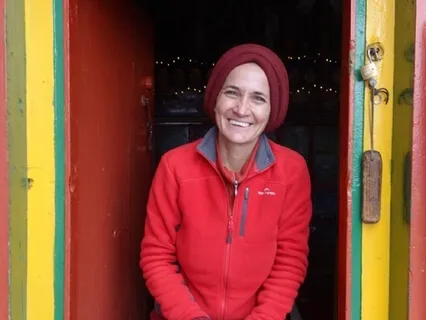
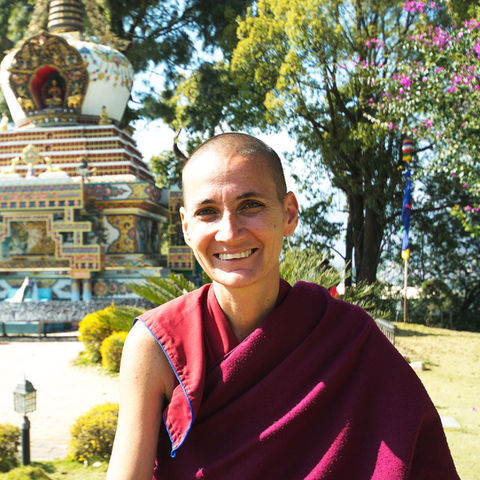
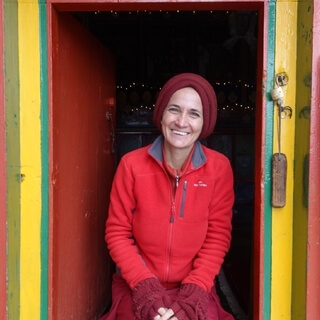
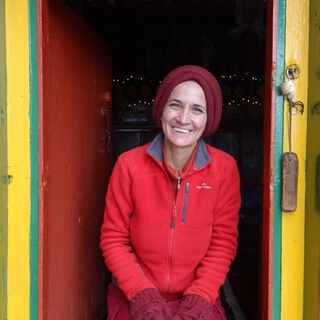
I'm Jen and we're here at Mahamudra Centre which is a retreat centre affiliated with the FPMT and we're a residential retreat centre that runs weekend and week-long retreats.
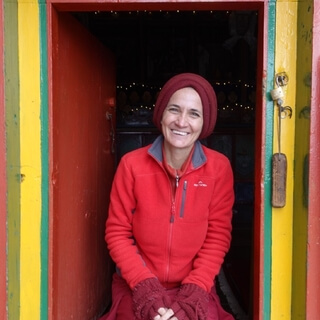
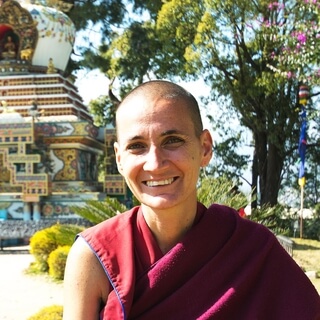
And I'm here with Venerable Kattro who is our teacher in residence and she's a nun in the Tibetan Buddhist tradition and she's from Venezuela originally but she's been teaching throughout New Zealand and internationally for many years and so we're very lucky to have her here as our teacher in residence and I'm delighted to be talking to her today about the subject of anxiety.
So welcome Venerable Kattro.
Thank you,
Hi everyone.
So the first question is what is anxiety?
Yeah that's a really good question to start with.
So let's talk about that,
Let's try to have that clarity.
So it's an,
I could say that it's an intensified nervousness.
So it's not just that you're nervous about something but you're extremely worried and nervous regarding an uncertain situation or outcome or experience,
Okay?
So it's a combination of a few things.
So is having fear or apprehension about doing something or about something that is about to happen?
So anxiety is related particularly with the future,
Is a projection towards the future.
I've been preparing a little bit for this dialogue and I looked at the different definitions that normally psychotherapists use and they actually say that anxiety is your body's natural response to stress,
Okay?
But I would say,
Probably based on Tibetan Buddhism,
I would say that anxiety is an emotion,
It's not just a body's response,
It's an emotion.
So emotions have to do with mind.
So if I would define anxiety,
I would say that it is an emotion that is an intensified nervousness regarding an uncertain outcome,
That is,
It's about being overwhelmed and to be overly worried.
So it has to do with overthinking and that's why I'm linking it with being an experience of the mind,
Okay?
Of course,
The body will have a response to that but it's a mental process and it's a mental experience,
Anxiety,
Okay?
So to give you an analogy,
Let's just say that you have something coming up about yourself doing something or about something to happen and you start being worried about it and then you overthink and you overthink and you're not worried anymore,
You're like extra worried and then you start kind of being very fearful about it and then you start playing in your mind different scenarios of all the possible things that could go wrong.
And so you are intensifying and intensifying the worry,
The fear and that's probably when anxiety kicks in.
So to give you an analogy,
It could be like as if you were boiling water.
So first the water is there,
The situation is there,
Right?
Like a possible experience is there but then all these extra layers you start adding in your mind,
So the heat of the water has been increased to the point that it's boiling and that's where anxiety probably kicks in your experience.
It's something that you don't have control anymore.
While the water was boiling,
You still have control to turn it down but if you don't have any control and you keep on enhancing and feeding into the fear and the stress,
Then that anxiety will kick in and then the boiling water,
It's just spinning up the pot.
So once that happens,
The normal responses of body and mind,
You will get fatigue,
It's really debilitating,
It affects everyone around you,
You will be excessively worried.
So all these are just symptoms of what anxiety could do to you.
So now I think I could say that there's two types of anxieties.
One is the one that we could probably label it as being normal or even pleasurable.
So if you're about to start a new job or if you have some tests coming up or some important meetings or whatever it is in your life,
It's normal that you will get just a little bit anxious.
It's a normal experience that makes us human.
And that's okay,
That's fine.
Because with that sort of experience,
It can give you the motivation to prepare yourself for that meeting,
For that test or for whatever it is that is coming up.
So with that preparation means that probably you will feel safe enough to handle the situation.
So that's a wholesome kind of pleasurable kind of anxiety.
But when this anxiety becomes overwhelmed with fear,
That is the one that becomes like unpleasurable.
That is the one that becomes more like an anxiety disorder.
That is the one that consumes us and instead of empowering us to make better decisions and feel more safe,
It gives us the opposite outcome.
And that's the one that we should try to have the emotional intelligence to work with.
And that's probably why we're having this conversation.
So there are different types of anxieties.
So we have things like panic disorders or phobias or social anxiety disorders or separation disorders or obsessive compulsive disorders or PTSD.
So these are different types of anxieties.
So now it's important that we remember as a community that whatever anxiety people could have or even if it's just like,
You know,
Maybe it's not like a panic disorder or anxiety disorder,
Whatever it is that we might have,
Even if it's to the kind of like normal level or the very intensified level,
These are things that as a community we should be able to accept them and just support each other with the process and not stigmatize them,
Not patronize them.
They're just another human experience.
There is nothing inherently wrong with them.
It doesn't make us weird or crazy or different.
They're just another experience within this spectrum of human emotions.
So I think as a community it's important to have that common understanding.
Okay,
That's great.
So from what I understand that you said,
There is a difference between just anxiety being a response,
A physical response that maybe it's just natural we have no control over,
As to anxiety being a mental process is what you're saying.
So if it's a mental process that is actually quite empowering because it means that there might be things that we can do with our mind.
So what kind of practical things could we do with the mind as that process is unfolding?
So I'm going to try to be really practical.
So if any of you guys out there have problems with anxiety,
You might want to make mental notes of these things.
So now that we are clear what anxiety is and kind of learning its boundaries.
So we talked about that it could start with a mild worry all the way to a panic or an anxiety attack when the water is boiling.
Now that we know its boundaries,
Let's just talk about what to do with them.
So I think that the first thing is to actually prevent the boiling.
Because then when it's boiling,
When you are having an anxiety or panic attack,
It's too late.
You still can do things about it.
We can talk about it later.
But what can we do so we don't get to that grade of explosion?
So prevent.
One of the most simple basic things that we can do is deep breathing.
Deep breathing.
So let's just do that together right now so you can have a direct experience of that.
So whatever you are,
Whatever you might be,
Even if you are driving just keep your eyes open of course.
If you are at home and you can close your eyes,
You can close them,
Whatever is your situation right now just keep yourself safe and basically just breathe in deeply.
So inhale fully.
Try to retain the breath just for a few seconds and then when you exhale,
You exhale slowly.
Inhale fully.
Try to inhale from the bottom of your lungs,
Not from the top,
Not shallow breathing.
Try to push the ear down when you inhale.
Retain and then breathe out slowly.
As low as you can.
Breathing deeply.
Breathe out slowly.
A few more times at your own pace.
Breathing fully.
Breathe out slowly and relax with the exhalations.
Relax the muscles in your body,
In your face.
Breathing in fully.
Breathe out slowly and relax your body.
Breathing fully.
And then try to relax your mind so exhale any worries that you might be holding.
Inhale and mindfully and consciously exhale any mental anxiety and worry.
And then just allow your body to breathe naturally a few more seconds.
And so let's come back.
So see,
I know we talk about the breath a lot,
You know,
Breathe and breathe,
But what I would suggest to prevent anxiety to become overwhelming,
Just do some self-regulations with deep breathing,
You know,
Every now and then in your daily life,
Right?
So maybe you wanna even,
You know,
Sitting before breakfast,
You can just do it just like we did,
Just maybe two minutes.
You do deep breathing,
Remember to relax your body and then you relax your mind with exhalation.
You know,
You can do it in the car when you're driving,
If you have something important coming up,
Do it before that event.
So deep breathing is magical,
It's like one of the best medicines for body and mind actually.
So try to exercise what we call self-regulation.
Learn to regulate yourself and use your breath.
That would be number one.
Number two,
I would say during your day,
Try to spend some time on your own,
Even also if it's like five minutes,
You know,
Whatever you can,
You know,
Even if you have like a veranda outside your,
You know,
Your house or like a balcony,
Whatever it is,
Try to be just a little bit on your own in a quiet environment.
If that's not possible,
Try to be in your own and maybe just put a little bit of like soft or relaxing music,
Just a little bit,
Just to calm down.
Yeah.
So these are ways to help you create mental space.
Yeah.
So if you're an over-thinker,
It's good that you are aware of it,
But try to slowly,
Slowly with practice,
With the deep breathing and with spending some time on your own,
Just breathing or just listening a little bit of music,
Try to create some inner mental space.
Okay.
Now,
You might choose to,
You know,
If you have time,
I don't know,
You know,
People's circumstances,
But you might choose to do a little bit of,
You know,
Walking,
Just bushwalk,
Or even if during the pandemic,
You can just walk around the block,
You know,
Just to be on your own and breathe some fresh air.
And if you're going to listen to music,
Maybe just listen very relaxing music,
Yeah,
Very soothing,
Like comforting music,
Soothing and comforting music.
Okay.
Now,
Another really good technique to try to prevent those intensified experiences of anxiety,
Number three would be try to visualize something very peaceful.
Right.
So this is something that you might want to incorporate in your daily life.
Yeah,
You can do it after you deep,
Your deep breathing,
Or you can do it once or when you are in your,
Like,
You know,
In your sweet,
Safe,
Quiet spot,
Right.
So when you find yourself in those places,
Again,
Instead of overthinking or looking into your phone,
Just try to visualize something very peaceful.
Yeah.
So try it now,
You know,
Try it now.
Try to think,
Okay,
What,
What is something peaceful for me?
It could be an environment.
Yeah,
It could be just,
You know,
In the bush or sitting by the ocean or by a river under a tree,
Just try to choose your safe spot.
And then not only you can visualize the external environment,
But you might want to visualize like a very soft,
Smooth,
Comforting light at your heart.
Peaceful,
Calm,
Safe light that protects you,
That illuminates you.
So your external environment is safe and inside your internal environment is safe.
And you try to stay there for a little bit.
And if you want to combine doing the deep breathing here,
You can do that too.
Okay.
Okay,
So now we come back.
These are all I think,
Practical steps to help us to prevent those experiences of being overwhelmed.
If you can,
If you can catch them before,
Yeah,
They explode,
That's,
That will be an optimum outcome.
If you can,
You know,
Apply these techniques in your daily life will be great.
Now,
If you can't,
What do we do then?
What happens if you try,
But you still get anxious,
Remember that these things will take time to kick in.
These are not quick fix techniques,
They take time.
So practice is very important and just keep on doing them and keep on doing them.
Right.
But what if,
What if you just sometimes you just can't do it right,
Because we're humans and that happens,
Right?
Well,
If you are not,
Not exploding,
Right,
You know,
Like,
Not like when the water is boiling,
But you are feeling that you just you're feeling more and more and more intrigued.
Try to remember the breath again,
Try to remember the breath and try to remember that,
That whatever it is that is happening,
It's impermanent,
It will pass.
You know,
You can do that mantra,
You know,
Mantra is like like a mental repetition,
Right?
So you can tell yourself,
This is impermanent and it will pass.
So you try to soothe yourself.
You might want to actually touch your heart with one of your hands at your chest,
Your,
Your,
Your,
Your heart chunk or not,
Not the physical heart.
And you might want to,
You know,
Strike it and go,
Okay,
It will pass,
It will pass and is impermanent and try to,
Yeah,
Try to soften your experience,
Right,
To calm down,
Right?
Then if,
If even that it's challenging to do,
Because it's too much,
Right?
I mean,
We're trying to prevent this as much as possible.
So try these things first.
If they don't work,
And you came to the extent of being totally overwhelmed,
Okay.
I mean,
These are the most challenging,
You know,
It's probably one of the most challenging experiences that we can have.
Again,
Remember the breath will be one of the,
It's like you will be in ED.
Yeah,
Now you're in ED before we were kind of like,
Just entering the word.
But now you're in ED,
Try to remember the breath,
The deep breathing,
Try to again,
Breathing deeply,
Breathe out deeply,
Maybe you will need to do that more intensified.
And again,
I would remind you,
Remember that it will pass and it's impermanent,
It will pass and it's impermanent.
Okay.
So,
Of course,
All this sounds ideal,
Right?
The mind has an amazing capacity to train itself,
To transform itself.
But also there's other aspects like,
That you might want to consider,
Like maybe just you might need to change a little bit your habits.
Yeah.
So of course,
We're talking about how to deal with it in,
You know,
With the mental aspect,
But also you might want to think that there's other aspects of your life that they might need tweaking.
Yeah.
You might want to maybe do a little bit more of exercise,
Maybe,
You know,
Like,
Or you might want to instead of overthinking about things,
You might want to inspire yourself and read.
Yeah.
Books still exist.
And then they're very relaxing to read.
Yeah.
There's so you might want to read something that inspires you.
You might want to take a new challenge and I don't know,
Learn a new language or just do things that it will,
They will keep you healthy,
Physically,
Emotionally and spiritually.
Yeah.
I think that's what I would,
What I would say.
Now,
Would you like me to,
Would you like me to talk about how we could support others?
Yeah,
That would be wonderful.
If they are having a panic attack or anxiety attack or if they have anxiety problems.
So,
So first we talked about what is anxiety.
Then we talked about how to try to deal with anxiety within ourselves.
And then if we have someone we love that it's having anxiety issues,
How to support them.
So again,
So one of the most important things is to remember that is an a human emotion.
It's an emotion.
It's not a flaw.
It's not a fault.
It's just another experience.
Okay.
So,
So why I'm saying this is because if we understand that and if we normalize it,
Then we might,
We might be able to just accept it.
Okay.
To just accept that this is an experience that some people have.
Okay.
They,
It doesn't make them lower or,
Or,
Or high or whatever it is.
They're just like us,
But they just have these thing.
We all have our thing,
Right?
And for some people there's anxiety.
So just to accept that and normalize that.
Then it will be really good.
So it would be,
So number two will be really good to learn,
Learn how actually anxiety manifests.
And normally it manifests in normally,
Normally it manifests in three ways.
We have the fighting,
We have the,
The fleeting or yeah,
Or we have the freezing.
Yeah.
So your loved one might have any of these three responses to anxiety,
Right?
So why,
Why is good to kind of know how it manifests is because then you will be able to match your support,
Independence,
Independence on how anxiety manifests for them.
You see,
Instead of like thinking what you think in my work,
Just observe them,
Observe them,
Try to,
You know,
This is,
This is like not judgmental,
You know,
Just,
Just kind of like objective,
Empathetic observation,
Try to identify how anxiety manifest for them.
Once you have that clarity,
It's like any,
It's like any disease.
First,
We need to identify them to try to treat them and in the future to prevent them.
So try to identify how,
Identify how does anxiety manifest for them.
Okay.
And try to have any insights,
Okay,
Of,
Of what could trigger that anxiety.
Yeah.
Okay.
So try to,
Try to have some sort of,
If you can try to have some sort of yeah,
Very loving and honest conversations with them based on your observations,
Because some people have really good insights about them.
Some,
Some people don't.
Okay.
But if you want to support this person,
Maybe you just can have this very honest and loving conversation saying,
You know,
You know,
It appears to me,
Or I have observed that anxiety manifest,
Anxiety manifest for you in this and this way.
These are the insights that I have.
What about your insights?
What insights do you have about your own anxiety?
And you can start a very open dialogue.
And like that,
It's interesting because when we talk,
When there's actual communication,
When there's actual listening and when there's actual sharing,
So the listening has to be,
You know,
Not,
Not judgmental and the sharing has to be free of any criticism.
Okay.
So there's a lot of things,
A lot of dynamics that happen.
And one of the most amazing dynamics that can happen through a conversation is clarity.
So,
So if you can try to have these kinds of conversations with them,
Okay.
Within that conversation,
You might want to ask questions to help them to have that insight into their anxiety.
You might want to ask questions like,
Well,
What is the worst thing that could happen?
Right.
Because they're projecting,
Remember that we talked about what anxiety was and it's a projection into the future.
So you might want to ask them,
Okay,
Is that the case?
What is the worst thing that could happen?
And allow them to expand on that.
What is the best thing that could happen?
And allow them to expand on that.
And then you can talk about,
Well,
What is the most realistic or likely thing to happen?
And that's a really important question because when you do that question and these things,
Of course,
We're talking about supporting others,
But you can use it for yourself as well,
Right?
That is a really important question because that brings the person back to a more logical perspective.
Right.
Because what anxiety does is that projects you into the future,
But it projects you if it's the implicit kind of anxiety,
It projects you into the future with fear and worry.
So it's projecting negative outcomes.
So ask them,
Okay,
Talk about the negative,
Talk about the positive and talk about what realistically,
What do you think could happen?
Okay.
So try to support them,
But without taking over.
So we're not trying to fix our loved ones.
We're just trying to create a safe environment for them to look in within safely with support and do the work that they need to do.
Yeah.
Yeah.
Okay,
Great.
So that's a really thorough answer.
So you gave some really practical tips of how to incorporate practices in our life that we can do on a regular basis.
And I imagine that the more that we do those,
The more naturally that they would come.
Yeah.
Yeah.
Okay,
Great.
They become a habit.
Right.
Okay.
They almost become part of our new framework or our new habits,
New way of being.
Great.
Okay,
Perfect.
And then you went on to say that in the moment,
Because of course it takes time for these to really change our minds.
So in the moment there's other things that we could do.
You explained that very well.
And then you also went on to give some really practical tools of how to help others in those positions.
And I found it very interesting when you said that we should actually ask people more questions,
Like what exactly they're anxious about.
Yeah.
And ask them to elaborate on that.
And that was interesting for me because I guess I felt that if one of the contributing factors is overthinking and then we ask them actually to elaborate and to think more,
So could you maybe explain a little bit more how that works?
You know,
How that.
Yeah.
Normally with anxiety,
The overthinking that triggers anxiety is the fearful overthinking,
Right?
It's a little bit,
It's more like micromanaging.
It's like micromanaging,
You know,
Every single aspect of that future event.
It's a bit even like,
I don't know if that's the case with people,
But yeah,
Being a big perfectionist,
You know,
It's going to happen like this and you project into your future,
You know,
It's going to be like this and like this and I'm going to do this and I'm going to do that.
And then if you think of the things that might not happen around those micromanaging events that you have created within your mind,
Then you start feeling anxious.
It's like we want to have total control.
It's about control,
Right?
And that's why we want,
That's why we're overthinking.
We want to have control over every single second of that future event.
Whereas in reality,
That is an impossible task.
It's impossible to have control over everything.
So asking questions,
You know,
For ourselves and for the others,
It's like,
Well,
What do you really think is,
You know,
What do you think it would really happen?
You know,
And it's an important question,
Like a personal experience that I had and I would like to share is that I used to be a bit like that.
I'm a planner.
I used to do a lot of planning for spiritual programs.
Okay.
But in my daily life I plan,
I,
Now I learned how to do it in a more moderate way that I can also be spontaneous with other things.
But yeah,
I guess with a busy environment,
You know,
Busy life,
You kind of plan and because I like to be prepared,
That's why I plan.
Right.
But there was a point in my life that I saw that I was over planning,
Overthinking,
Over planning.
And then I had these aha moment because I saw that when I over planned and then that event happened,
It never went into the way or in accordance with what I had projected.
And the thing is that I realized that if that was the case and if things didn't go,
You know,
To the plan,
I would feel disencouraged or disappointed or,
And then I realized,
Well,
It's really silly because it's all about attitude.
It's about my attitude.
So I decided that instead of over planning,
It's good to have a little bit of a structure for sure.
But I decided to be more open,
More open to just accept whatever it has to happen because we don't have control of situations.
Why?
Why we don't have control of situations because situations involve other people and we all come with our own luggage.
We all come with our own projections and ideas and aims and aspirations.
So it's,
It's a,
It's a dependency.
Situations manifest independence on the dynamics that happen between people.
So the more I realized that the more I was more open to just,
I have a little over structure,
But I was willing to just be open to just accept and not only just accept,
But like appreciate.
So first I accept and appreciate whatever,
Whatever might come.
And then helped me to see that if I had that approach,
Then I wouldn't be disappointed because I didn't have any high expectations.
I think anxiety has a lot to do with having really high expectations or fearful expectations.
So then asking those questions of someone or indeed asking it of yourself and helps you to build an awareness of what you're doing with your mind and also to build a more realistic worldview in a way.
Yeah.
Yeah.
Okay.
And I accept,
I think acceptance is a huge thing.
Instead of with anxiety,
What we do is like we,
We micromanage,
We micro plan,
We become very tight.
Our minds become very closed.
It's even asphyxiating.
We kind of like we asphyxiate ourselves to the extent that what happens with anxiety is that you can't breathe.
You create,
You,
It's a mind process.
Every single one of us,
We created the causes and conditions for that anxiety to be triggered and to manifest in a way that it overwhelms us.
So if you have a little bit more of insight about how the mind works,
That that's what we are talking about now,
Then you might choose changing your attitude towards your future,
Towards others and towards yourself.
And you might want to maybe be a bit open to the idea that as much as you might plan whatever plan that you did,
It might not happen that way.
Of course it's good to have structure,
But just remember that you might be wasting your time because whatever you might be thinking in some aspect of that planning,
It might happen,
But not exactly have you thought of what you're expecting.
So if you're more open,
Then you'll be more relaxed and whatever comes,
You'll be happy because you didn't have that expectation.
It just comes.
Right.
And I think that perfectly answers the question that many people had is how that we can feel anxious about future events when we can't control them.
Yeah.
Maybe it is simple,
Not easy to do,
But simple as being more open and accepting how everything's turned out.
Yeah.
And really remembering that we don't have control.
We want to,
But we don't.
We don't even have control.
It depends.
It depends on the individual.
Some people have more control of their emotions.
Some people don't have much control at all.
And that the idea is to remember that when it comes to dynamics with others,
Those are the ones,
Or even with the environment,
Right?
Those are the ones we don't have control.
Yeah.
I like that a lot because it's giving us not just an understanding of anxiety,
But actually an understanding of the way that our mind works and also the way that the world works in a more realistic way.
Yeah.
So in that way,
Do you think anxiety could actually lead us to a more realistic worldview and have other more beneficial things come out of that self-awareness of anxiety?
So in a way that anxiety could be quite a teacher for us.
Yeah,
Absolutely.
So because if we start with these processes of self-awareness,
That process of self-awareness is healing in itself,
Right?
And not only for you,
Like for you to do your own work,
But it also gives you a more open view or an awareness of the experiences that others are having.
So anxiety could be an insight of,
Or an insight into compassion,
Right?
So if someone,
If you see that someone is having anxiety,
You can empathize with them because you understand that experience and then you might feel compassion,
Right?
So anxiety,
Yeah,
It could be,
It's up to every,
Sorry,
It's up to the individual,
Right?
So anxiety could be your worst enemy.
If you don't try to prevent it or if you don't try to control it,
Yeah,
It could be your worst enemy or it could be your best enemy because it's giving you the awareness to know yourself and then to have the compassion for others.
And then you can empathize and practice kindness and all these things,
You know,
All these really good qualities that makes us,
That brings inner happiness into our lives.
So then we can transform that in a way.
Yeah,
We can transform because it's interesting,
Now that we're talking about transformation,
It's interesting.
This is a very,
Yeah,
I would say a very emphasized practice within Tibetan Buddhism,
Right?
It's mind transformation or logon,
Yeah,
Tibetan.
So with anxiety,
What happens is that we,
Maybe to use an analogy,
I mean,
I don't know,
You know,
Our listeners or culture or backgrounds,
But we were all probably afraid of something when we were little.
Maybe we were afraid that there was a monster under our bed or there was a monster in our,
How do you say,
Wardrobe or there was a cookie monster eating our cookies or whatever it was.
I mean,
Yeah,
We had some sort of fear about what?
About a fantasy.
And we believe that that fantasy was true and that's why we had a lot of fear and that's why it made us anxious and that's why we couldn't go to sleep with,
I don't know,
You know,
On our own or if it was totally dark,
Yeah.
As adults,
It's exactly the same.
We create fantasies,
We create our own little monsters,
We create ghosts,
You know,
That come and haunt us.
We create those realities within our minds and we create them and we believe them and that's why these fantasized stories into the future based on fear,
You know,
They daunt us and they haunt us.
What a great insight.
It's just a fantasy really.
And then this is difficult for some people to maybe to listen or to accept,
But if you guys think about it,
If you really think about it,
It's true.
We project into a future,
Even that projection is a total fantasy and not only is a projection,
But is a negative projection.
And so we create these fantasies and things like this and so that can be the cause of our suffering,
But what if in certain situations there isn't a specific reason that we can see,
How do we get to the underlying cause of the anxiety?
You know,
Sometimes we can think that we're anxious about a particular reason,
But if we scratch the surface a little deeper,
We can see that there's something else that we're not aware of.
That's a really good question,
Jen,
Because sometimes it's very obvious what it is that we're anxious about,
But some people they're just generally anxious,
Right?
So I would say that there is a more conditioning factor there involved.
So what do I mean is that probably if that's your case for any of our listeners,
It's maybe now we're tapping a little bit into trauma.
Maybe we're tapping more into childhood,
A little bit traumatic experiences,
Or maybe not in the extent of like extreme trauma,
But it could be something even more mild than that.
Maybe there was a bit of a lack of self-confidence,
Maybe there was a lack of self-acceptance or a lack of acceptance from others.
Maybe there was some rejection within the family or neglect,
Or maybe there was over,
You know,
When mothers particularly,
They overcontrol the children,
Whatever that is,
If that is your case,
If you're someone that you have anxiety all the time,
All the time,
And you don't know why,
This is a good time maybe for you to see if you're willing to do more inner work.
And some people can do this inner work on their own.
And that's what in Tibetan Buddhism we encourage rather than paying thousands of dollars for a psychologist.
But you can become your own therapist.
So how do you do that?
Well,
As we talked about before,
You might want to go to your safe place,
You might want to even visualize that peaceful place,
You might want to take yourself there,
And in there,
In that place of self-inquiry and kindness,
You might want to start asking questions.
Like why?
And okay,
But is that story true or is just another fantasy that I created related to that experience?
Or is this something,
Okay,
Maybe I'm getting to the root here,
Am I willing to let it go?
Am I willing to just accept it as part of my life experience and let it go?
So there's a few questions that each individual can ask within that safe environment,
And then you will really start going into the very,
Very deep healing.
Great.
Yeah,
This is fascinating and it shows what a complex issue it is and how it can really lead to an understanding and an exploration of the mind,
Which is wonderful.
And do you think that there's a reason,
I mean,
We talk a lot or we hear a lot of talk lately about pandemics,
But it's almost that there's an anxiety pandemic at the moment.
And do you think there's a reason that anxiety seems to be more prevalent in modern times?
Yeah.
Well,
I would say that the real pandemic is not COVID or whatever,
But the real pandemic is anxiety.
That's a pandemic really.
And I think that why anxiety is being an experience that it's becoming more and more common is because we don't have enough education how to deal with it.
These lockdowns and pandemics were not part of our experience before,
Right?
I mean,
We were free,
You know,
To just go wherever we wanted,
To do whatever we wanted,
To,
You know,
To visit our friends whenever we wanted.
When your external environment starts being compromised and you have to retrieve and retreat within yourself,
Then is when you start having insights about your mind because you're having a direct experience of your mind.
Before you were distracted by all of these external things.
But when you have,
When you actually,
When the government is pushing you to retrieve and you look,
You go,
Oh my goodness,
You know,
You realize that your mind is like going into a bad neighborhood.
But it's not that now is kind of worse.
It's just probably it was always there,
But people didn't have the opportunity to look inside and realize really what's going on.
I think that's one aspect.
But of course,
I think that because the actual pandemic is putting so much pressure on people,
You know,
Financially and socially,
That's also a triggering factor for anxiety.
But I think it's so,
Yes,
Of course it's been increased because of the circumstances,
But I think that is also a new discovery for people because they've been pushed to look.
And that seems to me a very positive way of looking at it,
In fact,
Because it's not that we've become worse.
It's just that we're starting to see what's going on.
Yes.
And we're starting to see that we need to heal,
Right?
Right.
Now we need to heal our hearts.
And that's why,
You know,
Here at the center,
We're having more people coming and our online courses,
More people coming is because people have been given,
Not that they want it,
But they have been given a mirror to look inwards and they're not liking what they're seeing.
Great.
And then it's great that we have these tools in fact,
To work with that because I think that often happens.
People feel anxiety,
But they don't know what to do with it.
Yeah.
And also I think in our society,
This can be quite a stigma around anxiety.
It can be considered,
You know,
A fault or a weakness if you feel anxiety.
So then people either cover it up or they don't even acknowledge it to themselves.
Yeah.
And do you think that there could be a way that we could de-stigmatize anxiety?
Well,
We talked a little bit about it before when we were talking about how to support others,
You know,
It's just,
Just creating a common understanding that this is another human experience.
This is just another human experience.
It doesn't make you more faulty or weaker or vulnerable.
It's just,
It's just another human experience like any other ones.
Even like kindness,
It's just a human experience,
But it's just the difference is that some emotions have pleasurable results and unhappy emotions have pleasurable and undesirable results.
So anxiety when it's not managed properly,
Have that outcome.
But I think acceptance,
Again,
I would go back to acceptance.
If we just accept our loved ones and ourselves with whatever conditioning we have,
It's quite liberating.
Yeah.
Wonderful.
Great.
Thank you so much.
This has been really insightful and I think very practical for me also many practical tools and it's been wonderful to have this discussion and I'm sure our listeners too,
And even just having these discussions,
I think they help with the de-stigmatization of anxiety and bringing it up into the open and shining light where there wasn't light before.
So thank you so much.
My pleasure.
I really hope that it's been beneficial and if people have questions,
They can contact us and they can come and visit us.
Yeah,
That's right.
We have many retreats coming up,
So make sure that you check our website.
If you look up Mahamudra.
Org.
Nz,
You'll see the retreats that we have coming up.
And if you make it for this September,
We have a specific retreat on calmness and contentment and healing anxiety in particular.
So hopefully we'll see you there for that retreat or for some of our online events.
So thank you so much for listening and stay tuned for the next podcast.