Welcome to Living Simply,
A guide to mindful living and mindful parenting with your host,
Dr.
Gina.
What is Thanksgiving in Canada?
About the second week of October.
Okay.
I think the second Monday.
Okay.
The second week of October is always a great week for me because it's the week after all of the birthdays in my family.
The first week in October is horrible.
My birthday is the first week of October,
But so is my mom and dad and my grandmother and their anniversary.
It's kind of horrible,
But it's very nice.
I'm glad that Thanksgiving isn't the week after that.
Today,
We are talking about the gift of impermanence.
Yes.
Explain a little bit what that means to me,
Please.
Yes.
So impermanence,
If I put it simply,
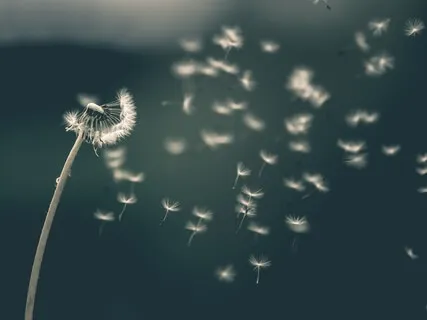
Is the concept that nothing lasts.
Everything passes,
Everything dies.
So the saying,
This too shall pass,
Is a good mantra to have.
So I wanted to talk about impermanence because I think it's an important concept that I use when I work with my clients because most people,
When I see them the first time and I say,
So what do you want out of therapy or your coaching sessions?
It's always,
I want less of this.
I want to not feel this or not feel that.
And usually they're obviously feelings they qualify as negative.
Right.
Yeah.
But they want all the positive things to never end.
So the thing with impermanence is another great equalizer is that nothing lasts.
So even good things end,
But bad things also end as well.
So I thought it'd be an interesting topic for today.
Yeah.
I personally don't like impermanence.
So if you can explain to me why it's a gift,
Then I'm all in.
So can you sort of tell us a little bit about why it's a gift?
Like,
I know that you have a list and we'll get through those of what impermanence gives us.
But can you just say,
No,
That's okay.
What is the dog's name?
That's Lulu.
Hi Lulu.
Lulu is supposed to be locked up upstairs,
But she escaped I think.
That's all right.
So yeah.
Can you tell us a little bit about the gifts,
But in a broader term before we start hitting on why,
On what they are individually?
Yeah.
So we're a society in America,
Especially,
We live in the denial of death.
Basically we live like we will never die and we'll live forever.
And as we both know,
You know,
There's the phrase only the good die young,
I think.
Only the good die young is a phrase.
Well,
One of them and why bad things happen to good people.
Sure.
Well,
Actually everyone dies young and old and bad things happen to good and bad people.
So if we live knowing,
One,
We won't live forever,
But we also are not guaranteed we're going to live till 80.
Right.
So we live as if we're going to live forever.
We tend to put things off.
We tend to maybe hold grudges for too long.
We put things off and then something happens and we regret we didn't do it.
Especially if I think I work with parents who want their kids to grow up too fast and then once they've grown up and detached,
They're like,
Oh,
I miss when they were little,
I should have would have could have.
I tell them,
You know,
When they have sleepless nights,
This won't last forever and I'll bet you anything you're going to miss these nights.
So when we start living knowing that nothing lasts forever,
It's not a pessimistic way of life.
It actually forces us to cherish things and take advantage of opportunities when they show up and even saying yes to things we can't do.
We keep putting off our people we want to see because,
As I said,
Some people can die in freak accidents or a disease they didn't expect.
And then we regret we didn't spend more time with these people.
So consequently it forces us to reevaluate our priorities and our values when we know nothing lasts.
That's a great sell.
I still would kind of like to live forever,
Though,
If somebody can make that happen,
I'm interested.
So you talked a little bit off air about how one of the gifts is that it helps you manage stress.
Can you explore that a little bit for me?
Well,
If you think of impermanence in and of itself,
It's a concept.
So if you accept that things,
Not everything lasts,
It will change your mindset automatically.
So if you're going through a challenge,
Illness,
Struggle,
Argument with someone,
Even a panic attack,
If you change your mindset knowing this too shall pass,
Automatically you will be less stressed.
Because when we're stressed it's because we're in a state of denial,
Non-acceptance.
I think I've mentioned this in other episodes,
When we live in the reality gap where this is reality,
This is where we want to be,
And we resist reality.
So when we resist reality we're more stressed.
So it's easier to accept the present moment,
Especially when it's something we deem as negative.
We accept it by knowing it's not going to last,
So I'm going to be okay,
I'll get through this,
Even if it's difficult.
So that's one way to reduce stress.
I love that.
There's one of my favorite songwriters who I happen to also be friends with,
His name is Glenn Thomas at Check Him Out on Spotify.
He has a song called Little Truths,
And one of the lyrics in it,
Which is one of my favorite lyrics of all time,
Is I found a postcard that I wrote myself two summers before last,
And the only words I'd written were this is going to pass.
Though I can't recall my troubles then,
I have new fears in their place,
So I can bet the end result is going to be the same.
I wrote this letter to myself two years ago that said it's going to be okay,
And I have no idea what I was even talking about.
So I can only assume that the stuff that I'm bothered with right now is I'm going to forget about in two years.
And that's true,
The stuff that you think is,
There are some things obviously that continue,
But generally day to day,
Our work stuff,
Our friend stuff,
Our interpersonal relationship stuff,
Most of it that you stress and worry about and put so much anguish on and suffering is gone.
Within a couple months,
Or weeks even,
Or days,
But it was so important at that moment.
So it's kind of cool to remember like,
Oh,
This is going to pass.
It's not permanent.
And usually what causes stress is not big things,
It's chronic daily mindsets we put ourselves in that add up over time.
And like you said,
We will forget about those little things,
The perfectionism that the house wasn't perfectly clean when someone showed up and the cake wasn't baked perfectly.
And it's like,
Who cares?
You won't remember this in a year that you stressed over a dinner that you wanted to be perfect.
Right.
Absolutely.
So what about the,
So now we know about managing stress with it,
But the opposite side of that,
And we started this by talking about,
You know,
Thanksgivings and just that general feeling of gratefulness.
Thankfulness,
Gratitude is the core of that and what that really is.
Do you think that one of the gifts of impermanence is to,
You know,
You mentioned it even a couple seconds ago,
To be more grateful for what we have at the present moment,
Instead of being stressed about everything else?
Yeah,
Instead of being stressed for what you don't have,
Again,
You're,
Who knows,
Let's say you don't have the car that you want and you're stressed about it,
Or you're bent out of shape about it and you're like,
Oh,
I wish I could afford that car.
And so you make yourself upset and you just need to come back and go,
Well,
I have a car right now.
It might not be the car I want,
But it's getting me from A to B,
Has an engine,
A steering wheel,
Brakes,
And this too shall pass.
Meaning when I make more money,
I'll get the car that I want.
And that's if I still want a new car.
So when we stress out about what we don't have,
What's not there,
Because of what's our current reality,
We need to remember that our current reality can change.
And we need to make choices that will change our reality.
And then whatever we're suffering with will pass.
So gratitude is important.
And do you think that the gratitude and just the living in this state of knowing that impermanence is a gift helps us make better choices?
I think so,
Because,
For example,
If you go to the extreme knowing,
You know,
We get old and we die,
Or we could die by accident,
I often tell people who see me who are in a very unhappy marriage,
I say,
Okay,
Picture five more years of this.
Ten more years of this.
You'll be this age.
Do you want more of this?
Because you're going to get older.
And what if you get sick?
Or what if this happens?
Are you going to regret you didn't leave sooner?
Right?
So it forces people to reevaluate their priorities,
What they value in life,
And then consequently,
It will impact their choices.
Yeah,
And it sounds like it's a great tool also to help get out of or manage toxic relationships.
From what you just said.
Yeah,
Right.
When people are hanging out with the wrong people,
Especially if these people are abusive,
Take advantage of you,
Walk all over you,
It causes you,
Like many people I see are anxious because they're in toxic relationships,
They're depressed,
It tears down their self esteem.
And I'm like,
Listen,
You know,
This life you're living is not a dress rehearsal.
That's the only one you have.
Is this how you want to live?
Is this who you want to share your life with?
Right?
So it helps you rethink your worth and your values.
And who do you want to share this precious life with because it will not last.
So I think of people that I work with a lot of highly successful career women,
For example.
And they're very ambivalent in the sense they love their career.
And they want children.
And at some point,
Something's got to give.
You can't be 100% mom and 100% high executive and something's got to give.
Either the jobs,
You're going to have to put less time there and not work 12 hour days,
Or you're going to be less at home with your kids and you have to get a nanny.
So when I tell these women who are on the career path,
You know,
Promotion one after the other,
I tell them,
Are you ready to think your kids will grow up?
There's three right now,
But trust me,
By the time they're even seven,
They're in school or 10 and teenager,
They won't want to be with you all the time.
Are you ready to postpone your career path just a little bit?
So you can be with your kids.
Because the dilemma is not do I pick career or my kids,
It's if I want both,
I need to readjust my path or accept if I'm a career woman,
I need to be okay that my kids won't see me as much and make the best of it or vice versa,
Right?
I'm putting on hold,
I'm still going to work,
But I'm not going to go for it and work weekends,
Evenings,
Travel,
So I can be with my kids more and not feel guilty I'm not at work.
So it's all about then accepting the choice you're going to make and know whatever choice you make can be temporary.
Do you think in general that impermanence helps or being conscious of impermanence helps you with the priorities?
Because what you're talking about there is setting priorities,
Determining the value that you put on stuff and the fact that you do only have so much time and you only have so much time at the present,
But then we only have so much time time.
Yeah,
Even on a tiny scale,
You know how everyone's on their phones right now.
And I see it because kids complain about it.
I talk to mom or dad,
They don't listen,
They're on their phone all the time,
So it's not only a kid problem.
So when parents get caught up on their phones,
I tell them,
You know,
Hang on,
They're going to be in bed at eight this time,
This little moment that they need you between seven and eight will pass.
And at eight you can go on your phone.
This too shall pass.
So it's putting off things and you know your kids won't need you forever.
So it applies even for the tiny,
Tiny little things when you're stuck in traffic,
The light will turn green at some point,
So don't freak out.
It won't stay red for two hours.
There is a construction light near my parents' house that is solar powered because it's not really a red light,
It's just on either side of a tiny bridge.
And it stays red for seemingly two hours every time.
When nobody's coming,
I went there at three in the morning earlier this week and it took me,
I kid you not,
15 minutes at this red light.
But yeah,
We should have done this podcast before then because I was freaking out.
Yeah,
So it'll pass.
I'll put a good podcast on while I wait.
You can't see what's on the other side of it too,
So you can't even try because it's one lane and it's dangerous.
Even though it was three in the morning,
I was like,
I'm not breaking,
I'm not doing this.
But yeah,
I freaked out.
I was yelling.
I was literally yelling at three o'clock in the morning by myself in my car.
So you made yourself suffer for 15 minutes.
I did.
I couldn't believe it stayed red for 15 minutes,
But it really did.
So normal red lights don't seem that bad anymore.
No way.
So you said about,
You know,
It's okay to put some things off when you were talking about priorities.
But what about the opposite of that where,
You know,
Some things that we want to do that we keep putting off because we think we have forever?
Yeah,
Like what?
In general,
Like you,
You wanted to start a podcast for a while.
Yeah,
For four years.
I kept putting it off.
I don't think that we've been doing this for four years,
Gina.
No,
I was putting it off for four years.
No,
That's what I'm saying.
I don't think we've been doing this for four years.
So what were you doing?
Yeah,
I was letting my fear stand in my way.
If people couldn't see me right there,
I just pretended to judge you really hard.
So anyway,
Go ahead.
Yes.
So we put things off sometimes out of fear.
Whatever it is,
Fear of performance anxiety,
Fear what people will think.
Sometimes just fear.
We think we can't do something.
Fear people will be mad at us.
So sometimes we put things off because we think the fear is bigger or the belief than anything else.
But if we're like,
Yeah,
Well,
Time will pass.
Tick tock.
So,
You know,
If we think of the elderly,
Sometimes we put off seeing people and then they pass away.
We get too busy.
I think both things will go before the elderly comment because that's another thing that's making me sad.
But if you go back to the things you want to do,
Maybe career wise or next step in life type of things,
Where you said that there was some fear.
I think that I'm asking,
Are there two different sides of that,
Which is one is time will pass.
Just do it now because tomorrow is not guaranteed.
The general reason why we say stop putting things off.
But also,
This fear isn't permanent.
Not only will that time pass,
But the time when you're scared is going to pass.
The time when you don't know,
When you're unsure,
When that beginning feeling that you're really afraid of,
That's going to pass too.
Yeah,
That's why we say feel the fear and do it anyways.
So,
I don't remember what Broadway artist it was,
But she was saying before every show,
She was so nervous she would puke.
But she would expect it,
Knew it would pass and the minute she was on stage,
She was fine.
So some people don't push beyond the fear,
Right?
They feel like the fear is going to last forever,
So they don't push through and then they avoid,
Avoid,
Avoid.
So she's a good example of,
She knew she'd be scared.
She also knew the fear would pass the moment she'd go on stage.
So,
And that's the thing for anything.
People have stage fright or want to go to a new job,
But they're nervous to be interviewed.
You're like,
Yeah,
Yeah,
But it'll pass.
The nervousness will pass,
The fear what people will think.
So if you trust that you can feel the feeling and do it anyways and as you're doing it passes.
And that's a great,
So we were just talking about that in the context of not putting things off,
But in general fear and anxiety,
Like I think everything that you just said probably works for any general anxiety.
It's not going to be permanent.
If it's an anxiety attack,
It's going to pass.
There's blue sky behind these clouds.
Yeah.
And people have panic attacks.
It's like they have panic attacks because they're scared they're going to have a panic attack.
And while they're in it,
They make it worse because they feel it's not going to end.
But it's like just ride the wave.
Your panic attack will pass if you don't feed it,
If you don't try to control it,
If you don't force,
Try to force it to stop.
Just ride the wave.
It'll pass.
Then a panic attack can last five minutes instead of two hours.
I hope so.
Sorry.
So in general,
Right,
Because we're kind of starting to wrap things up here.
Would you say that,
For all of the other examples that you've given today of these gifts that living in this conscious state of nothing is permanent,
Or impermanence,
As you've said many times,
Do you think that that makes us value things and people more?
Like,
Do you think that it makes us value the time that we have and the people that we spend it with and the things that we have?
Like,
What do you think the effect on our own value system is for this and our gratitude?
Like,
What do you think?
I think it gives us the opportunity,
One,
To make better choices and therefore only let people who resonate with us and our values enter our lives.
And it could actually transform our lives for the better,
Knowing that nothing lasts and that we're valuable and things,
And I don't mean in a materialistic way,
But we value things and people better because we're in America,
But 90% of the world is poor and they don't even have a bed,
A roof over their heads.
So that's what I mean by things,
That we value what we do have better and the people that are in our lives that choose to be with us,
If we focus on them as opposed to the one person who's rejecting us,
We'll value those who are actually loving us instead of focusing on those who don't love us.
And we're trying to understand why they're rejecting us,
Why they don't want to be with us.
It's like,
Well,
Just turn around and look at those who are with you and are choosing you.
So it does force us to value people and things better and to transform our lives for the better.
Very,
Very,
Very well said.
Is there anything else that you want to hammer home on any last point you want to make on impermanence before we wrap up with our moment of gratitude?
Yeah,
Very simply,
Don't take your life for granted when you wake up in the morning and you're actually awake.
Know that a million people don't wake up in the morning,
So don't take your breath for granted.
It's quite a gift.
That would be an amazing place to end this episode,
But we end every episode,
As always,
With our moment of gratitude.
So Gina,
Would you like to go first?
Yeah,
I thought who I would be grateful for today are actually my clients.
I find it's quite a privilege that people choose to work with me because they could pick anybody else.
That they trust me with their deepest secrets.
I find it's a privilege and I don't take that for granted.
They take time out of their lives to get help and they entrust me with that.
At the same time,
Many of them,
Yes,
I give to them,
But they give back to me.
They are great teachers for my own life as well.
That's really nice.
Well,
Now I feel bad if I don't say my clients.
So I could,
But maybe I'll save that for next episode.
Although,
You know what I do?
Obviously,
I appreciate my clients.
I really do and I want to stress that.
My clients are mostly people like yourself who are coaches and deal with these sensitive topics and stuff.
They are these people that you think are going to be sensitive about the subjects that they talk about and whatever.
The most fun thing is before we hit record or after we hit record and I'm just talking to them.
I think that's a really good thing.
I think that's a really good thing.
Let's do an opening video for the show where I'm falling down in the sand and trying to slide down a railing and I can't do it.
Just really dumb things.
The conversations that we have that are just really funny and irreverent off and on,
But off mic are always really fun.
I'm really grateful for my clients.
I'm just going to do that instead of going with another one.
Also,
Just real quick,
We had Thanksgiving yesterday and all three families came together and it was very nice.
I was very thankful for that.
But yeah,
That's it.
Gina,
Amazing episode.
As you know,
Nothing lasts and neither does this episode.
Where can people find you?
You can easily find me at drgina.
Ca or GinaMadrigrano.
Com if you remember my name.
You'll find a nice little free ebook on the benefits of giving kids chores.
Have a look.
Awesome.
All right.
Thank you very much,
Gina,
And have a great rest of your day.
You too.
Bye.
For more information or to book an appointment with Dr.
Gina,
Go to drmadrigrano.
Com or click the link in the description of this episode.