Welcome to Living Simply,
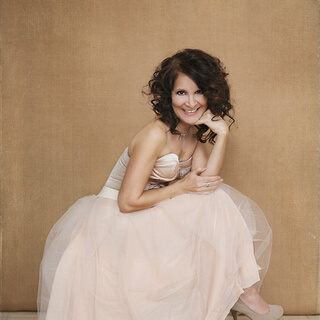
A guide to mindful living and mindful parenting with your host,
Dr.
Gina.
Hi everybody,
Welcome to the show.
Hi Ben.
Hey Gina,
How are you?
I'm pretty good.
How are you?
I'm doing great,
Thanks.
Awesome.
Yeah,
So today I thought that we would do something a little bit different.
I really want to know about you.
Interesting.
So you wanted to know more about me personally or through my work?
I wanted to know more about you through your work first and foremost,
Obviously.
But yeah,
A little bit more about you just in general,
I thought would be great.
As we've talked about on the show several times,
You know,
Going from psychology,
You know,
Doing psychology and the mindfulness stuff,
That's not always something that goes hand in hand.
You know,
They on some levels could seem diametrically opposed.
So I'm just wondering,
You know,
Can you give us a little bit of backstory on what kind of brought you into the field to become a doctor and then,
You know,
We'll take it from there.
Oh,
Yes.
So interestingly,
I had never really planned to go into psychology.
My passion was architecture.
So I did a lot of studies in health sciences and just sciences to prepare to get into architecture.
And I was on the wait list to get into architecture.
So I was also taking courses in art history.
And finally,
You know,
You have in university of courses that are electives.
And I ended up taking a course in psychology just because it seemed interesting.
And one of the guest professors was a forensic psychologist.
And she was a woman telling us her experience.
And I always had an interest in forensics.
So nowadays shows like CSI and profiling and my uncle who I was really close to was a detective.
Oh,
There you go.
That's a good in.
Yes,
So he would always tell me his stories and I would always listen to his cases and he would show me pictures.
Some of them were kind of gory.
So I always liked the investigative process of it.
And from the time I was little,
I always had an interest in psychology and the power of the mind,
But not as a profession.
I had an interest for it for myself.
Example,
When I was 12,
My mom,
I think I don't know if she gave the book to me or if it was her book,
But there was a book by Dr.
Joseph Murphy called The Power of Your Subconscious Mind.
So how to manifest things.
And then later on books,
I don't remember the titles,
But,
You know,
On the law of attraction.
So I always had an interest on that and understanding the mind.
And so there's that the psychology part and the investigative part.
And I always like to challenge and figuring out puzzles.
So I got really interested in forensic psychology.
So I was like learning about that.
Didn't get into architecture.
So I was like,
Oh,
My gosh,
This is so interesting.
And that's what I ended up doing.
So I did like my degree.
I didn't want to be overly specialized because I knew that beyond the criminal,
There was a person.
So I did extra courses and internships,
Not just in prisons,
But also in regular psychiatric hospitals.
So I wanted a holistic view of the person.
So I did internships and I worked for the parole,
Like assessments for the parole board,
Maximum security prisons,
Treating people on probation and communities.
And I worked in forensic programs in hospitals.
And my specialty was sex offenders.
And my subspecialty was juvenile sex offenders.
That seems like a that that seems like a really heavy specialty.
It's heavier than for outsiders,
I think.
I never felt it as heavy.
To me,
It was intriguing in the same way people watch these shows like Law and Order.
What interests I like the figuring out the components,
What gets them to do this?
What are the factors that contribute and get these people to do these offenses?
And as a sideline,
We're also assessing psychopaths.
So I was trained to assess psychopathy.
So it was interesting.
More than heavy.
Yeah.
The part that was I'd say was more difficult was when I was doing my dissertation and I was developing an assessment protocol.
I was assessing teenage boys who had committed sexual offenses on little children.
But as I was working with these kids and we would get them through child protection.
More than half of them were themselves victims.
Of different types of abuse.
So hearing their stories,
Although what the crime they committed was.
Not good.
I also saw the victim in them.
Yeah.
And that was difficult because back then I wanted to save the world and rescue everybody.
So I found that difficult.
I would go home and cry.
But at some point you develop defense mechanisms and you get you get desensitized to be able to work in this field and you hear the stories.
Right.
Yeah.
It did change me as a person because.
I was very trusting of the world.
I remember when I was 12.
So if my mom hear this,
Maybe her hairs will go up on her head,
But I would go to my best friend's house and we would hitchhike at 12 years old to the ski hill.
And when I think of that now,
If I picture my daughter hitchhiking.
I can't imagine that.
So I always trusted the world.
I was always protected.
Nothing ever happened.
But working in maximum security jails,
Hearing the stories of the adult rapists and pedophiles.
Got me more paranoid,
Scared.
Yeah,
I would never hitchhike.
You learn there are modest operandi.
So I stopped keeping my doors unlocked,
Windows open.
Even if I'm on the second floor.
So a lot of people,
There's books written on that.
It's called Vicarious Trauma.
So you get this underlying fear where you don't.
There's some people you just don't trust.
Yeah.
I won't let teenagers babysit my daughter,
For example.
Yeah.
Because I that's how you've seen too much.
Yeah.
And that's how I saw the teenage boys often with molest the kids.
They would babysit.
Yeah.
So this is obviously like a very high stress job.
You know,
You're dealing with these very sensitive subjects and very sensitive matters.
How did you find your way from that to the mindfulness and coaching and parenting expert?
You know,
Great question,
Because a lot of people wonder,
How did I end up doing that?
So what happened?
When I did that,
First of all,
I had no child.
And I worked a lot.
But because I loved it,
Not because I had to.
So I had sometimes two and three jobs.
And then I had a baby.
And so I couldn't sustain that that kind of job.
And like most parents will tell you,
Having a child shifts everything.
So I was on the track.
I wanted to be a university professor and expert witness in court.
But it wasn't sustainable because I fell in love with this little thing.
And it takes too much of my time.
So I would do it part time.
And I started a bit before she was born doing a lot of assessments for learning disabilities.
So it's start one thing,
Finish the next.
Right.
I didn't want to commit to treating people because I was going to have a baby.
So I didn't want to have people hang out with me for a year,
Two years.
I didn't want that responsibility.
So fast forward,
Had Beatrice.
And as you know,
When she was two and a half,
She was diagnosed with leukemia.
So having an underlying tendency to anxiety,
Which I managed,
It looked like I managed it pretty well without medication and therapy.
I was doing well,
But then she got sick.
She almost died in my arms when she got diagnosed.
So my anxiety was out the roof.
I couldn't eat,
Couldn't sleep.
That makes all the sense in the world.
Yeah.
So I was anxious.
So the researcher in me was,
You know,
Researching medication because there's no everything's experimental with kids who have cancer.
And that wasn't working to calm my anxiety.
So every strategy I used to use to cope with anxiety wasn't working.
So it's like I should know better.
I'm a psychologist.
I've been to therapy forever.
Something's not working.
I was like,
This is crap.
Nothing's working.
And finally,
I thought,
I don't even know how it popped into my life.
I knew what I was in my training.
We teach relaxation techniques and this and that.
And I was like,
That doesn't work because of my ADD brain and I needed to do do do and sit down and meditate and relax.
I couldn't bring myself to do that.
But anyways,
I met a energy healer who did Reiki on my daughter.
Yeah,
I think that's how it started.
So I've always been into alternative health.
So for my daughter,
I was like,
Let's get the big guns,
Chemo,
Great.
But we need other stuff to support her body.
Because I knew the chemo would kill the cancer,
But I knew it would also do a lot of damage.
But I also thought.
I think there's probably another reason why she has cancer.
So we did Reiki.
And I met that person who did Reiki was also a meditation teacher.
So she knew what was happening.
And so she got me into mindfulness and meditation.
And that's what got me through it.
The anxiety.
Sorry.
And binge listening to a radio show called Hay House Radio coming across insight timer.
So I was binging on these things because I had to stop working.
I'm self-employed.
I had no income.
So I couldn't afford a therapist.
So I was and I didn't want medication.
And I didn't want like many moms.
God bless them.
I was also a single mom.
So they were like,
You know,
Chardonnay,
Red wine.
Do you not go get a glass of wine?
I didn't want that.
Because there.
In my genes,
There's a propensity to alcoholism.
I'm like,
No,
I'm not going down that road.
And I naturally didn't drink.
So I was like,
No,
Don't want that.
Don't want pills.
So meditation and mindfulness did it.
So,
Again,
Being intense as a person,
When I dive into something,
I'm full into it.
So I started learning these skills and teaching them.
From the psychology perspective,
There's the third wave in psychology.
Called acceptance and commitment therapy.
Which combines a bit of CBT.
Sorry,
But a lot of also the old traditions of mindfulness.
What is a what is CBT?
Cognitive behavior therapy.
OK.
So the thing with CBT,
Which is the therapy I've been exposed to and trained,
Is it keeps you in your head a lot.
Yeah.
The thing with mindfulness and meditation,
It gets you out of your head altogether.
And when I saw how much it helped me.
In the worst possible conditions.
So I had the major life stressors.
I'd been separated the month before.
My daughter got diagnosed with a life threatening illness.
She almost died twice.
I had no income.
I had no support because my family was in another city.
Yeah,
That's I mean,
You're checking all of the boxes.
Yeah.
All of the worst boxes.
That's what got me through it.
Yeah.
So I was sold on that.
And since then,
I've been teaching it to my clients.
As for the parenting component,
I've always had an interest in parenting,
Even when I was working with the teenage sex offenders and getting the parents on board because kids need parents and they need that support system.
And then because she got sick and I had to go back to work,
But I couldn't work a lot.
Parenting is what interested me.
I didn't want to do heavy mental health treatment simply because I did not have the energy to give to my clients.
So I had to do a lot of self care and decide what kind of practice can I handle and be 100% available to my clients.
So coaching and parenting made sense.
Yeah,
Better now.
Yeah.
You know,
You said that it's kind of a,
Or maybe this was before we started recording,
But you said to me that it was kind of like a story that didn't necessarily go.
It's a very interesting story is my point.
And it's also,
You can see like,
You know,
All of your work with the adolescents from before you had Beatrice and then having Beatrice and all of the traumatic stuff with that and your anxiety and all of that stuff.
You can really see all of the arrows that pointed you to where you are now.
And you know,
This podcast is free therapy for mothers and fathers who are,
You know,
Might be having the same sort of battles that you were.
And that's amazing.
So it's really awesome to hear all of this.
And to me,
It makes sense.
You know what I mean?
To me,
It all comes together really nicely.
You have this skill that you learned and that you used for good and you saw the empathy in some of the most heinous crimes imaginable.
But those are people too.
Those are humans with,
And there are reasons why,
And the victim-ness in those offenders.
And then to take all of the stuff that you learned and kind of direct it at,
Hey,
I think we can work with kids at an early age to make sure that they grow up to be good adults,
Good people.
And the parents to make sure that they're not overwhelmed and they're handling everything.
I think that it's fantastic.
I think you have a fantastic story.
That's awesome.
I'd never made all the links you made because I'm in it,
Right?
Yeah,
Exactly.
Definitely.
It's,
Yeah.
So every episode we want to end with some gratitude.
Yeah.
Should I,
I should probably,
It's better to end on you,
I think,
Right?
Yeah,
So you start.
Okay.
I should have had something locked and loaded,
Ready to go for this.
That's a horrible expression,
By the way.
Sorry about that.
What am I grateful for today?
I'm grateful that I twisted and sprained my ankle this morning.
Because?
Because it was the reason why I was still home.
The reason you were still what?
It's the reason why I was still home.
Okay.
So we had,
Yeah,
So we had a little scheduling mix up.
We weren't sure exactly if this was the day we were supposed to or not.
And Braden,
Ali's son,
Left his,
Left his stick horse on the ground in the living room and the colors blend in with our carpet.
And I twisted and sprained my ankle.
And for that reason,
I was still home today.
Ali is at the zoo,
If you're wondering where she has been for this episode.
And Gina called.
And I said,
Oh,
Right,
Yeah,
Let's record.
Absolutely.
We were definitely scheduled to do today.
I had forgotten.
But yeah,
I'm really,
So I'm grateful for the things that have unintended consequences that you think are bad in the moment,
But they lead to good,
Fun things.
So that's the little thing I'm grateful for today.
Well,
I'm grateful you didn't split your forehead on the fireplace.
Me too.
When you fell.
So you hurt yourself pretty badly,
But it could have been a lot worse.
Oh,
Yeah,
I went face first into the fire pokers.
Yeah,
Yeah,
That could have turned out pretty badly.
Yeah.
The second thing I'm grateful for.
So I'll add one is I have a swimming pool outside,
But my home office where I see clients.
There's windows everywhere so I can see outside.
So lately there's been a couple of ducks that land in the pool.
And it's been really entertaining and good to use as exercises of being present and mindful.
So it gives me good subjects for my work.
And it's fun to just watch them my neighbors call them.
Fred and Ginger.
It's a male and female couple.
So it reminds us how beautiful nature can be and if we can be present.
All our troubles can go away for a few moments.
That's beautiful.
Also,
I don't know if you're familiar with this TV show.
That story reminds me you are two different characters on The Sopranos.
Okay.
In the pilot of The Sopranos.
He sees a psychologist.
Yeah.
And he has ducks that come to his pool.
Yeah,
I don't know what that means,
But you're a mix of Tony Soprano and the psychologist.
And I'm Italian.
There you go.
I don't know what that means.
Don't ever listen to a Journey song.
But,
Alright,
So that's it for this episode Gina.
Thank you so much.
Where can people find you?
Dr.
Gina dot CA and on Facebook and Twitter.
Awesome.
Alright.
Thanks guys.
And we'll see you next time.
For more information or to book an appointment with Dr.
Gina,
Go to Dr.
Mandragrano dot com or click the link in the description of this episode.