Welcome to Living Simply,
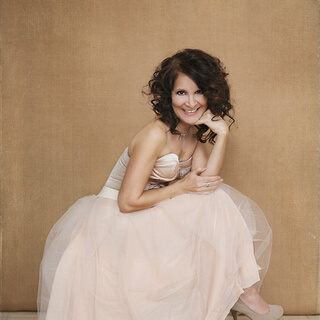
A guide to mindful living and mindful parenting with your host,
Dr.
Gina.
Hey everybody,
Welcome back to Living Simply with Dr.
Gina.
Dr.
Gina,
How are you on this beautiful day?
I'm super good and how about you,
Ben?
Wonderful,
Thanks.
I hope that you are getting a good amount of work-life balance these days.
And that is a horrible segue into what we're talking about today,
Which is in fact work-life balance.
Yes.
Is there such a thing,
Ben?
Is there such a thing?
Can you answer the question straight away?
Well,
If you take it literally,
Meaning 50-50,
30-30-30,
No.
I don't think we can find a balance.
But if we expand the definition to are you balancing out what matters most to you and setting your priorities and your actions accordingly,
I think it is possible.
That makes sense.
So how do we do that?
How do we set our balances and how do we set the metrics that we use to determine whether or not we have balance?
So I'm going to sound like a broken record if people listen to all the episodes.
It always comes back to first looking at all the spheres of your lives,
Right?
So like work,
Education,
Family,
Leisure,
Spirituality,
Etc.
So looking at all your life domains and determining what's important for you in each of them so some might not apply.
And prioritizing,
So example,
If you're early on in your career,
Work could be a lot more important than leisure or than family.
So prioritizing versus just existing unconsciously and going through the motions is the first step.
And determining what really matters in all these areas.
I'd say that's the first first step we should all take.
Right,
And what you're going to prioritize is different than what I'm going to prioritize and vice versa.
Yeah,
And even at different cycles of your life,
Right?
Right.
Your priorities at 20 are different at 30,
40,
50.
Because you have a completely different mindset at 30,
40,
50,
20.
So how does that work with your,
You know,
Is that something that you have to keep in mind?
I think if you want to live a life with minimal stress,
So some stress is inevitable.
But if you want to live a life where you're happier,
Content,
Minimal stress,
No overwhelm,
You really need to make conscious choices every day.
And the way you do that is getting clear on what kind of life you want.
But also realizing it's all fine that you prioritize,
But we need to live with the reality that hasn't changed for millions of years.
We have 24 hours in a day,
Seven days a week.
We have to eat and sleep.
We have to take care of ourselves first and foremost.
And then what's left over is what we should prioritize.
And one of the reasons people are so stressed is they think they can do everything,
That they can do it all.
Well,
It's kind of scary to choose,
Right?
So when you set your priorities,
You have to choose something over something else.
And then that can create a lot of fear,
You know?
So there's like,
Do I want to spend more time focusing on my family and miss something at work or miss an opportunity?
Or do I want to focus on my work and then miss the time that I could have at home or finding a mate or spending time with my kids or having kids?
The fear of always missing something on one side of it.
How do you deal with that?
Well,
Basically the fear of missing out,
Right?
Oh yeah,
FOMO.
Right.
So the first thing was looking at life domains,
Right?
Education,
Work,
Family.
But then you've got to dive deeper and clarify your values.
And there are hundreds of values.
And you want to basically choose three to five values you want to live by.
And that will dictate your behavior.
So example,
If whatever I do,
My value is to be fully involved in it and not do a half-assed job.
Then I'll want to be present at work as much as I want to be present with my spouse,
As much as I want to be present with my kids.
So if presence and working to my full potential is a value,
I need to assess what does it look like in parenting.
So in parenting,
Obviously it's spending time with your kids and quality time,
Not watching TV or on your screen all day.
And same at work is depending if you want to take care of your family and do a good job,
Well,
Maybe you might delay getting the promotion that requires you to be on call all the time and working 12,
14 hour days.
And delaying that promotion so that you could also be with your kids.
So instead of looking at what am I going to miss out,
Which underneath all that is fear,
Is how do I want to show up in the world?
What do I value?
What kind of person do I want to be at work with my kids?
Because usually our values will cross over all domains.
And then it makes it easier to make a choice.
And accepting that we can't do it all.
So postponing certain things,
Knowing we can get to it later.
And then choosing the same way we need to teach our kids they can't have everything.
It's just part of life.
I couldn't agree more.
What about the judgment?
I think it's inevitable when you're having this conversation,
And especially the conversation that we just had about work and work-life balance and stuff,
Is just in society,
At least I'm sure,
Obviously we live in different countries,
So I don't know how prevalent it is in Canada versus the United States.
I believe it's extremely similar.
There is very little judgment if I wanted to have three kids and also spend 80 hours a week working compared to a female counterpart.
Yeah,
There is a bias.
Yeah,
There's a huge bias.
And so how do you,
You know,
Like the work-life balance argument is something that guys don't even really get,
They never get asked about it.
They never,
You know,
They get rewarded for being workaholics.
They hardly ever get asked about their children or their home life or whatever.
But there's so much judgment coming at it from the female perspective.
What level does that play in all of this,
And is there any way to deal with that?
Because I mean,
I wish it would go away completely,
But I don't know how realistic that is at the moment.
You know,
You can't change everyone's opinions and minds.
Yeah.
It's funny you bring this up because yesterday,
One of my clients said exactly what you said.
She's the breadwinner.
So she earns more money than her husband,
So they both work,
But she works more hours,
More responsibilities.
So she works high up in the government,
And she says,
When people come in my office,
They see the picture of my three kids,
I get asked,
How do you do it?
How do you do all this?
How do you manage it?
Her husband never gets asked that question.
Right.
And so there's an impact at work where women who have the same job as men almost have to produce more to prove themselves because of the bias.
We can't pretend it's not there.
Right.
But we see it also in the household.
So I work with a lot of women who are breadwinners as much as their husbands,
So managers,
Engineers,
And yet they're still doing more inside the house.
And they're the go-to for the kids.
So I see a complaint on that end as well,
Or dads saying,
Oh,
You can go out and I'll babysit.
And the women get like,
You're not babysitting.
It's your child.
You'll never hear a mom go,
Oh,
While you're out with the boys,
I'll babysit.
We're not babysitters.
We're parenting children.
So how do we change that?
Well,
It's one family at a time.
And we're seeing now a change.
So women standing up for their white rights,
But also women sticking together and having each other's backs and men sticking up for women.
So we see that in famous people in the US that do stand up for women like Obama,
Stephen Colbert,
I hear him speak about his wife and girls.
So if men,
More men will stand behind women,
They are also a big influence on this change,
Not just women.
It has to be a global change,
Right?
Yeah,
I thought that that was just an important part to,
You know,
Before we go further with it,
I guess,
Like just the.
.
.
Double standard.
Yeah,
Everybody deals with a work-life balance issue and situation and everybody has to find the balance that's right for them.
But it is generally,
And you know,
These are broad terms,
But it's generally speaking a lot more difficult and there's a lot more pressure on women than there is on men to find it,
To identify it,
To defend it,
Which is ridiculous.
But how important is being flexible in all of this?
Yeah,
So flexibility to find work-life balance.
Flexibility in life overall is important,
But it's work-life balance.
What I was saying earlier is you need to have a long-term vision and know that some dreams or goals need to be postponed,
But not forever.
So be flexible.
Same thing with if you have little children,
You're going to have to tweak your work-life balance,
Meaning your self-care might just end up happening after all the kids are in bed.
Even if before you had kids,
Your self-care was between six and eight,
If you're too rigid and it has to stay that way,
You're going to get stressed because kids can be demanding and unpredictable and there are things we need to be the grown-up and step up.
And they can't change yet just because of developmental issues.
So the flexibility that way,
Flexibility,
Our values,
Our choices might change in the work-life balance if a partner gets ill or a child,
A parent gets ill.
It shifts our priorities and if we don't accept and we resist that,
We'll be more stressed and then we have to readjust how we find that balance.
So always keeping your priorities the same,
But you might tweak how and when and the proportion of that time required is.
I once heard that balance in work and life,
So finding balance in your life isn't a scale,
It's a pendulum.
So if you go,
You know,
There are going to be times when life is going to need to take your attention and then there's going to be times when work needs to take your attention to the other side.
And it's just trying to figure out where you are in that pendulum and to sort of make sure that because of what you're prioritizing and your value system and all of that stuff,
If you've been spending a little bit too much time on work,
Or not even too much,
I don't want to throw judgment words in it,
But if you've been spending a lot of time on work and you need to spend a little bit of time on family,
Making sure that you carve out that time.
And if you've been spending a lot of time with the family,
But your work needs your attention,
It's okay to swing that pendulum back the other way and to be flexible.
People get sick,
Projects are due,
Big,
Big opportunities come up.
All sorts of stuff happens.
So,
And you actually,
I think,
Can talk a little bit to that on both ends.
As someone who,
You know,
You just had a great work opportunity and you ended up having to spend a lot of time working.
Working.
Right.
But then also,
Like years back,
You know,
You had the situation where your daughter was ill and you needed to take care of that.
And I chose to stop working based on basically that,
My priorities and my values.
I had to make difficult choices,
Intellectually difficult,
But in my heart,
Easy to make.
Right.
So yes,
I went from working a lot to not working at all.
And that's where flexibility comes in and adaptability and acceptance,
Right?
Not resisting and just surrendering to what is and doing the best possible with your circumstances.
Absolutely.
And then,
So on a happier note,
More recently,
You had to spend more time working because you had this great opportunity that was presented to you out of nowhere.
And that wasn't something that you had in the plans.
You didn't plan to spend hours and hours and hours writing,
You know,
Since the beginning of the year,
But you did.
Yeah.
And I had to put a bunch of projects on hold.
So I had to assess,
Basically reshuffle my priority and look at my long term goals,
Not just short term goals.
And then it became obvious and again,
An easy choice.
So when you make choices based on your values,
It doesn't become an intellectual process of pros and cons,
Which doesn't always work.
And I think research shows it doesn't work.
So if you connect it to your heart and your values,
The choices become so much more obvious.
Right.
You find balance that way.
Especially when you have a philosophy to follow for your own life.
How do you create like a low like what is a life philosophy for yourself?
How do you establish that?
How do you use the values that you've written down and kind of create a bigger,
Broader roadmap for yourself?
Well,
Everyone can have a philosophy of life,
Right?
How they will define generally the concept they want to live by.
So example,
What I found and many other people have found and research shows,
Too,
Is example of a life philosophy is to embrace minimalism and simplicity.
We live in a culture in America,
So Canada,
US,
And I'm guessing maybe Europe as well,
That it's all about bigger and more stuff.
So much so that they're building extra storage places where people can store their junk.
Right.
What's the point of having stuff in storage?
You're not even going to look at it.
It's money sitting there in garage bins.
And more stuff means you need to make more money,
Spend less time experiencing life.
You're just working to spend it.
And so minimalism is great for,
It's a great philosophy because it reduces a lot of stress and it carries over also physically,
Meaning you declutter your environment so you don't live in a hoarded apartment or a house,
Which causes stress.
And then you lose your balance,
Right?
Mentally,
Physically,
And simplicity.
And same with your parenting.
If it's too chaotic and complicated,
It creates anxiety in children,
It creates anxiety in parents.
So minimalism for me is a form of philosophy.
Remembering that life is about connection and experiences,
Right?
We're social beings,
It doesn't matter,
Sorry,
If we're introverts,
Extroverts,
We thrive through connection.
So if we remember that philosophy will carve out time for experiences and connection,
Which physiologically and psychologically is soothing and promotes happiness and quality of life,
Right?
Absolutely.
Absolutely.
So accompanying these talks from now on are going to be little strategy eBooks.
Can you tell me a little bit about that?
Because in this ebook that you've written to accompany this podcast,
You lay out 13 strategies.
And we've covered them in the show as well,
But as sort of a visual aid,
Can you tell us a little bit about what you're doing with these and where people can find them,
Obviously,
In the link?
And yeah,
Just explain a little bit about it.
Because we didn't do it in the structure of 13,
But if you want it in that structure,
Boom,
It's there for you.
You've created that.
So can you tell me a little bit about that?
Yeah,
So I'm going to try and work for every episode to create these little eBooks because some people are visual learners.
They like to have a little handout.
I'm trying to create resources at the end as well.
So links to other podcasts or books,
Not necessarily my podcast,
But other podcasts that I find useful or research or strategies.
So people can have their own little PDF version of the podcast.
So it is a summary of the podcast,
But it might have a bit more information on a visual basis and we'll create links so people can have access to them and print them out if they want to print them out.
That's amazing.
That's really cool and I've never heard of anybody doing that before.
So I really love that.
So Dr.
Gina,
What else as far as work-life balance is there a final thought,
A summary that you'd like to leave everybody with on how to maintain or create a balance that they personally feel comfortable with in their life?
Yes,
So one that we bring up every week is incorporate gratitude in your life,
Which is in link with the fear of missing out.
Instead of looking at what you're missing out on,
Be grateful for what is actually present in your life.
So you're not always chasing change,
Chasing the next goal,
The next big thing that will help with finding balance.
Remembering that change is the only constant.
So being flexible.
So whether going through good or bad,
It's not going to last.
So when it's bad,
Hang on tight.
It's going to be over soon.
And when it's good,
Take advantage of it because it's going to be over soon.
That's very,
Very nice.
All right.
And we finish every episode with a moment of gratitude,
Sharing something that we are grateful for.
I will go first so that you have the last word.
And this week,
I'm grateful for actually something that happened a year ago.
We just passed the anniversary of,
Well,
Actually the first anniversary of two of my dear friends who got married last year in March.
And they asked me to officiate their wedding,
Which was crazy,
Like absolutely insane that they did that.
I didn't have to get ordained or anything because there was a justice of the peace that stepped in at the end.
And I literally said,
Because there's no power vested in me by the state of Connecticut,
I present justice such and such.
But it was really fun and an honor.
And I got to talk to both of them the other day.
And they're coming up soon for a birthday party and stuff.
So I thought a lot about that and we made a nice video for them with Dave singing their wedding song and stuff,
Which was really nice.
But I'm just really grateful for that entire experience.
That's great.
I remember that.
Thank you.
Cheers.
Thank you.
Gina?
What am I grateful for?
So this week,
I'm grateful for my chiropractor.
Because I've been having a sore back and we had no idea why.
I didn't get hurt and we realized it was the chair I was working in.
Which is great because now we know the cause.
But also because he's just a great guy.
When Beatrice was sick,
I wasn't working.
He treated us for years for free and not many people would do that.
So I was so appreciative of his support and taking care of my daughter and he still does.
And he's just a great and funny guy.
So I'm grateful for Dr.
Pope.
That's so nice.
That's awesome.
I really love that.
That's so great.
So as we said,
You can get in the links of the description of this episode,
There's all the ways to contact Dr.
Gina,
Her website.
The ebook that goes along with the 13 strategies for work-life balance.
And yeah,
Dr.
Gina,
Is there anything else you want to plug before we say goodbye?
Yeah,
I would like if people who listen would give us a review on iTunes so that other people can find us.
There's over a million podcasts in the world.
So it helps us a little bit to get found.
Absolutely.
And actually,
No matter where you view or listen to this podcast,
Please leave a review.
So if you listen on Inside Timer,
Leave a review there.
If you listen on iTunes,
Leave a review there.
Spotify,
Wherever you find us.
If you like the show and you've gotten this far,
This deep into it,
It just takes a second to leave a review.
That would be extremely helpful.
It's the best way to help the show.
Thank you so much,
Ben.
Thank you.
Have a good week.
You too.
For more information or to book an appointment with Dr.
Gina,
Go to drmandragrano.
Com or click the link in the description of this episode.