Welcome to Living Simply,
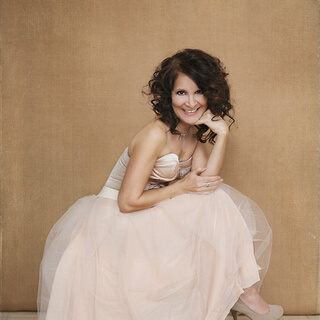
A guide to mindful living and mindful parenting with your host,
Dr.
Gina.
Hi,
Everybody.
Welcome to the show.
Hey,
Ben.
Hey,
Gina.
How are you?
Long time no see.
I'm good.
I know.
It's been two minutes.
So today we are talking about making assumptions.
And I'm super excited because I assume that this will be a good podcast.
Awesome.
Yeah,
I thought this topic would be good.
I don't have people listening know the book,
The Four Agreements by Don Miguel Ruiz,
But I think this book should be taught in every school and to every parent.
If we could live our life based on these four agreements,
This world would be such a better place.
So making assumption is a big one.
So I think it will be an awesome topic today.
Yeah,
I think,
I mean,
Honestly,
I think we could probably end up doing one episode on each of the four because they're all super important.
You know,
Be impeccable with your word.
Don't make assumptions.
Don't take anything personally.
Don't take anything personally.
And what's the fourth one?
I have it written.
I think it's always do your best.
Yeah,
Yeah,
Yeah.
So it's a wonderful book.
It's the book that I've read multiple times and I never read a book.
I never tried to read a book if I can't help it.
I'm kidding.
But yeah,
So don't make assumptions.
A lot of bad can happen when you make assumptions.
As you may have heard,
When you make an assumption,
You make,
I won't go into that saying.
Well,
Yeah,
When we make assumptions,
We're assuming we can read people's minds and we actually can't.
Yeah,
Exactly.
Cause a lot of needless conflict or even sadness,
Depression,
Resentments because we're mind reading,
Right?
So if we connect this to mindfulness and we're present with what's going on in our mind when we're thinking and we go on a rant on our own,
We can go,
Oh,
Wait a minute.
I'm making an assumption here.
Yeah.
Then we can stop ourselves.
Right?
Absolutely.
I try not to make,
I mean,
I try not to dive into my mind very often cause it's a pretty dark and scary place,
But no.
So yeah,
So we have a,
We have a bunch of different aspects of this.
You know,
Something that you talked to me about was how when we're making assumptions of people,
We always tend to assume the worst.
Why is that?
I think especially if we don't feel good,
We might dramatize,
Make things worse cause we tend to project onto other people,
Our own beliefs.
It's a natural tendency humans have and we really want to work on noticing when we do that so we can stop doing that.
So the other thing comes from our evolution.
The negativity bias is for our survival.
When we were cavemen and women,
We had to assume the worst.
So if the bushes were moving,
We had to assume it was a lion,
Not a squirrel.
By the time we wait,
The lion could jump on us.
So it was always better to assume the worst.
So from an evolutionary perspective,
We tend to notice the negative more than the positive.
But then there's also personality,
Right?
Some people have more of a tendency to be negative.
Sometimes there could be a negativity bias if there's history with that person.
So we know them.
We always assume we know all of a person,
But we don't always do.
So I think that's why we tend to assume the worst sometimes.
Yeah.
What about how you think that people are.
.
.
You just said we tend to think that we know people.
We tend to think that people.
.
.
We also tend to think that people think like us.
Everyone is different.
Can you just talk a little bit about why we tend to think that everybody thinks the same way as us and therefore would be thinking what we think that they're thinking?
Wow.
Okay.
So I think I understood what you said.
I think the more people work on themselves and wake up,
The less they will do that.
So I think part of it is unconsciousness to not be awake,
Basically,
Because it's pretty naive to think everyone's like us.
I think it comes with self-awareness.
I think if we start with that assumption that not everyone's like me,
So I need to check with people before I make an assumption.
Thing is we could be right sometimes,
But sometimes we could be wrong.
And ultimately it's always best to check instead of making an assumption.
We can also look at it if we look in the addictions model,
But not everyone who's an addict does this,
And not everyone who does this is an addict.
If we look at codependent behavior,
There's a lot of assumptions being made.
So if people I've worked with who have a lot of codependent traits and are people pleasers,
Go out of their way for others,
Can't say no,
What I often see is they'll do a lot for other people,
But there are strings attached and they don't even realize it.
They assume people will do the same for them because they do it.
They assume others will do it for them.
And then when that doesn't happen,
There's a lot of anger and resentment.
So assumptions can also be made in that sense.
Yeah.
And I think that one of the big things that you just mentioned that I think we should go back on for a second was like unintended assumptions,
Like unconscious assumptions.
Like you were just saying,
If you're a giver,
If you're somebody who wants to give and help people in that way,
But you're unconsciously expecting things in return from that,
That can be dangerous and hurtful and hurtful to a relationship and very damaging because a lot of resentment can get built up that you didn't even know that you had.
So that's a dangerous.
.
.
So when we talk about solutions later,
I definitely would like to talk a little bit about the solution to that.
To subconsciously be making assumptions is a scary thing.
Anything that you do subconsciously is kind of frightening because it's not at the forefront of your mind and you're doing it unconsciously.
And that's the importance of encouraging people to wake up.
And how do we bring to consciousness unconscious behavior is by being present.
So I'm going to sound like a broken record,
But that's the key to change,
Right?
If we're self-aware and we're not lost in our head,
Whether it's making assumptions,
Jumping to conclusions,
And we pay attention to our thoughts,
We're more likely to become aware if we are making assumptions and we're less knee jerk reactions,
Right?
Yeah,
Absolutely.
How do we avoid projecting our beliefs onto other people?
Because I think that like what you were just saying with,
You know,
I'm going to do this for them and I expect them to do that for us.
That's a form of projecting your beliefs onto other people.
So how do you talk a little bit about that?
How to avoid projection.
So first projection is something that happens first inside of us.
So we can't always avoid it.
We can work through it.
So let's say a friend is late,
But it's not always late.
And I'm like,
Oh,
She doesn't care.
She doesn't respect me.
If I'm like self-aware and I'm like,
Well,
Do I respect my friend?
Am I projecting?
Maybe I'm not.
So it's doing a self analysis looking,
Is this a projection or not?
Is it an assumption?
So we may project on people.
The good thing about it is noticing when we do questioning it and then verifying.
So it's an,
I find it's an internal process because it's,
It's something that happens in the privacy of our heads.
So it's,
I will project,
I still do,
But what I do is I catch myself and sometimes I don't.
Right?
So my goal is not necessarily to be perfect and never project,
But to catch yourself when you do it.
So if I get really caught up in an internal dialogue about something that happened that really made me upset and I'm playing the scenario,
Oh,
She did,
Or he did,
She said,
I'm sure this is what happened.
And if I'm noticing,
Okay,
I'm getting bent out of shape.
I need to go,
Okay,
What's real.
What's not real.
What's a projection.
What's an assumption.
So it's weeding out everything to notice and then letting it go.
So I think it's more than maybe someone who's enlightened never projects,
But I'm not there yet.
Very nice.
Like anything,
Right?
It's noticing and then correcting.
Yeah.
When we notice basically.
Absolutely.
Social media is the devil.
I'm kidding.
I mean maybe,
But you know,
There's a lot of assumptions that people make via Facebook and Instagram and comparing,
Comparing themselves to other people.
You know,
I think,
I think,
I don't know if this is taking place in Canada,
But Instagram,
For example,
Just announced that they're going to be taking the like,
The like counter away.
So you're not going to be able to see how many likes other people got so that it's not as much of a competition.
And they're trying that out in some other countries right now.
I know like Australia,
New Zealand and Japan and stuff.
And yeah,
There's,
There's a big controversy about it because so much of social media is,
Is that comparison of yourself to other people.
And making assumptions.
Yeah.
So,
So I just so I just wanted to talk about,
You know,
The,
The role of social media in how bad everyone makes assumptions now about everybody else.
Yeah.
So research does show that people who spend more time on social media are more depressed because the thing is people compare other people's outsides to their insides.
So let's say they're sad,
Their partner just left them,
They lost their job,
They have less money,
And they look at other people's profiles and you look at them,
They're traveling that cute pictures where they're partnered with their partners.
And there we go in fantasy land,
Assuming that their life is perfect and hunky dory.
So they travel all over the world,
They must be rich,
They have no debt.
Their relationship is so perfect,
Where I've,
I've had personal clients tell me,
You know,
Like,
We post pictures of me and my husband on one of the social medias.
And she's like,
Yeah,
We look all nice and happy on our boat and in these tropical places.
And they're just getting a divorce.
And the husband was cheating on her.
But if we look at the pictures,
We assume they were happy couple.
So there's this thing when we compare,
But we also compare and we make assumptions,
Right?
Yep.
And usually the assumption is people's lives are much better than our lives.
And based on a few pictures.
Right.
Yeah,
That's,
Um,
It's a really dangerous thing.
And it's,
Uh,
It definitely leads to depression.
And it definitely leads to shame and all of this other awful,
Awful things because you start to think everybody else is living this perfect kind of life and I'm not and,
But you're right,
You know,
You're making assumptions of what other people's reality is because you're not seeing what their reality is on social media.
Yeah,
Even something completely different.
We even make assumptions about different professions.
For example,
In my practice,
I'm,
I'm the kind of psychologist where when useful,
We have a guest.
I'm sorry.
Hey,
Buddy.
It's Oh,
Come here.
Hey,
You smell like the beach.
I said,
Hi.
Do you want to say hi to Gina?
All right.
All right.
Oh,
I had all these cream.
Oh,
Nice.
All right.
Well,
I'm doing the podcast.
Okay.
Have a good nap.
Night.
Sorry about that.
So,
Um,
That's okay.
So what I was saying is with my clients,
When useful,
I share personal,
Um,
Examples in my life so that they can see when I give them tools that it is doable.
And but they also see the humanity in me.
And I have some clients who are like,
Really?
They assume because I'm a psychologist,
My life is perfect.
I have no problems.
I don't struggle.
I have all the perfect coping skills.
I must be the perfect mom,
The perfect friend.
And I'm like,
No.
And I show them my process and they're all surprised.
And I tell them,
Well,
Do you think dentists don't get cavities and root canals?
Do you think chiropractors don't get sore backs?
So we even assume,
Make assumptions again,
Based on professions,
Socioeconomic status,
Um,
What cars people drive.
Right.
Yeah,
Absolutely.
Constantly making assumptions.
And then,
Um,
It feeds our internal world.
It feeds our emotions for some it's depression or some it's their delusions.
So assumptions I've noticed.
I tell my clients,
If you only use one tool with your bosses,
Employees,
Partners,
Kids,
Stop making assumptions and go verify.
You would save so many arguments and fights.
Yeah,
Absolutely.
Um,
All right.
So let's transition now to,
You know,
A big part of what this show is,
Which is talking about children and parenting and,
Um,
Making assumptions with your children,
Uh,
Are,
Is,
Is a huge thing that people do every day,
You know?
Um,
So,
So how,
How do we make assumptions with our children that is leading to negative consequences?
So if,
If I think different age groups,
Um,
And I think behavioral stuff as well,
Um,
I always tell parents assume the best in your kids before you assume they're being a bad kid.
There's no bad kid.
So you know,
Instead of telling your kid you're lazy,
Um,
I tell them assume lack of skill before you assume lack of will.
Yeah.
He doesn't want to do that.
She doesn't want to do that.
She's doing this on purpose.
She's doing this to piss me off.
That's making assumptions.
Notice the behavior and then go verify with your child.
Assume there's some things going on and go check it out versus you assume that they're being a bad person and they're doing it on purpose to upset you.
They're doing it on purpose to defy you.
There's usually something underneath it and even if they would do it to defy you,
We don't know why they're doing it,
But we'll make an assumption.
So I find it causes a lot of problem in parenting because often parents think they know everything about their child just because they're the adult and I'm like,
Well,
You don't because you're not them.
And even if you were a child,
You still were not them as a child.
You didn't have the same parents.
You didn't have the same life.
Go verify with your child.
Don't make an assumption because that takes their power away.
Right?
It labels them and I see it with teenagers where the teenagers just give up the ones who are depressed.
They're like,
What's the point?
My mom or my dad,
They'll think I'm doing this for that reason.
And I'm like,
Well,
Let's open communication here.
So they tend to give up opening up and communicating because the parents make assumptions and they assume they're right in their assumptions.
Absolutely.
So let's talk about some solutions.
Let's talk about some solutions to all of these problems.
Saying the worst to people,
Thinking people are like us,
You know,
Projecting our beliefs onto other people,
The social media epidemic,
Children.
What are the solutions to all of these problems that we have making assumptions with other people?
So at the basis will be self-awareness.
Catch yourself making an assumption.
Second,
If you can go verify with the person.
So communication is at the core of every healthy relationship.
So open communication without accusation.
Gina?
Is it back?
Yep,
It's back.
Okay.
So if you make an assumption and you think you're right,
The way you'll approach the other person,
They'll be on the defensive.
So speak in I messages.
I felt this way.
This is what happened.
Can you explain to me what happened with you?
So you get clarification.
With your kids,
The same.
Don't assume.
Who knows?
If you're a child who loves sports,
Don't assume your child will love sports.
Verify.
Yeah.
Get to know the person.
Get to know your child.
Don't assume even if you're married 20 years with the person,
Don't assume you know people or you know your child better than they know themselves.
The other part in that communication is ask useful questions.
Right?
So again,
Part of a previous episode,
Useful questions without judgment.
Right?
So ask yourself,
Is this question more likely to bring a solution to the problem or more likely to put the person on the defensive or close down or shut down?
Is this a useful question?
So I think the self awareness and open communication is ultimately the best.
And the other one is possibly letting it go,
Saying,
Hey,
I got to accept I don't know and let it go.
Because for some things,
It's not necessarily appropriate to have a communication with that person.
Sometimes it's our issue and we need to work through on our own and let that go.
So there's also context involved in that.
So letting it go and being comfortable with not knowing.
Yeah,
Absolutely.
The open and clear communication that you're talking about and asking useful questions really reminds me of you and I before we started the show,
We're talking about the Netflix special with Brene Brown that came out this year.
And I just watched that the other day and this entire thing of making assumptions made me think of,
And I used this as an example with a friend yesterday about clear communications and making assumptions,
Is she tells this wonderful story about swimming in a lake and trying to have this moment with her husband.
And she says,
I love you and I'm so happy that I'm here with you and this is so nice.
And he's about 20 feet away from her and he just goes,
Water's fine and keeps swimming.
And there's more to it.
And it's a hilarious story,
But she thinks that their marriage is ending because she's so in her head and she doesn't understand why he is responding to her that way.
And when they finally end up having that conversation,
Because she's done so much of this work and because she's able to use phrases like the story I'm telling myself right now is,
Which is self-awareness and clear communication and all of the things that you just talked about,
She's able to go like,
What are you doing?
And she's like,
I don't think that you think I'm attractive anymore.
I'm not as good of a swimmer.
I'm not the person you married 20 years ago.
And he's like,
I was having a panic attack thinking about a dream I had last night and I was just counting my strokes in the water.
But that lack of communication,
He thought she was thinking like,
Oh,
This guy can't take care of me because of his own insecurities.
And she was thinking,
I'm not attractive to him anymore.
And so many people,
The majority of people that I've ever met,
Including myself,
Would stay on those two opposite ends and have that fight about nothing,
About absolutely nothing.
They're just two people in their own head and they would have that fight about nothing because they're both making assumptions about what the other person's thinking when really it was nothing at all.
So I just thought that that was a great example of how making assumptions and the lack of clear communication can lead down a horrible road when really all you have to do is,
A,
Be self-aware enough to acknowledge it and B,
Be clear and ask useful questions.
So I think that what you said is amazingly helpful.
And I think that this is a bigger problem than people think that it is.
Oh yeah.
And she,
Brene Brown,
Her life work is around that making up stories.
And I like the phrase that she uses because it doesn't put the other person on the defense,
Right?
Right now I'm making up the story that you don't find me attractive.
It's not,
You don't find me attractive anymore.
Yeah.
It's a good preface to a phrase to even use that.
It's true.
It's not because it's not even,
I feel like you don't find me attractive anymore.
It's acknowledging this is going to,
I know that this is me,
But this is what I'm telling myself.
And I think that that's wonderful.
And it deals directly,
I mean,
She was using it in the sense of vulnerability and shame,
But I think that making assumptions really ties in beautifully with that,
You know,
Because so many times we're making assumptions that other people are thinking the worst or have negative thoughts about us and it's just us.
It's just us projecting and looking at other people's outsides and assuming lack of will from our children and all of this stuff,
You know?
Yeah.
So,
This is a great show.
I love your insight on stuff.
Thank you,
Gina.
Thank you.
So before we get into where people can find you,
It's time for the moment of gratitude.
Yeah.
I'll go first.
Yeah,
I go first usually.
I'm going to,
I don't know if it'll be in the show or not,
But halfway through the show today we were interrupted by my little friend who came home and wanted to say hi before nap.
And I'm grateful that he is back home right now because Allie had a surgery,
Just a simple surgery and she's doing well.
And she had a surgery on her nose to fix some stuff that was wrong.
And he went to his dad's for a week and it's really nice having him back.
And I'm grateful for that.
And I'm grateful for the other side of the family who's able to take that responsibility from Allie so that she could heal.
And I'm grateful that she's okay and that everybody's good and happy and healthy.
And so there's just a lot of gratitude around that whole situation.
That's great.
Yeah.
Say hi for me,
By the way.
I will.
So what am I grateful for?
I'm grateful for technology.
More specifically,
I'm grateful for documentaries on Netflix like Brene Brown,
Brene Brown on YouTube and other great speakers and other great teachers on podcasts because they make my job easier.
And I constantly send these resources to my clients and it supports my work because I can't be in their homes every day.
So that's a positive side to technology that I find really,
Really useful.
That's awesome.
And I think someday soon other people are going to be saying that about you because this is one of those resources now.
Your podcast is one of those resources and something that someone else can send somebody when they're dealing with an anxious child or anything like that that we've talked about.
So I think that that's wonderful.
So thank you.
I'm grateful for you and this podcast.
Thank you,
Ben.
You're welcome.
You have an ebook.
Yes,
On the benefits of giving your kids chores.
I love it.
I have not been able to read it yet since the last podcast because we record these at the same time,
But I can't wait to do that.
And then where can people find you?
DrMadrigrano.
Com and you'll find the ebook on my main page.
Awesome.
All right.
Thank you very much,
Gina.
Thank you,
Ben.
Awesome.
Awesome as always.
Talk to you soon.
For more information or to book an appointment with Dr.
Gina,
Go to DrMadrigrano.
Com or click the link in the description of this episode.