Hello,
Hello,
Beautiful,
Beautiful soul family,
Gorgeous humans of the inside time realms,
Welcome to this discussion around insomnia.
And this talk was actually inspired by a group reading that I was doing and someone asked the question around insomnia and I thought,
Oof,
Actually,
If I'm gonna answer,
I'm gonna speak for a whole hour just on this topic because I personally have suffered from insomnia.
I suffered for three years.
I basically went three years with no more than an hour's sleep at a time,
Which basically turns you into a zombie.
And yeah,
It's just not a great way to live and I did manage to cure it for myself.
I do think it's also important to note,
I'm not a doctor,
I'm not here to diagnose or to treat any of you,
But really just to share my personal story and what worked for me and hopefully that can help you.
But of course,
We are all unique and different human beings and my path may not look anything like your path,
All right?
And for those of you who haven't met me before,
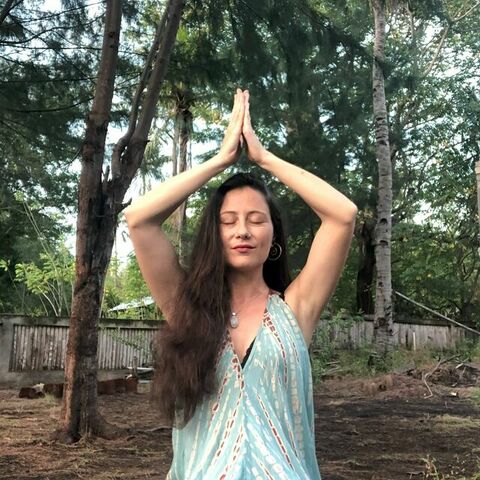
My name is Carla and I'm a psychic,
A spiritual teacher,
A yoga teacher and an artist.
And this is a passion.
This is what I do.
And being a psychic is definitely something that you're called to,
Right?
You're just called to do.
And yeah,
Today we're gonna be speaking about insomnia.
So please do share with us if you have any little bits of information or if you wanna share some of your story,
If you've suffered from insomnia or if you know someone who suffers from insomnia,
Let us know in the comments.
Let's talk a little bit about some of the causes of insomnia.
I think that's a good place to start.
And again,
I'm just talking from my own experience.
So for me,
It was a combination of these aspects.
And I think that this would probably apply to many people,
But possibly there are other causes that I'm not gonna touch on.
So the first thing that comes up is this feeling of safety.
If you don't feel safe in your environment,
Then it's very difficult to allow yourself to sleep because we become very vulnerable when we sleep.
So if you don't feel safe in your home,
Safe in your environment,
Safe in your family,
If you don't feel that there is a safe environment for you to sleep in,
You're simply not gonna sleep.
So one of the first things you can bring in is to ask,
Well,
What about your environment makes you feel unsafe and how can you change that?
Maybe it's as simple as locking your doors and putting burglar guards on your windows so you feel it's impenetrable,
No one can come in.
And that allows you to relax,
To slip,
Let go of the control essentially.
And this goes hand in hand with the fear of the unknown,
The fear of losing control,
The fear of letting go.
And as someone who really has that archetype within them of that control,
Right,
Virgo Sun,
Virgo Sun,
Just wanna control everything.
And then when you can't have control,
You start to feel unsafe.
So that for me is very,
Very much one of the underlying issues of why I suffered so intensely from insomnia for so many years.
Of course,
Stress,
Overthinking,
Overstimulation,
And physical pain,
Physical pain.
If your body is not comfortable,
It's a lot more difficult to fall asleep.
And I think for me,
The biggest one is that fear of the unknown,
Because when you slip away into the dream space,
Anything could happen,
Right?
If you suffer from nightmares or the kind of night terrors that wake you up in the night,
There can be the fear of falling asleep.
And so therefore you don't fall asleep and rather stay awake which then becomes insomnia.
And of course we really need sleep,
Right?
We really need sleep in order to be healthy,
Functioning human beings.
And I think for me,
It really became this cycle of,
You know,
The feeling of unsafety is what caused me to start not sleeping or sleeping less,
That fear of lack of control,
Fear of letting go,
Fear of being vulnerable,
The fear,
You know,
Essentially actually I had a fear that someone would come into my room at night.
And of course that feeling of safety is not always about your physicality,
It can be something else as well.
So let's start looking at some of the tools and techniques that I integrated into my life in order to cultivate that feeling of safety and in order to essentially get myself sleeping again.
And I must say,
I don't follow all of these rules anymore because I'm years and years and years not an insomniac anymore.
And I actually break a lot of these rules I'm gonna give you.
So I just sleep so easily these days.
I love delving into my dreams.
I feel very safe in my environment.
So,
But it was incredibly useful for me to be really strict about these rules for a time,
Okay?
Now,
One of the first,
First,
First things that I incorporated is I declared my bed a sacred sleep and rest space.
And I know a lot of people out there,
Especially those of us who work from home,
Right?
Sit on your bed with your laptop doing works or sit on your phone in your bed,
Check messages,
Go on Instagram,
Even on inside timer,
Right?
The light shining in your eyes,
The,
All the radiation from the cell phone.
And I used to study on my bed.
I used to do all of my studying on the bed.
When I declared my bed a sacred sleep and rest space,
And even the type of reading that I would do in my bed space became only spiritual reading or relaxing reading,
Right?
Reading that helped to cultivate some kind of sense of calm and safety.
So even,
You know,
A thriller novel,
Not good to read in the bed,
Right?
You should go sit on the armchair or something like that.
You want to only cultivate the energy as if there's a bubble around your bed space that says this is the space for sleep,
Okay?
So no laptops,
No cell phones,
No study material,
No answering phones,
No speaking on the phone,
All on the bed space.
Create for yourself your workspace elsewhere,
Even if it's in the same room.
So a lot of us work from our bedrooms,
Right?
I'm right here channeling from my bedroom,
But this is my channeling space.
This is where I do all my lives and it's separate from my bed space.
Yeah,
A big one was not studying because when you activate that thinking mind,
Right?
And activate that sense of focus,
Okay?
You don't wanna be in your bed space.
You want your bed space to be that space where you let go,
You bring in calm,
You bring in deep breathing and you relax and then you can sink off into dreamland.
So separating out the space.
The next thing that I integrated was color therapy,
Okay?
For some people,
It doesn't matter if you have red bed sheets because you sleep just fine.
But for those of us who are very sensitive and really battle to sleep,
It can help to bring in colors that are conducive for sleeping.
So we're talking blue,
White,
Green.
These are the colors that are good and calming for the sleep space.
So you want your bedroom to be in these kinds of calming colors.
You don't want red all over the place or orange,
Which is all very energizing.
Even yellow is a little bit too awake,
Energizing sun,
Right?
Fire.
Violet and purple can be all right if that resonates for you.
Personally,
For me,
Blue and green is the best color for the sleep space.
The next thing that I integrated was a very strict sacred bedtime routine.
So I set myself strict rules where it doesn't matter if I've got a deadline or a test the next day or whatever it is or a report that needs to be handed in.
The number one most important thing is my self-care.
And so at 11 p.
M.
,
No matter what,
I start my bedtime routine.
And that means all devices go off.
Laptop off,
Cell phone off.
I'm going to put on an inside timer medicine,
Right?
But very strict,
No going on Instagram.
And if you can't be strict about it,
Just switch the phone off.
It's actually better for you to not have those waves and stuff,
The radiation,
The cell phone,
The wifi.
Switch the wifi off.
Make all the lighting dim,
Right?
Set your time.
Your time can be different.
11 p.
M.
Is the time it was for me so that by 12 o'clock at night,
I was ready to sleep.
So it takes,
I'd say about an hour.
So you want to set the time that is a good bedtime for you,
That is going to give you enough sleep to get up in time for the next day.
Now,
It used to be 11 o'clock for me.
These days,
It's actually more like nine o'clock.
I much prefer to wake with the sun at the moment.
Yeah,
And I love sleep.
Dim the lights,
Put candles on,
Switch all your bright lights off.
Your bedroom light.
It's better to change it to a warm yellowish light than those very bright fluorescent lights which are also very stimulating.
Again,
When you sit and scroll on your phone and look at the cell phone,
You have light going directly into your eye and this can actually confuse your melatonin levels in your brain because it sends the signal of,
You know,
It's light,
It's light,
It's light,
So I must produce the hormone to keep me awake.
And I'm sure all of you have experienced this sense where,
You know,
You're feeling tired,
But you're like,
Oh,
I'll just quickly check my whatever,
Facebook or whatever it is,
And you start scrolling and you're nodding off,
You're nodding off,
And then you keep scrolling.
And then the next thing,
You're wide awake again.
And that is because of the light shining in your eyes.
So again,
It's very,
Very important that you're not gonna sit on the computer,
Look at the phone,
Rather put low lighting.
If you really wanna do an activity,
Read a spiritual book,
Okay?
Maybe on a Kindle,
But not on your phone and not on your laptop.
The best is a real book,
Isn't it?
Reading can help to tire you out.
I'm sure many of you know this.
Sacred bedtime routine.
Drinking teas like chamomile,
Right?
Here in South Africa,
We drink a tea called rooibos.
It is available in some places in the world,
But it's indigenous here and it's a really great one for bedtime.
Caffeine,
Right?
You don't wanna drink caffeine after 2 p.
M.
In fact,
I would say you don't really wanna drink more than one cup of coffee a day,
But the max should be four.
Especially if you're an insomniac,
Try cut it down to two at your max,
Right?
But especially not after 2 p.
M.
It takes,
I think,
10 hours for caffeine to work out of your system.
It affects you for 10 hours.
If you wanna play music,
Play soft,
Gentle,
Calming music,
Right?
And you really wanna tell the people whom you share a home with,
Right,
Your immediate family or your chosen family,
That you're implementing this routine and you would really appreciate their support.
So you don't want someone in the same household to be watching a movie that's full of bombs and gunshots,
Which sends your nervous system on edge.
But maybe if they really wanna watch that movie,
They can put headphones on,
Right?
And of course,
If you're gonna watch movies,
You wanna do so before your sacred bedtime routine.
You don't wanna be watching movies while you're lying in bed.
No,
No,
No,
No,
No.
And of course,
If you really,
Really must watch those movies,
Choosing your genre quite specifically,
Because if you're gonna watch horror films or thriller films or even action films,
Right,
Not that there's anything wrong with enjoying these things,
Just if you're an insomniac,
You don't wanna do so just before bed,
Right?
Yes,
Absolutely,
What you are eating,
What you are consuming,
I mentioned coffee,
But even the food that you eat is so,
So,
So important.
And in many ways,
The Dutch have it right in that they do chocolate and sweets and sugar in the mornings,
And then as the day progresses,
They have less sugar.
Whereas in South Africa,
Sugar for breakfast is like an absolute no-no,
Except obviously in your tea and coffee.
And the idea is that after you've eaten your dinner,
Then you can have sweets and sugar and dessert,
Which is a kind of strange thing to have sugar just before you're going to bed,
Right?
If you are an insomniac,
Then sleeping during the day is really stealing from you at night.
Personally,
I've reached a point where I can actually have three naps during the day and still sleep at night.
I love sleep,
But to be honest,
My naps during the day are not really naps.
They're more like meditations lying flat on my back where,
Yeah,
I just go into other realms,
Which is really beautiful.
And of course,
Yeah,
I managed to do the healing of the insomnia without sleeping pills and without medication myself.
I grew up in a family that didn't really believe in psychiatry or medication or doctors or GPs.
I grew up very,
Very alternative in terms of the healing practices.
I grew up seeing a homeopath and a craniosacral therapist.
And the only time I went to a GP was when I went to my homeopath and he decided I needed to see a GP.
Then I'd go see the GP or if I needed to physically have something cut out of my body,
Right?
So having said that,
I suffered from insomnia when I was still in my parents' house,
In my parents' home and under the care of others and did not therefore have access to the medical world.
Let's put it that way.
So I used what I knew and that was energy,
Healing,
Focus and meditation and all of the routines and the,
Yeah,
I did the alternative practices.
For some people,
It may be the case that you need to go on sleeping pills to help you cope,
Right?
It's so important for us to realize we are multidimensional beings and that there are multiple layers of things happening and that it's all interconnected.
So this is the idea of holistic healing.
We look at it from multiple different perspectives and we bring in all of the different tools so that they can integrate and work together.
So cultivating your sacred bedtime routine,
Okay?
Yours is obviously not going to look exactly the same as mine,
But you really wanna give yourself an hour,
Dim the lights,
Make everything calm,
Put the calming music and really,
It's almost like you're creating a romantic setting to get yourself to bed,
Right?
Okay,
So meditation.
Of course,
We're all here on this meditation app,
Right?
So all of us understand the power of meditation,
Even if maybe you're just beginning out on that meditational journey.
Pranayama is breathing techniques.
It comes from the,
I wanna say Vedic,
Sanskrit word,
Prana,
Right?
Prana meaning spirit,
Life force,
Energy,
Chi,
God,
Right?
Breath.
And it's the taking in,
The cultivating of life force into the body in specific ways to create certain effects.
So there is warming pranayama,
There is cooling pranayama,
There is all sorts of pranayama.
But for me,
In terms of what would help with insomnia,
There are two techniques which I would really like to share with you.
Meditation,
Meditation,
Meditation,
Cultivating your meditation practice.
And you know,
One of the big things for me when I was suffering with insomnia is,
Of course,
I was stressed,
I didn't feel safe,
I had all of these causes that was creating me to not be able to fall asleep.
I was also in a lot of physical pain,
I was suffering with scoliosis,
My hips were misaligned,
My neck was misaligned,
You know,
I was just really not in a good space at all.
And then I would get really stressed out,
The later and later it would get,
And I'm tossing and turning and tossing and turning and starting to freak out.
Well,
I'm not falling asleep,
And I'm stressing myself out that I'm not falling asleep.
And then I'm,
You know,
Oh,
Tomorrow's gonna be ruined.
And,
You know,
And it just becomes this cycle of stress.
It's like the stress creates more stress,
Creates more stress,
Creates more stress.
And then there's actually stress around falling asleep.
And someone once said something to me,
Which really helped me to shift that.
And they said to me,
You know,
It doesn't actually matter if you don't sleep.
And I don't know if this is true or not,
But it helped me to reprogram my mind and to relax that I didn't actually need to sleep,
That I just needed to rest and relax.
It didn't matter if I didn't fall asleep.
What mattered is I entered into a restful phase.
And then I stopped putting so much pressure on myself to fall asleep.
Oh,
I must sleep,
I must sleep.
And instead I would just go into meditation.
And some nights I would just meditate the whole night and it was fine.
And then eventually I started falling asleep because I stopped putting all of that pressure on myself.
So telling yourself that that was a light bulb moment for me,
Honestly,
That really helped to shift things a lot.
Just tell yourself,
It's okay if you don't sleep.
Let's just rest.
Let's just rest the body.
Let's just bring in relaxation into the body.
And then this is the other one,
Right?
Physical pain,
Right?
Physical pain and learning to bring relaxation into your physical body as part of the meditation practice is extremely,
Extremely powerful.
And I'm sure many of you have experienced this practice before.
I'm sure that there are many meditations out here on Insight Timer that utilize this,
But you tap into your breath,
You lie on your back or your side,
Whatever it is,
But I quite like to start on my back,
At least when I'm bringing in relaxation.
And on the inhale,
You squeeze your feet.
Squeeze,
Squeeze,
Squeeze while you hold,
And then you release.
And then on the next inhale,
You squeeze your calves.
And so you move all the way up the body.
And once you have tensed every part of your body and released,
Then you squeeze your entire body all in one go and release with your breath,
With your breath.
You do this very slowly.
Right at the end,
You do the full body at least three times.
Wow,
Does this help to release nervous energy out of your body and bring yourself into a relaxed state.
So,
So,
So phenomenal.
It was one of the biggest sort of cycles and ironies is like stressing myself out all night to fall asleep.
Meanwhile,
Like it actually just,
It doesn't matter.
Just relax,
Right?
Just,
It doesn't matter if you don't sleep,
Just relax.
Just,
Just,
Because right,
We can do that.
Maybe there,
There's this fear of falling asleep.
There's this fear of letting go.
There's all of the stuff that's causing the insomnia.
And then there becomes that stress around actually trying to fall asleep.
So don't even try to fall asleep.
Just try to relax and meditate.
Just try to focus on your breath.
And quite often,
Sleep follows.
Tell you,
Three years of suffering with insomnia for me was,
Yo,
It's really,
It's such a fundamental thing to just rest and to relax and to let go.
And it's just,
Yeah,
Yeah,
It's not a fun thing.
It's not a fun thing.
And I think that people also don't really take it seriously in terms of like,
You know,
If you have a job and you need to take some time off,
Because I mean,
Flip,
You haven't slept in like three weeks or something for more than like one hour at a time,
Sometimes not for three days.
And then you start becoming forgetful.
You actually just have to take some time off.
And to be booked off because you have insomnia,
People are just,
There is a stigma around it.
Much like with most what they call mental disorders or psychiatric problems.
It's just,
Yeah,
We gotta get rid of that stigma,
Right?
Because we've got this unhealthy society,
Right?
We've built cities and all of these strange things that kind of disconnect us from our true natures.
And this causes a lot of disease,
Right?
I think our environments have a lot to do with these things.
Of course,
There's ways to cope with our environments.
Creating an empowering routine.
This is actually something I talk about a lot with my clients because sometimes I come across someone I can see they have so much of this resistance around routine and they lose a lot of their energy just simply by not implementing a routine.
And I think that we get this sort of idea of routine from school and that feels very oppressive,
Right?
Because that's something forced on us,
Right?
You will do this,
This,
This,
And this.
But when you build your own routine that is for you,
That makes you feel good,
That empowers you,
That helps you to sleep,
That helps you to de-stress,
That makes you feel amazing,
Then that is something that actually sets you free.
It's not something that's oppressive,
Right?
And so we need to shift our idea around what routine can provide for us because it actually frees us from thinking,
What should I do next?
What should I do?
What should I do?
If we've created,
Okay,
Well,
This is what I do at bedtime.
This is what I do in the morning to help myself.
And of course,
You can play with your routine,
Right?
You can go,
All right,
For a week,
I'm going to try do this thing and see if it changes anything.
And if it's not working for you,
Let it go.
And then you can try for another week or you can try this thing,
Right?
So many things that we can implement,
Okay?
Now,
In talking about releasing anxious energy or pent-up energy from the body,
Right?
I did speak to you about the squeezing as a way to relax the body before bed while you're lying in bed.
But we're going to take this to another level.
You should have exercise in your daily life,
Right?
It doesn't have to be that you're running marathons,
But if you go for a walk or you do some yoga,
Stretching your body,
Like just checking in with your body because our bodies physically hold emotion,
Right?
Physically hold our stresses.
And when we exercise our body,
Right?
If you look at your body as a tool,
As an antenna,
Right?
As an antenna or a tool that needs to be looked after.
Think about your home.
You look after your home.
If something breaks,
You fix it,
You sweep the floors,
You maintain,
Right?
You wash the dishes.
With your body,
Your body needs to be fed healthy food that is healing,
Right?
Your body needs to be exercised.
Your body needs to be watered,
Okay?
If you look after your body,
A lot of these things will iron out.
I definitely want to recommend yoga.
And I think sometimes we have this idea of yoga being this thing that's like,
You know,
These super flexy,
Skinny girls who can like just do crazy things with their bodies and yoga doesn't need to be like that.
Yoga can be for anybody time,
Right?
You do obviously need to work with someone who's going to understand the kinds of limits that your body has or the kinds of advantages that your body has,
Right?
Because we can look at every limit as a advantage as well.
All right,
So I did speak about digital media,
Right?
No more scrolling,
Like an hour before bed,
Switch off the phone.
Finding release for your emotions.
Now,
So many of us are in the practice of silencing ourselves.
I have my sleep meditation,
Which,
You know,
Used to be to help me to relax to sleep.
I don't need that anymore.
So now my sleep time meditation is to invoke dream recall and lucid dreaming.
So I work with my dreams and,
You know,
I've honestly become so comfortable with the sleep space that I just,
I really work with my dreams as a way to communicate with my guides.
And for those of you who are interested,
If you don't know,
I do have my lucid dreaming meditation out here on Inside Timer.
So if you are interested in working with the dreams,
As I feel,
You know,
Once,
For me at least,
One of the things that helped me to get excited about going to sleep was actually this idea of learning how to lucid dream and learning how to access the knowledge that comes through in the dreams,
Which was an incredibly potent and powerful thing for me to do.
So I literally now,
I'm at a point where I get so excited for bed.
I'm like,
Ooh,
It's bedtime.
And I like jump into my bed like an excited child.
And then I'm like,
Hey dreams,
I'm so excited.
And then I like squiggle in and,
So,
You know,
I think that eventually getting to a point where you're trying to be in a constant state of meditation is really the aim.
I just suddenly remembered that when I started meditating consciously at around age 13,
And I was trying to learn how to meditate,
I had this aim to eventually be in a space in my life where I was almost always in the meditative state.
That was the aim.
And I feel like I'm pretty much there,
Which is really amazing.
Oh yes,
Finding release for your emotions,
Okay?
Practicing facing your fears,
Which I feel is in some ways the same thing as finding release for your emotions.
Because often finding release for your emotions means you gotta have uncomfortable conversations with people,
With your loved ones,
Instead of bury,
Bury,
Bury,
Bury.
And why do we bury our emotions?
Firstly,
We invalidate ourselves,
Right?
But also we fear conflict,
Right?
And we fear that we are not worthy enough to have a resolution for that.
And so we just hide it away and we hide it from ourselves.
We lie to ourselves and we hide it away from others.
And then we wonder why there's all of this passive aggressivity showing up in our lives.
And often if you start making that decision to A,
Live fearlessly,
Right?
Which means when something comes up,
You feel it,
You feel it,
You allow it.
You ask where it's from.
You ask where it's sitting in your body.
You maybe do a physical practice to help it move through.
You maybe do a little bit of journaling.
And then you go and have a conversation with the person you need to have the conversation with,
If there is someone else involved,
Right?
Quite often we need to have those conversations.
So maybe there is something that your partner is doing that is triggering you all of the time and you just never say anything.
And it's actually triggering something in your past,
Right?
Something from the childhood.
Now you need to deal with that entire trigger.
And that doesn't mean blaming the other person,
Right?
That's not facing fears.
It doesn't mean blaming the other person.
It means taking responsibility to ask for help from that other person to help you to feel less triggered,
To help you to heal this thing so that you no longer need to be triggered.
So,
You know,
It's always gonna be multiple things.
And I think a lot of the time we get depressed and anxious because,
And you know,
When I say depressed and anxious,
I mean for extended periods where it actually becomes debilitating because I think it's quite normal for us to have anxiety.
It comes up and then we release it and we move on.
And it's quite normal for us to also go through a moment of depression or grief or sadness,
Right?
We need these emotions.
It is part of the human experience.
But again,
When it becomes debilitating that you just can't pull yourself out of it,
A lot of the time we create these feelings for ourselves because we haven't been given the skills.
We haven't been taught the skills to release,
To deal with,
To speak about,
Right?
We've grown up in societies where feelings such as sadness and anger and grief are shamed and they're hidden.
Certainly in terms of my own blood lineage,
Which is,
You know,
At least one aspect of it is British.
There's this idea of the stiff upper lip,
Like don't show how you're feeling,
Right?
Don't show how you're feeling because that means you're weak,
Which is just so not true,
Right?
It takes so much strength to allow yourself to feel vulnerable,
To allow yourself to sink into the vulnerability and to show how you are feeling.
That is what is brave,
Right?
Allowing yourself to cry in front of people,
That is brave,
Right?
Holding it all in,
Hiding.
I mean,
That's also got to take a lot of strength because you've just got to hold onto it all the time.
But that is the kind of stress that can break you.
So again,
There's never going to be a one-size-fits-all in terms of being able to release the emotions for some of us,
It's enough to go for a run.
For some of us,
It's enough to sit and journal,
But for some of us,
We need to go for years of therapy,
Right?
And that's fine.
Play with your techniques and have fun with it.
And I think that's another important aspect to bring in,
Right,
Is play and have fun.
Because I think with insomnia,
There is just all of this like seriousness and stress.
And like,
You know,
You're just taking life too seriously.
Play,
Right?
Play,
Because we're taking it all so seriously.
But if we just bring a little bit of lightness,
Like,
You know,
Like it's some big cosmic joke,
Because trust me,
It is just a little bit of a cosmic joke.
All of our sadness,
All of our depression,
All of our difficulty,
There is an element of us who is absolutely reveling in it,
Having a ball,
Right?
There is a part of us who loves the drama and the trauma and the attention.
And I hope you're not going to be offended because I also am speaking about myself,
Right?
There,
And a lot of children from quite a young age,
Especially when they're not given a lot of attention from their parents,
Unless they fall ill,
Unless they're sick,
Unless there's a problem,
Then they get attention.
They learn to create ailments through their thinking in order to get attention and love.
So it's like a form of negative attention,
Isn't it?
It's also like children who act out.
It's also about getting attention and recognizing that there are those archetypes within us,
Right?
There's an aspect of me who loved my drama story,
Who loved being,
You know,
This outcast or this black sheep of the family or this misunderstood teenager,
Right?
And yeah,
I was just so serious about it all,
So much of that seriousness.
And if we can bring just a little bit of that lightness,
Then it just,
It becomes easier to let go.
It becomes easier to let go.
And I think these are key words,
Right?
Release the need to control.
Release the need to control.
Let go,
Let go,
Let go,
Let go.
I'm gonna teach you two pranayama techniques,
Which are really amazing for helping with sleep and essentially actually for calming the nervous system,
Because that's,
You know,
One of the most important things to calm down in order to have a good night's sleep,
Right?
We've got to bring the stress level down.
So the first one is,
Okay,
You always start with the ujjayi breathing,
Which is also called oceanic breath.
It kind of sounds like,
But it sounds like that inside your head with your mouth closed.
And you create this sound by slightly constricting the back of your throat.
So you can just hear that breath moving through your body.
So you always start with the ujjayi breathing.
Also kind of sounds like a Darth Vader kind of breathing,
Right?
So we always start there.
Just brings you into presence,
Brings you into your body,
Brings you into connection with that flow of your breath.
And I would just like to remind you that when you are breathing,
You are taking in universal energy in the form of air,
Right?
But there is actual energy in that air.
You are literally taking it into your lungs.
Your lungs are doing some wonderful magic and taking the oxygen out,
Sending it to your bloodstream.
Your heart is pumping it around your body and nourishing your body.
So I want you to know your breath is true magic,
Right?
True alchemy,
Seriously profound.
And it is literally you taking the universe into your body,
Accepting it into your body,
Allowing it to integrate into your body.
And then you are releasing anything that no longer serves you.
This is what your breath does.
It keeps you alive,
Right?
Keeps you alive.
So let's just remember the power of your breath.
And this is also why pranayama,
It's almost insulting to call pranayama breathing exercises because it's so much more than that.
It is pulling in life source energy.
But I think that that says more about our definitions in Western or Westernized languages,
Or in this case,
English,
That we think of breathing as just this physiological process.
But prana really speaks about something that's more,
Something that's a spiritual element.
Really,
I think of spirit as energy.
Energy is spirit,
Spirit is energy.
And spirit are those layers of energy that we cannot perceive with our normal senses.
Okay,
That was an aside.
So we start with ujjayi breathing.
Just,
And if you wanna join me and practice this now,
And you can do this in the form of a meditation before you climb into your bed,
In which case you'll be seated,
But you can also do it lying on your back.
It's fine.
It's fine.
It's not traditional.
And you wanna do a couple cycles of the ujjayi.
You wanna just feel your heart rates coming down.
And you just want to keep bringing your focus back to your breath.
It's quite normal that thoughts will pop up.
And you can just imagine them.
What is very useful for me is I imagine there is a river flowing past,
And the river is my thoughts.
And so I see the thought and I just let it flow through without attaching to it.
I just let it flow past and come back to the breath.
And then I just let it flow back to the breath each time.
You really wanna make sure your spine is nice and straight.
And once you're feeling comfortable with that oceanic breath,
The ujjayi,
Then you wanna begin to bring a count to your breath.
In pranayama,
This is called sama vritti,
The technique I'm gonna teach you next.
And it just means we're going to create And the most comfortable count to start with is four.
If you never move beyond four,
That's fine.
Just stay with four then.
So you're gonna breathe in for four.
And you're gonna hold just for a natural pause.
And then you're gonna exhale for four.
Natural pause,
Inhale four,
Pause,
Exhale four.
And just continue with that and see if you can notice a change in your body.
And if you feel you want to start elongating the breath,
You can go up to a count of five.
If you're comfortable at four,
Just stay there.
Inhale one,
Two,
Three,
Four,
Five,
Pause.
Exhale two,
Three,
Four,
Five,
Pause.
Inhale two,
Three,
Four,
Five,
Pause.
Exhale two,
Three,
Four,
Five,
Pause.
Continue counting for yourself.
And you can take this count all the way up to eight if you want,
Just slowly progressing and adding on.
And if you are new to pranayama,
I would say that is probably enough for you to start bringing the daily practice of pranayama into your life.
You can use this Samavritti,
Starting with Ujjayi breathing,
Oceanic breathing,
And then bringing equal in,
Equal out with a count.
You can use this anytime in your day if you just want to calm your nervous system,
Right?
It brings integrated balance.
The next technique I want to show you takes a little bit of time to get right.
It is my favorite breathing technique.
And if it feels too much for you right now,
Just let it go,
Okay?
That's fine.
It gets easier.
So one day,
Maybe it comes to you again.
And yeah,
It is a more advanced technique.
I can remember the first time I was shown this technique,
I was like,
What,
This is,
No.
And I definitely was not accessing the technique in the beginning,
And that's fine.
That's absolutely fine.
So what we're gonna do is we're going to take our hands like this,
Like,
Yeah,
Cool.
Yeah.
So we're just gonna bring the pointy finger and the middle finger and bring them down.
And we've got our pinky finger and our ring finger and our thumb.
Use your dominant hand,
All right?
So whichever hand is more comfortable for you.
For me,
That's the right,
Okay?
And we are going to use alternate nostril breathing or Nadi Shodhana in Sanskrit.
I'm probably pronouncing it wrong,
But that's how I say it.
And you are going to begin by blocking the left nostril and you're gonna breathe into the right nostril and you're gonna close with your thumb,
Right?
And then you're gonna open your left nostril and breathe out.
You're gonna breathe in,
Close and open the right,
Breathe out.
In,
Close,
Open the left,
Breathe out.
Now,
Once you feel comfortable with just being able to inhale on the right,
Exhale on the left,
Inhale on the left,
Exhale on the right,
Inhale on the right,
Exhale on the left.
It's almost like you're creating this U shape,
Right?
But you move between like this.
So I really think for everyone,
It is worth,
It is honestly worth learning.
Studies have actually been done on Nadi Shodhana and its ability to calm the nervous system.
It has been recommended in books by doctors for depression,
For anxiety,
For insomnia,
For calming the nervous system.
All of these things are quite interrelated,
Right?
It's all stress-concerned ailments.
So Nadi Shodhana,
It's honestly one of the best things that you can integrate and it clears your sinuses.
It also has physical benefits as well.
And I'm sure that I'm still learning and tapping into all of these spiritual benefits of it as well.
But certainly in terms of calming your nervous system,
Clearing your sinuses and just bringing balance,
Right?
It brings balance.
Apparently it balances the left and the right hemispheres of your brain as well.
Breathing,
It's literally bringing nourishment into your body.
You know,
We often forget the importance of breathing.
And so many of us just breathe shallowly in our chests because of this idea of wanting to have or cultivate a flat stomach.
But really we're meant to be breathing into our stomachs.
You look at a child,
The way they breathe with their stomach goes out like a bellows.
It's like,
That's real breathing,
Right?
That's real breathing.
So practicing breathing is actually so,
So,
So powerful.
Now with Nadi Shodhana,
Once you are comfortable with just getting that rhythm,
Right?
Then you bring in the count.
Now,
Personally,
I start with an eight count,
Which is quite high.
And I'm not gonna recommend you start with an eight count.
I'm gonna recommend you start with a four count,
Get comfortable with four.
It's only years of practicing Nadi Shodhana that I literally just go in on the eight.
So I go inhale on the right,
Eight,
Close for eight,
Exhale on the left,
Eight,
Inhale,
Eight,
Close,
Eight,
Exhale,
Eight,
In eight,
But you can start with four.
It's a bit of a brain exercise as well.
Once you wrap your brain around it and you don't have to think about it anymore,
It just moves and you really get into the rhythm of that.
It is so powerful.
I do at least five minutes twice a day.
And I really,
I can't understate how amazing this technique is.
So I really hope that it benefits you.
And I think that that is me coming to the end of my life today about insomnia.
I would like to thank you all for being here.
Thank you for your support.
If you enjoy my energy,
Please do head over to my channel,
My teacher page,
Hit follow.
I would love to be connected with you.
I would love it if,
Especially for those of you who are new,
I would love it if you would join me for one of my group channeling sessions,
Which is really my vibe.
That's what I do,
Right?
I channel spirits.
I work with a team of guides whom I call the blue team.
We are so grateful to be connected with such beautiful people and honored,
Honored to be connecting with people across the world.
We are honored.
Thank you for being here.
We do hope you will go and listen to our guided meditations.
And of course,
If you enjoy them,
Leave us a review.
This is a wonderful way to help support us to grow.
And yeah,
Thank you.
Thank you for being on your healing journey.
I always like to end my lives with this one,
Right?
You are here.
You are showing up for yourself.
You are doing the self work.
You are bringing attention to the things that need healing.
You are meditating,
Right?
You are enacting self-love.
And that is the most profound gift that you can give to the world.
So we thank you for being on that journey.
It is,
Nothing is more important.
Nothing is more important than that.
So thank you so much with so much love.
And to all of you suffering with insomnia,
May the balance be integrated into your sleeping routines with love.