Welcome!
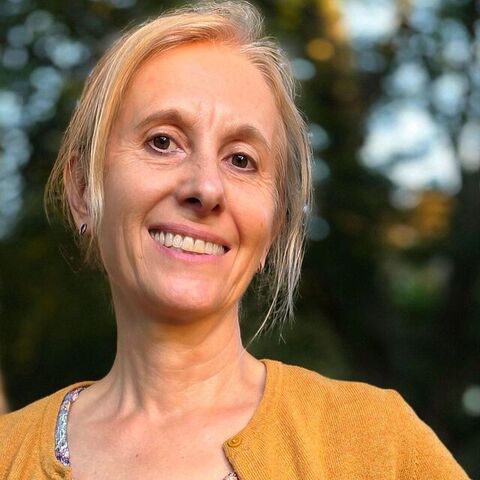
My name is Lucia.
Today I will be guiding you through a practice called Dhirga Pranayam.
Dhirga Pranayam is the Sanskrit name for a breathing practice known as three-part breath,
Or full yogic breath.
For simplicity,
I will refer to it here as Dhirga breath.
Dhirga breath gently draws the mind inward,
Allowing thoughts to soften and fade into the background.
By breathing slowly and deeply through the nose,
Fully filling and emptying the lungs,
We invite the body to release tension and settle into a calmer,
More grounded state.
This is a very safe and accessible breathing practice,
Suitable at any time of day or night.
Practicing in the evening can be especially supportive,
Helping prepare the body and mind for rest and sleep.
Dhirga breath is deeply soothing.
It supports efficient and full breathing.
It helps strengthen the diaphragm,
Improves lung efficiency,
And may have a calming effect on digestion by relaxing the abdomen.
Many people also find that regular practice supports stress reduction and a greater sense of ease in the body.
If you are new to breathing practices,
This is a wonderful place to begin.
It forms the foundation for many other pranayama techniques.
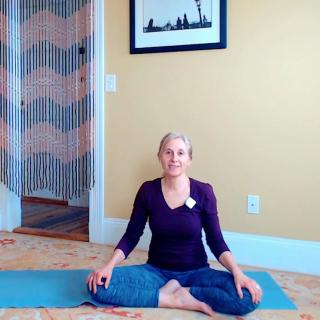
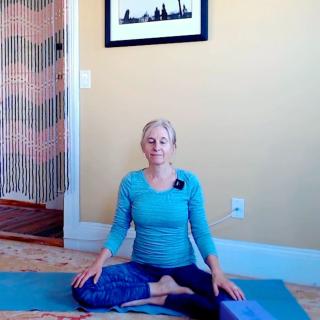
Find a posture that feels supportive to you.
You might sit on the ground on a cushion with your legs crossed,
Or kneel with a folded blanket under you,
Or sit in a chair.
If you are seated in a chair,
Lean slightly forward so you are not leaning against the backrest.
Take a moment to notice what position your body is asking for.
Allow your seat to feel grounded and balanced.
Feel your weight settling into the ground or chair beneath you.
If it's comfortable,
Close your eyes.
Take a few slow,
Deep breaths,
Allowing the body to soften.
Notice the points of contact between your body and the ground,
Your feet,
Your seat,
Or any other place that offers a sense of stability and support.
Bring your attention into your body.
Lengthen and straighten your spine,
Letting the tailbone release downward and the crown of the head to lift upward.
Explore the inner space of your body.
With the spine as the central support of the body,
Let the body settle.
Allow the rest of the body to relax around it.
There is nothing to fix or change.
Befriend your body.
Let it be at ease.
Now bring your awareness to your breath.
Feel how the breath moves through the body and the sensations that arise with each cycle.
Notice how fully you can be present with each breath,
A simple experience of breathing,
Just as it is.
As you inhale through the nose,
Let the breath fill your lungs.
As you exhale through the nose,
Let the breath flow out long,
Slow,
And smooth.
Now begin to deepen your breath.
Place your palms on your abdomen,
And as you inhale deeply through the nose,
Feel your abdomen expand into your hands.
As you exhale,
Let the body soften.
Let your exhalation be long and slow.
Repeat this abdominal breath several times at a pace that feels natural.
This first part where the breath expands the abdomen is called diaphragmatic breathing.
Next,
Bring the palms to the sides of your ribcage.
As you inhale,
Feel the breath expand your ribcage,
Expanding it in every direction,
Front,
Sides,
And back.
As you exhale,
Allow the ribs to soften and gently recoil.
Explore this breath for a few rounds,
Feeling the ribcage expand as you inhale,
And relax and recoil as you exhale.
This second part where the breath expands the ribcage is called intercostal breathing.
Now,
Place your palms on your upper chest,
With your thumbs just below the collarbones.
As you inhale,
Notice if you can feel the breath fill the upper part of your lungs,
Feeling the upper chest rising.
Then relax into each exhale,
Allowing the chest to soften and release,
Letting go a little more with every breath out.
Take a few more breaths into the upper chest,
Deepening your breath on the inhale,
Noticing the subtle lifting of your chest,
And then releasing back down and letting go with each exhale.
This third part is called clavicular breathing,
Where the breath fills the upper part of your lungs,
Lifting the upper chest just below the collarbones.
Now we will combine all three parts into dirga breath.
Keep one hand resting on your chest,
And place the other hand on your abdomen.
As you slowly inhale through the nose,
Allow the breath to expand the abdomen first,
Then the ribcage,
And finally the upper chest,
Moving gently upward like a wave.
As you exhale,
Let the breath release completely,
Gently engaging the abdomen at the end of the exhale to fully empty the lungs.
The exact sequence on the exhale isn't important.
What matters most is allowing the breath to flow out smoothly and completely,
Releasing any residual air with ease.
Continue breathing in this way,
Slow,
Steady,
And without any forcing or straining,
Allowing the breath to move naturally through all three parts.
Explore how much movement you can create with your breath.
Keep your spine long and the shoulders relaxed.
Find your own pace.
A slow,
Deep breath in through the nose,
Letting the abdomen,
Ribcage,
And chest expand,
And softening the body with the exhale,
Letting your exhalation be long and slow.
Find your own rhythm.
Let your inhale be slow and deep,
Then each time you exhale,
Empty your breath completely.
Keep your awareness gently anchored on the breath,
Each exhalation a soft release,
Each inhalation a fresh beginning,
Drawing your awareness into a new moment,
A new breath.
As your breathing muscles warm up,
Your capacity to breathe will be more full and your breath will be deeper.
Continue the three-part breath for several cycles.
A slow,
Deep breath in through the nose,
Softening the body with the exhalation.
Let your breath be slow,
Steady,
And smooth.
To bring this practice to a close,
Release any conscious control of the breath,
Allowing the breath to return to its natural rhythm.
Let your attention drift into the body,
Feel all the details,
All the effects of your practice,
Any sense of calm,
Grounding,
Or quiet present.
Observe the quality of your mind.
Does your mind feel more spacious?
Notice if your thoughts faded into the background.
Nothing to analyze,
Just noticing.
When you are ready,
Gently open your eyes.
Take your time transitioning,
Allowing your mind to become active again at its own pace.
I hope you found this practice supportive.
You can return to Dhirga breath whenever you need a pause,
A reset,
Or a gentle way back into your body.
Even a few minutes can make a difference.