This meditation has been created to help you turn on your relaxation response.
We turn on this relaxation response by allowing our vagus nerve to do what it's designed to do,
By focusing on yoga nidra techniques and other practices that will help your body move into the parasympathetic state,
The part of your nervous system that allows you to feel like you can rest and relax.
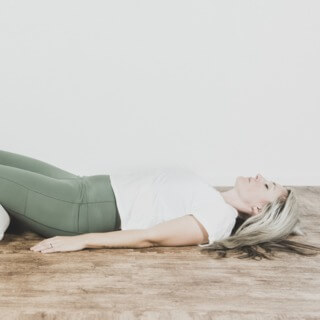
It's time to get really comfortable into your favorite position for yoga nidra.
If you're new to the practice,
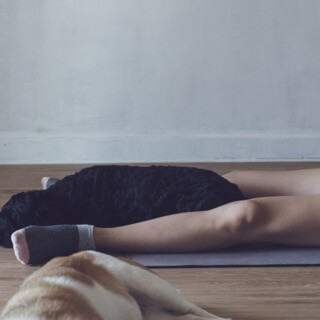
The traditional pose is lying down,
But the most important thing to remember is that you find a position that works best for you.
Notice if you are holding any tension in your body from the way that you have yourself positioned,
And see if there is an opportunity for you to invite in support,
Welcoming in props such as pillows or blankets to help allow your body to become really comfortable.
You could consider covering up with a blanket and covering the eyes with a soft cloth,
Or just simply closing or taking a soft gaze.
And now that you've settled into this position,
Give yourself a moment to start to tap into what your body feels like.
Scanning from head to toe,
Noticing the tone of your muscles,
Whether there's tension or relaxation present.
And doing this scan without judgment,
Simply noticing what you notice,
Taking inventory of how you're feeling.
Notice the quality of your mind,
Notice your breath,
Beginning to pay attention to the detail of the rhythm of your natural breath.
This rhythm that happens over 20,
000 times a day,
And is a direct link to your mental state and the state of your nervous system.
And beginning to shift your natural breath into a breathing pattern that will help you begin to initiate that relaxation response.
When you're ready,
Breathing deeply and slowly in through your nose for a count of four,
Expanding the lungs,
Feeling the breath come from the low belly.
Hold the breath and then slowly exhale for eight,
Letting everything go.
Repeat that again when you are ready,
Inhaling through the nose for four,
Slowly and deeply from the diaphragm,
And allowing the breath to let go.
Leave the body moving up and out for a count of eight,
Completing that again for two more full inhales and exhales at your own pace.
And now we'll encourage your attention to drift away from your breath and find the top of your head.
And there's an invitation here that as I move through different parts of your body,
And you allow your attention to land and move from one body part to the next,
At each body part I name,
You welcome in a sense of heaviness.
Allow your attention to move from the top of your head,
To the center of your forehead,
Both eyebrows,
Both eyes,
And feel the eyes move down and back,
Resting in the sockets,
Heavy and full.
Notice the tip of your nose,
The air moving in and out your nose,
The upper lip and lower lip,
Moving to your teeth,
Upper and lower,
Welcoming heaviness to your entire tongue,
And settling your attention to the center of your throat,
Hollow pit of your throat,
Center of the chest,
Both sides of the chest,
Right and left,
Both shoulders,
Both elbows,
Both wrists,
Palms of the hands,
Backs of the hands,
And awareness to all ten fingers at one time,
Heaviness placed to all ten fingers.
Become aware of underneath both of your arms and allow that awareness to move to the sides of the waist,
Both hips,
Both knees,
Both ankles,
Tops of the feet,
Bottoms of the feet,
All ten toes.
Begin to become aware of the entire body,
The whole body at once,
The entire body and your awareness on your body,
Allowing this attention to offer nourishment to every nerve from head to toe.
Allow your awareness to move away from your body,
Settling your attention on your breath and the tailbone,
Allowing this dual awareness of each natural inhale and exhale as you also concentrate on the tailbone.
And then if it feels good to you,
Begin to feel,
Sense,
Or imagine that the breath moves up the spine from the tailbone to the crown of the head.
And then as you exhale,
The breath moves back down.
The spine becomes a channel for this energy of your natural breath to move,
Allowing all of your attention to be placed on your natural breath.
And sensing into this breath moving up the tailbone,
Up the spine,
To the crown of the head,
And then moving back down in a way that feels good to you.
And then let go of your breath and drift all of your soft attention to behind your forehead,
Being nurtured by this space of vast awareness that permeates in all directions.
Take a deep breath in through your nose.
Exhale,
Sigh it out your mouth.
Repeating again,
Inhale through the nose.
Exhale,
Sigh it all the way out the mouth.
Begin to become aware of the outline of your body.
Allowing the skin to become a subtle boundary where you become aware of the space that your body is taking up.
Moving back from formless to the physical body.
Begin to open your senses,
Allowing them to move from your inward focus to what's happening outside of you.
Sensing what you notice.
Sensing any sounds that you hear that surround you.
Beginning to have a subtle awareness of the space that you're in and the walls that surround you.
Welcoming in small movements like moving fingers and toes.
And continuing to take your time to awaken the body.
Moving slowly and allowing this time of waking the body to be as sacred as the practice of moving into the state of yogic sleep.
Taking as much time as you need.
Before opening your eyes,
Tuning back into that inventory that you took at the beginning of class.
Noticing the tone of your muscles.
Noticing the quality of your mind.
And creating an invitation to lock this feeling in.
Noticing where it is that you feel what it is that you feel.
How it feels.
And see if you can lock it into place or create a pathway for you to access this feeling again.
Maybe an image comes to mind or a feeling or a word.
Allow your subconscious mind to offer you what it is you need to tap back into this calm state.
To serve as a reminder or anchor for when you feel yourself drifting away from the state that you want to be in.
Continuing to take your time to awaken the body as your practice of yoga nidra is now complete.