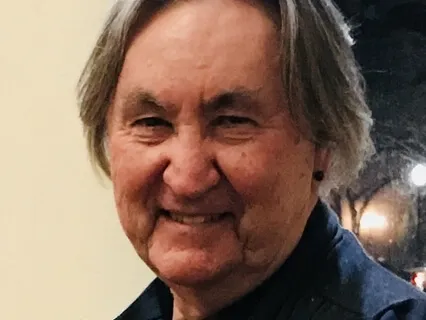
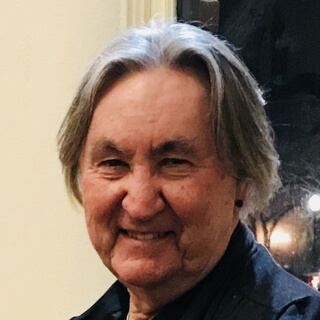
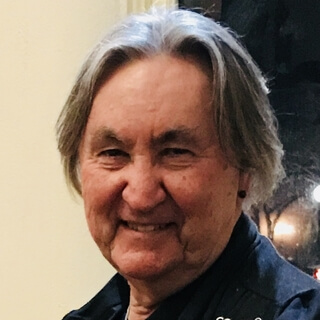
Carol Wilson and Sally Armstrong,
Who both teach at Insight Meditation Society in Barre and also at Spirit Rock Meditation Center in Northern California.
And as we do at the opening of any retreat that's based in the Theravada tradition,
As well as many city groups and as we do here sometimes,
We open the retreat with what's called the taking of the refuges.
The three refuges in Buddha Dharma,
Also known as the Triple Gem.
And as we did the ceremony that I've participated in and sometimes led many times in the past,
I suddenly began to become sort of curious to know a little bit more about the nature of that tradition,
Having done it a lot,
But seldom really having looked closely at what that means,
Where the tradition comes from,
What it has meant historically in the different Dharma traditions,
What it means today in the different Dharma traditions and how it's understood.
And then I think in some ways more importantly what it means to us,
How do we relate to it.
And so this evening and for the next two times that I'll be teaching,
Like I said,
I'm going to be inquiring into this tradition a little bit.
I'll be offering a kind of an informational framework or structure and then also offer some questions for us to reflect on together in terms of how we relate to this particular concept and sort of what refuge means to us.
So in the Buddha's time,
As has been the case going forward,
There was this simile,
It was often used for anyone who is going to get involved in some form of deep spiritual inquiry,
This notion of being on a journey or on a quest,
Of going forth.
The author Joseph Campbell,
He's probably best known for kind of explicating the works of Carl Mustapha Young,
The Swiss psychiatrist and theorist of basically spiritual psychology,
But has done quite a lot of thinking and writing in his own right as Young did on questions of myth and what not.
When he talks about,
He has a book called A Hero with a Thousand Faces and some other writings as well,
He said if you look at myths,
Not myths in terms of people making up stories to try to get you to believe something that really isn't true,
But rather notions of kind of fundamental stories that underlie the human psyche and that also underlie human culture.
This as a way that culture is used to teach each succeeding generation in that culture what some of the core values and beliefs are that teach things about how to live courageously and wisely in society and on the earth.
He said that one of the things that all of these traditions or all of these approaches seem to have in common is a kind of a four step process that the person on the quest,
The person who is the hero of the thousand faces has in common.
The first is a sense of the person being called somehow or another they are kind of tapped on the shoulder in whatever their circumstance is and informed that there is something they need to be doing rather than just sitting around twiddling their thumbs and cleaning the kitchen and doing the crossword puzzle and mowing the lawn.
But that there is really some kind of greater meaning or purpose or something that they really should be devoting themselves to.
So the first notion is this calling whether it comes from an external source or whether it is a still small voice that rises within and says you know something is missing.
There's got to be more to it than this.
Or that something is really off,
Something needs attending to and whatever I was taught by my culture,
My society does not seem to be equal to the needs that I feel.
So this notion of calling,
Of a calling of being called,
Of being summoned.
First aspect of this experience.
The second is going forth,
Leaving the comfort of the situation that one finds oneself in.
And moving forward into the unknown.
In many cases towards something one knows not what.
Having a strong feeling that they are being drawn forth,
That they are being drawn out,
That they are going into the world,
Leaving their comfort zone.
Entering into a realm of,
Voluntarily into a realm of uncertainty.
Being something that they may not be entirely clear of.
But they know it's something that's important and they know that it's out there and they know they need to go look for it.
So being summoned,
Going forth.
And then third aspect is what's sometimes called heroic struggle.
That there is something that's encountered that needs to be confronted,
That needs to be worked with,
That needs to be sorted out,
That needs to be understood,
That one needs to really apply one's energy and attention to,
To overcome or to work through or surmount.
And then the fourth aspect is resolution.
As a result of this struggle,
Of this effort,
That there is a final resolution,
This settling.
Just like T.
S.
Eliot's lines in the Little Giddings,
The Four Quartets,
We shall not cease from exploration.
And the true meaning of all our exploring is this,
To return to the place from which we began and to know that place for the first time.
So going forth,
Exploring,
Seeing what's there,
Going through whatever struggles you need to,
And then coming to that place of knowing,
That place of wisdom.
So it might mean coming right back to where you started,
But a different person with a different way of seeing the world and a different way of understanding who you are.
And so that's very much,
Sort of tells the story of the Buddha in a way.
He was raised in a princely setting.
His father was kind of a head of a minor fiefdom in northeastern India at a time when India wasn't yet India.
It was just sort of like the medieval fiefdoms before they became the modern nation states.
And it was a time of real tumult,
And it was a time of a lot of intellectual and spiritual ferment,
And it was a relatively prosperous time so that there was excess wealth and people who wanted to go forth and undertake spiritual seeking,
There was support for them doing so.
And up until age 29,
He had been being groomed for the leadership of his dad's fiefdom.
So he had been held and raised in a place of shelter and a place of refuge for all that time where he was very well fed and all of his sense desires were immediately met and he had become well educated.
And he basically lived in this kind of royal bubble where the staff and his family were not very carefully shielded from the ills of the world.
And so for a lot,
Up until young adulthood,
He had no real idea how the rest of the world worked and what it was really like to be a commoner in his own little kingdom there.
Until one day he goes out with one of the provisioners and they're going through town on the rounds to make the purchases for the support of the royal household.
He sees things that he's never seen before.
He sees the abject poverty that most of the subjects live in.
He sees that a lot of them are diseased,
That they are barely getting by,
Their needs are barely being met,
That there is infirmity,
That people are aging without adequate support for that process.
And he sees for the first time dead bodies,
Things that had been very carefully shielded from him for all of his early years.
And so there was something about the shock of that experience that caused him to see,
To understand,
That he had been living in this artificial environment all of his life.
And that what he had been told in terms of how things were versus how he really saw things to be in the wider world was so traumatic for him,
Such a shock,
That he decided that where he had been living in the comfort of the royal household was really not a place of privilege anymore,
It was a place of imprisonment.
And that in order to truly discover what it meant to be alive in the world,
And also why there was so much suffering in the world and what might be done about it,
He could no longer stay in the castle.
He had to go forth.
So seeing old age sickness and death and the breadth of suffering in the world was his calling.
And he felt it incumbent upon himself to go forth and to explore more deeply what it meant to know sort of all walks of life in his society.
And also if there were means by which the suffering that he saw all around him when he was out in the real world could be ameliorated.
Not only the physical suffering,
But what he saw to be the mental and spiritual suffering of the people in his community as well.
And as he came back to the palace he realized that a lot of people that were there were also suffering spiritually,
They just didn't know it.
Because they were living in such comfortable surroundings.
So he goes forth,
Goes off into the boonies,
And he spent six years hanging out with various leaders of various sects and whatnot,
Just different kind of religious movements and whatnot.
And gurus that were teaching different techniques and had different cosmologies,
Some of the traditional ones that were part of Indian society and some of the ones that somebody just sort of cooked up.
And the whole time that he was doing this he was basically just trying to answer two questions.
One is,
Why was there so much suffering in the world?
And in this regard he was not so upset or hung up on the mere facts of what happens to a human body over the course of the lifetime.
That we age,
That we are subject to illness and infirmity,
And sooner or later we keel over and that's that.
But it wasn't so much the fact that that happens,
It's the mind's reaction to it.
Why did we find ourselves so disturbed by these truths?
Why did we find ourselves so anxious and withdrawn?
Why do we exert so much effort trying to pretend that they aren't true?
Trying to avoid them?
Why are we upset by what you call the exigencies of life?
We're social beings,
We're connected with each other.
And knowing that others,
Our loved ones and others,
Are likewise subject to illness and infirmity and death,
We find that very stressful,
Because it means that those we love and are attached to,
Either they're going to go or we're going to go.
And so there's a lot of loss involved in addition to one's own predicament,
One's own situation.
And he felt these things in his own mind every bit as much as he saw them in anyone else's.
So different teachers had different kind of sticks out there in terms of what they were putting forth and what they were trying to get people to be interested in.
He after all this period of seeking decided that the answers weren't to be found out there anywhere at all,
They were to be found from inner exploration.
And so after wandering around and learning all he could from these other teachers and what not,
And basically not finding it adequate to his own needs,
Then he decided that it was time to really go deeply inside and really have a close look at his own mind and see if he could discover as a result of that where this suffering was coming from and what could be done about it.
So at his time there were all these various traditions,
All these various practices,
All these various gurus out there.
And spiritual seekers going forth would do sort of what he was doing.
They go around,
They kind of do a sample or they check out this one and they check out that one.
And sooner or later they find some tradition or teacher or what not that they felt they kind of clicked with.
And they would go to be with that teacher.
Basically adopt that teacher's world view,
Investigate it more thoroughly,
Study that teacher's teachings,
Join that teacher's spiritual community.
So this idea of going for refuge with the teacher was not so uncommon a one at the time.
And it was kind of a big deal because not only were you kind of surrendering yourself to whoever this particular teacher was,
But in entering into the community at this time of real tumult in what was to become Indian society.
It was very boisic,
There was a lot of armed conflict and there was a lot of medium sized fiefdoms,
Gobbling up little fiefdoms and then the medium sized fiefdoms would get gobbled up by a bigger one.
It was all about the big fish eating the little fish and 300 years later the emperor Shok would finally unite India.
He was the big fish,
He was the big tuna.
And he is also the first sort of national benefactor of Buddha Dharma.
He was the one that commissioned the writing down of figuring out what the Buddha really said and didn't say.
He was the first one that commissioned the kind of bringing together of the nikayas,
Of the discourses of the Buddha and the organized form that we have today.
So there was nothing particularly unique about what happened with the Buddha.
At the time that he became enlightened,
Decided that he had something to teach,
Gradually accumulated some followers.
The followers would listen to his talks and they would remember his talks,
They would start chanting them.
So the teachings,
The Dharma began to take form and the community itself began to take form.
So when people would come and decided they wanted to join the Buddha's community,
They would make this specific gesture of coming forward,
What's called going for refuge.
You know I take refuge in the Buddha,
I take refuge in the Dharma,
I take refuge in the Sangha.
Especially for women at that point in history this was a very big deal.
Because if a woman was not married into a family and had a secure family situation,
If for whatever reason she was not married or had been abandoned or was being severely abused,
There really wasn't much of any place for a single woman to go in Indian society at the time.
It was a position of extreme vulnerability and they were in great danger at all times.
And there was a big squabble at the very beginning in the Buddha's Sangha in that a lot of the different traditions and sects out there,
They wouldn't allow women to join at all because one of the,
Part of the thinking at least in the really kind of conservative Hindu circles was that women,
I'm sure there's no relationship at all to anything in modern society,
They believed that women were incapable of enlightenment,
That they could get up to a certain point.
And then the final step,
They had to incarnate as a man in order to be able to attain one with a Godhead,
Right?
And so when the Buddha would talk about the various holy people that would come to talk and debate with him and whatnot,
He would talk about various recluses and brahmins.
Those were two very different kinds of people.
The brahmins were the scholars of the religion at the time,
Very learned,
And they were the ones that knew the chants of the Hindu tradition and whatnot.
The recluses were the people like him,
The ones that had been out in the bunnies fasting and doing all kinds of yogas and smoking whatever came along and doing whatever they could to play with their consciousness a little bit so they could attain a different worldview.
And so the brahmins,
Or the ex-brahms that were in his outfit,
They weren't too keen on having women around because it certainly wasn't part of Brahmanism at the time.
But the other view eventually prevailed,
Which was something that was pretty unusual at the time for these kind of spiritual movements,
Is that women were invited in regardless of rank.
And once they had been invited to join the Sangha and become nuns,
They came under the protection of the Buddha,
And they came under the protection of the Sangha in a way that made them inviolate.
So it really was a place of physical sanctuary,
Physical refuge at the time.
It's one of the things that really made the Buddha Dharma Sangha kind of unique at the time.
The other thing that made it unique is that anyone from any caste in Indian society was welcome to join.
It was a caste,
You know,
Whatever rank,
Whatever kind of uniform you came in with,
Off it went.
Because the only thing any of them wore were rags,
You know,
People would donate old clothing and they'd take it apart and stitch it back together again in their robes and they'd dye the robes with the different clays that they found along the riverbanks there,
Which for the most part were kind of ochre in color and sort of burgundy and the yellow that you see today.
And everyone wore the same thing,
You know,
And they all shaved their heads.
And so it was a very,
Very egalitarian community at the time.
But it was also a unique one at the time.
So over time the act of going for refuge was extended to lay followers of the Buddha as well who would take refuge in the Buddha and the Dharma and the Sangha.
The main difference was that for the monastics who wanted to join the Sangha,
There were about 230 rules they had to live by that governed every aspect of their day from the moment they woke up and washed their face and,
You know,
Went to the john and cooked breakfast and washed the day.
Every aspect of their day had a rule to govern it as a way of trying to foster mindfulness and also to inculcate values of virtuous behavior,
Personal integrity.
Yes,
Please.
Would these rules be figured out or conceived on by the Buddha himself?
How did they come to be?
That's a very good question.
The way they came to be was this.
He would lay out his basic teachings and so the followers that would join him and community would kind of pledge to,
You know,
Since they were taking his refuges,
They would pledge to try to live the Buddha's teachings in their daily life as best they could.
You know,
His teachings about the need for kindness and compassion.
That the heart being glad and by the happiness of others,
Being able to live in peace,
Right?
And they would give it a shot and inevitably they'd blow it somehow or another,
Right?
They'd fall off the wagon,
They'd get into conflict with each other over this,
That or the other thing.
And whenever they did,
They would come to the Buddha and they would say,
Well,
You know,
We've got this particular issue that arose.
How do you recommend that we apply your teachings to sorting out this aspect of living together?
And he would give them some instruction.
And then somebody was hanging out there making note of this.
And eventually there is this great mass of notes that were made,
You know,
Because every time he'd make one of these pronouncements,
One of these rulings,
It would get recorded orally and it would become another whole other set of texts that would be chanted.
Eventually it was amassed into a set of texts called Lavinia.
And that mass of texts is still followed today by 230 preset monastics in the Southern Buddhist countries.
So we talk about the Pali Canon,
The three baskets,
The Tṛbhitaka.
One is the discourses,
The transcripts of what the historical Buddha's actually thought to have said.
Second is Avidama,
Which is basically a reorganization of what the Buddha said within the structure of essentially a form of Southern Buddhist psychology.
Kind of DSM manual for a lot of Buddhism.
And then the third is the Venya,
The rules of conduct for monastics.
That's what constitutes the Pali Canon.
So it was extended to lay people.
Yes?
Excuse me,
I found this so fascinating.
Nobody has built it,
So what happened to the Buddha when he got it to come to what it was doing?
That's a good question.
Or is that known?
Perhaps that's not known.
It's probably not known,
Because within the Sangha he was the one who was thought to be the wisest and the one with the most compassionate heart.
And so they basically considered his judgment to be wiser and more open-hearted than anyone else's.
There were,
From time to time,
He was confronted actually regularly within the Sangha by people who had been there a while and got their nose out of joints somehow or another and got into a debate with the Buddha about this or that.
And then everyone would watch very carefully to see what was happening,
Whether this person had pushed the Buddha's buttons and he was going to read in the riot act.
He'd mouthed on his head.
And when people broke the rules,
If they went out and got drunk a lot or if they committed adultery with some lay person's wife or whatever,
You could get tossed out for that.
For doing great harm to a member of the Sangha or anyone else,
You could get tossed out for that.
But short of that,
If someone wanted to challenge the Buddha on a sort of a point of doctrine or something like that,
They would debate it.
They would talk about it.
And the way the discourses read it,
That ultimately whoever it was that had decided to get in his face would realize the error of their ways.
So you're right,
We don't know if there were times when he flew off the.
.
.
There are actually a couple of places in the discourses where he kind of flies off the anal,
Really chews somebody out and there's two schools of thought about that.
One is that basically the Buddha can do no wrong.
It was papal infallibility essentially,
And that he did it for this guy's own good or whatever.
And the other view is that even though enlightened,
The Buddha would always talk about when Mara would assail him,
The evil one,
Which is basically his shadow side,
If you're going to use Jungian terms,
That had not gone away,
It had just been substantially disempowered.
And so another way of understanding those texts is the Buddha just flew off the handle,
Lost his temper.
Kind of like Jesus did with the money changers in the temple and whatnot.
He was mostly on his game and then every once in a while,
Things would get crazy and he'd lose it.
But he was certainly regarded as having more on the ball than anyone else in the community,
Which is why people would sort of go.
.
.
So that notion of going for refuge has actually come down through the ages to be with us today.
It's held differently in different traditions.
In the Vajrayana tradition,
For instance,
In the Tibetan,
There is,
Especially in certain schools of Tibetan Buddhism,
They place a very significant amount of emphasis on the relationship between the yogi,
The student,
And the guru.
And some traditions,
Certain high teachers are regarded as actually being reincarnations of previous masters down through the ages who kind of come back around.
And so in that tradition,
When somebody goes for refuge with a particular teacher,
It's a very big deal.
Sometimes it's a lifetime commitment,
Or at least for a substantial period of years.
And what they do is completely surrender themselves to the spiritual caring of the teacher,
The guru.
They give all their instructions to the letter.
And so when they go for refuge,
It's to a specific teacher,
In a specific lineage,
In a specific school,
As for the purpose of attaining enlightenment in this lifetime.
That's the goal.
That's kind of what they're there for,
Sort of an accelerated one-year program.
Not one year,
But one lifetime program for attaining the ultimate goal.
Which means that you better choose your guru carefully.
Because some of them,
Of course,
As is the case,
Seem to still have a few shadows of their own.
It implies a high level of commitment and mutual responsibility within that tradition.
The Theravada,
It's held a little differently.
There's not so much emphasis on surrender to a particular teacher as there is surrender to the teachings.
So teachers aren't sort of deified.
One interesting thing about the monastic sangha in the Theravada,
However,
Certainly in Asia,
When one takes robes,
And if it's not just for the weekend or a couple of weeks,
Or you know,
Like go off,
Some lay people will take robes for a couple of weeks or a month or three months or a year,
And kind of lose some weight and clean up their act a little bit,
Get off the bottle,
Whatever,
And maybe learn some dharma.
But for others,
For whom it's a lifetime commitment to enter the monastic sangha,
Among the things they do,
Is they learn their lineage,
Their root teacher lineage,
Going back to the Buddha.
So that's like somewhere between 75 and 80 generations of teachers.
And one of the things they have to learn to do is to recite the name of every root teacher in every generation,
You know,
And the particular lineage that they're in going back to the Buddha.
So for them,
When they enter the sangha,
Take refuge in the sangha,
It still has that real significant weighty aspect to it.
You're joining this 2600 year old living tradition that dates back in history to the time when the Buddha first taught.
So in Asia and in the West now,
The emphasis not so much on the teacher,
But on the dharma and the sangha,
The spiritual community,
And on what some teachers in the tradition call the teacher within.
The Thai forest meditation master,
Ajahn Chah,
Used to talk about what he called the one who knows.
And what he meant by that was not some persona within the consciousness,
Right?
He was talking about your own higher wisdom,
Your own capacity for knowing what is true,
Your own capacity for doing the same things that the Buddha did,
And ultimately with the same result.
So in all of these traditions,
Both historically,
Certainly now and in the present day,
I found it useful from my own study and my own practice to recognize and work with the understanding that each of these three refuges has an outer as well as an inner aspect.
So there's an outer aspect to taking refuge in the Buddha,
The dharma and the sangha,
And a kind of an inner aspect as well.
In terms of taking refuge in the Buddha,
The outer aspect can consist of,
When you take refuge in the Buddha,
Of basically remembering the historical Buddha,
Remembering that it was a real person who lived and who taught and who had followers and who,
Along with some other teachers like Rasa and Jesus,
Changed the world,
Changed the course of human history.
There is also the memory of what he told his followers at the time.
He said,
I am not a god.
I am not a demigod.
I am not divine.
I am a person just like you.
What I have done,
You can do.
I would not ask you to do what I have done if I did not think you could.
So when one aspect of taking refuge in the Buddha externally is just that,
Just a person in the world who discovered something within his own consciousness,
He said,
My head is wired just like yours is.
It was just through this assiduous exploration that I was able to discover these things.
And I can tell you what I discovered,
But my words will be meaningless unless you begin to discover them for yourself,
Unless you begin to discover them too.
And so that is where we kind of begin to move from the outer to the inner,
The inner aspects of what it means to take refuge in the Buddha.
What that inner aspect means is that we are learning to take refuge in the Buddha within each of us.
I had this remember,
I was in Thailand on a volunteer trip last winter.
We went to a couple of monasteries and one was a village where we volunteered to teach children English,
But we went to a monastery and I was kind of caught up in how beautiful it was.
There were monks chanting over us for a half hour and the senior monk on top,
He was taking questions and I said,
I just couldn't help but resist thinking,
Have any of my teachers been through here?
So that is why I asked him in front of the senior audience and he looked at me and he smiled and he goes,
Not important.
So I went,
He goes,
It's all in the Dharma.
And then I did get a little present time to ask another question,
But he,
So I just wanted to share that,
He said not important.
The Thai root teachers,
The ones that had these profoundly transformative effects on people like Jack Kornfield and Joseph Kolsky,
They're all dead.
Ajahn Chah was certainly one of them,
Ajahn Buddha Dasa was another.
And one of the ones who is still alive is a fellow down at Wat Tham Sua,
Ravi province named Ajahn Junian.
So most of these people have passed on.
That's also basically my own teaching lineage,
And then to a lesser extent some of the Burmese teachers as well.
But he knew exactly,
I was fishing not important.
No,
That's just it.
Really,
This is real,
Just like you said.
It's the living Dharma that matters,
You know,
And how if it was conveyed in a way that,
You know,
You could make some sense of it.
So we have this tradition of taking refuge,
And as we think about it for ourselves now,
It essentially invites two questions.
One is,
From what do we seek refuge?
Where are we seeking protection from?
And the other is where do we seek this refuge?
And I'm not talking about Buddha Dharma now,
As I say,
I'm just talking about life in the world.
Life in the world as it was in the time of the Buddha before the Buddha started teaching,
Before he became enlightened,
You know.
And in terms of the human condition,
What are some of the things from which we seek refuge in the present day,
Either personally or socially?
What do you feel you need protection from?
I think in general it's the stress of daily life,
You know.
Stress of life.
It's one of the translations of the word dukkha.
Yeah,
Refuge from dukkha.
From the unsatisfactory.
Literally,
As that word is translated,
That which is difficult to bear.
You want refuge from that which is difficult to bear.
Please.
The discursive mind.
Yes,
Monkey mind.
Where's the off switch?
Or at least the volume knob.
How do I stop this incessant chatter,
What the Buddha called I-making and me-making?
Sometimes it seems like that's all the mind can do.
And there just doesn't seem to be any way to shut it down.
Beautiful,
Absolutely.
Refuge from the self,
You know,
Or at least those aspects of the self that we're not thrilled with.
From what else?
Does anything else come to mind from which we seek refuge?
From our body itself.
From this mind-body process.
Yes,
Of course.
Of course.
You know,
Just as the Buddha went forth and saw that,
You know,
We seek refuge from illness.
Seek refuge from aging.
You know,
Our body starts dying and we're told by physiologists at about age 25.
I mean,
It's from about that point onward that it's basically working like crazy to maintain itself.
You know,
It spends that first 24,
25 years getting to full ripeness.
And after that,
You know,
People wind up spending,
You know,
Vast sums of money and a lot of their efforts from there on trying to stretch out that period of time when we pretend we aren't aging,
You know,
Until it becomes all too obvious.
Seek refuge from our past.
Thank you very much.
That was one of the ones the Buddha talked about.
He said,
Yeah,
He said we know that in the past we have done unskillful things.
So sometimes it's just the memory of the unskillful things that we've done.
At the time of the Buddha,
It was just understood in terms of karma,
Cause and effect,
What goes around comes around,
You know,
That things that you have done in the past that were unskillful,
You may yet be going to experience the negative consequences of.
So people would get very anxious about,
You know,
What might befall them in the future as the result of unskillful things they did in the past.
I've either read or cobbled together two quotes,
But it stays with me and it is,
Spiritual freedom is giving up the hope of ever having a better past.
Yes.
Yeah,
Jack Kornfield says that a lot.
Yeah,
I like that one.
It's great.
But yeah,
Please.
For me it's seeking refuge from the difficult work of trying to heal broken relationships with family and friends.
When you feel like you're being skillful,
Yet the other folks won't take a step forward.
Things,
People and others are not behaving in the way you would like them to.
Right.
And I just add to that forgiveness.
Say it again please.
Forgiveness.
I was just going to add to what he was saying.
Forgiveness in terms of not something you seek refuge from.
Seeking refuge from both.
From the painful relations that you have with others?
I just keep coming up with the word forgiveness.
Of others that we feel we can't change.
Yes,
Yes of course.
Well that is actually one aspect of refuge in the way the Buddha uses the term.
So we kind of reflected a little bit on some of the things that we would just assume are not part of our life.
That we don't want in our life.
That we want to do something about.
Classically in the Buddha's time there is this sense of ambient anxiety.
That's one of the diagnoses in the DSM now.
And this ambient anxiety at the time of the Buddha,
Some of it was just what you were talking about.
It was fear of the future karmic effects of past activities.
Fear of loss of nutriment,
Which is like basically fear of starving.
Fear of not being able to see yourself adequately in this world.
Things of that nature.
So these are some of the things from which we seek shelter from the storm.
Where are some of the places that habitually we go for refuge?
Aside from the Buddha.
Drinking,
Drugs,
Things that distract us.
Netflix.
One of the things that is called in the Dharma conversations is what is called going through a sense door.
That you seek refuge by going through a sense door.
So if you are basically like,
There is a lot of research right now going on in Israel about the therapeutic uses of cannabis for PTSD.
Solid research.
Very exciting stuff.
Of use of what?
Of cannabis.
Cannabis.
Yeah.
For combat veterans dealing with PTSD.
Both ameliorating the symptoms immediately after you experience it and all of a sudden it's over the long haul.
So a lot of the people I was in Vietnam with were self-medicating like crazy.
At the time we just called it getting stoned.
But in fact there was something going on there in terms of doing what was possible to try to cushion the horrors that were being experienced over there.
It was an effort to going out to one of the sense doors of the mind and of the senses trying to find shelter from the enormity of what was going on in the world.
There are foods that we call comfort foods.
Why do we call them that?
Chocolate.
Because it's a place we go for refuge.
Well actually there are things that happen when you eat chocolate that in fact do kind of tend to chill you out a little bit.
But it's just that once more.
It's something that makes us feel comfort.
That makes us feel cared for.
Please in the back.
I think refuge is a gem.
Uh huh.
Exercise.
Compared to some of the others not so bad.
But it's still a way to try to shield oneself to some extent.
It's fairly wholesome in so far as the body is concerned.
But if we find ourselves doing any of these things beyond a beneficial effect when it starts to feel like it's getting kind of obsessive.
Like we're doing that in order to distract ourselves or keep ourselves from looking at some difficulty.
Right?
Yeah,
These are a lot of the places we go for refuge,
For comfort,
For protection.
Yeah?
For me it's if I just read one more book or go to one more lecture or go to one more retreat or bed or worship,
Send a book to a family member or friend so they can do themselves.
So they can get their act together and finally be worth talking to.
Right.
Well I just,
You know it's all the little habits in our day.
Like I like to have a chai tea when I go to work.
If for some reason I can't have that,
I'm not happy.
I find that I take refuge in all those little habitual things.
The value of routine,
Absolutely.
These are great examples.
I appreciate everything everyone has come up with because we do it.
And the internet,
Absolutely.
That's another one.
Watching movies a lot.
Anything to distract one.
Anything to focus the attention on something other than what actually wants to be looked at.
Yeah,
I had a chai tea.
I mean those are wonderful things to broaden your mind.
They can be distractions done mindfully.
They can also be wonderfully focusing events,
You know,
In terms of nature and what not.
But all we're really pointing to here is something that you do in order to not avoid having to deal with the difficult.
And to some degree or another,
All of these ones that we've tried at different points in time,
They all seem to work up to a point,
And then they don't.
Or they don't work as well,
So you do it more.
And then it works even less well.
The effect kind of starts to wear off,
And we find that we're trapped in this kind of cycle of reversion.
And it's at that point when the realization begins to dawn that all of these efforts at refuge,
All these means by which we try to care for ourselves in order to shield ourselves in some ways from the inevitable,
Just from the fact that sometimes life is difficult,
Don't work.
And it's at that point in time that the realization comes that there is other knowledge out there.
And in some ways it's the knowledge that comes from within that says,
You know,
This stuff isn't working,
And some of the things you're doing to distract yourself really aren't very good for you.
Maybe it's time to have a closer look and to see if there is a place one might go where true refuge lies.
If there's a place where the kinds of difficulties that we face in daily life become manageable,
Or do not become so much of a problem,
Do not dominate our lives.
Because we see the world in a different way.
Maybe there is a place to go where a transformation can occur that will result to us relating to the world in a completely different way than we have.
Relating to our own suffering in a completely different way.
Relating to each other in a completely different way,
To our environment in a completely different way.
To a ground of being,
A way of existing in the world that leaves out nothing.
That doesn't seek to deny anything.
That does not seek to suppress anything.
That does not try to remain ignorant of anything.
That does not try to push anything away.
That does not result in us trying to cling to something that is inherently changing and insubstantial.
And as this little light begins to dawn,
It's like whenever you hear a Dharma talk that is really working or clicking,
One of the ways that you recognize that to be the case,
Hearing something that is true,
Is that maybe words that you have never heard before,
But when you hear them,
You think to yourself,
I knew that.
Because you are not really hearing it for the first time.
You are being reminded of something you already knew.
That there is some inner wisdom there,
And all the words do,
All the content,
Whether it's something you read in a book or something you hear somebody say,
Or perhaps just an insight you have when you are sitting.
It's right.
You get this feeling as if you've come home.
That you've,
Like the T.
S.
Eliot poem,
You've returned to the place in which you began,
And you know that place for the first time.
That's what Ajahn Chah means when he talks about the one who knows.
You have taken refuge in the Buddha within.
The Buddha nature is called in Northern Buddhism,
The wisdom and compassion that together comprise the living Buddhavids within each of us.
So there is taking refuge in historical Buddha on the outside,
But then there is discovering this Buddhavid within each of us that's always been there.
Same thing the Buddha discovered.
It wasn't anything new and different that arose in his own mind.
It was a realization of the infinite that lay within him,
Of a consciousness that was beyond suffering,
That is beyond death because it was never born.
He used to talk about the deathless quite a lot,
Actually.
And what he was referring to in part was that deep wisdom that lies within us when we wake up from the illusion of a separate self.
We realize nowhere to go,
Nothing to do,
No one to be.
That which was never born can never die.
So in the moments that we remember how to cease giving birth to the discursive mind,
The moments that we are able to relax this process of I-making and me-making,
That is when we have taken refuge in our inner Buddha,
In our Buddha nature.
And now we've come to the end of our two hours of refuge together,
So let's if we can for just a moment get back in our sitting cow's tree,
Allowing the eyes to gently close,
The intention to come to rest on the breathing.
I go to the Buddha for refuge,
I go to the Dhamma for refuge,
I go to the Sangha for refuge.
The second time I go to the Buddha for refuge,
I go to the Dhamma for refuge,
I go to the Sangha for refuge.
The third time I go to the Buddha for refuge,
Go to the Dhamma for refuge,
Go to the Sangha for refuge.
May all beings live with ease,
May all beings be free of suffering in the roots of suffering,
May all beings be happy,
May all beings be at peace,
May all beings be free.
Have a safe journey,
All,
And a sunny tomorrow.