Hello.
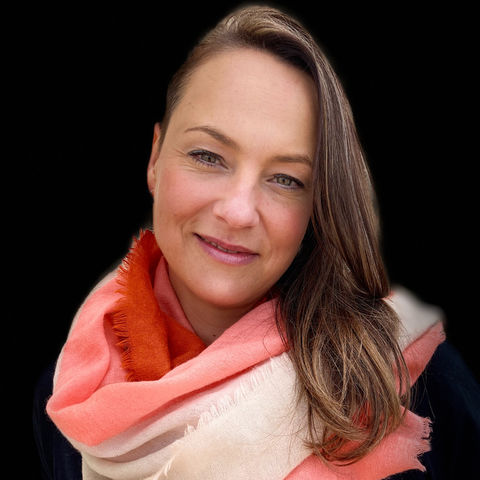
My name is Liv Downing,
And you have joined me on the You Are Loved podcast.
You Are Loved is the title of my forthcoming children's book,
Due to be released in 2021.
And in this book,
I explore the possibility that love is actually always available to us.
And that maybe,
Just maybe,
We don't actually have to rely on external sources of love or other people to feel a sense of true belonging.
As you may know,
Research tells us that a sense of belonging or a deep sense of connection is really essential for us humans to thrive.
And in this series of podcasts,
I want to learn more about why that is and how we can all get more of it,
To nourish both ourselves,
Our kids,
And our beautifully broken world.
It's my deep hope that through these conversations,
It's together we can learn more about creating a more loving and wiser world.
Welcome to the You Are Loved podcast.
Today we're joined by Caroline Weinstein.
She's a clinical psychologist.
And Kaz and I went to uni together,
Which you'll hear later on in the podcast.
And I have always admired her work so much in the clinical space.
Because while I flittered between the clinical,
The corporate,
And the wellbeing sectors,
She has really stuck within the clinical space,
Which is why I wanted to learn from her and to hear about the trends she's seeing when it comes to connection and mental health.
In our chat,
We cover a range of topics and how mainly around how we can look after ourselves and each other during this rather stressful time of COVID-19.
We dive really deeply into how it's okay to feel uncomfortable,
And that us humans,
You know,
We're not supposed to be happy or comfortable all the time.
And Kaz shares with us some tips around how we can support our kids to develop their capacity to sit with discomfort.
We talk about how we can support our children to ride the waves of adolescence and really prepare them for adulthood,
And how we as adults can create these islands of sanity for ourselves as more and more of us are working from home during this time.
Kaz also shares some eternal wisdom from Billy Ray Cyrus,
So can't wait for you to hear that.
And listen to how lovely and humble she is when I ask her at the end of the podcast for how you can find out more about her work.
She wasn't ready for that question at all.
So I hope you enjoyed the session today.
And I look forward to hearing your feedback,
Either through ratings,
Comments or emails.
And check out the Live Mindfully website for more blogs and information around connection.
So welcome,
Everybody.
I would love to introduce to you my dear friend and mentor,
Caroline Weinstein.
I know.
Thank you.
Mentor.
That's lovely.
What a compliment.
You know,
I've really always looked back to you with your clinical expertise and experience and,
And,
You know,
We went to uni together and I always figured that you were a very smart chick,
I might hang out with you and maybe it would.
That's hilarious.
I thought I'd hang out with you and our groups full and that might rub off.
It didn't work.
It didn't work.
Correct.
So I really I'm super excited to share some of your wisdom with the audience today because you know,
You've got experience within the clinical space.
And so,
You know,
Just welcome,
Welcome to the You Are Loved podcast.
And as you know,
The mission of this podcast is to really enlighten and inspire and educate around the healing benefits of true connection.
And,
You know,
I'm really keen to learn more from you about the work that you do and some of the things that you're coming across in the space of connection and mental health.
So get started.
I would love to just hear a little bit about you and how you came to be doing the work you're doing.
What a long story.
How did I come to do this?
So I started with you way back when studying psychology and studying psychophysiology.
So I always had a fascination with connection,
But neural connection in the brain always fascinated me.
So that's where I started.
And then using connection,
I think is a really nice basis for our talk.
Then looking at the connection through other parts of the system.
When I studied yoga way back when a couple of decades ago,
I'm looking at then the connection between not only the clinical systems and the physical body,
But more the emotional system and a spiritual system and uniting that.
And that's what yoga is really about.
And then kind of bringing them all together through a master's in counseling psychology and then clinical psychology and really uniting it all together.
And I've always practiced very eclectically in bringing all of those facets together.
I've been really lucky to practice in lots of different arenas that have ranged from well,
With adolescents always.
I started with adolescents and still continue to work in that area and in the forensic space and community mental health.
And now I still work in an adolescent mental health facility and also in a private practice that I've run for quite some time with adult adolescent clients.
And I've worked in corporate areas,
Teaching yoga,
Not so much as a psychologist and yeah,
Bits and pieces all around.
So I think that I've led a pretty eclectic life in the psychology space,
Which has been amazing because I'm lucky every day is different.
You go to work and you meet a human being and it's never the same.
It's never the same session.
It's never the same day.
So it's a pretty lucky,
Very,
Very lucky job to have.
Thank you for saying that.
That actually brought me to my next question,
Which is you've stayed in a pretty consistent,
I guess,
Career path,
Always within the clinical space,
Always within the mental health space.
Obviously yoga was a key part.
What's kept you there?
What's kept you engaged in that specific area for 20 plus years now?
I think Liv,
For me,
Working one-on-one with people has been like,
It's a gift.
It's such a privilege to be let into someone's world and their story to be privy to that when sometimes no one else in the world has been,
Is just a gift.
And so having been allowed to do that,
It's like,
I couldn't imagine doing anything else.
It's so unbelievably rewarding that I really couldn't imagine doing anything else.
Every day really is very different,
Liv.
I think about all the different people that I've met over the years and had the privilege of working with.
And it's not just my clients,
But colleagues as well,
And the mentors that I have had and the teachers I've had along the way and people who have exposed me to other,
Even just books and journals and workshops and the things that I've been privy to.
I just think that it's just been lifelong learning and more learning.
And so I've never yearned for a change.
I've never yearned and thought that I'm really bored and not challenged because it's just different all the time.
There's always more to look at and more research and different people coming through the doors.
And so I always feel fulfilled.
I've been unbelievably lucky.
I feel very,
Very fulfilled and continue to feel fulfilled.
And so I can't actually see myself doing anything else.
And I've said that over the years when I say,
What else would I do if I weren't doing this?
And I'm not quite sure what that would be.
You are so lucky to have found that.
And I was reading an article recently and the conclusion was that as human beings,
There are two things that we yearn for.
And one is a clarity of our purpose and what we want to do.
And the second one is a sense of belonging and to be loved.
And it really sounds as though you've got the first one nailed so that purpose has been really clear for you.
Which brings us to the second yearning for humans,
Which is around connection.
And I guess your career has provided you with some of that connection.
And I'm keen to hear a little bit about what does connection mean for you within the clinical space?
Well,
Connection is,
It's so important.
We're born into this world,
The infant yearns for connection from the moment it's born.
I mean,
It's neurologically wired to connect to others.
And we learned through developmental psych about attachment theory and attachment theory about the infant starting to attach to primary caregivers is all about connection.
And we look at relationships throughout the lifespan and patterns of relationships and attachment style.
And we look at where things have gone awry and how can we fix them.
And we're looking at connections and where there's been ruptures in connection.
So it's all about connections,
Human to human.
But we also look very much in every clinical psychologist who's trained in CBT as you are as well.
And what are we looking at?
We're looking at any connections between thoughts and feelings and actions in relation to our environments and events.
So everything is about connection.
Nothing in isolation.
And I guess in this current climate that we find ourselves in at the moment where we have been physically isolated from each other and this physical disconnection that we've had at the moment has had some unbelievably detrimental effects on mental health.
And we've seen that in the media.
We've seen more money given to Medicare,
Medicare saying,
We're now going to allow telehealth and we're going to give more money into the system to allow for more people because we can see that they need to access mental health services more and why?
Because they're disconnected.
So it's so evident now at the moment how important it is to not only have connection internally to our internal space but physically as well to others and just all of those interactions I think I've realised personally,
Those interactions that we have and connections during the day that we may not have realised were so meaningful.
The person at the train station that you just wave to every,
Or say hi to every morning simply because they're on your train or the person that you walk past in your office and you say hi because they sit next to the photocopier and all of a sudden you take that away and we're feeling very lonely.
It's so true,
That is such a great point.
You know,
I went for a walk this morning along the beach with my husband and I walk the beach every morning and usually I do it alone and I've built up a lovely relationship with several other people who walk along the beach.
It's a non-verbal relationship,
It's a wave and a smile but there is something really deeply nourishing about that wave and smile.
Isn't there?
Yeah,
There really is and it's non-verbal,
It's an energetic thing.
And you know,
I'm really interested to hear about what you're seeing within your practice.
What kind of stories are you hearing or what kind of themes are you seeing in this,
I guess around loneliness which we know has been at epidemic proportions globally for a while.
My sense is,
And this is your area of expertise,
But my sense is that's only going to get greater,
This sense of loneliness and you know,
Within the broader population.
What kind of things are you seeing specifically within your population?
Well we're seeing,
Well me personally,
I'm seeing,
You know,
It's interesting,
I'm seeing a range of responses to this pandemic at the moment.
I'm seeing those very introverted individuals who are actually relishing with,
I don't have to go out and be in the world.
And so they're actually thriving on this,
I can stay at home and not have to engage.
That's one small,
Small pocket.
There was those that in the beginning,
You know,
Were struggling to adapt and have adapted to this new norm of,
Okay,
Now where I live is where I work is where I play is where I rest is where I actually have to do everything,
Which was a very big adaptation.
And then it finally adapted.
Now some have had to adapt to having to go back a little bit.
And that's been really tricky is that going back and how do I now start to go back and now it pulled back a little bit again and people found it actually really hard.
It's like,
We're going back again.
And just this state of inconsistency and sitting with uncertainty as human beings,
We don't like it.
It causes great anxiety.
And so there's a lot of fear and there's a lot of discomfort with sitting with these uncertainty and the loneliness is real because we live very individualistic lives,
Unfortunately,
In Western society.
We don't live with extended family members and we often live in buildings where we don't know our neighbors.
We don't know the people down the street.
We often don't speak to people in our little shopping strips because we order our groceries online,
Food online.
And so we're really missing all of those connections and we're lonely and we're not getting those connections at work because we're working online from home.
And so it's really very,
Very challenging at the moment.
So yeah,
We're certainly seeing,
I'm certainly seeing clients who are desperate to come in for face-to-face sessions.
So I've been working face-to-face as much as I possibly can throughout this simply because my clients and myself,
So like we were desperate to see each other rather than over a screen.
And I know we're doing it safely.
Like if anyone's on well,
I bet you we're not saying each other,
But for those that can and want to come in,
They're coming in and a lot of them are so grateful that they can come in safely and sit in a space with another human being,
Because that level of connection,
As you said,
Energetically,
You just can't get over zoom.
And I'm very grateful for telehealth,
But there is that connection that happens when you're sitting in a space together that you just,
You can't replicate.
Yeah,
You're so right.
So there's a couple of points I wanted to pick up in what you've just said,
So many great points in there.
So one of them was around boundaries and spaces and how,
You know,
During this time it's been really hard because we've been eating,
Breathing,
Working,
Living,
Chatting,
Dancing,
All in the same place.
Have a couple of questions around that.
How do you think that's a,
How do you think that's impacted people's mental health and b,
How do you think we'll be able to reintegrate back into somewhere between how it was pre-COVID and how it is now?
Yeah,
So,
What we've been speaking about,
My clients and I,
A lot is how to try just to find,
If you can,
Just pockets of places where you can do things a little bit differently.
And if it's not a physical space where you can sit here and work and sit there and age,
Then it's even just when you eat,
You pack the work stuff up,
You put it away.
The space becomes now,
This is where I age.
You just designate times and spaces for particular things so that it doesn't all become the one place where you're meant to be resting.
But hang on,
This is where I work and this is where I age.
Routines is a really big one that we've been talking about a lot.
And I've been saying to my clients around finding routines for yourself.
So finding anchors throughout your day,
Because they were feeling very lost without the anchors,
The anchors of getting up at seven,
Going for a walk,
Getting back,
Having a shower,
Jumping on the eight o'clock train,
Getting to work at this time.
They had routines and anchors that had anchored them for many years and all of a sudden they were gone.
I could sleep till whenever,
I could get up from whenever.
And so we spoke about needing a routine and anchors throughout the day,
Splitting it up with exercise and rest and relaxation in between.
So I speak a lot about anchors.
I don't know that word works for me,
So I tend to use it a lot.
It's great.
I haven't heard in that context,
Obviously from a mindfulness perspective,
We talk about anchoring to the moment.
Yeah.
But I love that way that you're creating,
You can create those anchors throughout the day,
Kind of those touch points,
I guess.
Yeah.
Yeah.
That's what I've been talking about a lot with my clients.
And this,
And I keep saying to them,
When it goes back to normal and I keep saying to them,
We don't go backwards ever in life.
We're not going back to the normal.
We're moving to a new normal.
Nothing goes backwards in life.
As uncomfortable as that feels,
It just isn't.
It's not going to be what it was.
I don't believe it will be that we're going to do things differently now.
We're going to respond differently to things.
We're going to work differently.
Our workspaces are going to look different.
We're going to maybe rely more on zoom rather than traveling to things.
It's just going to be done differently.
And so I think if we can start to entertain the idea and accept that it's going to be a new normal and that we can't go back and we can let go of that a little bit,
I think that's going to help us adapt and keep adapting because this is going to be a really tricky ongoing process.
And I think in terms of the mental health space,
We're not at the tip of it yet.
And I think that it's only going to,
That wave is only going to keep moving and there'll be another wave.
And we're talking waves a lot at the moment and I tend to use waves.
I talk about waves a lot in my practice as well.
That we're going to see more waves of issues around mental health problems because we haven't seen things like the unemployment benefit change again,
Which it will.
And we haven't seen the peak of unemployment yet and the real financial costs haven't really come in yet until we get to September and things will change again.
And we might see businesses start to close their doors.
And so I think that it's all still,
We're in this kind of holding pattern,
Which is very,
Very uncomfortable.
It is.
It's really uncomfortable.
A couple of things that you said there that I think is really valuable for us just to kind of underline,
Which is around being conscious of everything that's happening.
So bringing that clear thing,
Awareness.
Another thing you talked about is acceptance.
And I think the third thing you've touched on there is that uncertainty.
And as you said,
The waves,
Can we flow with the waves rather than getting stuck on this is the way it is?
I guess it kind of reminds me of,
Remember when we were new parents and we think we'd nailed one milestone.
It's like,
Yes,
This is what they do.
They sleep for two hours here.
And then all of a sudden within three days,
It's changed.
It's a disaster.
It's what I tell my new parent class,
I could get stuck on this.
It's only going to last three seconds.
Enjoy it.
Like it's fabulous for now,
But trust me by next week,
It'll be different.
And it really reminds me of one of the core teachings around everything changes.
And that's a really great thing for us to remember through this time and forever.
Everything changes and I think we,
As humans,
We create this illusion of solidity.
COVID has taught us so much about that,
Those waves of change.
And every week there's a new or every day there's a new number of people you have in your house or toilet paper going in the door or whatever.
Everything's always changing.
I read a quote recently,
But interestingly,
And don't laugh at me,
With Billy Ray Cyrus,
The country singer,
And he has said,
And I actually love it.
And I think,
Oh my goodness,
I think I really admire this man now.
He said,
And I keep quoting him,
Life is just a series of adaptations,
Just adapting to the next thing.
And I'm like,
No,
Life is a series of adjustments,
He said.
That's right.
And I'm like,
Oh my God,
The man's a genius actually.
And I thought that is just what it is.
It's just a series of another adjustment and then that whether it be to an event,
Whether it be to a meal,
Whatever it is,
It's just exactly what it is.
And the minute is,
You say,
We think we've nailed this,
But no,
Don't get so cocky because you know what,
It's going to change again.
Isn't it true within a clinical sense,
There's actually a disorder called adjustment disorder?
There absolutely is.
And I said,
I actually have said recently quite a few times that I think every single person who may go to their GP at the moment and say,
Look,
I'm really,
I'm struggling at the moment would actually meet clinical criteria for what we call an adjustment disorder,
Which is struggling with a serious adjustment in their life.
Like I think we would all make criteria for it.
So maybe it's just being human,
We're all a little bit adjusted.
And that's what I think that 100% is just being human because if you had no response to this,
Which I think is impossible at the moment,
I would be really concerned.
My colleague said to me the other day,
I was at work and she said to me,
She said,
How are you?
And I said to her,
You know what,
Actually I'm feeling really uncomfortable.
I said,
I don't know how to describe how I'm feeling at the moment in life other than really uncomfortable.
And she said to me,
You know what,
Actually,
I think that's how I feel as well.
I said,
I don't know how else to explain it or describe it.
And I think to,
Well,
To anyone else in my life,
I said that they'd be like,
Oh,
You're weird.
But at least to her,
She was like,
I get it.
Just uncomfortable,
Really uncomfortable.
Well,
Everything that we've taken as normal and typical and predictable has,
Has been pulled out from under us.
So you know,
There's not really that discomfort for sure.
Very very.
And as human beings,
We don't sit very well with discomfort.
When we feel distress and discomfort,
What we often see is patterns of avoidance.
I know we feel anxious about something we avoid.
The socially anxious person just doesn't go out for things on,
I don't want to go to this,
I don't go to that.
Or we drink or we smoke or we avoid distress.
You know,
That's what we do.
And so I do a lot of distress tolerance skills and learning to sit with discomfort and not run from it.
And my point as teachers is to be present to it,
Accept it,
Hello,
There you are,
High pain,
I can't run from you.
Yeah,
This,
This time in our lives,
My goodness,
Isn't it,
You know,
The world just saying to us,
You know what,
We're gonna all have to learn to sit with it because there's nowhere in the world you can run.
There's no way you can run from this.
It's so interesting,
You should say that.
Several times throughout COVID,
I had the automatic thought,
I just want to get on a plane and go somewhere.
But of course,
That's my natural tendency.
But of course,
We can't.
So it's been so interesting to really have to sit with that discomfort.
Discomfort.
Yeah,
Because there just is nowhere.
No,
There's nowhere.
And so that brings me to a question that I really want to ask you around your adolescence you work with.
In the work that I do within schools,
And obviously also within my own kids and their peer group,
I notice and also some of the research that kids these days,
Perhaps don't necessarily have that capacity to sit with discomfort,
Because as parents and maybe as a society,
In a broader context,
We've been really quick to give them what they need or we think,
You know,
To take away their pain.
I just wonder what you're seeing,
Whether you agree with that,
First of all,
And whether you're seeing that play itself out within adolescence.
Absolutely.
I just it's funny,
I had this discussion with my husband yesterday,
He just read a very interesting article that I'm not even going to try to quote because I haven't read it yet.
But it was about,
Because he's an excellent psychologist that isn't a psychologist.
And because you know,
He lives so you know.
And he read this wonderful article that spoke about parents struggling to sit with the distress of a distressed child and the anxious child.
It's not so much about the child,
But it's about we need to treat the parents.
So I was always taught and I'm pretty sure we were taught this at uni.
So I think you were taught with me that when we deal with children,
We don't deal with the child,
We're dealing with the parents really.
The kids are there as a bit of an adjunct in the therapy,
But really you're dealing with the parents.
And I absolutely agree.
I think with a lot of adolescents that I see,
They're used to very quick fixes because their brains have been wired in a particular way just because of the world that they live in is that things are acquired quickly.
It's a click of a this,
It's a flick of a that.
You get it there.
And so for them to be able to hear,
No,
Actually this is a process.
This is actually something that we're going to have to work on together.
It's going to take time.
They're like mortified.
They're like,
What are you talking about?
Like,
Where's the quick fix?
Like,
Where's the switch?
Where's the come on?
Which is brilliant,
Which is why having them in therapy is like so awesome because it's the complete opposite to the rest of their lives.
And as parents,
I think of me included,
As I say to everyone,
I am a flawed parent of adolescents.
I can sit here and I can say to parents,
Try this and do this and whatever.
And I walk out the door and I am a flawed parent like everyone else and I get it wrong and my kids don't believe that anyone will listen to me.
And I can't imagine any adolescents would want to talk to me because I'm just a flawed human like everyone else.
You're just a human.
You're just a beautiful,
Complicated human like the rest of us.
A hundred percent and you know,
I can step into other people's families as the observer.
That's the very easy role.
The harder role is to be in that family.
So much harder.
And you know,
I think that as parents,
We don't want to see our kids' distress.
It's heartbreaking.
And if we have the tools to fix it,
Well,
Why wouldn't we want to?
That just is a very deep,
You know,
Maternal,
Paternal desire to fix and to solve.
And the hardest part is for us to sit with our distress of them in their distress.
So yeah,
Absolutely.
As parents,
It's excruciating.
And this article that Jezza was writing is all about that.
I must read it and I'll pass it on to you.
Thank you.
Yeah.
What kind of things can we be doing?
And this is you putting on your,
You know,
Your expert hat,
I guess,
Taking the observer role for us other parents out there.
What kind of things can we be doing to support our kids to sit with that distress?
And I guess it all comes back into connecting with themselves and helping them build that resilience internally.
You know,
What kind of things can we be doing with our young people?
I think that the best thing is to validate.
To validate that every feeling is just a feeling.
It is valid.
It has a place that,
You know,
Adolescence is hard.
It's pretty awful on so many levels,
Emotionally,
Physically,
Academically.
It's really the most shocking time,
If you look at it and what we expect of these young people during that time,
What we put them through when they're going through hormonal searches and physical changes.
And we expect them to sit test at school every five seconds.
Like it's just,
It's a lot for these poor kids.
And I think the best thing we can do is to validate.
To validate that it's unbelievably tricky,
To validate that it's okay to feel like this and to really struggle socially at times and to know that you will find a clown at some point and that,
You know,
You can try things out and not be okay at some things and that's okay and be a bit different to others.
I feel that is the best that we can do.
That for me,
I really think that that is like baseline,
The best thing we can do.
All the other stuff,
I think,
You know,
It's toppings to introduce them to this,
You know,
Sports and extracurricular things is great,
But to have that validation,
I think is so important.
Yeah.
And I guess that then becomes a skill that they can internalise within themselves.
So they'd look to us as their primary caregiver or carer while they're growing up.
And then once they're adults,
You know,
They can learn to self soothe in that way.
Absolutely.
Yeah.
Because if you,
If you know that,
Okay,
What I'm feeling is okay and I don't have to run for it,
I'm not running for the whiskey bottle and I'm not running and I'm okay to feel like this and I don't have to jump in and do what everyone else is doing,
You know,
That peer group pressure because I'm feeling like this.
I can,
It's okay to feel like this.
I can feel like that and that's okay.
That's why I think it's so important and look,
They're going to fall off and experiment with this and experiment with that.
We have to kind of expect that as parents.
That's the other thing is that we have to expect they're going to experiment.
We're going to have to expect that that's going to happen and that they're going to do things and we're going to have to go,
Oh my goodness,
Like,
Oh God,
Because that's what adolescence is about.
They need to experiment.
They need to learn through experimentation by their frontal lobe in their brain isn't developed like an adult brain.
They don't have consequential thinking really in place yet.
They don't have inhibition that's going to stop them and as much as we've got a tissue that's really risky and dangerous,
We also have to give them a little bit of leeway to have a go to fall down to dust themselves off and to get back up again.
I think our society tries to do a lot of helicopter parenting and they,
And these kids really have to go out and graze their knees and get up and have another go.
And you know,
I see a lot of helicopter parenting and I think it's stunting them unfortunately.
It's really interesting.
You should,
You should say that.
I mean,
I,
I was reading a book recently and this parenting expert talks about how we need to allow our kids to feel held and free.
If I reflect on my childhood,
I was definitely held,
You know,
I was definitely loved within an inch of my life,
But I don't think freedom was there.
I think I was very cotton wooled and I don't think that served me well.
And I,
I think,
You know,
I try to be conscious in the way I parent my kids is,
Is really trying to find that balance.
And that's exactly what you're saying.
It's,
You know,
We want them to feel validated and safe and connected and they belong,
But we also need to give them that freedom to fall down and see how strong they are and to learn to trust themselves.
And that's secure attachment,
You know,
In that bulby,
You know,
Attachment style,
That's that,
You know,
That's when you know,
You've got that secure attachment.
I can come back and you'll love me and you'll validate me,
But I can go out and venture into the world because I have the confidence to be able to do that and come back.
And if we can find that balance,
Then absolutely.
But it is tricky because especially at the moment,
I think that we've had the fear of God put into us in our society at the moment because there's a pandemic,
But there's been,
There's so much fear.
Yeah.
Just in the air,
You know,
You can feel it.
It's just,
You know,
That you go back six months,
There wasn't as much fear that you can feel in the air that there is now.
And I think,
I think that's a concern in terms of level of anxiety and that there it's,
It's in the air.
I'm really interested that you brought that up because I was wondering whether you had some thoughts about what do you think is coming next?
You know,
You've talked about the fear levels and that anxiety and I know from my study and also from my own experience of life that if I spend too long being anxious,
I then crash and I,
You know,
I kind of burn out and I'm wondering if that's what you're anticipating we might see on a bigger level on a,
You know,
A societal level.
I'm wondering that as well,
Liv,
Because if,
You know,
When the,
When that primitive part of the brain kicks in and that flight or fight that keeps us in that hypervigilant state and that's what exhausts us.
And we know that we've been tapped on with,
You know,
That fear response now for a few months and it's going to continue.
Like I think we're very fearful about the economic state and we're fearful now about health and cases have gone up again.
And I,
I wonder about that and I wonder about,
And this is maybe the mental health crash that we're all concerned about,
Is,
Is that going to happen?
And look,
It very well may,
I'm reluctant to make predictions because,
You know,
We may have predictions about 80,
000 people getting infected and that didn't happen.
So I just,
Yeah,
I'm not sure.
I think that,
I'm very curious.
I certainly think that there has been,
There's been a lot of mental health issues that have arisen.
How many of those people have actually sought help through,
Let's say the Medicare system or,
You know,
Through,
You know,
Life coaches or counsellors or kinesiologists or other health,
Allied health,
It will be really interesting to see.
And I guess that data will come out.
At some point it'll be very interesting to see Lifeline and Beyond Blue.
I know they've had a real surge in calls.
So it certainly has,
Has surged.
It will be interesting to see the long-term effects,
To see studies over the long-term to see what actually happens.
I'm very interested to see around things with OCD and hand washing and phobias around germs.
I'm really interested to see if this is going to have a long-term effect on rates of OCD because in the population,
It generally isn't that high to have a full-blown diagnosis of OCD,
In particular with hand washing.
I don't think it's that high for memory.
I thought we wouldn't be huge,
But I'm wondering because now that's all we're told.
Wash your hands,
Wash your hands,
You know,
Sanitise,
Sanitise.
Every shop you walk into sanitise,
Sanitise,
Are we creating our whole generation of germaphobe?
It's such an interesting question,
Kaz.
And obviously I have no idea what the answer is.
Something I've noticed is really interesting in my own life is just,
You know,
If we go back to kind of this,
This connection piece,
I don't know how to greet people anymore.
I don't know if I should be giving them a hug or a kiss or a towel or a foot or just an eye wing.
It really starts off an interaction with a friend or someone,
You know,
Even an acquaintance.
That connection's just not there.
It's not as easy.
So I wonder whether that's got to be something that maybe schools need to start thinking about how they can,
I don't know.
I mean,
Obviously we're still in pandemic mode maybe next year,
But as a broader society,
How can we bring that sense of connection,
Belonging,
Presence,
Embodied ability for us to meet someone else?
We almost need to retrain ourselves to do that.
Yeah,
I'm actually finding that very,
Very hard.
Interesting you should bring that up because when I made a client for the first time,
I will always put my hands out so lovely to meet you.
And especially with an adolescent,
I make a point of always speaking to them first before the parent and always shake their hand first.
And now I find myself having to say like straight up,
I say,
Hi,
It's so lovely to meet you.
I would so love to shake your hands and I'm so sorry that I can't.
I feel like I actually have to acknowledge it.
So I say something because I can't let it go past because to me it feels so unnatural to not engage them in putting my hands out.
So I actually call it and I say something.
Well,
I think I just feel uncomfortable.
I think it's probably part of the reason you're an amazing therapist because well,
No,
Because you get it,
You get the impact of the power of the body and the importance of the body in mental health and healing and you get the energetic side of mental health as well.
And I think from my own studies and my own experiences,
I just think that's something we really,
As mental health professionals,
We really need to take into account if we're going to really treat the whole person and not just their thoughts or not just their beliefs,
We're really treating the physiology as well.
So yeah,
Absolutely.
And again,
That's such a powerful thing to do with your clients.
I'm really interested to really,
I guess,
Drill down a little bit.
We're coming to the end of our time together,
But I'd love to hear maybe just a couple,
Two or three takeaways that you think as either as parents,
As women,
Or just as members of the community we can do to support ourselves and each other in managing our mental health throughout this time and beyond.
You talked about obviously the interpersonal connection as one of the key components,
The validation piece as something else.
Is there anything else you'd like to add on what we can do to support ourselves and each other?
I think it's very,
Very important that we stay connected however we can.
If you're working at home,
I think you need to make sure that you have anchors throughout your day that make you stop working.
Because if you're working at home,
It's very easy to have days that start late,
You sleep in or you work till late at night or you don't see sunlight,
You don't speak to anyone else that you intersperse throughout the day,
Getting outside,
Getting sunlight,
Maybe some exercise,
Talking to your friends.
And whether it's a quick face time call or you meet up and you go for a walk,
Just try to keep your connections up as much as you possibly can because it can get unbelievably mundane or very lonely if you don't.
And I think it's really,
Really important that you do it.
Even if it's a walk down to the shop to buy some milk,
Do it because you have to talk to someone.
Don't check yourself out if you go somewhere where you can.
Make sure you go through a checkout where you talk to someone,
You ask them how their day is going,
Speak to someone.
And in terms of other takeaways,
There's so many takeaways live at the moment.
Find yourself that these are really uncertain times that if you are feeling uncomfortable,
Then you're joining my gang feeling uncomfortable because I am feeling very uncomfortable as well.
And that can also feel sometimes like irritability,
I would say,
And just a general discomfort.
And sometimes you can feel quite settled.
And again,
It's waves,
It comes,
It goes.
And you know what,
Sometimes it's okay to feel all right in this pandemic as well.
It's not all doom and gloom and sometimes you're going to feel quite okay and your day goes okay.
Even if there's been so many cases and it all sounds bad,
It's okay to have a good day too.
But that's quite fun because some people are actually doing quite well through this.
And what other takeaways can I give you,
Livvy,
That to quote my new hero now,
Billy Ray Cyrus,
Life is a series of adjustments.
This is my new country,
Western hero.
And I guess it's just remembering that we belong to each other,
That we're all here together and we're,
You know,
We're,
And I loved your point about really reaching out to other people because,
You know,
For those of us who are conscientious and we just put our head down and bum up and work,
Work,
Work,
It's very easy to forget to get out of the house or pick up the phone because there are no boundaries.
So that's a great tip.
Thank you so much.
And also,
You know,
The one thing also Livvy that I've been thinking about as well,
This is the first time,
God knows in our lifetime,
But in a lot of generations above us as well,
Where we can say that,
You know,
Globally,
We are all going through something at the same time.
And that's pretty significant.
You know,
We're talking about real connectedness,
Like that's unbelievable,
Right?
Like all of us like globally can say we are going through this collectively.
Yeah.
All right.
Well,
Thank you so much,
Kaz.
Thank you,
Liv,
For having me.
No problem.
I have really enjoyed our chat and I know our listeners will have got some great wisdom out of all of your tips.
How can people find out a bit more about your work?
Well,
They can look at our website of my practice if they would like to.
So our practice is called the talking cure and our website is the talking cure.
Com.
Au.
And we are contactable through there.
There's a contact us part where you can email us if you would like to.
That's probably the easiest way to find me.
I also consult at Headspace.
Thank you so much,
Caroline,
For joining us today.
It's been awesome just to hear your tips and your insights into what's happening within both the young people and us older folk,
As well as parents,
You know,
Within Australia at this time during this global pandemic.
And we really appreciate your insights and your wisdom.
So thank you so much.