Welcome to the Breakdown to Breakthrough podcast.
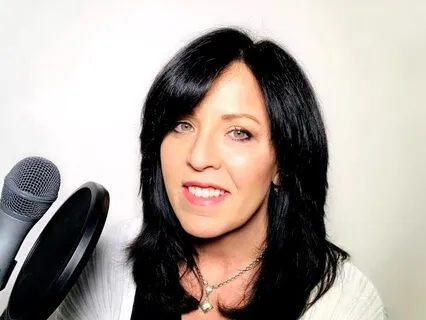
My name is Lisa A.
Romano.
I am a life coach,
Bestselling author,
YouTube vlogger,
Meditation teacher,
And expert in the field of codependency and narcissistic abuse.
I am a believer in the power of an organized mind.
My aim is to help people learn what it means to live above the veil of consciousness rather than living a reactive life.
May your heart feel blessed,
Your mind feel expanded,
And your spirit find hope as you spend time with me here at the Breakdown to Breakthrough podcast.
So today we're going to be talking about adult children of alcoholics and why it is so difficult for adult children of alcoholics.
And this would include children of narcissistic parents as well.
So adult children or the adult child who has come from a dysfunctional home,
That has come from a home that has caused them to have to leave their childhood behind.
And why does this happen?
This happens because adult children of alcoholics,
Children of abusive parents,
Children who don't have the luxury of being taken care of,
Children who do not have the luxury of feeling nurtured,
Children who are born to homes where there is rage,
There is unpredictability,
The rules are always changing,
People are cold,
There is no attention to the emotional needs,
The psychological needs of the child or the children in the home.
Parents are dysregulated,
They are over emotional,
They are unpredictable,
And they are people who are self-absorbed,
Perhaps in their own pain,
In their own chaos.
And they are unable to attune themselves to the needs of the children of the home.
When someone grows up in this kind of an atmosphere,
Then very much they are forced to stop being a child.
A child or a childhood is a time of self-exploration.
It is a time when a child should be full of wonder,
Looking around,
Learning to explore their environment,
Learning to conquer their environment.
But when you come from a home where you feel like the floor is made of jello and the walls are about to crack and the roof is rickety and at any moment it will collapse on you,
You feel very fragile,
You live in a constant state of hypervigilance,
You are afraid to move the wrong way.
And when this happens,
Your brain is being forced to focus externally on things outside of you.
You grow up feeling like a little rabbit in a field where there is no cover and there are wolves all around you.
And the slightest noise you make,
The slightest move you make,
May cause a wolf to devour you.
When a child grows up in that type of an atmosphere,
That child must let go of themselves in order to survive.
So the inquisitive little girl or the little boy inside of you had to be abandoned for the sake of survival.
This is an incredible coping skill,
By the way.
There are pretty devastating consequences,
But it's an amazing coping skill to think that a child is engineered to survive under extenuating circumstances is the reason so many adult children of alcoholics and adult children of narcissistic parents survive.
It is the reason so many adult children from dysfunctional homes can multitask.
It is the reason so many trauma survivors become nurses and become paramedics and EMTs,
Police officers,
And join the service.
Because we're used to dealing with this type of day-to-day chaos.
We're used to triaging.
We had to to survive.
And so we're used to this experience of looking outside of ourselves and taking care of other people.
We're used to putting ourselves last.
One of the devastating consequences of growing up in a home like this becomes obvious when we realize that we have a difficult time having fun.
We work.
And I'm guilty of this myself.
That's what we do.
We work.
We take care of other people.
Our work and our identity is,
What does someone need today?
And what happens is,
And I see this a lot with my clients who are nurses,
They get burnt out.
They're at work and they're so happy and they're amazing.
Nurses are just amazing.
And they make their patients feel so good,
Even about having the most difficult treatments.
They walk in with a big smile on their face.
They help the families feel comfortable all day long,
Just putting out all this energy.
Then they go home and they pick up the kids and they make dinner and they have laundry to do.
And the kids have needs.
Their husbands or wives have needs.
Their mothers have needs.
The neighbors have needs.
And we get into this rut of feeling lost.
And our identity is such that we believe that we are here for everyone else but ourselves.
We have lost our childhoods.
We have forgotten what it's like to have fun.
We don't know what it's like to live life wondering,
What makes me happy?
What can I do today just for me?
Some beautifully self-caring,
Yes,
Yes,
Healthy,
Selfish thing that's just for me.
It might be taking a walk.
It might be playing the piano.
It might be taking a voice lesson.
It might be just doing something completely random just for yourself.
We don't do those things.
Adult children of alcoholics,
Grandchildren of alcoholics,
Children of parents who were dysregulated,
Who were dysfunctional,
Who had mental health issues.
We don't do that.
We have lost our childhoods to dysfunction.
And we have lost the ability.
When we were supposed to be learning about me,
Myself,
And I,
We were fixated on who,
What,
When,
And where.
When were we going to be abused?
Who was going to abuse us?
When was it going to happen?
Where was it going to happen?
And how can I avoid it?
And when children grow up with that type of hypervigilance,
They are forced to let go of their playful nature.
And that is not their fault.
That is not your fault.
If today,
If you look at your life,
You work,
You take care of people,
You don't know how to,
You have no idea how to stop and say,
Wait a minute,
Wait a minute,
Wait,
Wait,
Wait,
Wait,
Wait,
What's going on here?
You know,
Like,
What did I do for myself today?
Anything,
Anything.
Did I meditate?
Did I journal?
Did I exercise?
What did I do today?
Did I call a friend just to talk?
You know,
Just to talk?
Did I buy myself flowers?
You know?
Or am I all day recycling these subconscious beliefs that are driving me to abandon myself day in and day out on a subconscious level?
Am I repeating the patterns of childhood?
Am I denying myself the right to take center stage once in a while?
Now,
When we're healing from things like codependency,
Because codependency is about this idea that we need to control things that are happening outside of us,
Because our childhoods were so out of control,
And we learn that taking care of people was a way to survive.
We learn that not taking care of the self avoided tremendous conflict,
Right?
So if we tone ourselves down,
And we stay small,
And maybe the wolves won't see us,
Maybe they'll leave us alone today,
Maybe we won't get into trouble.
And so when this becomes our disposition,
We are absolutely disconnecting ourselves,
This becomes an ingrained way of being.
And because as a codependent,
We are running our lives in a dysfunctional way,
A maladaptive way,
Although this is our coping skill,
It's also subconscious.
And so we are living subconscious autopilot types of experiences.
And I think that is one of the most sad things about being the adult child because you are,
Your thinking is subconscious,
Your behavior is subconscious,
You're not really conscious about why you do what you do,
And the way you do it.
And doing can become an obsession.
It becomes a behavioral rut.
The brain likes patterns,
The brain waves that emit from your brain,
They're all about patterns and frequencies.
And frequencies and patterns are what run the unconscious life.
And so healing from the trauma of the past requires an awakening.
It requires the ability to observe one's childhood,
To become a detective,
And to investigate how did my childhood impact me?
How did my childhood perhaps rob me of my right to have fun,
And to let go,
And to be silly,
And to actually enjoy life once in a while?
If you are someone who is a workaholic,
If you are somebody who has a very difficult time letting go,
If you are someone who looks around the room and wonders why is everyone laughing,
This isn't so funny.
If it's difficult for you to laugh,
If it's difficult for you to do something silly,
Or to enjoy yourself,
Those are signs that you have grown up feeling like you had to stay in control in order to survive.
I very much relate to this.
My home was very stale.
My home was very almost sterile.
My mother had a lot of emotional issues.
She struggled with,
In my opinion,
Tremendous depression that was undiagnosed,
Anger,
Enrage,
Codependency.
She was the adult child of two alcoholic parents,
And she very much needed to control everything.
The woman dismantled our stove once a week,
Literally,
Literally dismantled our stove once a week,
Took the screws out of it and everything to clean it.
Our home smelt like bleach.
We were afraid to move as children.
It felt very unsafe and very unpredictable.
And I had to become hypervigilant.
I had to become obsessed with my mother's moods.
I had to monitor her movements.
I had to become hypervigilant and watch her mood just change from moment to moment.
I had to watch her eyes.
I had to pay attention to how quickly she moved into the house and around the house.
I had to.
If I didn't,
She would sideline me.
And it was too scary to think that in any moment she could hijack me and I wouldn't see it coming.
So as a coping skill,
Me staying fixated on her helped me feel safe.
And this became a way of being.
And it was quite suffocating.
And I still have to work on getting away from the computer.
I still have to work on not taking on too many clients.
I still have to work on not cleaning the house so much.
I still have to consciously every day say,
What are you going to do for yourself today,
Lisa?
What playful thing are you going to do?
What fun thing?
And it could be something as simple as go to the beach,
Even though it's cold,
Get out my lawn chair and just sit on the beach.
Maybe play with the sand a little bit.
As silly as that sounds.
Just allow my mind to let go and observe the sun.
One of the first things that I did when I was realizing that I had a difficult time having fun was I drove down to a local ice cream shop,
Walked right in and bought myself an ice cream cone.
And then I walked to the park,
Not far from the shop,
And I sat on a swing.
That was something I always wished I could do as a little girl,
Because I had seen other little girls do that.
And that just wasn't possible for me when I was a little girl.
We didn't go to the park as a family like that and have ice cream and sit on the swings.
We didn't do that.
And so that was something that was solidified in my mind.
And that marked the beginning of me saying,
Okay,
You know what?
You know what?
It's time for you to have a childhood.
It's time for you to remember.
And so I hope that this episode has helped you think about your childhood and helped you think a little bit more seriously about how you show up for yourself today,
Or perhaps how you haven't.
And I hope that it's given you some inspiration to begin showing up more for the inner child that is within you.
Namaste,
Everybody.
Until next time.
Bye for now.