So as we begin a new year,
I want to offer some reflections on this practice that we do.
This path of practice.
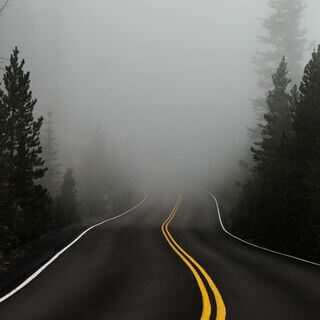
So generally the understanding is that a path means that it's practice that's leading somewhere.
It takes you somewhere.
You know,
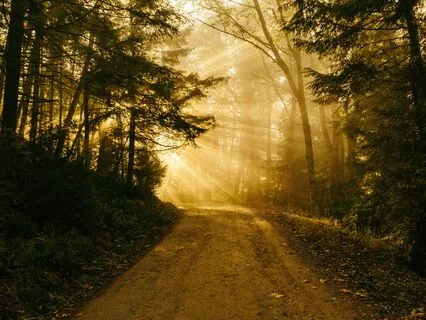
When we think about walking in nature on a path,
Like the metaphor of walking on a path is it's something that first of all we bring our whole body to.
You know,
We engage with a path with our whole self.
And this path of practice that we do together,
It's not meant to be a hobby,
Like something that we just do on Sunday.
It's something that we engage with for all of our life,
In all of our life.
You know,
On this on this path that we're on,
We hear phrases like,
You know,
Be here now and being present and being mindful and aware.
And yet in our own experience,
The experience of being present,
It's a wide range.
You know,
When we sit,
The experience of being mindful here and now feels like,
Okay,
You know,
I've taken a three breath journey.
Here's the breath,
My posture is upright.
Okay,
There's a sound,
I'm noticing the temperature in the room.
It's like,
We have these little pops of mindfulness,
You know,
One object,
Pop,
Another object,
Pop,
Another pop,
Look at all these objects in my field of awareness,
Pop,
Pop,
Pop.
And then the to do list comes.
And then pop to do list.
And then you're lost in the to do list for a while,
Planning and thinking.
And then maybe five minutes passes,
And you discover that you've been completely lost in that pop.
Now I'm back,
Pop,
Here's the breath.
So mindfulness,
It can feel kind of spotty.
And pop,
I'm present,
And then poof,
I'm lost again.
And then when we're dedicated,
You know,
Committed to coming back again,
And again,
And again,
Coming back,
We notice this more and more.
What happens is that the the momentary mindfulness,
The pop,
Pop,
Pop,
Pop,
They,
It actually begins to string together.
It has some momentum of its own.
And then we,
We begin to experience and feel the flow of mindfulness,
We were less lost in other things.
The continuity of mindfulness can have the feeling where the object,
Like the objects begin to come to us.
Sort of like,
Oh,
The breath is known now.
Or the sensation is known,
Kind of like,
Oh,
Look at that sound.
Or if you open your eyes,
You see,
We become more rooted in the present.
And we're not going anywhere.
And the more we're grounded here,
The more steady we get.
Instead of like traveling in the mind,
We're resting.
And with that becomes a receptivity.
Where the objects of mindfulness begin to come to us.
So that process,
It takes time.
And a little bit of trust.
Definitely patience,
Though.
We have to be willing to come back again and again.
You're coming back to our breath.
And this deepening of here presence.
You know,
The breath is such a useful tool.
You know,
When we breathe in,
We feel the fullness of life just in the in-breath.
Because our breath is life.
You know,
It's our energy and our vitality.
We're both participating in this life process.
And we're also observing it.
So we're kind of curious about what we're participating in,
Like this dance of life.
And what we're doing here together in practice is we're really moving against the stream of the ordinary way in which people come in contact with things that are difficult or unpleasant.
You know,
Instead of denying that there's difficulty or distraction or avoiding it,
When difficulty arises in the practice,
The intent,
The practice is to actually turn towards the difficulty rather than away from it.
In this way,
Our mindfulness practice has been described as kind of an exposure therapy.
We're exposing ourselves to the source of our anxiety without the intention to cause further harm.
Because maybe that anxiety can be harmful to ourselves and others.
And in doing so,
Turning over and looking at it again and again,
Turning towards rather than away from it,
It makes it easier to overcome the distress and the anxiety in some ways.
But it also serves to benefit us turning towards the difficulty.
You know,
When we train our mind to embrace what is hard,
Instead of trying to get rid of it,
We really are walking the path of growth and resilience.
So I'd like to begin this year,
This year of practice together with a focus.
And the focus is on compassion.
Compassion literally means to feel passion with.
And passion,
The meaning of passion is pain.
So compassion is this willingness to feel pain with another to feel one's own pain and another's pain.
Compassion,
The felt sense of it in kind of application is probably why I like to sit with the dying.
You know,
When everything else goes,
As it will,
What's left?
You know,
Just feeling the pain and feeling the joy with another.
And how also feeling how it's me to one day I will be the person sitting in the bed.
One day I too will be the dying person sitting with my memories and my joy and my sorrow that make up this life.
In the end,
The only thing left is compassion.
So why not start practicing now?
Training and compassion is kind of like training our hearts to do something that it ordinarily doesn't want to do,
Right?
Which is to go towards rather than away what is painful.
When we begin to receive pain,
We come to understand that it's the way that the heart opens.
So we start with our own pain,
You know,
Coming face to face with our own fear,
Our own resistance,
That the personal pain that is happening in our lives right now.
We take in our own stuckness and our own difficulties.
And here's the important part.
We're also breathing in,
Taking in,
Remembering the stuckness and the difficulty that we're having.
Millions of people just like us at this very moment are also experiencing the same stuckness and difficulty.
Now that takes a little bit of practice to remember,
But it's really helpful.
It goes against the grain of like what we normally do,
You know,
Which is to sort of avoid the suffering and seek pleasure.
So the practice is to kind of breathe in,
Taking in your stuckness,
Meeting whatever is painful,
And that remembering,
Remembering that countless other people are caught in the very same emotion.
And as we send out relief to ourselves,
Kind of on the exhale,
We're also sending it out to countless other people along the path.
And in this way,
We open up space for ourselves.
We come back to awareness.
Another way that has really supported me to cultivate moment to moment awareness,
Which is kind of another focus that we've been talking about,
Moment to moment awareness off the cushion is to remember that this life is ending.
Remember death,
Keep the awareness of death close.
Now this might not feel normal to you,
Or something that you would want to consider doing.
But death is an ever present reality for us,
Whether we're thinking about it or not.
You know,
It's death is always announcing itself in the background,
You know,
In our bodies on the news and stories we hear about others in our lives.
It's in our health concerns,
And the attention that we we pay when we're crossing the street.
If you observe yourself closely,
You'll see that we spend a fair amount of energy each day trying not to die.
So awareness of death and impermanence,
Taking in that fact,
It brings a kind of clarity and energy to our present moment experience.
It can bring a resolve to not suffer over stupid things.
You know,
Like,
Like road rage,
For example.
If you're behind the wheel of your car,
And someone in another car does something kind of erratic,
Or they're driving too slow.
And you'd like to,
You know,
You've experienced yourself getting angry.
If you're mindful and aware of the shortness of this life,
It's very likely that you won't get angry.
If you're aware that you're going to die,
And the other person that's driving so slow or erratically is also going to die.
And you're both going to lose everyone you love.
And you don't know when.
And you've only got this moment in your life,
This beautiful moment.
You know,
Your consciousness is bright,
It's not dimmed by morphine or drugs in a hospital room.
And the sun is out,
Or it's snowing,
And both are beautiful.
And your loved one,
Your spouse or your partner is alive,
And your children are alive,
And you're driving.
And that person in front of you,
Whom you'll never meet,
Whose hopes and sorrows you know nothing about.
But if you could know them,
You'd recognize that they're similar to your own.
And what they're doing is just driving slow.
You know,
This is your life,
The only one you've got.
And you'll never get this moment back.
And you don't know how many more moments you have.
You've got this one opportunity to sort of fall in love with existence.
So why not relax and enjoy your life?
Really relax.
Even in the midst of struggle.
Even when we're doing hard things.
Even with uncertainty.
So I offer this talk to you on this second day of the new year for your consideration.
Thank you.