So I just returned from retreating.
As some of you know,
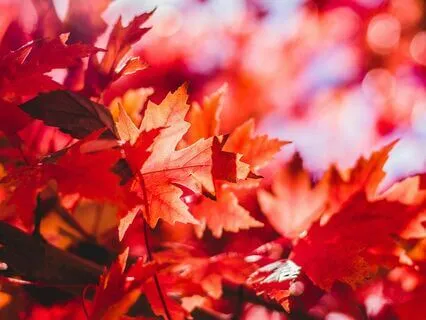
For three weeks I was in the Redwoods in the Santa Cruz Mountains in silence.
And I got back on Saturday.
And retreating is an opportunity to come back to yourself.
You know,
Most of the time we're living a slightly disembodied life.
One of my first meditation teachers in this tradition used to quote the novelist James Joyce saying that Mr.
Duffy lived a short distance from his body.
So that's all of us in some way living a short distance from our body.
So retreating is this coming home to yourself.
And although there are moments where you're literally living in a Mary Oliver poem,
Prayers made out of grass,
Oh yes,
Laying under the redwoods on the forest floor and feeling the roots of these great trees move under you.
Very much alive.
Extraordinary to be resourced by these great beings.
And it's also a container where all of your life comes to meet you.
All of it.
No part left out.
So it takes some willingness to also meet your history and the patterns of your life.
I have retreated every year,
Sometimes multiple times a year,
Since I started practicing over half my life now.
Excluding the year that my son was born.
Put that caveat out there.
And what I've noticed in the early days of retreating is that I had these really big openings,
Experiences of deep concentration,
Deep connection,
Living really a non-dual life where there was just me and I was part of everything.
Just one.
So joyful.
So amazing.
And it's sort of like in the beginning of a relationship when it's so new and you're just into that person and you can't really get enough of each other.
That's what early practice was like.
But now after over 25 years in this relationship,
It's matured and there's a knowing pattern of retreating.
You know,
There's a little bit of expectation,
Anticipation,
Curiosity of course,
Because you know what's gonna happen this time.
And also it takes a little bit of effort to be willing to be surprised or confronted by the parts of our unmet life.
One of the insights that I came to while sitting this last retreat was how deeply the grooves of our habit patterns are in our mind.
And I know that we all kind of know this.
We know about our habits,
Right?
But I think the interesting thing about retreating is that you're not relating to your habits from your thinking.
You're relating to them from your senses.
It's a really direct relationship.
Kind of hard to explain,
But I'll try.
So even though I,
You know,
I entered into retreat and I had this pattern,
The first couple of days,
You know,
I'm really focused on getting concentrated because I have this memory of the bliss of concentration.
And so I noticed there's a bit of striving and then I go through missing home,
Like missing my life,
Doubting,
Really doubting,
Like why am I doing this again?
And then that moves into the experience of being imprisoned by my mind.
Like,
I just gotta get out of this.
That contraction is then followed by ease and contentment.
And then doubt comes again,
And then desire.
And this is all in the first week really.
You know,
When people ask me,
You know,
How was retreat?
It's not true to just say it was good.
It was everything.
My whole life.
All the ways that we get distracted from ourselves shows up.
And these patterns,
These patterns are what I want to explore with you.
It's so important to see the habit patterns of the mind and in the body.
Our habit patterns are our routines,
You know,
And there's some comfort.
There's a there's a comfort of certainty in them.
In a way,
There's a subtle denial of things changing when we have scheduled to go to the gym three days a week,
Or we always sleep on the left side of the bed,
Or we do laundry on Saturday,
Or bike ride on Sunday.
We create these routines that if they're in the calendar,
Then we have some assurance that it'll happen.
Our continuation,
The certainty of that.
It's like we will use up all the bulk toilet paper that we purchased at Costco because we have so much of it to use.
There's a certainty,
But it's all uncertain.
There is nothing that you can count on except that at some point you will die and you don't know when that is.
And just saying that,
You know,
This could feel really uncomfortable to hear.
Generally,
It makes people more speedy,
Like we have to cram it all in,
Like we can outrun the inevitable if we keep really busy.
But what this practice is about is really being at home and comfortable with uncertainty.
Change and dissatisfaction and how this is all of us,
All of us.
This is what I'd like to explore together.
They're called the three characteristics of existence.
Everything is changing.
There's dissatisfaction in life and it's not personal.
It's everyone.
There's no self.
It's everyone.
And if we look closely at these,
We see it.
We see it everywhere.
One of the last sentences before the Buddha died was,
All phenomena is impermanent.
Work out your freedom and salvation with diligence.
So important that it was one of the last things that he said.
And in these last words,
He said everything you need to know to do this insight practice.
Seeing this arising and passing of everything.
You know,
We know it in the most gross way.
Day turns into night.
Night turns back into day.
We see how our bodies are changing.
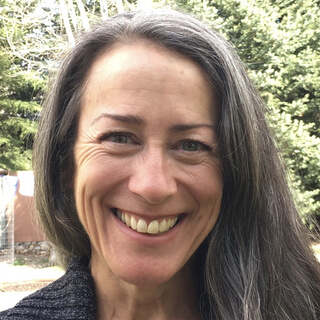
Hair turns gray.
Skin that was once firm becomes loose.
And these are just the physical phenomena.
What about the mental changes that happen?
Moods blow in like weather.
I love this poem by Jane Hirshfield.
It describes it so perfectly,
This life.
It was like this.
You were happy,
Then you were sad,
Then happy again,
Then not.
It went on.
You were innocent or you were guilty.
Actions were taken or not.
At times you spoke,
At other times you were silent.
Mostly it seems you were silent.
What could you say?
Now it is almost over.
Like a lover,
Your life bends down and kisses your life.
It does this not in forgiveness.
Between you,
There is nothing to forgive.
But with the simple nod of a baker at the moment he sees the bread is finished with transformation.
Eating too is a thing now only for others.
It doesn't matter what they will make of you or your days.
They will be wrong.
They will miss the wrong woman,
Miss the wrong man.
All the stories they will tell will be tales of their own invention.
Your story was this.
You were happy,
Then you were sad.
You slept,
You awakened.
Sometimes you ate roasted chestnuts,
Sometimes persimmons.
Things come and go.
We come and go.
Absolute transience is truly the nature of our experienced reality.
And by experienced reality,
I'm referring to the way we sense our direct experience.
For the purpose of understanding this insight practice,
Sensation,
Your own sensory experience,
Makes up your reality.
And we don't generally tune into our sense experience.
We are so dialed into our thinking experience,
Our ideas,
Our perception.
But in this practice,
We turn it and you look at how does this thought feel?
Where am I feeling this busyness in the body?
It's so essential in this practice to begin to perceive how you're experiencing your thoughts on the level of the senses.
We don't want to get lost in the content.
Just sense and feel your way with them.
And what we begin to tune into is this arising and passing of our preoccupations from the sense experience.
For example,
Let's say you have a fearful thought and you tune into the senses of that fear.
There may be heat that runs through the body or tightness in the chest.
There may be tightness in the throat,
In the belly.
The heart rate beats faster.
And you're just sitting there with it,
Feeling,
Allowing,
Breathing,
Seeing.
What's this like,
This fear?
The sensation does its thing and then it disappears completely.
So this week,
I invite you to the practice of paying attention to change.
And the invitation is to get yourself outside,
If you can,
And tune into nature.
Listen,
Like the doorway of sound,
And begin to hear and to see how rapidly things are changing around you.
So settling your breath and begin with listening to the birds and the river and the gardeners and the cars and the breath and the emotions,
All arising and passing.
Get more familiar with this characteristic of change.
It's you and it's me.
It's all of us.
The Buddha said,
All things are impermanent.
They arise and they pass away.
To be in harmony with this truth brings great happiness.
May we all experience the happiness of the Buddha.
Thank you.