So,
When the insight meditation movement first came to this country,
There was not a lot of Buddhism in it.
In order to have mindfulness practice be accessible to people,
Insight meditation teaching and teachers left out aspects of Buddhism because people would be turned off by it.
But as it turns out,
Mindfulness practice has been a phenomenally effective practice that supports many,
Many people.
And Buddhism is kind of optional in mindfulness practice,
But mindfulness is not optional in Buddhism.
So we've seen the environment of mindfulness and how it's really entered the mainstream from every,
In every capacity.
It's everywhere.
You know,
People have it on their apps.
It's in businesses.
The recognition of mindfulness in our society is huge compared to years ago when it was really hard to find teachers and hard to hear it in person.
Mostly we would listen to the Dharma on tapes,
Remember,
Cassette tapes.
So that wasn't really that long ago.
So in these next series of talks,
I'm quite excited about these talks,
I'm going to be introducing mindfulness,
But more from the perspective or of the view of an introduction to Buddhism.
So to introduce Buddhism and the practice of mindfulness,
We're going to go into the world of the Buddhist myth,
The story of the Buddha.
So from the oral translation,
Like from the,
It was an orally transmitted story.
And we're going to go into those oral,
Like the oral transmissions and also,
You know,
The writings from hundreds of years after the historical Buddha taught in India.
So that's kind of the,
The way that we're going to approach these next couple of weeks.
And the Buddhism that I belong to that many of you belong to,
Because we've been practicing together is the Theravada Buddhism.
And Theravada Buddhism is really humanistic in nature,
In that over time,
It is kind of evolved in this sort of theistic direction.
And what that means is there are many forms of Buddhism,
Where there's all of these sort of natural,
Like sort of supernatural beings and deities,
Godlike beings,
And this sort of transcendent states and heavenly realms and hell realms.
So that's the direction that it kind of adopted.
But the Buddhism that I study,
And that I teach here in Roaring Fork Insight,
Comes from the practices in Southeast Asia.
So Thailand and Burma and Cambodia,
Sri Lanka,
Theravada Buddhism,
Like the Vada in Theravada means something like doctrine,
Or teachings.
And Thera is elders.
So the Theravada is the teachings of the elders,
The teachings of the ancients,
The teaching of the Buddha and his disciples.
And this tradition,
It makes the claim that it represents the earliest teachings of Buddhism,
Going right back to the historical Buddha over 2,
500 years ago.
So if you dig deep and you go back into the early tradition to see what was really being taught back then,
It has a very strong humanistic quality to it.
It really is based on what people can experience for themselves and know for themselves,
Being our own teacher,
And pointing to something that we can discover ultimately in our own bodies and minds.
Ultimately we discover what we value,
Our purpose and the meaning that is so central to so many of our lives,
That we call it a spiritual life.
The values,
The purpose,
The meaning,
This is the spiritual life.
So from the earliest records we have,
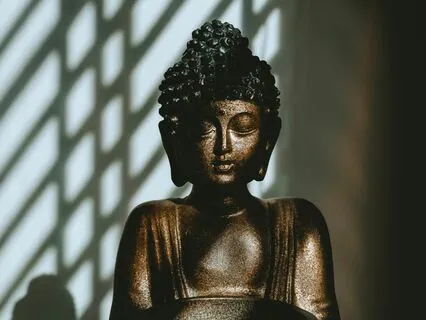
This person that we now call the Buddha,
Which simply means the awakened one,
The awakened one,
He didn't quite go along with being defined or being seen in the usual way that people identify as human beings.
He didn't want to be identified as the prince that he was at the time or a parent or a son.
In one famous story,
Someone asked him,
Who are you?
And his response was,
I am awake.
But even that really doesn't help us much.
What does that mean?
So am I.
So the most common way that he referred to himself,
The name he used for himself was this little unusual title called Tathagatha.
And it was very rare that he called himself the Buddha.
Other people called him that too,
Tathagatha.
And to Tathagatha,
The most commonly translated way or the meaning of this is the one who has gone thus,
The one who has gone thus,
Or the one who is thus,
Sort of like I am,
I am,
To just be this,
Not having to be defined by anything or anyone,
Not having to prove yourself or to apologize for yourself,
Explain yourself,
You just show up,
You don't carry any baggage.
That's who you are,
I am.
So he didn't seem to talk about himself,
But mostly he talked about himself as an example for what he had to teach.
There's no biography of his life.
He didn't tell you his story when he was teaching.
So even the earliest kinds of records we have,
He's described as not quite being an ordinary human being in the way that we prop ourselves up,
This is who I am.
So down through history then,
Because it doesn't tell a very good story,
Buddhists have filled it in.
And there's some pretty fantastical stories about the Buddha and his life and who he is.
And so if you've studied the historical text,
You can kind of watch this growth of the mythology unfold,
The Buddhist myth.
If you kind of read the stories,
It's like,
It's kind of fantastical and amazing.
And there's some amazing myths.
And what's so beautiful about myth,
And I think that many of us some years ago watched Joseph Campbell's story of myth on PBS,
Like that was so fascinating.
I remember just being so captivated by that.
And there's something,
You know,
Sometimes myth has,
It feels more true than reality.
It has its own truth.
Because it points to sort of underlying patterns and underlying realities in all human experience.
It's like,
You know,
Poetry.
We can hear a poem,
And we can see our whole life in the poem.
We can understand our life through it.
So as I offer you this myth,
The myth of the Buddha's life,
I invite you to listen to it from the standpoint of your own life and own experience.
How his story,
The story of this historical being,
Contains aspects of your own.
We're not so different from the historical Buddha.
So maybe that's a really large claim,
But that's what I'm claiming.
So we,
As I said,
We know very,
Very little about this person.
We don't know his name.
We don't know his name.
Nowadays,
We say his name was Siddhartha.
But the word,
This name Siddhartha,
It first appeared 500 years after the historical Buddha.
So it's possible that it's his name,
But it appears so much later.
So we really don't know.
So again,
This illustrates how people tell stories about the Buddha,
And they kind of put their own spin on it.
Because it makes for a good story,
You know?
It does make for a good story,
A valuable story.
And if you're sort of willing to suspend your disbelief on some of these stories,
And kind of listen to it as poetry,
As we would poetry,
It takes,
Kind of points to something in each of us,
Points to something that we each contain in our bodies and minds.
It says something about you.
That's what I found in my own reading.
So the story begins,
You know,
Once upon a time,
There was a king and queen.
And at some point,
The queen,
She got pregnant.
And it was the custom of the time to give birth in their home country.
So she left,
Where she was living with the king,
And she was traveling and walking back to her home county.
And on the way,
The contractions began,
And she knew she was going to give birth.
So halfway between the countries,
She stood under a tree,
And she took a hold of a branch,
And kind of to brace herself.
And the Buddha was born out of the side of her body,
Because that was considered at the time a pure birth.
We know that as a Caesarian section,
Right?
So the Buddha pops out,
And the first thing that he did as a newborn is he took seven steps.
So,
Okay,
Entering the land of the myth,
Right?
So that's pretty precocious for a newborn to do.
And he then points his finger to the sky,
And he says,
Heaven above,
And earth below,
I am the world-honored one.
So wow,
That's pretty good for a newborn.
And then he walked seven steps,
But as the myth goes,
He actually didn't walk the steps.
He was carried by these angels,
These devas that came down to let him walk,
So he didn't have to touch the ground.
So that's kind of a wild story,
Right?
I mean,
Someone,
You know,
Who would say that about themselves?
First of all,
It seems we know some politicians that would say that about themselves,
And we're not really following them,
Right?
So there's that.
You know,
I am the best of the world.
I am the best of the world.
How are we supposed to understand that story?
And what I feel compelled to do when I consider that,
I feel compelled to go to each one of you and say,
You are the most wonderful person.
You are the most wonderful person.
You are the most wonderful person.
You are the most wonderful person.
You are the time honored,
The world honored one,
Right?
My perception,
My interpretation of this story is that everyone comes to realize they're unique,
They're unique,
That they're special and important and valuable.
The whole enterprise of Buddhism is to inhabit this completely.
I am the world honored one,
Each one of us.
So this statement,
Basically,
That we are the best in the land,
You know,
How does that relate to ourselves right now?
I read to you as we begun or at the end of practice from the Dhammapada,
You know,
Oh nobly born,
Remember who you really are.
I am the world honored one.
Remember who you really,
Who you really are.
I am the world honored one.
Remember who you really are.
So coming together like this is remembering who we really are.
We are all nobly born,
But we forgot.
That's how I see this first entry into this path.
That's how I see it.
Maybe you see it this way.
Don't know.
Again,
We're trying to land ourself in this myth.
So soon after his birth,
A sage came to see the baby and he looked at the baby and he's looking at the sage is looking for signs of,
You know,
Who is this being going to be in the world?
So the sage says to his father,
Lo and behold,
This is a phenomenal person.
This person will grow to either be a world monarch or a great sage,
A Buddha.
Well his father didn't think much about religious life for his son.
The idea was that he was going to follow in his father's footsteps and become a world renowned monarch.
That was the way to go.
So the father to create and protect that and make sure that happened,
He built three palaces for each season.
And so these palaces were designed to protect his son so he wouldn't see any human suffering and be compelled to act on it in a,
In the way of a Buddha.
So the son was quite concerned that his,
That if he saw the human suffering of the world that he would go the religious route and he really wanted to make sure he went the kingly route.
So he made these gated communities,
You know,
Made sure that the Buddha went to private school,
Had all the luxuries in life,
Not unlike what we see in Aspen,
Right?
So this is very,
Like,
We can see this,
Right?
And as a young man,
He married and that was the custom of the,
Of the time to marry in his late teens.
So he was married for a good number of years.
But then when it said that when he was around 29,
He got curious about what was outside of the gates of the palace.
And so he asked his charioteer to get the chariot ready,
To get the horses ready,
And they were going to sneak out of the palace and go for a ride and find out what was going on outside the gates.
And lo and behold,
What did he see?
Something he'd never seen before.
He saw an old person.
And he says to the charioteer,
Well,
What is that?
And it must have been somebody that was quite decrepit.
Like we,
As we age,
We're like,
That's good,
Like,
We look pretty good,
You know.
What's that?
And the charioteer said,
Well,
That's an old person.
It's the nature of all people to become old.
So,
Wow,
Goes back to the palace,
Intrigued to go out the next day.
So the next day,
They sneak out again.
And then the Buddha sees a sick person,
Probably somebody that was very sick.
What's that?
And again,
The charioteer said,
Well,
That's a sick person.
It's the nature of all beings to get sick.
Wow.
He had no idea.
Here was this healthy 29-year-old man strapping in the prime of his life,
Getting sick.
Wow.
No idea.
He was so protected that he didn't even see that.
So again,
The next day,
They went out.
What is that?
He sees a dead person.
And that's what the charioteer said,
Well,
That's a dead person.
Every being has the nature to die.
Every being has the nature to die.
Wow.
So on the fourth day,
They went out again.
And the Buddha saw something he had never seen before.
They saw a renunciate,
A person that was completely devoted to the spiritual life.
And he was walking down the street very differently than anybody else.
He was very calm and self-possessed,
With a kind of clarity and presence and simplicity.
And the Buddha said,
Well,
What is that?
This being that was not looking at the billboards or scurrying off to get the errands done,
Not comparing himself to other people,
What is that?
And the charioteer replied,
That is a renunciate.
That is a contemplative.
So these four sites,
They're called the heavenly messengers,
The heavenly messengers.
And they're the messengers that came to this future Buddha to show him the human condition,
Show him what he had been protected from.
So now,
I'm going to stop at this point of the story.
It's just water.
Now at this point of the story,
We're going to reflect for ourselves.
We're going to turn this in and reflect for ourselves.
Last week,
We were exploring uncertainty,
How we create these palaces for ourselves that are safe in a certain way,
Even our comfortable beds,
Our home,
Our financial stability.
We create our palace.
These walls that we believe will keep uncertainty,
Aging,
Sickness,
Death at bay,
Keep them away.
You know,
We do this.
We create our palaces.
But some messenger,
Some messenger came to you that has you sitting here today.
What heavenly messenger brought you to practice,
To your spiritual life?
This is the inquiry.
This is the inquiry for today's topic.
Thank you for your kind attention.