This week we're beginning a series that I will co-facilitate with my friend and colleague Lish Dorson who is on the call.
Hi Lish.
And this series will be on the ten paramis.
In English they're known as the ten perfections and really what they are is these qualities,
These beautiful qualities that we all have that we get to develop in our daily life.
You may know people who are not practicing Buddhists who possess these qualities that we'll be exploring.
So just to say that what makes them paramis or perfections is that they're connected to our capacity for compassion and freedom.
These are the two wings of the vipassana practice,
Wisdom and compassion.
So the first parami,
Generosity,
Is the first one.
And as we know many people in the world are generous.
It's wonderful to be generous and when generosity comes out of this path of compassion and liberation then it's a parami.
And I'll speak more about that.
So the perfections,
They begin with generosity and for the lay community,
People like us that are not living as monastics,
The Buddhist teaching actually begins with generosity.
That's how he began teaching the lay community.
He spoke of generosity and one of the reasons why generosity is so valuable is that it puts our practice in the context of our relationships,
Our interpersonal lives,
Our lives with other people.
So if we start with meditation,
You know,
It's very easy to think that meditation is the foundational teaching and it begins with us and there's absolutely nothing wrong with that.
I started my own practice beginning with meditation.
But it can lead to,
I think,
A little bit of being skewed by emphasizing sort of the individualism.
It's about me and my experiences.
So I think this is why the Buddha taught lay practitioners about generosity.
It begins with the foundation of practice is to be had in our healthy interpersonal relationships.
And the thing about generosity is that it's always voluntary.
You know,
We can't be generous if it's not a voluntary act.
You can give with attachment,
You know,
You can give with reluctancy,
You can give with expectations.
But to be generous,
It's a voluntary act of openness,
Of abundance,
Of letting go really.
True generosity is not obligatory.
It comes out of this,
I guess,
Wellspring or the experience inside of ourselves where there's enough,
You know.
It's our goodness and our connection to each other.
So this practice that we do together,
It's largely about letting go.
You know,
We're learning to let go of our attachments.
We're learning to stop resisting.
And as we learn,
We don't feel inclined so much towards defensiveness.
As we relax and we learn to let go,
The natural feeling of wanting to care,
To be generous to those around us in a very ordinary and simple way,
It just grows stronger and stronger.
To emphasize generosity in the beginning of our practice kind of points us back to to the benefits of practice that I read at the that I read at the end of our meditation.
Our practice is giving and receiving,
Giving,
Receiving,
Giving,
Receiving.
This is the Dharma wheel that we're on together and giving is not an obligation.
For me personally,
Generosity with compassion really in the body feels like there's enough,
You know,
Like remembering that I am enough,
That I have enough.
And my hope is that many of us here that practice together actually experience that,
Experience this freedom of enoughness.
You know it within,
You know,
When generosity flows really naturally and we're naturally inspired to be generous.
And I think in exploring this first parami,
It's helpful to look at the places where we are not generous.
You know,
Where in our life do we hold back?
Where are we afraid to be generous?
Where are we too concerned or preoccupied with our own self-interest to be generous?
And this is not a problem,
It's just let's see where we hold back.
It's helpful for us.
It helps us to open up more,
Maybe to let go more.
And when we see where we're holding on,
Where there is not enoughness,
Then it supports us to live with greater generosity.
There's kind of an origin story that's associated with this particular tradition,
This Vipassana tradition as it came to the West.
There was a Dharma teacher who has since died,
His name was Robert Hall,
And he used to tell this story about how when he was first introduced to Vipassana practice in 1974,
Apparently this is when,
You know,
It was Joseph Goldstein,
Jack Kornfield,
And Sharon Salzberg,
And they were all pretty young.
They were in their early 30s and like fresh from Asia.
And as the story goes that he told,
You know,
Joseph had a bad back and so through a mutual acquaintance,
Joseph was told to go and see Robert because Robert was a doctor and he was a little bit older.
And so Joseph went to to Robert and worked and Robert worked on his back and they became friends.
And Robert,
Who was older,
Said that he just fell in love with these these young people because they were so idealistic and so naive and their mission,
Their mission was to bring the Dharma to the West.
And they didn't know how they were gonna do it and they didn't really know anything except this was what they were going to do and they had no money and they had no supporters.
But this was what they were dedicated to doing.
And in addition to being dedicated to bring the Dharma to the West,
They they also said that they were gonna do it freely.
They didn't charge for the teachings.
This is how it's done in Asia and this is how they were going to do it.
They didn't have any money at all and so in between retreats they would go and they would stay at Robert's and they would sleep on his living room floor.
So what came out of this generosity was Spirit Rock,
An Insight Meditation Society.
And from their Insight Meditation Center where my teacher began and all the different sitting groups and all the teachers all over the country and all over the world,
Including Roaring Fork Insight,
It all started with these three young people coming back from Asia who didn't have any money but were dedicating themselves to this process of continuing in the spirit of generosity that this Buddhist tradition has lived in for 2600 years.
So I find this incredibly inspiring.
And one of the surprising and wonderful experiences with generosity is sometimes it feels like we receive more than we give.
The more we're generous,
The more life is experienced as a gift and the more available we are for the gift of our lives.
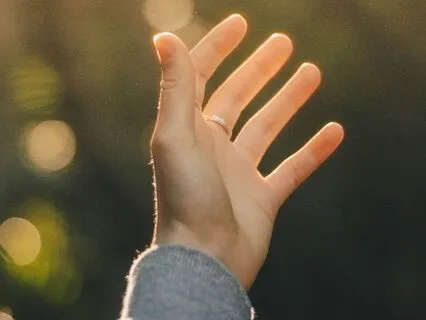
I often share with you all kind of the symbolic image of like if we're holding on to anything in a colt like in a tight fist.
That's one way of living,
Right?
But in order to give we have to open our hand.
It's the open hand that can give to another.
And once our hand is open,
Then it's open to receive the gifts of life.
If we stay close fisted,
We're really not available for what life has to give.
So generosity,
It's the foundation of the journey of the Pāramīs.
So for today,
Or really for the next 48 hours till we meet again,
Consider making generosity a thing.
You know,
Maybe bring food to a sick friend,
Bring in your neighbor's trash can from the curb,
You know,
Do something anonymously.
And then notice,
Notice the effect your gift has on these people.
Notice the effect it has on you.
Be mindful of what you're feeling and your thoughts about having done this generous act.
Start to tune into what is the attitude towards generosity.
You know,
Often generosity is conditioned by views and practices in our family,
Our family of origin.
So what belief do you have that may interfere with being motivated to be generous?
This is an important inquiry.
So I hope we'll begin to see that our giving is a gift that we too receive.
Giving and receiving is all mixed up together in this really beautiful and rich way.
So may we continue to give and receive with awareness.
Thank you for your consideration and your kind attention.