09:55

Not Always So 2

by Lisa Goddard

Rated
4.7
Type
guided
Activity
Meditation
Suitable for
Everyone
Plays
98

So this is the second talk on the little slogan said by the San Francisco Zen Center founder Suzuki Roshi who summarized Buddhism in three words, and those three words are not always so. Not Always So. It's not telling you how to think, it's not telling you you're supposed to believe something, but rather it's a way of thinking that keeps your mind open to possibilities as opposed to closed to possibilities.

ZenBuddhismOpen MindednessAwarenessDharmaLetting GoDaily LifeSelf InquiryNon JudgmentEnjoymentTeachingMind AwarenessFixed ViewsDaily IntegrationEnjoying LifeNon Judgmental AttitudesTeachings Without Words

Transcript

So thank you for your practice.

This is the second talk this week on the little slogan said by the founder of San Francisco's Zen Center Suzuki Roshi who summarized Buddhism in three words and those three words are not always so.

Not always so.

It's not telling you how to think.

It's not telling you you're supposed to believe something in a particular way but rather it's a way of thinking that keeps your mind open to possibilities as opposed to closed to possibilities.

Your mind your open mind is actually able to see is there a different perspective that I can have more perspectives to look at a situation rather than just the one that I'm using right now.

So one of the important hindrances that Buddhism emphasizes is the hindrance of fixed views being stuck in our opinions and part of being a Dharma practitioner is to begin to not just go along with our thoughts to adopt a new way of thinking like a new way of addressing and looking at your life to look at your life without being stuck in your views and opinions and stories about how things are.

Much of the suffering we have in the world and much of the suffering that we perpetuate onto the world really goes through our thinking mind the thoughts we have and part of the motivation to talk about this today is the value of trusting the process of practice that brings us into different states of mind so that when you're in a particular mind state an ordinary everyday state of mind where the mind may be thinking a lot or there's a preoccupation or distractable thought when you're caught in things it's actually quite helpful not to give too much authority to that way of being or don't assume that this is an accurate way of being in the world or an accurate way in which you see yourself and see the world.

Practice it helps us know I'm in a state of mind right now.

This is my state of mind right now.

I'm stirred up and with that state of mind comes a certain way of thinking and a certain way of seeing but it's just because I'm in this state and so to know that there are these different perspectives based on the state of our mind.

We're not so fixated like when we're not fixating on one state of thinking as if this is true but instead of saying like oh this is how I see it right now I think there may be other ways of seeing it but my mind state is clouding the way I'm perceiving not always so.

Buddhism is saying that you know we have these hindrances to freedom we have these fixed views these fixed opinions and stories and one of the ways to overcome that is to adopt a form of thinking that you haven't used before.

This is sort of like the dharmic way of thinking or a liberated way of thinking.

It doesn't involve adopting a set of beliefs rather you're adopting a practice of inquiry.

You can ask yourself you know one of the dharmic ways of thinking is to think not always so not always so and use that at times.

See if this opens opens you up you know or turns you towards the experience in a new way.

Keep looking and exploring and feeling your way.

Where's the path here?

How do I engage with this?

How do I find my freedom with this?

I have sort of a mundane example of this it just happens so I feel like it's useful to share.

My son he forgot his Spanish homework so he just forgot it at school and one of his friends one of the parents she sent me a note a text message saying do you have the Spanish homework because we're gonna try to get the Spanish homework done because my son also forgot it and I was like nope don't have the Spanish homework and her response was bummer and I was like is it so I responded back is it a bummer because I don't remember Spanish homework in fifth grade and I don't really remember any homework in fifth grade so does it really matter isn't homework just more of an exercise and learning how to do homework like maybe not always so not really a bummer just what happened.

I'm not gonna add on some layer of judgment to it.

Where's the path here?

How do I engage with this?

How do I find my freedom with this?

It's just a way in which we can bring this into daily life.

I was struck by a story that I read so the editor of the compilation of Suzuki Suzuki Roshi's teachings it's a book not always so and it was put together by a Dharma teacher Edward S.

B.

Brown and Edward Brown or Ed Brown was ordained as a Soto Zen priest by Suzuki Roshi in 1971.

He wrote the Tassajara Bread book if any of you know of that book and he also married my me and my husband Seth in 2003 and Ed he wrote that you know what's most difficult for any teacher is to teach without teaching anything and that Suzuki Roshi would often say you know if I tell you something you'll stick with it and it will limit your own capacity to find out for yourself.

I really appreciated that so in part I you know I have to say something otherwise the students that practice with me will just kind of stick to their habitual ways of being and I've heard from a lot of students of Suzuki Roshi's or even just listening to his archival talks you know he has this phrase that he uses often in his talks he would say the most important thing and he would it would really catch the attention of the students and make them sort of sit up and get their notebook ready.

So the most important thing in this week's teaching is to be able to enjoy your life without being fooled by things.

Without being fooled by things not always so.

Take a second look.

Take a second look.

Meet your Teacher

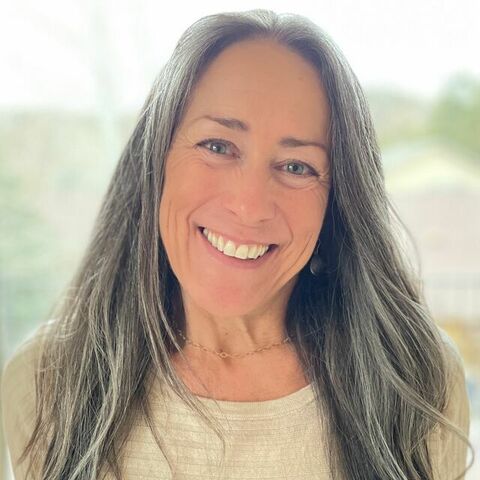
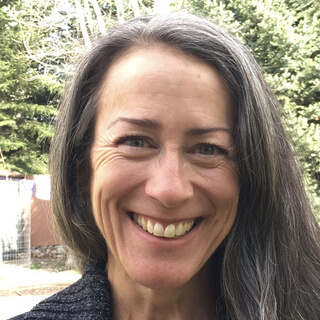
Lisa GoddardAspen, CO, USA

More from Lisa Goddard

Loading...

Related Meditations

Loading...

Related Teachers

Loading...
© 2026 Lisa Goddard. All rights reserved. All copyright in this work remains with the original creator. No part of this material may be reproduced, distributed, or transmitted in any form or by any means, without the prior written permission of the copyright owner.

How can we help?

Sleep better
Reduce stress or anxiety
Meditation
Spirituality
Something else