So,
Last week we started to experiment with this Tonglen practice of giving and receiving.
And today I want to talk a little bit about what happens to the body,
Like the physiology of the body when we give.
So last Wednesday in our in-person practice,
We did an exercise that some of you were there to experience and some of you may be familiar with.
We were at St.
Peter's of the Valley and what I had folks do is partner up so that you were sitting next to somebody.
And we did this exercise where we sat together and looked at the person sitting across from us or held their hands and reflected on our sameness.
And I drop in phrases for you to do this reflection so you just like me want to be happy.
Just like me,
You were once a child.
Just like me,
You've had sorrow and loss.
Just like me,
We have had our heart broken and we have loved deeply.
It's an intimate experience really being with another person in this way.
And for those of you who were there after this exercise,
We collected ourselves in our own bodies again and kind of experienced on the level of the felt sense what that was like.
And I can only speak from my own experience,
But the energy of generosity and intimacy was like a vibration of vitality in my body.
I hope that was what some of you experienced.
The experience of wholeness and connection was much more,
Again,
Vibrant in the body.
And in a sense,
When we're practicing giving and receiving,
Because in this way it was giving and receiving,
There is this felt sense.
And it may occur as subtler than the exercise that we did,
But on the level of the neuro chemical in the body,
What happens in the practice like what we did in person and in this practice of just giving and receiving,
Even in the Tonglen practice,
Oxytocin,
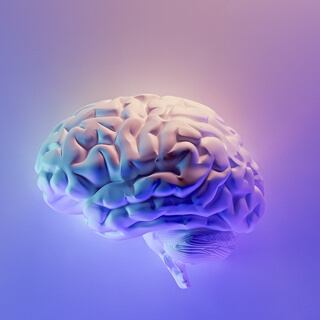
It's a really powerful chemical in the brain,
It surges.
It surges through the body.
And what this chemical does is it gives us this feeling of warmth and care towards other people.
And once this chemical is activated,
It kind of rushes in and kind of spurs the body to create more oxytocin,
Which then encourages even more compassion and more giving.
So it's quite remarkable.
This is what's going on chemically in the body.
And giving does more than just release these brain chemicals.
It stimulates the area of the brain that is involved with meditation and prayer and empathy and compassion,
All of the things that we are cultivating here.
And what's so interesting is that the more that the brain cells work in the same way that muscle cells work.
So if you go to the gym and you know,
At first it's pretty tough to lift a 10 pound weight,
But after training for a little while,
It's not a problem.
You get stronger and the brain gets stronger as well.
The more that we use these muscles,
The more that we engage with oxytocin,
The more we produce.
There was a study done that I thought was really fascinating.
Scientists wanted to determine with patients or people that had multiple sclerosis,
MS,
Like they wanted to kind of figure out what kind of treatments work best.
And so one group of MS subjects,
They were learning kind of coping skills with the deterioration of their muscular body,
Because that's how it comes.
It takes away your ability quite quickly sometimes.
And the other group was more of a support group.
They were able to discuss their illness with fellow multiple sclerosis survivors.
So they had these two groups,
One learning coping skills,
One being involved in conversation.
And after two years,
The results were really clear that the group who was offered help by listening,
Just peer group,
Showed greater improvement.
So giving in this case,
Giving help,
Support turned out to improve the person's overall health more than anything else.
You know,
Perhaps the best thing science has discovered about compassion is that we can cultivate it.
I've noticed just in my own self,
The desire to give grows the more that we give.
I don't have any shortage on giving.
There's just abundant amounts of my being that just can give.
And it really turns out that we're better off for it in the physical body.
The Buddhist path,
The understanding is that,
You know,
We exist in a vast network of life.
And I really got to see that yesterday in New York City when I went there with my son.
Holy cow.
So many of us.
Some of you may feel that New Yorkers are really mean and hard people.
That is not my experience.
I think New Yorkers may be some of the most generous and kind people I've met.
Really amazing.
And in recognizing this fact,
You know,
In recognizing that we are the recipients of the generosity of others in so many ways,
We can choose to orientate ourselves towards others,
Developing goodwill towards them,
And learning to give in all ways to all beings.
In my experience,
There's no greater joy that fills my heart more than giving.
And it's not about monetary giving.
There's that.
And if you have that ability,
By all means.
But it's also just giving selflessly to others.
Sometimes it's just looking at people.
We crossed by this homeless woman.
She was kind of hovering around our family after we had left the theater here in Philadelphia.
And my aunt,
Who's been so deeply conditioned by city life,
She didn't even notice this woman.
But Seth did.
And I did.
And so I just looked right at her and she had this frown on her face,
This deep frown because she wasn't being seen.
And it was so beautiful to be able just to see her and to look at her.
And then she said,
How you doing?
And I was like,
I'm doing okay.
How are you doing?
And she just kind of nodded her head still frowning,
Deep frown.
And then she wandered off.
But in that moment,
I gave her my attention.
And I don't know the impact of that.
But that warmth,
That care of giving it came.
I think we find more and more blessings raining down upon us when we give.
And our hearts are filled with love.
I will close this part of meditation practice with a poem from Mary Oliver called The Gift.
Be still my soul and steadfast.
Earth and heaven both are still watching the time is draining from the clock.
And your walk that was confident and quick has become slow.
So be slow if you must.
But let the heart still play its true part.
Love still as once you loved deeply.
And without patience,
Let God and the world know you are grateful that the gift has been given.