I'd like to read from Ajahn Buddha Dassana from his writing on the Buddhist Buddhism and care of nature.
The entire cosmos is cooperative.
The sun,
The moon,
The stars live together as a cooperative.
The same is true of humans and animals,
Trees and the earth.
If our life is not based on this truth,
This cooperative,
Then we will perish.
So yesterday in our in-person gathering at the Aspen Chapel there was a guest teacher,
Yeshe Lobsang Tenzin was the teacher in the Tibetan tradition.
And he in his Dharma talk spoke of the epidemic of loneliness and disconnection that we're facing in our culture,
In world culture.
There is an epidemic of loneliness.
And what we've been looking at this week is sort of the roots of our disconnection.
We're looking at the disconnection that we not only have with each other but with the very organism that sustains our life,
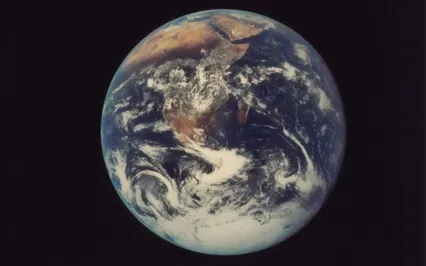
Our disconnection from this planet,
From the earth.
If we think about the earth as just the environment around us and we experience ourselves and the earth as separate,
It's not like it's bad,
It's been conditioned.
But if we live in that earth as separate,
That disconnection continues and grows.
We need to recognize that the planet and the people on it are actually one and the same.
We tend to think of the earth as separate because we've become alienated from it.
I mean if you just look at how alienated we are from our own bodies.
So many of us spend so many hours of the day kind of forgetting we even have a body.
We get so caught up in our work and our problems or we get lost in technology and we forget that we're more than our minds.
And what happens when we forget is that many people get sick because we forget to pay attention to our bodies.
And it's the same way that we've forgotten about this environment,
This planet,
This Gaia,
This earth.
She's a part of us and we're a part of her.
And because we're not taking care of the earth or ourselves,
We've both become sick.
And if we understand that the earth is a living,
Breathing organism,
Just like us,
And that we're connected to it,
To her,
And to each other,
Then we begin the process of healing.
And typically when our bodies are physically sick,
What do we do?
We stop,
We stop our activities and we rest and we pay attention to it.
We have to stop thinking and come home to our body.
And it's the same with the earth.
And the intent with this investigation is to stop and to rest and to pay attention to this giant living cell whose parts are all linked in symbiosis.
The earth is not a person,
But yet she's the mother that gives birth to millions of different species,
Including the human species.
She's created a protective atmosphere with air that we can breathe,
Food for us to eat,
Clean water for us to drink.
A mother constantly nourishing and protecting us.
These are some of the gifts that we've been given.
And with a population of nearly 8 billion people,
Human beings have a major impact on the workings of the earth.
There would be no human life without nature's support.
And if we overuse and abuse the natural world,
We destroy what sustains our life.
This idea is represented in the suttas in a Buddhist fable of a giant fig tree whose fruit was continuously available for people to pick.
But then one man,
After eating all the figs he could,
He broke a branch off of the tree.
And from then on,
In the myth,
The fig tree stopped bearing fruit.
And if this mythical tree represents the entire natural world,
Well,
The fable is a warning for how humans use the world's resources.
This ancient story,
It points to our human activity,
Our consumption,
And how we're changing the natural world.
And for so much of human life on the planet,
We've lived in cultures that kind of understand the covenant of reciprocity that for the planet to stay in balance,
For the gifts to continue to flow,
We must give back in equal measure for what we take.
So let's ask ourselves,
What is our responsibility to the earth?
What are our gifts that we can give to the earth that it so urgently needs right now?
One that I can think of that's among the most potent,
I think,
Is gratitude.
And even though gratitude may seem like a weak tea,
Given the desperate challenges that we have,
It's powerful.
It's a powerful medicine,
Gratitude.
Because the practice of gratitude,
In a very real way,
Can lead to the practice of self-restraint,
Of taking only what we need.
And acknowledging the gifts that surround us creates a sense of satisfaction,
Kind of a feeling of enoughness,
Which is the antidote to our societal messaging that kind of drills into us telling us that we need to have more,
Right?
So practicing contentment is kind of a radical act in our consumer-driven society.
And gratitude is most powerful as a response to what's happening on our planet because it provides an opening for reciprocity,
The act of giving back.
For the Buddha,
The degradation of the natural world is a crisis of greed,
Hatred and delusion.
And we'll talk more about those in the coming weeks.
They're known as the three poisons,
But I like to think of them more as the three operating behaviors.
When you put the label poison on them,
It puts them in the light of bad and wrong.
They're just operating behaviors that we've become accustomed to.
And they are the root causes that need to be addressed to end the destructive impact humans have on our environment.
But from the Buddhist perspective,
We can't harm the natural world without harming ourselves.
So to live ethically in relation to this cooperative process of life on this planet,
We must participate.
That's why I've encouraged you to write your letters to the earth and to share them.
We must learn to care for the fauna and the flora and the rivers and the oceans and the skies and the soil and all the people in a way and that cares for ourselves.
When we care for the earth and we care for ourselves and others,
This is how we uproot our habit pattern of greed and aversion and selfishness and self-inflicted suffering.
When we care for ourselves and our home planet enough,
The only home we have,
We uproot these conditioned responses.
So thank you for your kind attention this morning.
I'll open it up now for questions.