I want to begin this morning by sharing with you something that I read on Tuesday.
All things are impermanent.
They arise and they pass away.
Those who see deeply into this truth experience happiness.
It is said that when the Buddha died,
This was one of the first statements someone said.
It became kind of a funeral chant for Buddhists across all their lineages.
All things are impermanent.
They arise and they pass away.
Those who see deeply into this truth experience happiness.
And this happiness isn't experienced as being total delight and happy all the time,
Joyful.
It's a deeper happiness.
It's contentment or intimacy.
We're touching into what is real in the world.
The world of ours,
Our experience of the world.
And even if it's suffering,
We may not be overjoyed in relation to suffering.
There can still be a feeling of rightness.
Like,
Yes,
This is happening and I want to be with it.
I want to be present for it.
As many of you know,
This Buddhist path puts a tremendous amount of emphasis on change and impermanence,
The transitory nature of things.
But we're not meant to be a victim of change,
Just to float along on the sea of change.
Buddhist practice also involves changing ourselves.
Most people,
They come to this practice because there's some aspect within that they'd like to change,
Particularly not to suffer so much.
As we get to know ourselves better,
Sometimes we see aspects of ourselves that we'd rather not live with.
When I first came to practice,
I had a lot of anger.
And the approach of the Zen tradition was to practice sort of radical acceptance of what is,
You know,
And not try to change anything,
To not have a goal.
So it didn't seem quite right because I had this anger.
It felt like I was supposed to accept my anger.
You know,
Still barreling ahead and bulldozing people with my anger.
I was fortunate to work in the gardens at the Green Gulch Monastery where I began my practice and weeding was a big part of the practice.
And I learned about this teaching from Suzuki Roshi called Mind Weeds,
Like weeding the mind,
Just as the garden,
You know,
In the garden we weed the plants.
We don't want them to be crowded out with weeds,
Those invasive weeds that come.
It's the same thing with the mind.
You know,
We can weed the mind of those invasive behaviors and habits.
It might be okay to have this anger,
But it doesn't do a lot of good for me or the people around me being angry.
So I started working on and pulling those weeds and not being such an angry person.
So that's an example of changing oneself in practice,
Improving oneself in a certain way.
And so as we work with change and explore change,
The invitation is to release into it.
Release is an opening of perspective.
Releasing is not really the same thing as letting go.
You know,
In letting go,
It can be something that we actually do.
The release is something that we don't have control over.
The idea of release is more than just being open to possibilities,
But releasing the idea of control.
And in our ordinary life,
It's actually important to have some degree of control and agency.
But in the spiritual realm,
As we get deeper and deeper in practice,
It becomes clear that letting go is what's needed to let go in a deep way and allow.
Allowing something that's not in our agency to operate and to move.
This is part of the movement of spiritual life.
There's a short poem that illustrates this really well.
It goes something like this.
He said,
Come to the edge.
We said,
No,
We'll fall.
He said,
Come to the edge.
We said,
No,
No,
We'll fall.
He said,
Come,
Come to the edge.
So we did.
And he pushed.
And we flew.
We did.
He pushed and we flew.
What is the edge we get pushed from?
Where we can finally really let go.
And rather than falling,
We become free.
We fly.
What is the edge for us?
This is the question to look.
So being involved in a process of personal change is a big part of our Buddhist practice.
And part of practice is being involved in making choices to support and help that change in a way that it's beneficial for you and for others.
Something that I've learned a little bit about investigating personal change and healing is not like we would address the issue directly.
It might be useful to address something directly that's really hindering your life.
But rather to cultivate healing around this behavior or wound,
Create beneficial conditions in kind of a psychophysical way.
So for example,
To help us deal with anxiety and fear and anger,
It's useful to cultivate a palpable sense of safety,
Of reassurance.
When we feel safe,
Our breathing,
Our physiology of our body,
The heart rate,
We relax.
It changes.
Having a sense of safety creates kind of the optimal conditions to let the whole system rest and reconfigure.
And then the mind and the thoughts and emotions can address and resolve themselves on their own when the right conditions are created.
And that's what we do here.
We're creating the conditions.
I heard a story of a child who was around two and a half years old and he was very aggressive and he would go to play dates and then he would like slug the other children and bite them.
And his parents were concerned about this.
So they went to talk to a child psychologist and the therapist said,
Whatever your son,
Whatever your son is showing,
This violent tendency,
Whenever he's exhibiting that,
Go to him and shower him with love.
But they were worried.
They thought,
Well,
Wouldn't that be like kind of positive reinforcement for the behavior to be rewarded?
So that was their concern.
But they listened to the therapist and they did it.
And very quickly,
The violent behavior disappeared and stopped.
They created the conditions of safety and love and caring for this boy and it stopped.
You know,
And you're not going to reason with it,
A two year old,
But you have to create the conditions that allow something different to happen,
A different context for something else to bubble up.
And they offered love as a solution.
And so that's what,
That's in part what meditation does.
Like taking care of your posture,
Being very still,
Focusing on your breathing,
Letting the breathing calm down and settle you.
Even with the waves and the clouds of thoughts,
Whatever sense of safety you can create for yourself,
Let that sense of safety and well-being nourish you and take it in.
When we really create the conditions to feel safe and capable and loved,
We start seeing and being in the river of our life,
In the flow of things as they appear and disappear,
Coming and going,
Changing.
And at this really primary fundamental layer of experience,
It becomes clear that holding on and clinging doesn't work.
Trying to block or resist what's happening,
It doesn't work.
It doesn't work because it's suffering.
So as we practice initiating mindfulness of the moment,
We're letting go of something in order just to wake up to the moment that's here,
To take the time to clearly recognize what's happening in a different,
Like whatever the activity may be.
Instead of just going along with whatever's happening,
You're actually observing and being part of it,
Present for it.
It's letting go in a moment of what is ordinarily happening in order to step back and recognize what's happening.
To settle back and observe,
We're letting go of what's kind of pulling us away,
Our perceptions.
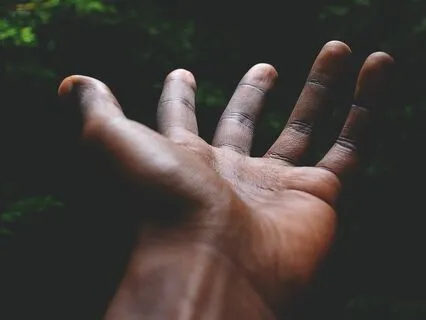
We're able to stay in the flow of observation in order to come back to our world with an open heart and an open mind and open hands.
All things are impermanent.
They arise and they pass away.
To be in harmony with this truth brings great happiness.