So we're in our second week of the series on the Four Noble Truths and these are considered the central teachings of the Buddhist path.
The myth is or the lore is that the Buddha's first teaching was to a group of five ascetics that he had practiced with previously and what he shared with them was the teaching on these four truths that he realized and across all Buddhist traditions in all the countries it's gone to all of the traditions rest on these four noble truths and even though they have different practices and appear differently and have different rituals they all believe in and derive their teachings from these truths as a framework for understanding our life better.
So even if you've heard them and you feel very comfortable and you have knowledge into them this framework it changes just like we do.
The Buddha realized these truths through his direct experience.
So this framework,
These it doesn't assume that or require even that we believe in something because these are things that we can see for ourselves.
This is something that we can discover for ourselves.
You know that there is pain in this life.
We know this.
We've talked about it.
We understand where the pain in this life is and the cause,
The cause is reactivity,
Is clinging,
Is contention with our moment to moment experience and there's a possible end to this affliction of our suffering,
Of our reactivity,
Of our pain.
There is a path.
There is a way out of this cycle of reactivity and contention with moment-to-moment experience and one of the central metaphors that the Buddha,
The Buddhist text actually makes reference to is that dukkha,
The pain of this life,
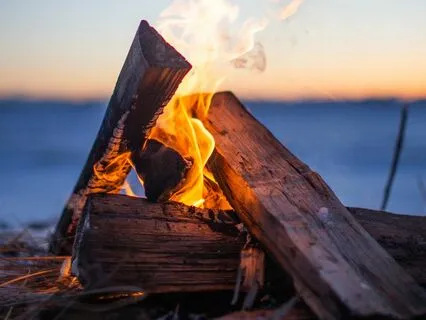
Is sometimes seen as fire.
This is the metaphor.
A fire that's burning within us.
Often in the text you'll see references to we're burning.
The world is burning in a certain way.
These fires,
The hurt,
The stress,
The pain that we have.
You can look around the world and see the world is on fire.
You know there is so much pain.
There is so much distress.
So much stress that people are living under.
You know even in the United States one in five children are living in hunger.
The fire of a hungry belly.
You know that's so painful.
So when the Buddha talks about suffering in the early text he uses this metaphor of fire over and over again.
The fires of greed,
The wanting,
The fires of hatred,
Of pushing away,
And the fires of delusion which we can't even see within ourselves.
We can't even see the ways in which we're deluded.
And he's talking about these powerful mental attitudes and motivations.
And when they're very compulsive and very strong these fires can destroy lives.
So the metaphor of suffering as fire.
This is powerful.
And so what is the fuel?
What is the fuel?
And that's where we're looking today.
The fuel is holding on,
Is clinging,
Is grasping.
Grasping the wanting or the not wanting even.
This is the fan that flames are suffering.
And it's not always easy to see how we cling,
How we hold on.
Our minds have been so habituated.
It's not always clinging or grasping in an obvious way.
Like when there's reactivity it can be a simple liking and not liking.
And the way that we hold that liking and not liking,
That can be the fuel for the fire.
A simple pushing away or not wanting or a drawing towards,
That adds more fuel.
So seeing and starting to see what we cling to,
How we hold on,
To what is ultimately impermanent,
Transient,
Changing.
This is important.
Let's say that we're standing in one of our rivers near where we live and we try to stop the river.
You know,
We build a dam.
It's not going to work.
Fighting the river doesn't work.
Clinging to the river of our life that is changing all the time is guaranteed to be a source of suffering.
So the alternative is to see,
And this is where it takes a kind of a pivot,
The alternative is to see this impermanent world all the time or at least more regularly.
Because when we can see that it's always,
Always changing then we can relate to it differently.
So the changing world actually becomes the medicine for our life,
Not the illness,
Not the fire.
So what is it that we hold on to?
In the text it states that we cling to what is known as the five aggregates.
These are like the five fuels.
They are the attachment that we have to the body,
So the first aggregate is the body,
The attachment that we have to our feelings,
The attachment that we have to our perceptions,
Very important,
To our mental formations,
The way that our mind works,
And the attachment that we have to our consciousness.
And they're constantly changing and unfolding and unconsciously a lot of the time we're clinging to them,
To this body,
To this perception,
To this formation of my thoughts,
To my feelings.
So it's not a big surprise that we experience the pain of that,
The stress of our perceptions,
The stress of our aging,
Changing body.
But if we allow for these psychosomatic ways that we see ourselves to just flow then we can find our ease and that's where it takes this remembering.
So this week is the second noble truth of the arising of suffering and one of the most common understandings of this second noble truth is about the cause,
Looking at the cause in our everyday life.
So the question for all of us to ask ourself is what is the cause of my distress,
Of my pain,
Of my feelings?
Just this question can open up the field.
In the Pali text known as the Majjhima Nikaya which is a large volume,
It's actually in the other room,
But it's quite an important volume,
The Middle Length Discourses.
And what it says in the Majjhima is that most people fail to see reality because of wanting.
They're attached.
They cling to material objects,
To pleasures,
To things of this world.
This very clinging is the source of suffering.
This very clinging.
It evoked in me a saying that I heard years ago and I'm sure some of you are familiar with it.
It was the saying that they who die with the most toys wins.
You know it was during that the 1980s greed era,
You know.
Isn't that crazy?
Those who die with the most toys win.
Now it's like those who die with the most experiences win.
But win what exactly?
You know a plaque?
A headstone?
I think it should be that they who die with the most presents wins.
To have an easeful death is preferable.
Like that's what the Buddhist path points to.
And this idea of contemplating our death,
You know,
Not knowing when it's going to happen,
But that it's certain that it will and we have no idea when.
This really helps remember impermanence.
When I wake up in the morning I am just so grateful that I have another day.
It's that simple.
Everything changes.
I don't know the moment of my death,
When it will happen.
I know that it's certain and I'm grateful that I have another day with my family and my friends and my community of practitioners.
It's always changing.
So in practice we're learning to look at and ask the question,
You know,
What is the cause of my stress?
Can we look at the cause?
And like our meditation this morning,
Can we see well what's happening inside me right now and can I be with it?
When we learn to let it be,
We begin to see it more clearly and then it evolves and it shows itself.
And as we let things be and relax with it,
We start to see how it flows and changes and moves.
All things are impermanent.
They arise and they pass away and the teaching is to be in harmony with that truth.
And this is the greatest happiness,
The happiness of the Buddha.