So at the end of our talk on Tuesday,
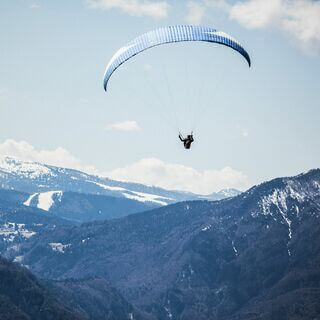
I described to you how meditation is kind of like putting yourself in a wind tunnel.
So you put yourself in this wind tunnel and you see where all the resistance is,
Where all the wind drag is.
And we start to understand where we're attaching,
Where we're holding on and where we're clinging.
What is it that we're resisting?
And there's a variety of things that can cause this wind drag that can slow us down.
And the invitation that I left you with was to explore your attachments,
Maybe even write them down.
Your physical attachments,
Your attachments to people,
To things,
To our mental attachments,
Our attachments to our views,
Our ideas,
Our political positions,
Really to start to see what we're attached to.
So one of the examples in our little valley,
You know,
Where we can recognize that it's relatively,
It's a relatively affluent place to live.
Not that everyone's affluent by any means,
But relatively.
And so I'll bet there's a fair percentage of you who live in a house that's bigger than you really need.
And so why do you live in a house that's bigger than you need,
Right?
Well because it's pleasant.
It's more enjoyable.
So some take on an extra job or take out a bigger loan so that they can live in this bigger house.
There's a sacrifice.
All that you have to do.
A lot of effort kind of goes into paying for the rent or the mortgage or whatever the financial arrangement is so that you can have this pleasant experience.
And so it could be said,
And this is sort of a mundane example,
But it could be said that then there's a certain attachment or clinging or drive for that pleasantness,
That pleasure,
Which underlies some of the choices about how a person lives their life.
So that could be true with the things of your life.
You don't have to do things that you don't really need,
But why do you do them?
Why do we do these things?
Because they bring us pleasure.
We feel more comfortable.
There's some people who kind of have an unconscious policy in their mind that if only things are pleasant and comfortable,
Then everything is okay.
So the attachment to pleasure and comfort is said to be one of the forms of wind drag.
The second one,
The second form of wind drag is our attachment to our opinions and our views.
And I know for me,
This attachment to view has caused me a lot of suffering.
It's where my main suffering resides.
It's like the whole story,
The story is our whole narrative about our life,
Our views and our opinions and our philosophies,
Our politics,
This whole my story.
So we're attached to our story of our people,
Of our family,
Of what happened to us earlier in our life,
The story about how our life is supposed to be.
And there's all these stories that we tell ourselves.
Our society tells us stories,
Tells us stories about what it means to be successful.
The American dream,
Isn't that a story?
People bought that story that if you're happy and successful,
You bought into that dream.
That's that story of the American dream,
Be successful.
And that's another one of those wind drags.
There's a certain kind of grasping to that story.
There's a grasping when we are really committed to our views.
And when we sit and we meditate and we get quieter,
The stories that we're attached to will continue to operate.
It's hard to just stop something because you're meditating.
If you're attached to it,
They appear,
They bubble up.
And they appear as unresolved issues or frustration or drive or preoccupation.
And so we just have to feel it,
To see it,
To hear it.
Wow,
That's a lot of wind drag.
That's a lot of wind drag,
Right?
So the third type of attachment,
And this is really big wind drag too,
Is the wind drag of our self image.
The attachment to self concept,
Self ideas,
The way we represent ourself to ourself,
The way that we want to represent ourself to the world.
We try to make ourself safe.
That's part of what we do in this practice.
And we try to get what we want in the world by having people see us in a particular way.
And so often there's kind of,
There's all kinds of people who kind of maneuver and say things and do things and act in ways in order to make a particular impression.
So people see you in a certain way.
It's said that many people give more care to what they wear and how they present than what they actually say because of the impression that it gives.
And so as we get quiet and still,
You know,
We get to see this.
If we're attached to self concept,
That appears in the mind as a form of agitation.
And that agitation,
It starts to feel uncomfortable.
And so part of the function of meditation is to learn how to relax and to soften,
To find a way of relating to this self differently in the world.
Where self concept and self image and self representation and identity are not something that we're holding on to,
That we're grasping to.
We just hold it really lightly.
And then this fourth kind of attachment,
The final attachment,
It's a little obscure.
It's difficult sometimes to understand.
And that's the attachment to becoming.
And one of the ways to understand this is the attachment to just existence itself,
To being alive.
And when people hear this,
It can be a little discouraging.
If I'm not attached to being alive,
What's the alternative?
But in Buddhism,
The solution is not to be against life,
But rather not to be attached to it.
And to attach to living is the fear of death.
You know that we're fearing death and that's powerful.
And what I like about this image of wind drag is that we're not talking about a should,
We're not saying there's a moral obligation.
It isn't like you're a better person if you do this work.
But rather,
If you're sensitive and you feel the resistance,
You feel the wind drag,
You feel the suffering and the pain of these attachments,
That's really good news.
And there's a practice technique to work with it.
There's a way of working with it and freeing yourself from it.
So one of the words in the poem that I read that started us out was the word dismay.
The Buddhist said,
Violence gives birth to fear.
Just look at people and their quarrels.
I speak of my dismay.
The word dismay is translated from the Pali word Samvega.
And dismay doesn't quite capture what Samvega means.
It's a combination of feeling a certain kind of uneasiness,
A discontentedness with the conditions of our world,
The situations of human life that we encounter.
Discontent the motivation to practice to overcome the discontent to find an alternative.
So sometimes the emphasis is more on the sense of discontentedness like I'm really tired of this,
The Dukkha.
I'm tired of all this running around doing all this stuff and building up this sense of self and putting on all these walls and trying to get all my ducks lined up.
And once I get everything lined up and everything is perfect,
Well then what happens?
It all falls down again.
And then I have to do it again.
And it just keeps on going on like this.
And so Samvega is what gives us the courage or the inspiration or the strength and the power to keep going,
To keep going.
To have this Samvega is to have the energy to encounter the world,
Seeing it for what it is.
To understand that it's not supposed to be distressing in the end,
But rather energizing in a good way.
Just like compassion,
It can be energizing to do a lot of good in the world.
But you don't feel compassion unless you feel suffering too.
Compassion and suffering travel together.
And Samvega comes together with seeing the conditions of the world,
Seeing the ways that we're attached,
The certain aspects of attachments that are like the wind drag of our life,
That reside in all of us.
And seeing that there's an alternative,
This loosening the grip.
It's just loosening the grip.
And my hope is in that sharing this,
That some of us become an example of that alternative.
That some of you experience yourself as understanding yourself well enough.
Where you understand these are my attachments.
These are my deepest resistance.
These are where,
This is where I hold.
These are my fears.
And that we learn,
We learn together and we've discovered how to pluck out those attachments.
And plucking them out is just actually the courage to really see them.
And to open to them.
It's a really beautiful thing to do.
And so these teachings,
This technique and practice that we're doing together,
It's all there to offer support and encouragement to do this work.
So I thank you for your attention this morning.
Thank you,
Lisa.