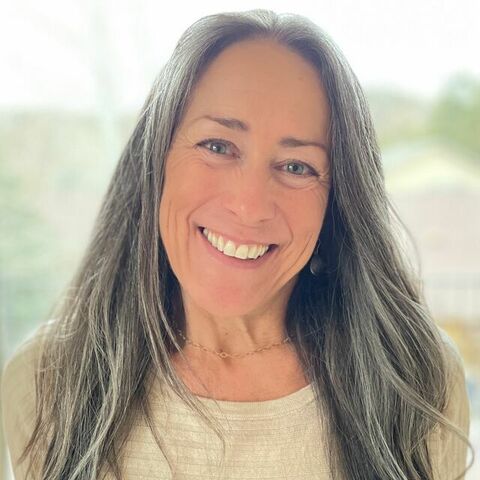
So in these weeks ahead I'll be offering an introduction to meditation.
I'm doing some formal training right now and I feel really inspired to explore kind of the heart of this practice that we do together.
So I have a lot of experience meditating.
It's been over a quarter century and it's been a journey.
You know this practice is just a journey.
It's the journey of our life.
You know and the journey is is really seeing and experiencing our life fully.
You know we we practice being present in all our activities and by doing so there is a kind of fulfillment and it's not it's not the conventional way that we find fulfillment like being in a partnership or having lots of recreational opportunities or having a lot of money.
Those conventional ways of fulfillment are considered kind of fragile from this Buddhist perspective.
They easily disappear and get challenged.
So the kind of fulfillment that we're experiencing is much deeper.
What's so refreshing I think about these Buddhist teachings is that an insight practice,
That's what we're doing,
It doesn't really matter if you identify as a Buddhist or not.
It's it's actually not that important.
You don't have to adopt Buddhist beliefs or ideas.
The way my teacher describes it,
The practice doesn't need Buddhism.
But Buddhism needs the practice.
So when I talk about Buddhism you can really take it or leave it if that's not how you identify.
Because I know that some people get a little uncomfortable with Buddhist references and so I just want you to know that it's it's not really the practice doesn't need Buddhism.
So what I intend to do and what you can expect in the next weeks is kind of progressive instruction and although many of you have had these instructions before,
I find that you know it's just very helpful.
I mean I've been practicing for quite a long time and I always come back to these basic instructions because I forget.
So today we'll explore meditation posture and meditation on breathing.
And the next week we'll explore the body.
You know the body is so important to this practice.
It's so central.
More so even than the breath in my experience.
And then the third week will be mindfulness of emotions.
And then the fourth week will be mindfulness of thinking.
For some people who have been meditating for a while there is a war going on between thinking and meditation because they think they think too much and that they shouldn't be thinking.
And there's really no divide like that.
There really isn't.
In mindfulness practice if we're not living in a divide like the idea is to not be living in a divide on how things should be and how things actually are.
So our practice is to learn to bring attention to our thoughts in a way that we're not caught in the thoughts and we're not bothered by when thinking is happening.
And we'll get more into that.
That's such an important topic.
And then the fifth week we'll pull it all together so that we can see how this applies to daily life and how we are cultivating new habit patterns.
So for those of you that have practiced with me for a while this is the path that we'll take and we've been taking.
And I encourage you to stay with this sort of step by step mindfulness.
And for those that are new,
Well,
Perfect timing.
I think it's important to say that many people find this practice challenging.
They're restless and they're not used to sitting still.
And so the invitation,
The offering is to consider that there is no right or wrong way to practice meditation.
There is no success or failure.
And maybe we can even just do away with the whole concept of right and wrong.
It really is just a waste of time to have those thoughts when you're meditating.
Like,
Am I doing it right?
Am I doing it wrong?
It doesn't go anywhere.
Whatever happens when you're meditating is fine.
It's really just one more thing to be aware of.
It's all about recognizing what is,
Not what you think it should be.
You know,
Many people have challenges in life.
And of course,
Of course,
We want to be happy.
But the path in this tradition is to find that happiness by learning to be present with this experience now.
And in a useful and productive way.
It's kind of like the art of showing up for our life no matter what happens or what is happening.
So our journey together is really about having a way of using our attention in a useful way.
Like whatever's happening,
How do I hold this with care?
How can I relax even with this?
That's the practice.
So I invite you now to take another three breath journey together.
Maybe asking yourself,
How am I right now?
Maybe you're at your three breaths.
And just to say that this three breath journey is a useful practice in our day.
We can use it as a way of developing practice.
And we start to build up some familiarity with what's going on in the mind and the body.
How are we in this three breath journey?
It allows us in a small way to let go of just for the moment,
Whatever we're caught up in.
And the accumulation of these moments in time can be really helpful.
So classically,
In this teaching,
We are taught to sit on the floor,
Keeping a low center of gravity.
But many of us sit in chairs,
And that is just as well.
Some people lie down,
And that's perfectly okay.
The idea is that we want to be upright in whatever posture we're in.
You want the spine to be extended,
And the natural kind of arch in the lower back,
We want that to just be there,
Kind of being relaxed and upright.
And if you're sitting in a chair,
The classic instruction is to sit where both feet are flat on the ground,
But the knees are not higher than the hips,
Because that actually can create problems over time.
It can be very painful.
It moves into pain.
So the feeling is to have stability in the feet.
And if possible,
Sit as upright as you can,
But without tension.
Some people find it useful not to use the backrest on the chair.
There's kind of an alertness when you're not resting against something,
But holding the body upright yourself.
So just to say that we want to be relaxed,
And we want to be comfortable,
But not like a couch potato.
Relaxation is very,
Very helpful in this practice.
But if it's overemphasized,
Which I sometimes overemphasize relaxation,
I'll admit it.
When we overemphasize it,
What happens is we miss out on kind of that clear seeing,
That clear awareness.
So we're looking for a balance between relaxation and calmness,
And being alert.
And some of this is found through our posture,
You know,
Creating a posture in the body that supports being both calm and alert.
In this tradition,
This insight tradition,
We meditate with our eyes closed.
In the Soto Zen tradition that I learned originally,
We meditate with our eyes kind of looking downward with a very loose focus.
Either way works.
You find what works for you.
Traditionally,
The hands are resting on the thighs.
For many,
Many years,
I rested the left hand and the right with the thumbs touching.
That's kind of the way of Zen.
So again,
Whatever feels comfortable,
I alternate quite often between the two.
I think a helpful rule of thumb is that you want your elbows at your sides and not in front of you.
Because if they're in front of you,
Again,
That's a pulling on the spine and that becomes problematic.
And sometimes,
You know,
In our life,
We don't see clearly what's happening.
We're caught in our thoughts and our activities.
And it's useful because we get caught in our thoughts and activities to have a point of reference.
So in meditation,
We use our breath as a reference point.
And for some people,
The breath is not a safe and comfortable reference point.
So then that becomes more of a body practice.
And we'll talk about that next week.
And so as you probably experienced,
When you sit down and try to follow a series of breaths in a row,
You very quickly realize you can't.
You know,
My mind is out of control.
And maybe you didn't know that.
You didn't see that.
So when you see,
Oh,
The mind is out of control,
The meditation is actually very successful.
Not at following the breath,
Which is not necessarily the point.
The point is to see yourself more clearly.
Look at my mind that's out of control.
In this tradition,
It is better to know than to not know.
So having that reference point,
Trying to be with the breath,
And not being able to because the mind is spinning or preoccupied from simply just being here.
Rather than being upset that your mind is preoccupied,
Just to know it and to see yourself clearly.
Look at that.
I'm so preoccupied.
You're getting to know yourself better.
If you can't stay with the breath,
That's okay.
The meditation works when you see what it is that's distracting you.
It's so important to understand that.
The main point of this practice is to see yourself clearly.
And if you're able to stay with the breath,
Over time,
You actually will be able to stay with the breath when you accept that for this time,
Your mind is preoccupied.
And if you're able to cultivate some breath through the three-breath journey,
Then the breath can be very calming.
If you can exhale a little bit longer,
It can have a calming effect.
And as we get calmer,
We start seeing the deeper layers of what makes us run.
We see some of the common patterns that we have.
Our beliefs and perceptions that are sort of hidden come to the surface.
And we start to see those things too.
So we can't fail in this practice.
We're all doing the best we can.
And then we learn from how we're not doing it.
Like,
Wow,
Look at that.
I can't stay with my breath because I'm so busy planning my future.
And look at all the ways.
Wow.
And once we see this,
We can be really simple with it.
We don't need to judge or criticize ourselves.
So I'll stop here today and take questions.