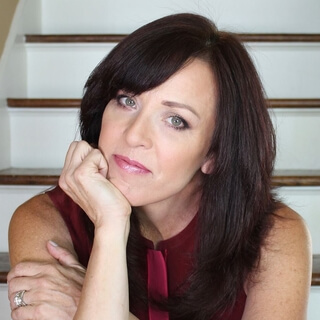
Welcome to the Breakdown to Breakthrough Podcast.
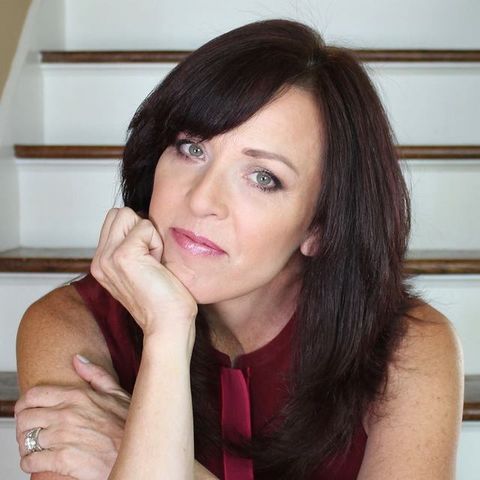
My name is Lisa A.
Romano.
I am a life coach,
Best-selling author,
YouTube vlogger,
Meditation teacher,
And expert in the field of codependency and narcissistic abuse.
I am a believer in the power of an organized mind.
My aim is to help people learn what it means to live above the veil of consciousness rather than living a reactive life.
May your heart feel blessed,
Your mind feel expanded,
And your spirit find hope as you spend time with me here at the Breakdown to Breakthrough Podcast.
So today,
We're going to be talking about how easy it is for a parent,
Although they don't recognize it,
To teach a child how to be inauthentic or disingenuous.
Now the reason for this session is because while coaching a client of mine,
I began to realize in his speech that he really had a fear of expressing himself,
Which is a fear of being authentic.
So from my perspective,
He is in a great place of change where he's out of his comfort zone,
He's left his job,
And now he's able to explore his passion,
Which is scary,
Especially for a young man,
But he's not married,
Doesn't have a mortgage,
Has no children,
Has himself to take care of.
So he's at a great point in his life where anything is possible.
He's stepping into the quantum field of potential,
And he's doing what he needs to do to begin lining up with creating this business that he loves,
And yet he's feeling intimidated to tell people about this change,
And he said,
I just don't know why.
And as we flushed it out,
We came to the conclusion that he had been trained by his dad to be afraid to tell the truth and to only speak about awesome things,
To only talk about accomplishments.
In other words,
To wear a mask.
So he had learned early in his childhood that there was an intolerance for imperfection.
There was an intolerance for not knowing exactly what you want to do with your life.
So he was trained to feel as if not knowing what the next step was a bad thing,
And you should be ashamed of it.
So the fear of telling the truth was tied to some unconscious fear that was tied to unconscious shame.
Shame when instead of him feeling excited and proud of himself for taking this chance and for trying,
Knowing that so many people on their deathbed regret what they didn't do versus what they did do.
So many people regret not taking the chance to fail,
Knowing this consciously,
But really not understanding the heart level or the emotions that were stirring inside of him despite what was happening in him consciously.
So this is the cognitive dissonance that we talk about in psychology.
This is the heart brain incoherence that we talk about.
If we're talking about meditation,
The quantum field,
We're talking about this inability to line up.
We're talking about a disconnect in the emotional realm.
We're talking about shadows that we've yet to bring to the light,
And that's the benefit of coaching or therapy or doing your own self healing work in which you are focused on figuring out what's wrong.
Talking about what's wrong doesn't fix what's wrong.
Figuring out what's wrong,
How it went wrong,
And then deciding where you want to go.
That's the recipe for achievement,
Right?
So today we're going to talk about the complex realm of child development and the influence of parental behavior as it relates to teaching a child to not be authentic.
While many parents strive to foster authenticity in their children,
Others may inadvertently cultivate an environment that essentially stifles self-expression and genuine identity.
So we can call this dysfunctional parenting.
So you could look like the most wonderful parent in the world.
Certainly I thought I was doing everything right,
But I wasn't.
There were things that were going on inside of me,
Unhealed trauma,
Mother wounds,
Shadows,
Self-independency,
The fear of disapproval,
Needing to appear perfect,
Afraid to appear weak to my parents.
So I was never able to be authentic.
So I wasn't as authentic as I could and should have been.
So how could I have been teaching my children to be that authentic?
I couldn't.
Now,
The wonderful thing about being a dysfunctional parent or a toxic parent is that at any point in time,
You can start moving yourself up the emotional scale,
Up and out of the subconscious mind,
And you can go from being unconscious to far more conscious and far more functional and emotionally intelligent.
So dysfunctional parenting can manifest in very,
Very different ways,
And this will lead a child to adapt or adopt behaviors that prioritize approval over authenticity.
And so I want to talk about three key ways that dysfunctional parenting can train children to suppress their true selves.
Number one is conditional love and approval.
So one of the most significant ways that dysfunctional parenting affects the child's authenticity is through the use of conditional love.
When a parent only expresses affection or approval when the child meets certain expectations of theirs or behaves in a way that only the parent thinks they should,
The child learns that their worth is contingent upon their ability to conform to what the parents want them to do.
So there's very little wiggle room for a two-year-old to make a mistake or a five-year-old to make a mistake or a seven-year-old or an eight-year-old.
You're not allowed to express yourself.
You're not allowed to make mistakes.
And so conditional love and approval,
Oftentimes immature parents will take what their child is doing personally.
So you have a two-year-old that's acting out in daycare,
And rather than focus on correcting the behavior,
The mother or father will make it all about them.
What does the nursery school or daycare teacher think about me?
What are people going to think about me?
That will show up in the energy between the parent and the child,
And the parent might not know they are offering the child the vibration of rejection and not even know it.
For example,
Another example actually is a parent might praise a child for achieving high grades or excelling in sports or being nice to everybody while ignoring or criticizing them for their unique interest or struggles or for saying no to someone.
This creates an internalized message that love is earned through performance rather than an unconditional bond.
And as a result,
Children may feel pressured to mask their true selves,
Adopting personas that align with their parents' expectations,
Which is very sad.
And then over time,
This can lead to a profound disconnection from the genuine feelings,
Interest,
And identity of the self.
And this is definitely a precursor to codependency,
People pleasing,
And feeling as if you have to prove that your existence is valid in the world.
You have to justify the fact that you breathe.
The second way that this takes place is through manipulation through guilt and shame.
So dysfunctional parents often employ guilt and shame as tools for control,
Which can deeply hinder a child's ability to tap into the true self,
Their true emotions,
Their true needs and wants,
And feelings to be authentic.
When a parent expresses disappointment or disapproval,
It can create a sense of obligation in the child to conform to the parent's desires,
Even at the expense of their own feelings and preferences.
So let me give you an example.
For instance,
A parent might say,
I sacrificed so much for you,
And this is how you repay me?
Such statements can instill a sense of guilt that compels the child to prioritize the parent's needs over their own.
And this also speaks to the idea that the attachment to the parent is far more valuable to the child's survival than the authentic connection to the self.
So the connection to the self is a threat to the attachment to the parent.
And as a result,
Children may learn to suppress their true emotions and desires to avoid conflict or feelings of inadequacy or develop a very deep fear of abandonment and rejection.
And this manipulation can lead to a lifelong pattern of people-pleasing behaviors where the individual struggles to assert their own identity and preferences because of a myriad of unconscious fears.
And the good news is that with the right help and the right information,
You can become aware of these patterns and breakthrough.
So number three,
There is a lack of emotional validation.
So dysfunctional parents often struggle to provide emotional validation,
Which is essential for developing a child's strong sense of self or identity.
When a child expresses their feelings or opinions and the parent responds with dismal ridicule or indifference,
It sends a message that their emotions are not valid or worthy of attention.
For example,
A child might come home excited about a new hobby only to be met with a parent's eye roll or negative comment.
Or they just don't acknowledge that the child has had this accomplishment,
Which is often the case with a narcissistic mom or narcissistic dad that refuses to validate their scapegoated child's accomplishment.
Even though they know more than anything that scapegoated child really needs and is trying to prove their validity or their worthiness to the parent that they need.
But even though the narcissistic parent or toxic parent knows exactly what that child needs,
They intentionally withhold it.
Over time,
This lack of validation teaches the child to distrust their own feelings and to view their emotions as unimportant.
And so this is where dissociation comes from,
Like why bother?
My feelings are irrelevant.
They're a problem.
No,
It's better for me to focus on other people's feelings,
Which is where codependency is rooted from.
And that's why it's so easy for a narcissistic predator type personality to victimize someone from this type of a childhood because they don't have that center.
They don't have that strong sense of self.
They don't have the ego boundary,
The right to say no or to voice an opinion or a complaint was obliterated by dysfunctional parenting.
The good news is that you can figure this out and you can go back and begin to rebuild these ego boundaries and find your way back to the divine self.
Although it is a difficult journey to take,
It's the best journey you could ever take.
So consequently,
They may become adept to hiding their true feelings and their desires also leading to disconnection from their authentic selves.
Again,
When you are codependent,
You have a loss of selfhood and oftentimes it's because you were raised in this type of environment.
This can manifest in adulthood as difficulty in forming genuine relationships or it also will exhibit as a pervasive sense of emptiness and of loneliness.
If you grew up in a home where you heard things like this,
Like whatever happens in this house stays in this house,
How dare you tell your teacher that your father did that?
What's wrong with you?
Why did you tell people that?
You're being taught that you are supposed to lie to the world and lie to yourself and pretend that what's happening in your home is not happening in your home.
What are you supposed to do as a child?
The people that you think that you need and you do need to survive are threatening you with being ousted from the family,
Excommunicated if you dare to tell the truth.
If you dare to even express your truth,
Which was my case,
The fact that I had feelings about the way that I was raised was a threat to my family system and so I very much felt like it's better for me to just stay away from everybody and it was.
So if you grew up in a home like that,
You're actually being taught to be inauthentic or disingenuous.
You're actually being talked out of your authenticity and the only way for you to be happy is to find yourself,
Find your way back to being authentic.
Now in conclusion,
The impact of dysfunctional parenting on a child's ability to be authentic is profound and can have lasting consequences.
So by fostering conditional love,
Using guilt and shame as manipulative tools and failing to provide the proper emotional validation every child needs to feel good enough to feel like their feelings are valid in order to go out into the world and say,
This is who I am.
Parents can inadvertently train their children to suppress their true selves.
So how can this help you?
Understanding these dynamics is crucial for both parents and professionals working with families.
So by recognizing the signs of dysfunctional parenting,
We can all work together towards creating healthier environments that do foster authenticity,
Allowing children to grow into confident individuals who can embrace their true identities.
Parents who are aware of these patterns can take intentional steps to break the cycle,
Providing their children with the unconditional love and support necessary for authentic self-expression.
This is us,
Dear one,
Being the cycle breakers we were born to be in this time and in this space.
And as we commit to breaking these generational chains,
No matter our past,
We heal the collective unconscious.
We change the patterns even in the collective unconscious.
And I feel that is the work that we should all be striving for.
So thank you so much for joining me here on Breakdowns to Breakthrough.