Welcome to Breakdown to Breakthrough,
The podcast that empowers you to transform your life by awakening to your true,
Authentic self.
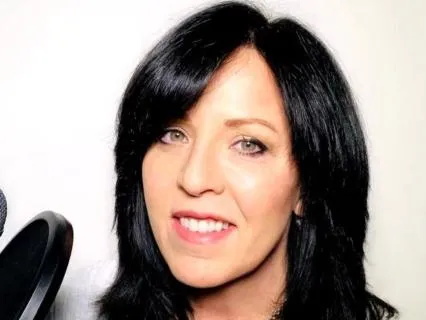
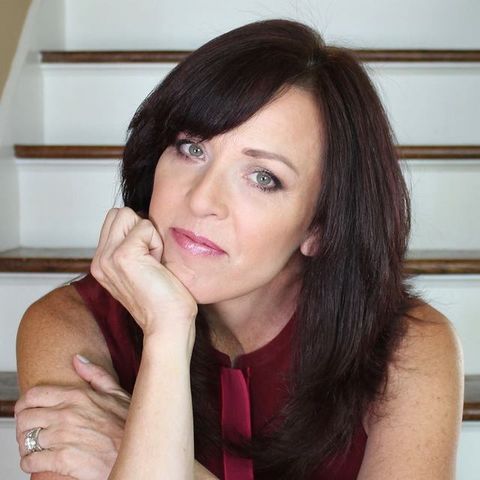
I'm Lisa A.
Romano,
Your host.
As an award-winning author and certified life coach,
I've dedicated my life to helping others understand the incredible power of an organized mind.
I believe that true empowerment begins with awakening to our false self.
My mission is to support you on your journey toward mental and emotional regeneration through conscious and deliberate awakening.
In this podcast,
I'll share insights,
Tools,
And transformative stories that illuminate the path to healing and self-discovery.
So today we're going to be talking about why adult children from toxic homes,
Those of us who are raised by narcissistic parents,
Those of us who are identifying as codependent today,
We fawn,
We people-please,
We are perfectionistic,
We are those who fear other people's negative behavior,
We are hypervigilant,
We confuse intimacy with infatuation.
We're going to be talking about why it is so many of us who struggle with these issues really struggle to be able to set a boundary.
And I do believe that once this clicks,
It's going to be easier for you to recognize like it really isn't your fault.
That what happened to you in childhood really is why you feel the way you feel and why it's so hard for you to set a boundary.
Now in order to set a boundary,
You have to have a sense of identity.
You have to have a sense of who you are.
You have to have a sense of I am enough.
And if you are the adult child of an alcoholic,
The adult child of a narcissist,
Then your needs were either never met or they were met very inconsistently.
And so you develop this sense that who you are and what you need is unimportant.
If you grow up feeling unimportant because your needs aren't getting met,
Because dad's a narcissist and mom is a codependent and mom's is being absolutely suffocated by her narcissistic husband and she lives in fear of him.
In essence,
What this is,
Is it's a dynamic in which one parent is completely domineering and scary.
And for you,
The way you look at it is your other parent just goes away and you internalize that as ignoring who you are.
And you deeper internalize that to mean that I am unworthy of protection of mother from this narcissistic or alcoholic father in this example.
You're observing this childhood experience and you're assuming things about who you are that are not true.
And that is not your fault.
This is neurology.
This is psychology.
This is what happens.
Children only know that they have worth because people in their life consistently meet their needs lovingly,
With warm affection.
Children only know that they have value by how well attuned the people in their life are to what's going on inside of them emotionally,
Because children are their emotions.
My little three-year-old granddaughter,
As far as she's concerned,
When she's sad,
She is that sadness.
If grandma pushes it away,
I'm not pushing the sadness away.
I'm pushing her away.
And we want to reflect on what we experienced as children.
What was that like for us?
To grow up and have our needs either not met or to be inconsistently met or to be criticized or chastised or humiliated or consistently pushed to the side.
What was that like for us?
What did that create in us in terms of an inner narrative?
Who did we think we were back then?
Today,
Do we think that we have value?
Do we feel like we have value?
Are we insecure in relationships?
Do we smother people?
Do we smother easily when people want to get to know us?
Like,
What's happening with us?
This basically comes down to having absolute boundary issues,
Being unable to set boundaries in relationships.
But it's always deeper than that.
Because I can't set a boundary unless I know who I am and unless I know what my needs are.
And if I as a child consistently had my needs unmet,
If I was pushed to the side,
If I was expected to shush because of another sibling,
Or if there was a major issue in the house and I got the sense that whatever was going on with me was irrelevant compared to what was going on with dad or my sister or my brother,
Or if I got the sense that my emotions were a burden,
If I got the sense that love was conditional,
Then I had no opportunity to find out who I was because the people that were supposed to be nurturing this sense of self within me were sick.
They were toxic.
They were caught up in their own drama and their own trauma.
So I can't set a boundary.
I can't ask to get a need met.
I can't even pick out a movie because I'm too afraid to speak the truth because I've managed my life by being hypervigilant and making sure that everybody else in my life is okay.
That's the way I was raised.
That's tied to abandonment trauma.
That's tied to survival.
I don't survive when I fall into the self and think about what does Lisa want.
I survive when I fall out of the self.
I survive when I detach from the self.
I survive when I abandon the self.
I survive when I detach from my needs,
When I suppress my needs,
When I ignore my needs.
Now a lifetime of this for someone who's struggling with codependency ends up that in a relationship in which you cannot set healthy boundaries.
In order to set a healthy boundary,
You have to know what you need.
And for adult children of alcoholics,
Those raised by narcissistic parents,
Those raised by sometimes well-intended parents who are controlling helicopter parents,
It's about their needs for their child.
It's about what they think for the child.
It's about what the parent feels.
It's not about what the child feels.
It's not the child's experience.
It always comes back to what's happening outside the child.
I'm so excited that with so many different platforms,
Word is getting out.
This idea that we have to care about the child's experience of us,
Us as parents,
Us as grandparents,
Those who are around children,
Teachers,
Counselors,
Doctors.
We have to now consider,
We always should have,
But it wasn't this way.
Children were seen.
They were never heard.
I heard that my whole life growing up.
Children should be seen and not heard.
That was my mother and father's mantra.
And they stayed true to it.
And what that did was that taught me to not hear myself.
And so how do I set a boundary if I can't hear myself?
I can't.
So now what happens?
I attract emotional manipulators.
I attract people who don't care about relationships in the sense of keeping it fair and negotiable.
I attract people who can sense that I have troubles with boundaries.
And now because I'm in a relationship and all codependent relationships all start off with idealizing their partner,
We fuse with people.
We are so hungry for love that those initial days inside a relationship,
Even though it's infatuation and it's chemistry,
We end up fusing with people because we're feeling finally like someone sees us because we felt so unseen.
But six weeks,
Six months,
Six years of this fusion,
Somebody's got to start breaking free of that because no codependent can live with that fusion forever.
We end up backing ourselves into a wall,
Taking care of everybody and taking care of everybody.
And then we attract narcissistic people very often.
And they just love that we're taking care of them.
They just love that they can look at us sideways and we crumble and fall.
They just love that we don't know how to say,
Hey,
What's that all about instead of boundary.
They love that.
And after so many years of that,
A codependent realizes that they're in this like a straightjacket experience and they don't know how to get out.
And then they start to judge themselves.
And it's a mess.
It's an absolute mess.
That was my story.
And so I just wanted people who follow this show,
Follow my work,
To think about this idea that if you're struggling with boundaries,
Understand why.
You cannot set healthy boundaries if as a child you were taught that your needs weren't important.
In order to set a boundary,
You have to know what your needs are.
In order to set a boundary,
You have to have the wherewithal to be able to set that boundary and sustain the bounce if that person then decides not to listen.
How do you react when someone rejects that boundary or even asks you to negotiate that boundary?
How do you react?
Unfortunately,
For adult children of alcoholics,
Oftentimes codependents,
We don't react very well because any type of confrontation for an adult child of an alcoholic,
A codependent,
Someone who people-pleases or fawns due to emotional neglect and the like,
You wanting a boundary with us triggers our abandonment and triggers our fear and our panic response.
Our body reacts in ways that we can't control.
Our mind reacts in ways that we can't control.
We are super sensitive to conflict.
We don't want conflict.
We don't want to risk you leaving us.
That to us is akin to death.
And so that makes us cling oftentimes.
That's why we ignore red flags.
We also live in fantasy world,
If I am enough,
If I do enough,
If I appease enough,
If I take care of people enough,
Then they'll love me,
Then everything will be okay.
And boundaries don't live in fantasy world.
Boundaries live in the world of reality where we are seeing things as they are,
Not as they potentially could be.
Codependents hang on for potential.
We hang on because we think it will get better.
We hope that it will get better,
But it never does.
It always gets worse because codependency is not something that's wrong on the outside.
Codependency is something that we have to address on the inside.
We have to address and start telling the truth about our childhoods,
Which is really hard because when you come from a toxic family,
Many people within that family system don't acknowledge that they're toxic.
So you're not going to get validated.
You're going to be alone.
So you have to start telling the truth.
Once you start telling the truth,
I do think the easiest thing to do is get into a support system or start working with somebody that can support you as you start telling the truth.
Because when you start telling the truth,
This toxic family system is not going to be happy.
They can attack you on social media.
They can stop coming to your kids' birthday parties.
They can block you on your phone.
There's so many ways in which the consequences of telling the truth are going to affect you in very emotionally upsetting ways.
And you're going to need the support of someone else or a group to help you navigate that leg of the journey.
It's very,
Very important.
Then you have to actually deal with the emotional trauma,
The pain that growing up in this type of a home has caused,
And the cost of not setting boundaries in the past.
We have to deal with the pain of that,
Which is another leg of this journey.
And eventually,
Once we're dealing with that pain,
We can learn to reprogram the subconscious mind.
We can learn to reprogram our identity.
We can heal the inner child and build ourselves up from,
I would say,
The basement up.
Because what's wrong is in the basement,
The subconscious mind.
And none of this is our fault.
And so if you're struggling with boundaries,
Understand that it goes back to childhood.
If you were not allowed to have a need,
If you were not allowed to have emotions,
If your needs were inconsistently met,
If your home was full of chaos,
Just think about what you saw as a child.
What was modeled for you?
Did mom set boundaries with dad?
Did dad set boundaries with mom?
Did the parents set boundaries with the children?
Did they set boundaries with their other family members?
And I can tell you,
I have not always exemplified healthy boundaries.
I would say I have exemplified very unhealthy boundaries with my ex-husband,
With my in-laws,
With my siblings,
With my parents,
With certain friends.
I absolutely have.
This has been a lifelong journey of unlearning the survival patterns that I learned as a child to survive.
Because setting boundaries is a foreign concept.
Saying no,
I wasn't allowed to say no.
The idea that I could say no did not exist.
Impossible.
The idea that I could go against my family,
Impossible.
I had to stick with them through thick and thin.
Blood is thicker than water.
All of that stuff.
This idea of autonomy and being an individual person and being able to say,
You know,
I think my mom's jealous of me.
It's just what I feel.
I know no one else sees it,
But it's kind of what I feel.
Or this idea that I think my mom is like suffocated by my father's need for control.
And I think that's why she is so wrapped up in his needs and can't see the needs of the children.
We could never say that,
You know,
When I was growing up.
It was hard when I started saying it 30 years ago.
And it was hard when I started talking about it over 20 years ago in my work on social media.
But now it's getting easier to talk about these things.
It's just so wonderful.
But I do think it's really important that when we think about the specific areas of our life that we struggle with,
And in this case,
We're talking about boundaries,
When we consider how important boundaries are,
That I cannot be my authentic self without a boundary,
Without knowing what I need,
Without knowing what I want,
And not knowing that I'm worthy to want and need those things.
I can't move my life forward without knowing what I want and what I need.
And what I deserve and prefer in a relationship.
I can't define it without knowing what I need and what I want and what I deserve in friendships or in life.
I can't define it and if I can't define it,
I can't align with it.
And so this idea of boundaries is absolutely,
Absolutely impactful.
It's absolutely essential to understand that if you struggle with boundaries,
It's because you weren't allowed to have a need as a child.
Your needs went unmet.
You're able to set boundaries as an adult when your needs are consistently met.
And those needs have to be consistently met over time with warmth and this sense of well-intentions or harmony for you.
Not resentment,
Not obligation,
Not fear,
And certainly not guilt.
Namaste,
Everybody.
Until next time,
As I bow to the love and light that is absolutely in you.