Welcome to Breakdown to Breakthrough,
The podcast that empowers you to transform your life by awakening to your true authentic self.
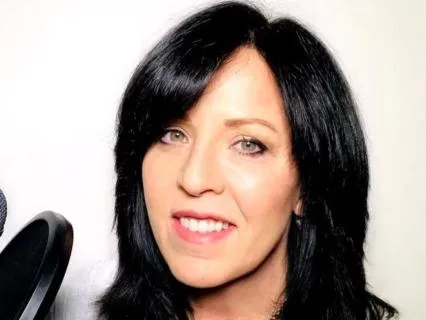
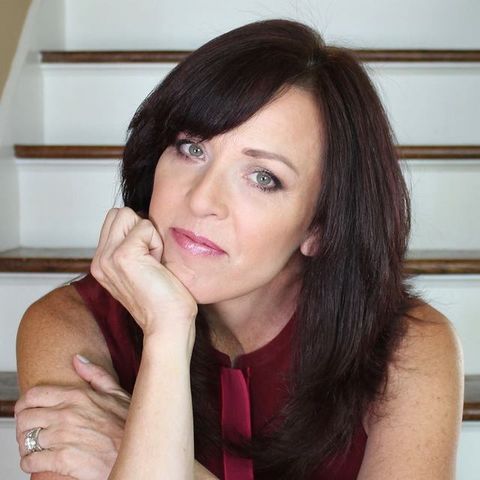
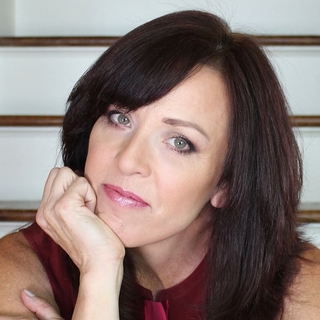
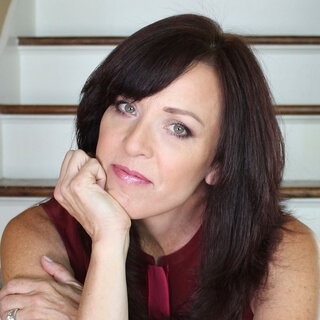
I'm Lisa A.
Romano,
Your host.
As an award-winning author and certified life coach,
I've dedicated my life to helping others understand the incredible power of an organized mind.
I believe that true empowerment begins with awakening to our false self.
My mission is to support you on your journey toward mental and emotional regeneration through conscious and deliberate awakening.
In this podcast,
I'll share insights,
Tools,
And transformative stories that illuminate the path to healing and self-discovery.
Have you ever heard yourself saying that my childhood wasn't that bad,
Other people had it worse,
My parents did the best that they could,
My parents had it harder than I did,
Maybe I'm too sensitive,
Maybe I'm being too hard on my parents.
Dear one,
What if minimizing your pain was something that the child within you learned to do to preserve your attachment?
Because a child will do almost anything to protect the bond to a parent,
Even if it's a fragile bond.
Even if that means betraying the self and their inner reality.
And this is why so many adult children of alcoholics or narcissists spend decades defending the very dynamics that wounded them.
It's because the psyche learned it was safer not to see,
Not to feel or talk about it.
And I really hope that you stay to the end.
So this really sinks in because a lot of people go superficially.
I want you to understand the cognitive dissonance.
Let's get into why adult children minimize their trauma.
As a way to preserve their psyche,
Why they defend abusive parents,
Why they doubt their own pain,
And why they live in a constant state of detachment,
And why this has everything to do with codependency,
Self-abandonment,
And subconscious survival programming that you're not even aware that you're running.
Because once this clicks,
And once you understand this,
You may never see your childhood the same way again.
Not because you want to wag the finger,
But because you want to heal and stop living below the veil from the wounds of the inner child with all the inner child's data.
For one,
Your inner child will always protect attachment at the expense of truth.
A child cannot easily hold these two truths at once.
So I need my parent to survive,
And my parent is harming me.
Something is happening outside that is really hurting me.
That creates unbearable conflict.
So psychologically,
We call this cognitive dissonance.
I'm sure many of you have heard that word before.
And often the child resolves that pain through adapting.
I know I did it and this is the way that we do it through denial,
Idealization,
Minimization.
And we don't do this consciously.
It happens subconsciously as a survival mechanism.
So instead of believing my mother neglected me or my mother put me in harm's way or my father is abusive,
The child concludes she loved me.
I just am too needy or too sensitive.
I'm just too much or I'm bad.
Instead of my father frightened me or this is terrifying,
The child in their head says,
Oh,
He was stressed.
He's overwhelmed.
The child protects the image of the parent at all costs by sacrificing the truth of the self.
This is one of the earliest wounds of codependency,
And until we earth it,
We cannot heal it.
The abandonment of self in service of attachment,
Even if it's a fragile attachment.
And many adults are still living from this unconscious split in a world of cognitive dissonance,
Still protecting the fantasy of the family,
Still doubting their own pain,
Still calling trauma normal,
Still minimizing their childhoods.
And this is why so many of us and we're still dissociated,
And we don't even know it.
When we hear ourselves saying that it wasn't that bad,
We have to understand that that's protecting you from grief.
Because if you let yourself fully admit what happened,
What might come next?
Grief.
The true sadness and the aching,
The deep grief of the inner child.
Grief for what you never received.
The mothering,
The nurturing,
The attunement,
The forgiveness,
The emotional safety,
The connection,
The protection,
The I am enough stuff.
And if you're the adult child of an alcoholic or a narcissist,
You didn't minimize because nothing happened.
You minimized when you were in a child because grief.
Has been buried.
Because to feel the pain of what was missing can feel overwhelming to a little child.
Their brain circuits just can't handle it.
Dear one,
Many adult children are not defending their parents.
They are defending themselves from the sorrow that they have never learned to hold.
This is where the true recovery work comes.
This is where it comes from.
And this is profound.
And healing begins when we become brave enough to stop overrunning or outrunning that guilt.
Grief.
And this is what codependents and adult children are struggling with.
Even codependency is preventing us from feeling that grief.
If I just do enough,
If I prove myself,
Then everything will be okay.
Eventually I'll have that attunement.
We want to understand,
Here's the next point,
That it felt safer to believe that something was wrong with you than something was wrong with your environment.
And this is one of the deepest subconscious wounds of all.
As a child,
It can feel safer to believe I am flawed.
I am bad and I am wrong.
It feels safer to the nervous system than it felt to believe that I wasn't protected or there was something wrong with the people that I love because if I'm the problem,
Maybe I can fix it.
Maybe I can earn their love.
Maybe one day I can finally be enough.
And so the child adapts subconsciously.
This is where codependency comes in.
This is where we become super responsible.
We become helpful.
We become the fixer.
We become perfect.
We become the peacekeeper,
The rescuer,
The one who asks for so little.
And later,
We call this our personalities.
It's just who I am.
I can't say no.
But oftentimes,
It's just our subconscious survival pattern running.
And this is where so much of our codependency begins.
It begins when we're little tiny babies,
Not in adult relationships,
In the wounded logic of a child that's simply trying to stay safe.
That's what codependency is.
Don't feel bad if you're codependent.
It's not a weakness.
It's a survival strategy.
And it means that your inner child was very clever.
So we want to also understand this point,
That loyalty became silence.
In dysfunctional homes,
There are often invisible rules.
Do not tell.
Do not feel.
Do not expose.
Do not talk.
What happens in these four walls stays here.
Protect the family image.
Never say the truth.
Daddy was drunk again and mommy stood by and let it happen.
Never tell the truth that mommy's in la-la land and she's acting like this isn't happening.
And so the child absorbs a dangerous belief.
If I tell the truth about what's happening in my home,
If I tell the truth about my pain,
I am disloyal to the family.
And so many adult children confuse silence with love.
So many women and men in toxic relationships,
They associate the silence with loyalty.
So they don't tell the truth about their pain.
They don't talk about what's happening with their spouse because they've been taught at a subconscious level,
If I talk about it,
I'm being disloyal.
So this is why we subconsciously excuse belief abuse.
This is called backwards rationalization.
We can even spiritualize neglect,
Making this neglect okay.
Throwing ourselves on the sword,
We protect the dysfunction,
And we call it compassion for our family.
But often it is trauma loyalty.
These are trauma bonds.
And trauma loyalty keeps self-abandonment alive.
This is why the truth sets you free,
Dear one.
Telling the truth is not betrayal.
Silencing yourself was betrayal.
It's a form of self-betrayal that you had to adapt to in order to survive your chaotic family.
So in dysfunctional homes,
Chaos was normalized,
So pain becomes invisible.
If you grew up walking on eggshells because you didn't know if mom or dad were going to be drunk again or if they were going to fight.
You may call hypervigilance normal.
You're super sensitive.
You're highly empathic.
If you were parentified,
You may call over-responsibility love.
Well,
I just love my siblings.
I just love taking care of people.
If your needs were ignored,
You may call emotional neglect ordinary.
Because repeated chaos simply becomes your norm.
It becomes familiar.
So you become a manager of chaos.
And remember that familiar equals normal,
Which is why so many say nothing happened to me.
I was just too sensitive as a little kid.
This is why living with chronic guilt or the fear of abandonment or relationship dysfunction or people pleasing and nervous system dysregulation,
The mind minimizes all of it.
But the body remembers and the patterns reveal what consciousness has hidden.
So we always want to look for patterns because the patterns are going to tell you the truth.
And this is why adult children defend the parents who hurt them.
This is and this may be the deepest layer of all.
Many adult children defend abusive parents because their identity was built around actually defending them.
Have you ever defended a narcissist?
Have you ever defended an abusive adult son?
Have you ever defended someone who is absolutely bombarding you with self-righteous indignation and criticism and stonewalling you?
This is because sometimes our identity becomes the loyal one,
The forgiving one,
The good child and even healing will threaten that identity,
The identity that you absorb just to survive the chaos of your family,
And that can feel terrifying to your nervous system.
Your brain will actually shut healing down and this is where betrayal blindness can exist.
Not seeing or acknowledging or speaking about what hurt you is tied to your survival depending on you not seeing it.
Just sit with that for a moment.
Not seeing may once have kept you emotionally alive.
But now it may keep you bound in codependency and reactivity.
And sometimes the adult child says things like,
It was not that bad.
Because if it was that bad,
They may have to deeply face just how deeply they abandoned themselves to survive it.
And that means that I have to jump into the abyss,
The vat that's holding all of this grief and sadness that I wasn't allowed to feel as an inner child.
And that realization can feel like an ego death.
And yet,
Dear one.
That is where the awakening begins,
The deep dark nights of the soul.
And this is where a lot of people get stuck on their recovery journey because they think,
Oh,
You know,
I should blame my parents now.
It's all their fault.
Yes,
You have to pin the tail on the donkey,
But this is about becoming honest and there's a difference.
Honesty liberates you.
So honesty says,
I know what happened and I'm going to be able to consciously hold that within myself,
That which I have had to deflect from in order to survive.
And here is the deepest subconscious belief beneath it all.
And until you get there,
Not just consciously because awareness doesn't heal you,
Feeling will heal you.
I believe that a lot of this healing comes down to this.
I need my story to mean I was loved.
I need my story to mean I mattered.
I need my story to mean I was not abandoned.
And this is what we think we need as a child.
And that's what keeps us stuck.
And so the child softened reality to preserve our hope.
But healing asks something much,
Much more sacred.
Healing asks us to stop asking,
Was it really that bad?
And begin asking,
What did I have to believe in order to survive that chaos?
That question changes absolutely everything.
Because seeing clearly is not betraying your parents,
Even though your nervous system and even your crazy family is going to think that.
It is ending the betrayal of self.
And that is where true recovery begins.
That is where we find the courage to stand up and to say,
Enough is enough.
I'm not drinking the Kool-Aid anymore.
I'm not carrying the dysfunction of my family anymore.
And this is why healing is not just about insight alone.
It has to involve uncovering the subconscious beliefs formed in childhood.
Learning to observe those wounded ego patterns,
Retraining emotional responses,
Interrupting these pattern loops,
Returning to the self beneath the trauma conditioning.
It's not just about understanding the programming,
Who did what and how you ended up where you are in another codependent narcissistic relationship.
It's transcending it.
It's about awakening accountability and eventually ascension out of these programs and returning to who you were before survival taught you that you should disappear and not have a voice and never stand up for yourself.
It's a beautiful process of you becoming who you truly are.
And dear one,
If you're like me perhaps you defended what hurt you.
And this isn't because it didn't hurt you,
It's because the frightened child inside of you believed that your absolute survival depended on protecting that attachment.
But I want you to hear this,
You're no longer that powerless inner child.
And maybe today is the day that you begin to see that clearly.
And if this resonates with you,
Let me know in the comments below.
Did you spend years believing your childhood wasn't that bad,
Minimizing yourself?
And when did that start to change for you?
Because obviously you're listening to new information,
You're learning.
And I would personally love to hear about your breakthrough moment,
The moment where you realize,
Wow,
This isn't normal,
And I have to do something about this so that I can spend the rest of my life above the veil of consciousness,
Loving my inner child and everything that happened to my inner child,
And learning to hold within my inner child consciously that which my inner child had to stuff and deny in order to survive the chaotic family.
So as you can see,
This is about a homecoming.
This is about self reclaiming,
Like reclaiming the self.
This is about mothering and fathering and honoring the wounded inner child.
It's not about pushing away what happened.
It's not about denying what happened.
It's about completely accepting what happened with love and with compassion.
I so hope that this resonates with you and you see that it was never you.
It was just me.
Your programming.
Dear one,
I bow to the love and light that is absolutely in you.
Even if you can't see it,
Even if you can't feel it,
The entire process for or reason for being born is to return to the love within you that you truly are.