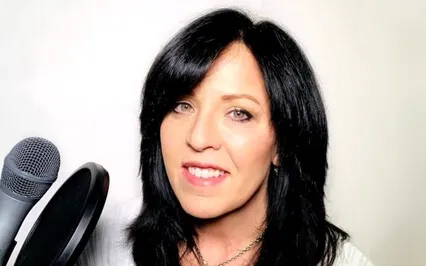
Welcome to the Breakdown to Breakthrough Podcast.
My name is Lisa A.
Romano.
I am a life coach,
Bestselling author,
YouTube vlogger,
Meditation teacher,
And expert in the field of codependency and narcissistic abuse.
I am a believer in the power of an organized mind.
My aim is to help people learn what it means to live above the veil of consciousness rather than living a reactive life.
May your heart feel blessed,
Your mind feel expanded,
And your spirit find hope as you spend time with me here at the Breakdown to Breakthrough Podcast.
So today we're going to be talking about what's going on when a narcissist who has idealized you,
Devalued you,
And discarded you suddenly starts texting you and hovering you back in.
Thank you so much for being here.
Thank you so much for learning about personal development.
Thank you for better understanding relationship dynamics.
When most of us are younger,
We don't understand relationship dynamics as fully as we should.
We go into relationships thinking that people think the way we think.
And it takes a number of toxic relationships sometimes to help us awaken and realize that just because we care about someone in a way that includes this whole person,
Meaning we are curious about who they are.
We want to know what makes them tick.
We want to know what their needs are.
We want to know what their desires are.
We want to even know what has shaped who they are so that we can better understand this person.
We have respect for this person.
We're curious about this person.
We have empathy for this person.
We see this person as an individual.
We want to feel close to this person,
But we don't want to engulf this person.
We don't want to rely on this person in an unhealthy way.
And we want to make sure that we don't lose our autonomy in this relationship.
When people are in healthy relationships,
They're able to see themselves as an individual.
They don't enmesh or fuse with this other person.
And in fact,
They enjoy the fact that they are communicating with someone who is an individual,
Who might think differently than they do,
Who might challenge them from time to time.
And in the healthiest relationships,
You are challenged.
You are with someone who sees the best in you.
And when you don't show up as your best self,
They tap you on the shoulder and they tell you,
I think you can do better.
This isn't from a place of wanting to hurt someone or gaslight someone.
It's from a place of genuine compassion,
Genuine connection,
Authenticity.
It's a place of empathy.
And so this is what happens when we are mature.
Once we've realized what doesn't work and we've done enough emotional recovery work,
We're recognizing what we did wrong.
We're learning to separate ourselves from our own issues.
In other words,
If you are highly codependent,
Then you are dependent on someone outside of you to make you feel like you have a sense of self and that sense of self is healthy.
The real problem is your perception of self.
The reason so many of us struggle with the false perception of self and in the case of codependence,
Our perception of self is negative.
We are shame based.
We don't feel good enough.
We've learned over the years through childhood that love was conditional,
That affirmation was conditional.
You had to do something in order to gain approval.
You suffered with emotional neglect.
You really are shame based and the person that you think you are is negative.
You don't feel good enough.
You've learned that people pleasing and acquiescing is safe.
If you are acquiescing to the needs of someone who is highly narcissistic,
Then you please them and you avoid a negative consequence.
And codependents who are below the veil of consciousness aren't recognizing oftentimes that they acquiesce,
They people please,
And they subjugate their needs for a toxic person because they feel so unsafe as human being.
They don't feel good enough and they oftentimes settle for bad boys or exciting girls because they don't think that they can attract someone who is truly healthy.
So someone's perception of self is really at the root core of all relationship dynamics,
Who we think we are.
When we're dealing with someone who is highly narcissistic,
They also have a false self.
They have learned that they need to dominate and control people in order to feel emotionally regulated.
They idealize others because they need this other.
If this other now loves them,
Then this is a reflection on them.
So idealizing you is a way that is really a mirror for the idealization,
The false idealization that they have for the self.
So when you meet someone who is highly narcissistic and they come at the relationship really strong,
Fast and furious,
And they're idealizing you,
Even though they don't really know you,
Their aim goal is narcissistic supply.
And so within their own mind is this grandiose perception of self that needs to be supported from the outside.
When a narcissist makes you a target or they target you,
And let's face it,
Narcissists can target anyone,
It depends on the amount of supply that they're going to get from a particular target that really determines who they go after the most,
Who they really love them,
Who they really idealize.
Now love bombing and idealization is really about the narcissist.
So the idealization is almost an infatuation.
It is exciting.
It's addicting to idealize you,
But this is really them idealizing you because the better person you are,
The better catch you are,
The better it is for them.
In other words,
It means that they must be really something if this celebrity talks to them.
They must be really something if this brilliant person who knows all of these amazing people loves them.
And so you represent in terms of value,
A really substantial source of narcissistic supply.
If a narcissist deems that you have tremendous narcissistic supply or value in narcissistic supply,
Then you would become more of a target for them.
This is why often I coach women who many would consider are very highly successful women,
High functioning women who may have their own business,
Who have their own companies,
Who have a number of employees and find themselves really targeted by a charismatic,
High functioning narcissist as well,
Who have made this woman the target of their desire.
And when a narcissist targets you and they want you,
It's almost impossible to resist it because they're very romantic.
You get swept up in their fantasies.
You think,
Oh my God,
This is amazing.
I've met someone who really checks all the boxes.
You don't know that this person is idealizing you,
Which is a source of primary supply,
Because idealizing you is all about them gaining narcissistic supply.
So the more value you have in society,
The more prestigious you are,
That's a source of narcissistic supply.
So that is why you're going to be targeted.
You are almost a second source of narcissistic supply.
Remember narcissists can't see you as a 3D person.
You have to offer them something.
They see people as commodities.
And depending on who the narcissist has in their life,
A narcissist is going to try to figure out,
Albeit subconsciously,
Who is going to offer them the best,
Quickest,
Most intense source of narcissistic supply.
Because remember,
They're not generating their own sense of self and purpose from within,
Which is what healthy people do.
We find value in just being.
We find value in nature.
We find value in watching our children play.
We find value in the work that we do.
Narcissists can't do that.
And it's very sad,
But it can make them also very treacherous to be around.
And so those of us who are learning about relationship dynamics,
It's of tremendous value to recognize what's going on.
I am not someone who says that we learn so that we hurt someone who has hurt us.
That's reactive abuse.
I get it.
And it could be very alluring to want to react when someone has hurt you.
However,
I'm hoping that what my work does is basically raise awareness around what's going on so that you can develop the space and the ability within yourself to make healthier,
More conscious choices,
To become aware of the red flags of love bombing.
Love bombing is about the narcissist.
They are idealizing you and they're love bombing you because they have to idealize you.
They have to love bomb you to secure you as a source of narcissistic supply because without the narcissistic supply,
They cannot sustain themselves.
So lots of times we think,
Oh,
I was love bombed and I was fooled.
Yes,
You were love bombed and you were fooled.
This is a false self,
But we want to understand what's really going on.
This is happening because the narcissist cannot exist without doing this,
Without operating this way.
What is the value in recognizing this for you?
The value in understanding what's really going on is that even though you're wounded and even though it's mind bending and even though you could have been in a terrible trauma bond,
Meaning that you're in a trauma bonded situation,
Which implies at some point in the relationship you felt like you couldn't get out.
You felt stuck almost like a captive.
The fear of upsetting someone who is so volatile,
You know,
Has programmed you to fear a negative outcome and is now also conditioned you to continue to seek approval of this narcissist.
So you are completely now checked out of the self zone.
And this is why codependents are so often involved with people who are highly narcissistic because as a recovering codependent myself,
I didn't have a sense of self.
My sense of self came from being programmed by my mom to acquiesce and to subjugate and figure out what the needs are of others.
I was taught that who I was was insignificant and my role was really to be placed second fiddle to the people in my life.
And that really became a baseline for all of my relationships.
Of course,
Through tremendous trial and error,
Through one toxic relationship after the other,
I learned to realize that this was inappropriate.
It's very humbling when you are on the spiritual path,
When you are on the emotional recovery path,
When you are investigating your past and you're dealing with things like CPTSD,
When you are now questioning,
Well,
Why am I reactive?
Why am I codependent?
Why don't I have a healthy sense of self?
Why don't I know what I feel?
Why do I tend to subjugate my needs for the sake of others?
Why do I end up stuffing my emotions?
Why do I say yes when I really want to say no?
Why am I so afraid to set a boundary?
What's really going on here?
It's very humbling when you recognize these traits in yourself and you start to understand how particular personality traits will make it more or less likely that you stay in toxic relationships.
There are people out there who don't have issues such as codependency,
Who aren't suffocating from the internal fear of not knowing who you are and who will recognize someone's love bombing as a red flag.
Thank goodness those people exist.
But there are far too many of us who have grown up feeling so invisible and who have never met the psychological milestone,
The need to feel seen,
The need to know who we are,
The need to feel valued.
We miss this entire milestone that allows a child to experience what it feels like to have healthy mirroring,
Consistent mirroring between a mother and a child.
We don't know what it's like to have a sense of self mirrored back to us and for us to feel like we are enough.
And so we carry this gaping wound within our souls.
We try to figure out how to be good enough and we end up attracting people into our experience who may see us as amazing sources of narcissistic supply,
Someone who will idolize them,
Someone who will look to please them,
Which is really very valuable to someone who has high narcissistic tendencies,
Somebody who is afraid of conflict,
Someone who is highly agreeable,
Someone who finds it difficult to set boundaries and say,
I'm out of here.
A narcissist wants that person that is struggling to set a boundary and struggling to let go.
And if you struggle with shame,
Then a narcissist will pick up on what your vulnerabilities are and they will exploit them.
Because narcissists in general,
Regardless of whether or not they're grandiose and or vulnerable are very exploitative.
Your wounds to them are exploitable and they will exploit them,
Which makes it really,
Really difficult to be in a relationship with someone who takes what you've shared with them because you want to feel close to them.
You want to reveal yourself to them and they stockpile it and see your vulnerability as a weakness and they think,
I'm never going to share anything like that with them.
This person's a weak person.
However,
They will use it later on.
I'm not so sure this is conscious.
I think if we're talking about psychopathy,
That's a different thing where people are monitoring every thought and they're very calculated.
In my own opinion,
I think that these cycles of idealization,
Devaluation and discard are subconscious.
It just represents the erraticness or is that even a word?
The erratic goings on inside someone who has narcissism or who is highly narcissistic.
It's not a healthy place to be.
It's a very unhealthy place to be.
It's very unstable.
It's very unpredictable.
It's a very needy place.
It's a very fear based place.
Being in the skin and the body of a narcissist is not a nice place to be.
The problem that many of us have is coming into contact with people who have these issues.
If you're not aware of the relationship dynamics,
You can spend years,
Decades and even a lifetime trying to be good enough,
Trying to understand someone,
Being stuck in a trauma bond,
Dealing with tremendous cognitive dissonance,
Feeling like it's your fault that you can't keep this person happy,
Looking for that next hit.
In other words,
The idealization phase,
It's very addictive.
You feel seen.
It's amazing.
You want it back.
And the narcissist,
Under the spell of the narcissism,
They will convince you that they are devaluing you because it's your fault.
They don't understand that they've grown bored.
You are no longer the exciting source of narcissistic supply they need in order to feel good about themselves.
So learning about this is really important.
Now what's really going on when a narcissist begins to text you again,
Sends you a birthday card,
Hits you up on Facebook?
What's really going on when they're hoovering you?
They're low on energy.
Their battery is running low.
Maybe they had a fallout with a current source of narcissistic supply.
Maybe the source of narcissistic supply they have is just not as fulfilling and as exciting as they need it to be in order to feel okay within their own skin.
And so when a narcissist is reaching out to you again,
What you will notice is they begin to re-idealize you.
So you know all those times they told you that you were a flake,
That there was something wrong with you?
You know all those times they told you that you were nothing without them?
You know all those times where they told you that you were crazy,
That you were jealous,
That everything was in your mind,
You were just too much,
You were just too much?
You know all those times that they called you a liar and they threatened you with different ideas about yourself?
Remember when they accused you of cheating when you didn't?
Remember all those times?
Well those comments or those beliefs are now softened.
So now what the narcissist has to do then is re-idealize you.
So when they re-enter your reality,
You will hear things like,
Well you might not hear the narcissist say it,
They may never reveal it.
What's happening in their head,
In order for them to want you back and gain you back,
They must re-idealize you in their head.
So they idealized you when you first met them,
They needed to devalue you,
They discarded you because they grew bored or you were just not as an intense source of narcissistic supply as you were when you first met them.
And so now they've devalued you,
Which they devalue you because you must be less than them,
There must be something wrong with you and that's why you don't want them anymore or that's why they're bored with you.
See that allows them to keep their grandiose perception of self intact.
It's not them,
It's you.
There's something wrong with you.
So they value you and then they discard you.
It makes it like,
Okay,
We're done.
Like I loved her,
You see,
I was wrong about her.
She really was untrustworthy,
Blah,
Blah,
Blah,
Blah,
Blah.
So it makes sense.
So the narcissist avoids feeling a narcissistic injury that it was them.
No,
It has to be you.
But an interesting thing happens when a narcissist starts poking around again,
They must rationalize the devaluing that they did of you.
They have to make it okay in their head that they're contacting you again.
They must re idealize you.
That's why what you'll hear is after someone devalues you,
Well,
Why do you want to talk to me?
You said that I was garbage.
Why do you want to talk to me?
You said that unless I put you first,
Unless I kicked my kids out of the house,
That I was of no use to you.
You told me that I had no loyalty to you because I didn't want to kick the kids out of the house.
Like,
Why are you contacting me again if you thought that I was a hoochie mama?
Like you called me all sorts of terrible names.
Like why are you calling me back again?
So a narcissist might say,
Listen,
We were going through a bad time.
I know that you didn't mean those things.
I know that you're really a good girl.
I know that you're really a good person.
You know what?
I'm willing to forget all of it because it was probably a bad time.
You know,
Let's let bygones be bygones.
So this is the way they're softening their devaluing of you or the beliefs they held about you when they were in the process of devaluing you,
Which is backwards rationalization or rationalizing why you're now no good because they have to keep up their grandiose perception of self because it's so fragile.
And so now when they start hoovering you back in,
You will,
You need to know that anybody that says horrendous things about you,
Anyone that had such little respect for you,
Anyone that cheated on you,
Anyone that tried to make you feel really bad about yourself,
That is them.
That is the internal torture,
If you will,
Of someone who has narcissism.
They are so unable to maintain object constancy that they flip flop constantly.
And it's a cycle.
And if you observe these cycles long enough,
They're actually predictable.
And it's a tortured experience because if you're someone who has such a high conflict personality,
You're never going to experience the love,
The contentment,
The connection and the authenticity that is humanly possible with another human being.
You can't because your grandiose sense of self is so fragile that you use people in ways that you may or may not even be aware of.
You drain people,
You hurt people,
You are aggressive,
You can become violent,
Highly agitated.
You justify your agitation,
You justify the verbal abuse that you put upon other people.
And then when people naturally begin to shut down and move away from you,
You are there in the devaluing stage saying,
Oh,
It's them.
But the loneliness is still there.
You've never connected with another human being.
And this is really the torture of someone who is highly narcissistic.
They're stuck in that cycle.
The problem is they're like subconscious cyclones.
They're like subconscious vacuums and they'll suck you in and then they'll kick you out.
You know,
You have an in setting and then you have an out setting when it comes to a narcissist.
Think about a vacuum.
You can suck in and then if you want to expel you,
You flip another switch and you kick out.
This is the constant cycle of a narcissist.
It's very sad,
But it's up to a narcissist to go into therapy and to work with a trained therapist,
Psychologist,
Psychiatrist who has the patient patience to deal with someone who will in turn devalue the therapist.
So a therapist has to be strong enough to deal with the devaluation of the therapist.
The therapist has to be aware enough of what's going on.
But over time,
Perhaps someone who is able to recognize that this is the cycle that they're in,
You know,
Maybe they can change.
But I think for the people who are caught up in these cyclones,
If you yourself are not highly narcissistic,
You must become aware of these relationship cycles so that you can avoid them,
Number one,
In the future.
But number two,
Also acknowledge what's going on.
When you are caught up in these cycles,
You take naturally what this person,
This high conflict person is saying about you.
If you're someone who is healthy,
You care about what this person is feeling.
You want to help them not feel this way anymore.
You want to feel close to this person.
If someone you love is in pain,
You want to understand the pain.
That's part of a partnership,
Helping your partner through something.
But if you don't recognize the cycles of someone who is highly narcissistic,
You can become lost in that cyclone.
You may never get kicked out of that cyclone.
You can stay a part of this person's narcissistic need for supply.
You can move from position to position.
You might be their first source of narcissistic supply at one part of the relationship cycle,
Move down to a second source of narcissistic supply,
Third.
And then when the first source of narcissistic supply falls down,
Then you move back up to the first source of narcissistic supply.
So this can happen through the relationship cycle of a narcissist.
And if you are not careful,
You can stay in this cycle.
You don't recognize what's going on.
And that's what is really,
Really damaging to someone who isn't aware.
So learning to become aware of these cycles so that you can avoid them is very important.
And also becoming aware of the cycle will allow you to heal from the consequences of being in a relationship with someone who is highly narcissistic,
Someone who is very,
Very troubled,
Someone who is unaware they are unaware,
And someone who uses people like their pawn pieces on a chessboard.
So that's the benefit of educating yourself around narcissism.
So what we want to make sure of is that when we are being hoovered back in,
You understand what's happening inside the mind of someone who is highly narcissistic.
They idealized you because they needed to for them.
The idealization of you was their first source of narcissistic supply.
I'm going to go talk to,
Let's say Serena Williams,
Because Serena Williams is very well known.
I'm going to go hit up Serena Williams.
I'm going to be her best friend.
She's amazing.
You see,
It's not about Serena Williams.
It's about she's amazing and therefore I'm amazing because I'm hanging out with Serena Williams.
You see,
That's the first source of narcissistic supply.
So you start hanging out with Serena Williams.
You're a narcissist.
You start hanging out with Serena Williams.
You're love bombing Serena Williams.
And for a while,
It goes along really well.
You and Serena Williams are meeting up for coffee.
She's giving you a cup of tennis lessons.
I don't know.
And suddenly Serena Williams can't make a lunch date.
Now the grandiose narcissist collapses into a vulnerable narcissist.
This idealized person doesn't want me.
Where is my value?
Oh,
I have no value.
What does a narcissist do to scramble to maintain their emotional regularity,
Which is based on a false narrative with a false self?
Serena Williams is no good.
I was wrong about her.
She used me.
This is what a narcissist will rationalize during a situation like this where Serena Williams,
Which could be anybody,
Just represents themselves as an ordinary person.
I made a lunch date with you.
I'm sorry I'm not able to make the lunch date.
A healthy person would say,
That's okay.
A healthy person isn't interested in Serena Williams because she's a tennis star.
A healthy person is interested in Serena Williams because they have like interests,
Because you see value in her as a person,
Let's say.
But a narcissist,
Not so much.
So let's say the narcissist quickly then moves another source of narcissistic supply in.
He hits up or she hits up an old friend that they dropped six months ago.
Hey,
How you doing?
Happy birthday.
Starts to re-idealize the person that they moved into position number three.
The person,
If they're not careful,
Will fall for what's going on with the narcissist.
Might return the text.
They haven't heard from you in a while.
Missing,
Missing all the signs of hoovering.
Not recognizing you're being pulled in again,
Dear one.
Did you forget the way this friend spoke to you?
Did you forget the way this ex-boyfriend spoke to you?
Did you forget the way this ex-girlfriend ended this relationship?
Cheating on you,
Calling you every name in the book,
Calling you worthless.
Did you forget?
Did you forget that this friend stole money from you and then told you you were crazy?
Ah,
Ah,
Ah.
I'm all for forgiving,
But not so much for forgetting.
So I can forgive someone because we're all human.
I get it.
And every relationship I know is meant to teach me something about life and about myself and about boundaries and really about honoring myself and letting go.
Letting go of what I cannot control.
Letting go of what no longer serves me.
Literally walking up a ladder of sorts to consciousness.
Oh,
I'm a little bit wiser today after that experience.
You fooled me once.
You're not going to fool me twice.
Well,
You fooled me twice,
But you're not going to fool me a third time.
Twice is a pattern.
And so I can forgive and I can let go because that makes my heart space feel open.
It doesn't weigh me down when I forgive.
I don't want to hold on to toxicity.
I don't want to hold on to resentment.
I don't want to hold on to blame because to me,
It's like if I hold on to blame,
It's like I've got a heavy rock in my back pocket and I just want to fly.
And in terms of law of attraction,
In terms of vibration,
It's just weighing me down.
And I don't want the resistance and I don't want to be any more of a magnet for toxic relationships.
So emotions are toxic.
So resentment,
Frustration and anger and blame and all of that and shame,
Those are toxic emotions.
And so I don't want to hold on to them.
So I am very,
Very cognizant of forgiving,
But that doesn't mean I forget.
And so if I start to get hoovered back in,
Oh no,
I say,
Slide the candy bar over to the left.
Quick story and then we will say goodbye for this session.
A very long time ago when I found myself severely subconscious and in a very toxic relationship and I was full of toxic emotions at the time as well.
No big surprise as to why I attracted someone who was also very toxic.
I was dealing with abandonment.
I was dealing with fear of being alone.
I was dealing with can I make it on my own?
Can I deal with life and three children without a job?
I can't really rely on my family.
They think I'm crazy.
Can I really successfully pull myself up by the bootstraps,
Reinvent myself and be a good mom for my children after my divorce?
Really struggling with tremendous self-doubt,
Shame,
Not feeling good enough,
All that juicy stuff.
And of course I manifest a very unhealthy relationship.
And so after about six weeks,
Thank goodness,
Light bulb moment,
I am not in a healthy relationship and I need to end this and I do.
I was called every name in the book.
I was actually pretty scared of this person with good reason.
And I was physically in fear of my life at one point.
Anyway,
Years later,
I'm at a 7-Eleven,
If you will,
And I'm getting a cup of coffee.
Thank goodness I was able to manifest a very good paying job.
And I'm at 7-Eleven after work and getting a cup of coffee and someone next to me puts a piece of candy next to my coffee.
And I hear this person say,
She'll pay for that too.
And I looked over my shoulder and my blood went cold.
It was this person that I had ended this toxic relationship with.
And I just slid the candy bar over to the other candy to the left.
And I said,
Just the coffee,
Please.
I paid for the coffee.
I walked out and I never looked back.
Hallelujah.
Praise the Lord.
I did it.
I reframed the whole situation.
I wasn't going to get hoovered back in.
I did not forget the way you spoke to me.
I was a very valuable source of narcissistic supply to this person because I needed to feel seen,
Because I was so fractured at the time,
Because I felt so alone and I was so vulnerable that I would have made this person my world.
Not very healthy.
I know it.
I feel remorse over it and I work on letting that go.
But it is what it is.
It was such a painful experience,
But it was an experience that taught me so much about myself and about being aware and about being conscious and about elevating my consciousness,
About honoring myself and stop ignoring red flags.
It taught me about the codependent life cycle,
About the narcissistic life cycle.
It taught me about abandonment trauma.
It taught me about emotional regulation.
It taught me about loving myself,
The need to love myself and to honor my past and to do inner child recovery work so that I am no longer susceptible to these narcissistic abuse cycles so that I can stay out of them in spite of my past.
Even though I was programmed to be a part of this cycle,
I could create something new for my life and so can you.
So the next time someone starts hoovering you back in,
Someone who has been cruel to you,
Somebody who may be a high conflict person like a narcissist,
Now you know what's going on.
In their mind,
They have to re-idealize you,
But be prepared.
Once you get sucked back into that cycle,
This cycle of idealizing you,
Which is really re-idealizing you,
Will soon lead to devaluing you and discarding you again.
So I hope this has been helpful.
Dear ones,
When you're out and about,
Don't forget to think.
Namaste as I bow to the love and the light that is absolutely in you.
Find your light and let it shine.
You are enough.
Bye everybody.
See you next time.