Welcome to the breakdown to break through podcast.
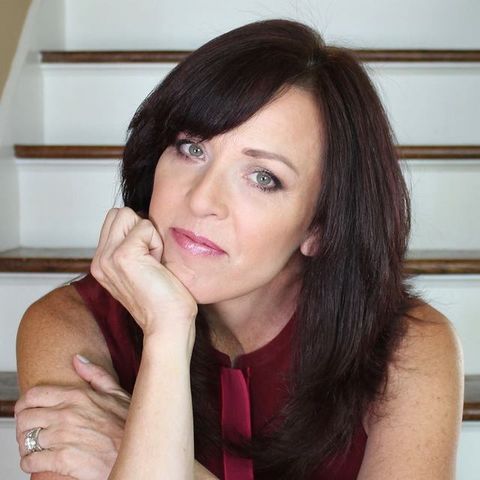
My name is Lisa A Romano.
I am a life coach,
Best-selling author,
YouTube vlogger,
Meditation teacher,
And expert in the field of codependency and narcissistic abuse.
I am a believer in the power of an organized mind.
My aim is to help people learn what it means to live above the veil of consciousness rather than living a reactive life.
May your heart feel blessed,
Your mind feel expanded,
And your spirit find hope as you spend time with me here at the breakdown to break through podcast.
Today we're going to be talking about the 13 signs that you might be codependent.
So the first sign that you might be codependent is that you have an overwhelming sense of guilt and responsibility.
So you feel guilty even though you haven't done anything wrong.
So you hear about something that happened at the office,
Has nothing to do with you,
But you feel guilt.
You hear about something that happens with your sister.
You weren't even near the house when this thing happened.
You feel guilt.
You hear about something that happened with your mom and your dad or the lady down the street.
You feel guilt.
There's just this overwhelming sense of guilt that you carry with you throughout your life.
The second sign is that you feel abandoned over the slightest thing that happens to you.
So you hear that someone had a party and you weren't invited,
And you're not able to just roll with it.
You feel deeply,
Deeply wounded.
You feel abandoned.
You see people talking over in the corner of a room,
And you feel abandoned.
There's this deep sense of abandonment.
You're inside a relationship,
And you just feel abandoned.
There's this sense of no matter what's happening,
No matter how many people you're around,
You don't feel whole.
This goes back to childhood.
The more you were abandoned as a child,
And the more you were rejected as a child,
The more emotional neglect you experienced,
The deeper the sense of abandonment will be.
So number three,
You are over-responsible.
I don't mean just responsible for your own bills.
I mean you are over-responsible for the irresponsible people in your life.
So you're somebody who is paying someone else's bills.
You're somebody who is taking care of someone else's children.
You are somebody who is cooking someone else's meals.
You are somebody who is taking on the needs of someone else.
Maybe you're counting their pills.
Maybe you're driving them back and forth to work.
Maybe that they got a DUI,
And now you're giving them money,
Or you're driving them to work.
So it's difficult for you to allow people to suffer the consequences of their actions.
You may have been taking on too much work at work,
Those types of things.
Number four,
You worry more about what other people think about you than what you think about people.
It never crosses your mind to ask yourself what you think about this person.
Instead,
It's,
I'm going to get dressed,
And I hope he likes it.
I'm going to wear this perfume,
And I hope he likes it.
I'm going to cook this meal,
And I hope she likes it.
Or I'm going to book this vacation.
I hope they like it.
It's all about you worrying about being good enough for another person.
So this is a very,
Very big red flag.
Number five,
You distrust that others really love you.
So you're in a relationship,
And even though someone might say they love you,
You distrust it.
You don't trust that this person really loves you for who you are.
And it really goes back to this idea that you don't love yourself.
And when you don't love yourself,
It's really difficult to believe that someone else could love you,
Because you're just like,
No.
It's impossible.
You don't love me.
What's really going on is that you don't know yourself.
You have an identity issue when you're a codependent.
So on some level,
You're like,
How could this person love me if I don't even know who I am?
So that's another red flag.
Number six is you are anxious,
And you don't feel good enough.
And so you might not even realize that you're struggling with not feeling good enough.
You might be a high-performing person.
You might be highly successful.
But the success might be motivated by the fear of not being good enough,
By perfectionism.
Well,
If I do this,
And if I gain that,
And if I get that job,
And if I make that amount of money,
If I get that experience,
If I buy that house,
If I have that car,
Then I'll be good enough.
And so it's really important that you make sure that who you are and what you are and what's motivating you isn't this sense of anxiety that's tied to not feeling good enough and you thinking that one day I will be good enough if I have this external experience actually manifest.
We're trying to move to a place as a recovering codependent where we believe that we're good enough just the way we are.
So it's really important that you think about that.
Number seven is you suffered emotional neglect,
Abuse,
And childhood abandonment.
So think about your childhood.
If you are somebody who came from a narcissistic home,
If your parents were codependent,
If you came from a home where there was alcoholism,
If you were the adult child of an alcoholic,
If you suffered domestic violence and abuse in your childhood,
Chances are that you're suffering with codependency today.
So number eight is your parents were dysfunctional and immature.
So the more immature your parents were,
The less they were able to show up and attune themselves to you.
So the more the chances are that you experienced anxious attachment or abandonment and complex PTSD from feeling emotionally neglected,
From feeling psychologically invisible.
I call it the disease of invisibility.
So the more immature your parents were,
The more their chances are that you might be suffering with codependency.
Number nine is you people please.
So you really have to be self-reflective.
Are you someone who says yes when you mean no and no when you mean yes?
Are you somebody who's afraid to rock the boat?
Are you somebody who doesn't even think about your needs?
Were you raised by parents who taught you that it was your job to make them happy?
Were you raised by parents who taught you that if you had a need,
They would chastise you,
Humiliate you,
Or punish you in some way?
Because if that's the case,
Then you've been brainwashed to think that people pleasing is less painful.
And let's face it,
It works,
Especially narcissistic people.
Narcissistic people need people pleasers in their life.
And so people pleasing works.
If you're nice to people all the time and you don't have needs all the time,
There's a large portion of the population that wants to keep a people pleaser around because you are going to be responsible for them.
You're not going to allow them to take responsibility for themselves.
You're going to enable them.
You're going to give them money.
You're going to take care of their kids.
You're going to give them a place to live.
You're going to give them food.
You're going to take care of all their basic needs.
You're not going to push back.
You are going to be the peacekeeper.
So even though you did nothing wrong,
You'll be the first person to go to them to try to make up after a problem that you've had with this person.
So number nine is your people pleaser.
Number 10,
You feel stuck.
You hate yourself because you don't know how to change.
So when you're codependent,
You are living off of subconscious programming.
I call it living below the veil.
You've been taught through childhood experiences that you're not enough.
And you've developed an identity issue.
So you don't feel like you have a healthy sense of self.
Damn,
You don't even know you have a self.
You're a doer.
You keep yourself busy.
You just keep doing and doing and doing and doing.
Very oftentimes,
You're chasing and chasing and chasing.
Chasing what?
Approval,
Validation.
You're chasing and run,
Actually chasing approval and running from the sense of shame.
Codependency is rooted in a sense of shame,
A sense of powerlessness.
We don't know how to be any other way.
We might know something's wrong.
But because we're living below the veil,
We don't know what that is.
So there's a sense that we feel stuck.
And we might hate ourselves because we're in a situation we don't want to be in.
But we don't know how to change it.
We don't know how to get out of it because we don't have the life skills.
We don't have the awareness.
We don't know what's wrong.
It's not us.
It's just our programming.
So if you feel stuck and if you feel like you berate yourself and you hate yourself because you let people push you around,
Until you learn how not to let people push you around,
This is going to continue.
And that's not your fault.
So number 11 is you either cling or push people away.
When you're in a codependent dynamic,
What will happen is,
And this is Pia Melody's work.
This is what I learned from Pia Melody.
In a codependent relationship,
And I think it's so profound,
You have somebody who chases.
And this is called the pursuer.
So they're pursuing love,
Pursuing connection.
And on the flip side of that,
You have a partner who is running and withdrawing from the person who's chasing them.
So it looks like this.
So you have the pursuing codependent pushing or chasing the codependent that withdraws.
And then when the codependent who is used to chasing and pursuing love and attachment and connection stops,
They begin to pull away.
And this divide happens.
And then what happens is the person who is withdrawing notices that they're not being pursued anymore and they don't like it.
And guess what they do?
They start to pursue the codependent that normally pursues.
And once the pursuing codependent feels pursued enough,
What happens is it goes back and forth again.
So they end up pursuing the withdrawing codependent.
And the balance in this codependent tango is restored.
It's a dysfunctional balance.
And it goes on and on and on and on.
So if that's your relationship,
That's a sign that you're codependent.
Number 12 is your relationships tend to be tumultuous,
Anxious,
Turbulent,
And dysfunctional.
So you might be somebody who attracts narcissistic people.
You might be somebody who finds themselves in relationships with people who have addictive personalities or are suffering from addictions.
You might be in a relationship with a narcissist or someone with high narcissistic traits who's on the spectrum.
You might be in a relationship with somebody who's empathy impaired.
And so you have over-empathy.
And the person that you're in a relationship with is empathy impaired.
So guess what?
You always end up getting the short end of the stick.
And when you open your mouth about it,
You're rocking the boat.
And this other person doesn't like it.
So your relationships are never smooth.
They're always up and down.
They're very inconsistent.
So that's a sign that you may have codependency or you might be codependent.
And the 13th sign is that you don't leave unhealthy relationships.
Now I think we have to give ourselves a break here.
Because if you were raised by parents who stayed in unhealthy relationships,
You were not taught about boundaries.
You were not taught about having a sense of self.
You were not taught about loving yourself enough to leave.
So it's not your fault if you're stuck inside a relationship dynamic and you don't know how to leave.
Ending a relationship is about boundaries.
And if people violated your boundaries as a child,
You don't feel like you have a self and you don't feel like you have a right to set a boundary.
And that is not your fault.
And so it's really important that you give yourself a break if you've been inside a relationship for a very long time.
This is toxic.
And you just don't know how to leave.
This is a life skill that you learn over time.
So what I suggest that people do is get smart.
Learn about codependency.
Learn about narcissism if you believe that you're in a relationship with a narcissist.
Learn about shame.
Learn about childhood programming.
Learn about childhood trauma.
Learn about abandonment and attachment problems like anxious attachment disorder.
Learn about your history.
Learn about how you were affected as a child.
Understand and investigate your parents.
What kind of parents were they?
Did you get your needs met?
These are the types of curious questions that you have to really,
Really think about when you're considering healing from codependency.
I highly suggest that you get into some type of a support group,
Maybe Al-Anon,
Maybe CODA.
But find a tribe of people who understand the codependent language.
One of the most popular books that you could ever read and one of the books that changed my life is Codependent No More by Melody Beatty.
Amazing book.
Absolutely amazing book.