Welcome to the breakdown to break through podcast.
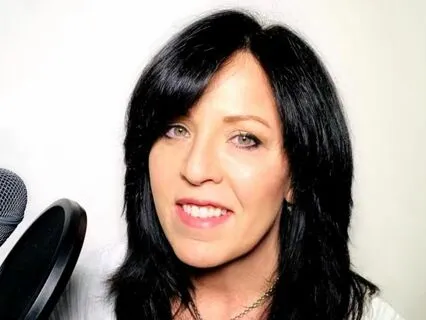
My name is Lisa a Romano.
I am a life coach,
Bestselling author,
YouTube vlogger,
Meditation teacher and expert in the field of codependency and narcissistic abuse.
I am a believer in the power of an organized mind.
My aim is to help people learn what it means to live above the veil of consciousness rather than living a reactive life.
May your heart feel blessed,
Your mind feel expanded and your spirit find hope as you spend time with me here at the breakdown to break through podcast.
So today we're talking about dysfunctional families.
We're talking about toxic family systems.
We're talking about what happens to the siblings inside a family that is rampant with CPTSD,
With trauma and with shame.
What happens when the children of a home are treated with contempt?
What happens when the children of a home are treated with indifference?
What happens inside the hearts and the minds and the bodies and the brains of children who feel like they are an obligation?
What happens to the children of the family when they are in competition for their mother and or their father's affection and or compassion and or their love?
What happens in a family system when the family is scapegoating a child,
When the parents are bullying a child?
What happens to the siblings in these relationships?
If you grew up in a toxic family system,
Chances are you may or very likely struggle with your sibling relationships.
This is not uncommon.
When you have parents who are narcissistic,
When you have parents who are emotionally immature,
When you have parents who are abusive,
Emotionally neglectful,
What you often see is that the family system itself is non-existent,
Or at least it's dysfunctional.
Family systems that are run by people who are dysfunctional will affect the siblings.
Children who are raised to feel like they are an obligation or they are raised to feel like their parents see no value in them,
This deeply wounds an individual child.
When we have children,
More than one sibling in a traumatized family system,
What you can see is scapegoating.
What you can see is triangulation.
What you can see is a narcissistic mom pitting her children against one another.
A narcissistic mom,
For instance,
Will figure out what child will listen to her,
What child will succumb to guilt trips,
What child will allow her to create narcissistic supply out of their children.
You will see children sometimes who will rebel,
Children who recognize that this is an unjust family system.
And oftentimes,
The children who will speak out are the children who are treated as the scapegoat.
When there is triangulation in a family system and the parents are triangulating the children against one another,
What ends up happening is you see more and more sibling rivalry.
In my own experience,
Very early on,
I always felt that my mother had nothing but contempt for me.
When I looked into my mother's eyes,
I felt disgust.
I felt like I was more than just an obligation.
I was just in the way.
I did not feel like my mother loved me.
And it felt odd to even feel that because I knew that it was wrong.
I knew that I should feel loved by my mother,
But I didn't.
And when I expressed this to my father when I was about seven years old,
He tapped me on my forearm and he told me to never say that again,
Which I never did.
When you grow up in a family where you're experiencing emotional neglect and you feel similar to how I feel or felt that your family or your parents felt disdain for you or contempt for you,
You don't have the ability to recognize that the problem is not you,
That the problem has something to do with your parents.
They are dysfunctional.
They are toxic.
They are emotionally immature.
Or they're struggling with their own childhood abandonment issues,
Their own childhood trauma.
A child doesn't have the ability or the cognitive ability to recognize it's not them.
What happens inside the child is the child must figure out how to make the situation that they're in less frightening.
And so what a child does is a child assumes that the reason that they are unlovable is because they are unlovable.
They're not enough.
They're not good enough.
They're doing something wrong.
There's something about them that is inappropriate.
In my case,
As silly as it sounds,
By the time I was seven,
I believed it was because I had green eyes.
No one in my family had green eyes.
My mom and my sister had blue eyes,
And my mom seemed to be really nice to my sister.
And my brother had brown eyes,
Very similar to my dad.
And my mom seemed to like my brother a lot better than she liked me.
So as a little girl looking for a pattern,
Looking for a reason,
I just believed it was because I had green eyes.
And this really added to the sibling rivalry,
Especially between my brother and I.
And we were only 15 months apart.
For me,
It was really obvious to recognize that my mother had more tolerance for my brother.
She had much more love for my sister.
It was easy for her to say that she loved my sister.
I don't ever remember my mother telling anyone that she loved me.
And I believe with all of my heart that I was the one out of the three of us that struggled the most because my mother,
For whatever reason,
Projected whatever her wounds were onto me more than she did my brother and sister.
Might have had something to do with the fact that I was the oldest.
Might have had something to do with the fact that I was a female.
Whatever it was,
It was real.
You grow up in this type of a family system and you feel alone.
You feel abandoned.
And more than anything,
What you need is to really connect to your siblings.
But sadly,
Very often,
More than not,
You can't.
The children of the family that recognize that when they go along with mom,
They experience less abuse and they see how mom is treating the scapegoated child,
They don't want that.
And so they figure out a way to develop compassion for mom.
They figure out a way to take care of mom or take care of dad.
They figure out a way to meet the needs of the demanding parent,
The dysfunctional parent.
And all the child's trying to do is gain a connection.
When this happens and there are siblings and you have a child who is unable to figure out how to please mom,
This child is left out in the cold,
Literally left out in the cold.
And it creates issues within the family.
It creates issues within the siblings.
As a matter of fact,
Peter Walker calls this pathological sibling rivalry.
And I'd like to read you a little bit about what he says from his book.
If you don't have a copy of Peter Walker's book,
I highly suggest that you get a hold of it.
It's called Complex PTSD,
From Surviving to Thriving.
And if you come from a dysfunctional home and you've experienced tremendous shame and you are struggling with CPTSD,
Then this book,
It can be a lifesaver.
It can really help you understand what the emotional recovery looks like.
He also discusses in the book that emotional recovery is not a linear process,
That you have to understand the recovery process at a cognitive level.
And from there,
You have to go deeper and deeper and deeper.
And this can take years.
The process can take years to unravel.
So many of us are living in denial about what really happened.
I think that was my biggest pitfall in recovery was I didn't know how to acknowledge that I had been emotionally abused or verbally abused.
I didn't know how to validate or justify how I felt,
The low self-esteem I felt.
I didn't know how to say,
Yes,
In fact,
This did happen.
When you come from a home that is dysfunctional and the house is ruled by denial,
Everyone's acting like everything's okay.
Even though you feel like nothing is okay,
Even though you are being emotionally abused and verbally abused,
You don't know how to say,
Hey,
I'm being abused here.
And the people in your life are denying that it is in fact abusive.
And lots of times,
And I would say more often than not,
When you have a dysfunctional mother and father,
They end up agreeing with one another.
So they back one another up.
And that's what happened in our house.
So even though my dad knew that my mom was emotionally and verbally abusive,
He said nothing.
He expected me to worry about her feelings.
And if I dared to say,
I don't think mommy loves me,
I got read the riot act about how hard my mother worked and how hard her life was.
So I was never heard.
So when you're a child and you're feeling abandoned,
You're feeling neglected,
And no one outside of you is saying,
Yes,
This in fact happens,
You dissociate.
You deny that what you're feeling is actually real.
Your concept of reality is distorted.
It has to be in order for you to be able to stay within the family system.
And it's really sad.
And then as you grow up and you are experiencing internal emotional turmoil,
You don't know how to validate it.
So you distort it.
You rationalize it.
You justify it or you deny it.
You suppress it.
And lots of times you end up internalizing this and it becomes self-harming.
You end up having an eating disorder or you self-harm in another way.
So these are some of the things that happen to us when we come from oppressive homes that are unfair.
And it's riddled with trauma.
And the adults that are responsible for the home are acting as if what's happening isn't happening.
You can find this section in Peter Walker's book on page 17.
And I find it particularly interesting because so many of my clients have issues with their siblings.
And so he writes,
Poor parenting creates pathological sibling rivalry.
Like many children in CPTSD and gendering families,
Maud could not turn to her siblings for comfort because her parents unconsciously practiced the divide and conquer principle.
Her parents modeled and encouraged sarcasm and constant fault finding among the children.
Moreover,
Interactions of cooperation or warmth were routinely ridiculed.
So when you're thinking about what happened to you in your family,
What you want to do is you want to ask yourself,
Were you raised by parents who were fault finding?
Did they criticize you?
If you grew up in a family like mine,
That's all it was ever about.
You were never praised.
But they knew,
My parents knew,
How to find something that was wrong about you.
It was like a big joke to make fun of you.
And what that does is that really encourages children in the family,
The siblings in the family,
To mock one another as well.
And when your siblings are mocking you,
You can't form a healthy bond with them.
You can't feel close to them.
You can't go to them and say,
Hey,
Can you believe what mom just said to me?
So it's the parents who set the tone for the fault finding and the criticism.
And this bleeds into the relationships with the children.
He goes on to say,
Sibling rivalry is further reinforced in dysfunctional families by the fact that all the children are subsisting on minimal nurturance and are therefore without resources to give each other.
Moreover,
Competition for the little their parents have to give creates even fiercer rivalries.
And so what he's basically saying is that there's so little nurturing in the family that there's none to go around.
So when you come from a dysfunctional home and the parents are not nurturing,
There isn't an excess of love to go around.
Everyone's just trying to survive.
The parents are clueless as to how their fault finding and how the humiliation and how they're scapegoating and triangulation is really bleeding into how the siblings react to one another.
So oftentimes,
I'll coach an older person who'll say,
My children don't get along.
And when we dig further into the way the children were raised,
We discover that there was a parent who ridiculed the children.
We discover that mom was way spent.
In other words,
She was living with an alcoholic and she was barely surviving.
She didn't have a job and she felt that her role was to keep the family together.
And so she would ignore a lot of the fault finding.
She would ignore a lot of the sarcasm.
She would ignore the put downs by the husband who had a drinking problem,
Thinking that she was doing the right thing.
Unaware,
However,
That this would end up showing up later on in life between the sibling rivalry of her older adult children.
We have to take into account how we grew up.
We have to understand how growing up in dysfunctional families affects us.
And so if you have a poor relationship with one of your siblings,
It might be time to ask yourself,
How did you grow up?
Were you children that were pitted against one another?
Did your parents use the divide and conquer technique to control the atmosphere of the home?
Or were your parents people who ridiculed you?
Did they encourage you to mock your sister?
Did they encourage you to mock your brother?
Or were you the child that was mocked?
Were you the child that was ostracized?
Were you the family scapegoat?
Were you the child that everyone made fun of?
When we peel back the layers and we become really,
Really objective and we think about how we grew up,
Oftentimes we discover that we were victimized.
And this could be a really great stumbling block for someone when you grow up in a home like this and you've been infused with the idea that this is normal.
How do you accept that you were abused?
How do you start the grieving process if you don't accept what happened to you as a child?
And so while some people say,
Oh,
You know,
You're just playing the victim,
I caution you when you hear people say that.
Because without accepting that you were first a victim,
It's impossible to start the healing journey in and of itself.
As adults,
This can be very difficult to recover from.
If you have a terrible relationship with a sister or a terrible relationship with your brother and they are living below the veil of consciousness,
This relationship might be damaged for good.
In other words,
You might never be able to make up for the relationship that you had as children and to recover.
But if you have a sibling who is willing to discuss with you what really went on in your home,
I believe that there's a chance that you can repair these relationships.
I believe that if there's enough awareness,
If there's enough acceptance,
If there's enough surrender,
If there's enough honesty and authenticity,
If two siblings can come together and say,
I was there,
I know what happened,
I saw exactly what happened to you,
And I know that you saw what happened to me,
And we have to accept that it was unfair,
That we were pitted against one another.
I believe that those types of sibling relationships stand a chance to improve.
However,
We all have to acknowledge that some siblings are not going to wake up.
Some relationships are never going to be able to be repaired.
And if that's the situation,
That's the situation.
And although it's sad,
We all have to do our best to accept what we cannot control.
Remember that recovery is not a linear process.
The first part of this process is cognitive awareness.
We have to understand that we have an inner critic that is punishing,
An inner critic that has been downloaded to believe that our goal is to honor our mother and father and figure out a way to make them happy so that we can feel loved.
Then we have to move into a place of grieving the sense that we didn't feel safe in the world.
We have to grieve the fear.
We have to accept the fear that we felt as children.
We have to move out of surviving and move into thriving where we feel safe in the world.
And certainly dealing with our past and recognizing that what happened to us is valid and dealing with trauma head on if we can and working through the grieving process,
We're able to push ourselves slowly into a state of thriving.
Namaste,
Everybody.
Until next time.